- 4 Jan 2026
- Gideon Thornton
- 0
Water Heater Lifespan Estimator
How Long Will Your Water Heater Last?
Calculate your water heater's expected remaining lifespan based on age, water conditions, and maintenance practices. Avoid unexpected failures and plan for replacement.
Your Water Heater's Estimated Lifespan
Most people don’t think about their water heater until it stops working. Then suddenly, you’re standing in a cold shower, wondering why it didn’t last longer. The truth is, water heaters don’t last forever - but they also don’t need replacing every few years. Knowing how long yours should last helps you avoid surprises and save money.
Typical Lifespan of a Water Heater
A standard tank-style water heater in a UK home usually lasts between 8 and 12 years. That’s the average you’ll hear from plumbers, manufacturers, and energy advisors. Tankless water heaters, which heat water on demand, last longer - often 15 to 20 years. But lifespan isn’t just about age. It’s about how well it’s been maintained and what kind of water you have.
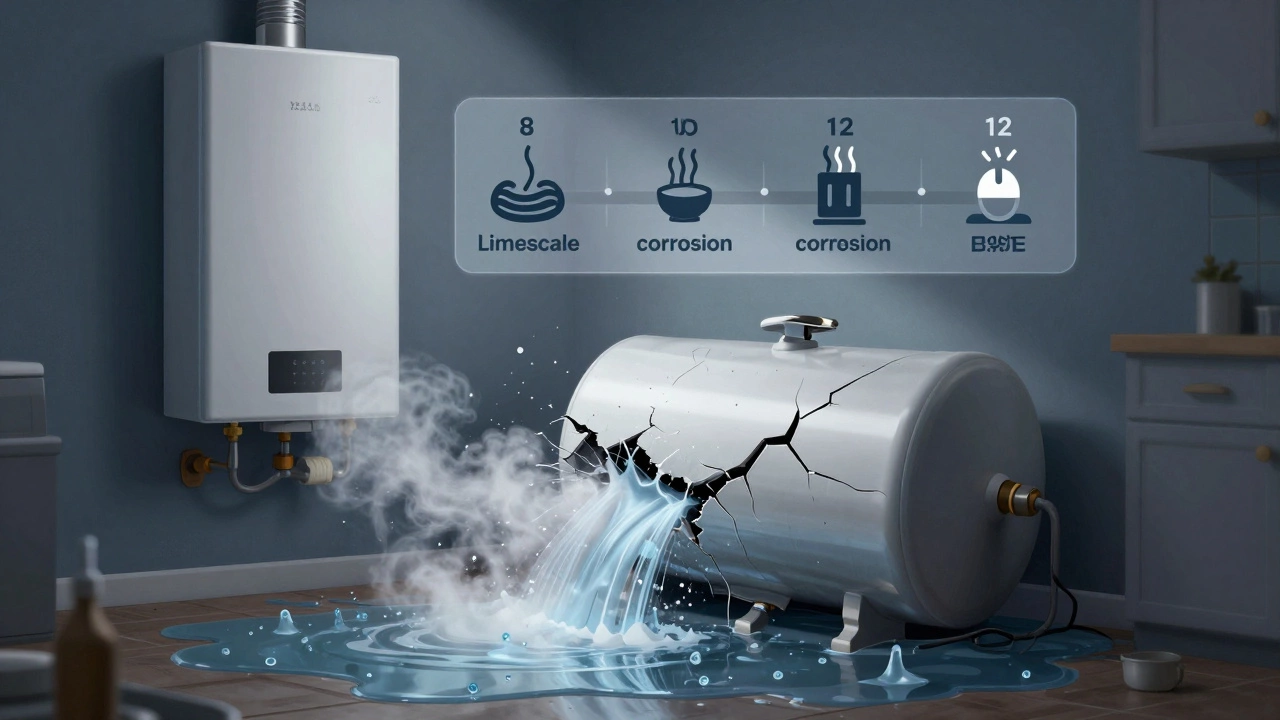
In Bristol, where water is moderately hard, limescale builds up faster than in softer areas. That scale coats the heating element and the bottom of the tank, forcing the heater to work harder. Over time, this leads to overheating, corrosion, and leaks. A heater in a hard water area might start showing problems by year 7, even if it’s still technically running.
What Drives Water Heater Failure?
Water heaters don’t just wear out randomly. They fail because of predictable problems:
- Limescale buildup - Especially in hard water areas like the South West. Every 1mm of scale can increase energy use by 10% and shorten lifespan by years.
- Corrosion - The anode rod inside the tank is designed to rust instead of the tank. But once that rod is gone (usually after 5-7 years), the tank itself starts to corrode.
- Thermal stress - Constant heating and cooling causes metal to expand and contract. Over time, this leads to tiny cracks in the tank lining.
- High water pressure - If your home’s pressure exceeds 80 psi, it puts extra strain on the tank and valves.
These aren’t mysteries. They’re mechanical facts. And they’re why some water heaters die at 6 years while others make it to 15.
Signs Your Water Heater Is Near the End
You don’t need to wait for a flood to know it’s time. Watch for these clear warning signs:
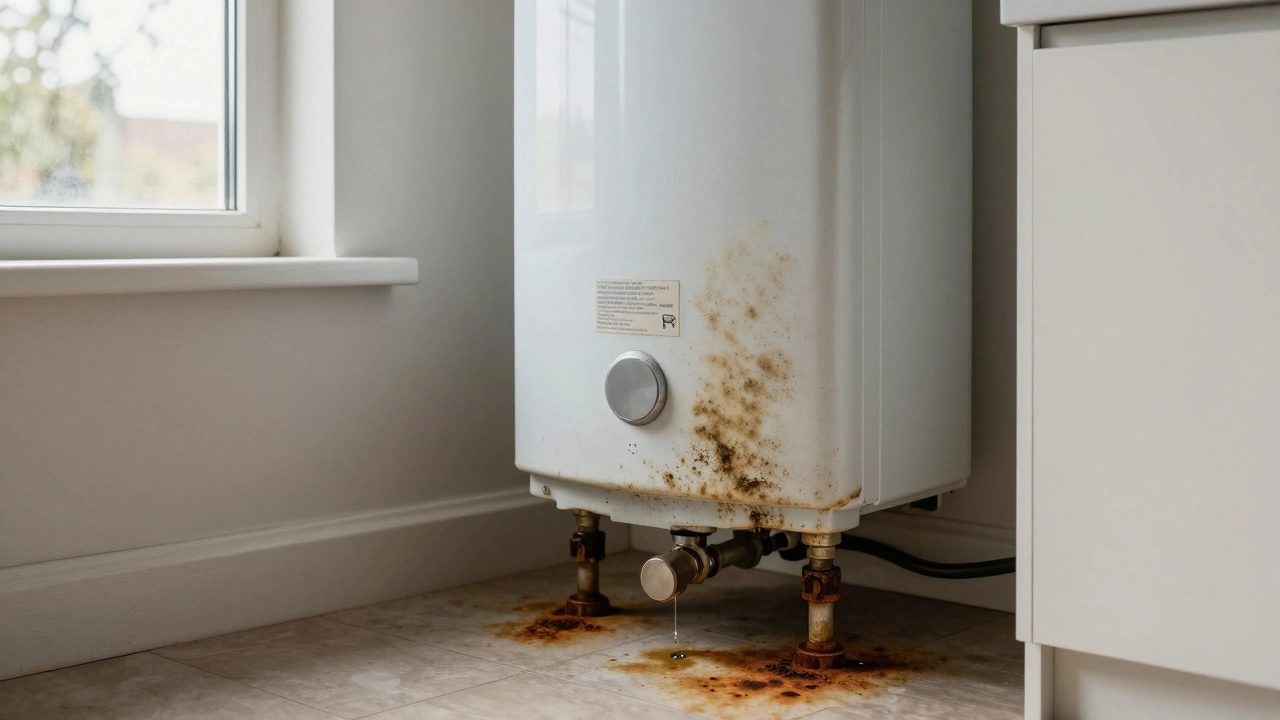
- Discoloured or rusty water - If your hot water looks brown or smells like metal, corrosion is happening inside the tank.
- Strange noises - Popping, rumbling, or banging sounds mean limescale is building up on the heating element. It’s not just annoying - it’s a sign of damage.
- Leaks around the base - Even a small drip from the bottom of the tank means the metal is thinning. No patch will fix this.
- Longer wait times for hot water - If it’s taking twice as long to heat up, the heating element is failing or the tank is insulated by scale.
- Age over 10 years - If your heater is past its 10-year mark and you’re seeing any of the above, replacement is smarter than repair.
One homeowner in Clifton replaced their 12-year-old heater after noticing rust in the water. They thought they could wait another year. Three months later, the tank burst during a weekend. The resulting flood damaged the kitchen floor and lower cabinets. Repair costs hit £3,200. A new heater would’ve cost £1,100.
How to Make Your Water Heater Last Longer
Extending your heater’s life isn’t magic. It’s simple maintenance you can do yourself - or pay a plumber to do once a year.
- Flush the tank annually - Drain 2-3 gallons from the bottom valve. This removes sediment that sinks to the bottom. Do this in spring when water usage is lower.
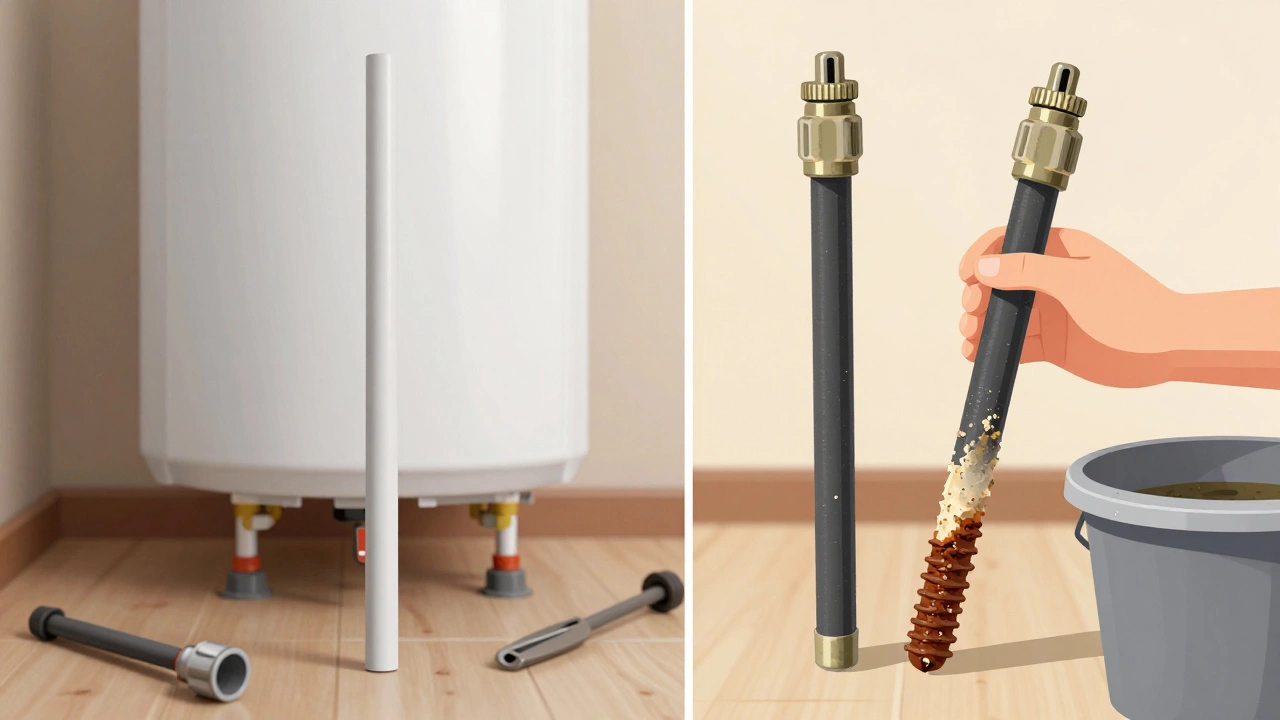
- Check the anode rod every 3-5 years - If it’s more than half eaten away, replace it. A new rod costs £30-£50 and can add 5+ years to your tank’s life.
- Set the temperature to 60°C - Higher settings speed up corrosion and scale. 60°C is hot enough to kill bacteria and gentle enough to protect the tank.
- Install a water softener if you have hard water - Especially in Bristol, Bath, or Gloucester. Softened water cuts scale buildup by up to 80%.
- Check pressure relief valve yearly - Lift the lever slightly. Water should flow freely. If it doesn’t, replace it. This valve is your safety net.
One family in Hotwells flushed their tank every year and replaced the anode rod at year 5. Their 1998 model lasted 18 years. They only replaced it because they were renovating the bathroom - not because it failed.
Tank vs Tankless: Which Lasts Longer?
When you’re ready to replace your heater, you’ll face a choice: traditional tank or tankless.
| Feature | Tank Water Heater | Tankless Water Heater |
|---|---|---|
| Average lifespan | 8-12 years | 15-20 years |
| Upfront cost | £600-£1,200 | £1,800-£3,500 |
| Energy efficiency | 60-70% | 80-95% |
| Hot water supply | Limited by tank size | Continuous flow |
| Best for | Small to medium homes, budget-conscious buyers | Larger households, energy savers, new builds |
Tankless heaters cost more to install, but they save money over time. They also take up less space and rarely leak. But they’re not ideal for every home. If your plumbing isn’t upgraded - especially gas lines or electrical circuits - the installation can get expensive fast.
When to Replace vs Repair
Here’s a simple rule: if your water heater is over 10 years old and needs a £300+ repair, replace it. Most repairs on older units are temporary fixes.
Examples:
- Leaking tank - Never repair. The metal is corroded. Replacement is the only safe option.
- Faulty thermostat - Can be replaced for £80-£150. Worth it if the heater is under 8 years old.
- Broken heating element - Costs £120-£250 to replace. Only worth it if the tank is under 10 years and shows no signs of rust.
- Pressure valve failure - Replace for £40. Always do this - it’s a safety issue.
Don’t be tempted by cheap repair quotes. A £100 fix on a 12-year-old heater is just delaying the inevitable - and possibly leading to water damage.
What to Look for When Buying a New One
When shopping for a replacement, focus on these three things:
- Size - A 120-litre tank suits most UK households. If you have 3+ people, go for 150 litres. Too small = cold showers. Too big = wasted energy.
- Energy rating - Look for an A-rated model. It might cost £100 more upfront but saves £50-£80 a year on bills.
- Warranty - A 6-year warranty is standard. A 10-year warranty means the manufacturer has confidence in the tank’s quality.
Brands like Worcester Bosch, Vaillant, and Ideal are common in the UK. But don’t just pick the cheapest. Read reviews about long-term reliability, not just price.
Final Advice: Plan Ahead
Water heaters don’t fail on schedule. They fail when you least expect it - during a holiday, in winter, or at 2 a.m. The best thing you can do is track your heater’s age. Write the installation date on the side with a marker. Set a reminder for year 8. At year 10, start researching replacements.
Replacing your heater before it fails saves you money, stress, and potential water damage. It’s not about being dramatic. It’s about being smart.
How long does a water heater last in the UK?
In the UK, a standard tank water heater lasts 8 to 12 years on average. Tankless models last longer - typically 15 to 20 years. Lifespan depends on water hardness, maintenance, and usage. In hard water areas like Bristol, heaters may fail sooner without regular flushing and anode rod checks.
Is it worth repairing a 10-year-old water heater?
Generally, no. If your heater is 10 years or older and needs a repair costing more than £200, replacement is the better choice. Repairs on aging units are temporary fixes. The tank is likely corroding internally, and a new heater will be more efficient and safer.
What causes water heaters to fail early?
The main causes are limescale buildup from hard water, corrosion from a worn-out anode rod, high water pressure, and lack of maintenance. Flushing the tank annually and replacing the anode rod every 5 years can extend life by up to 7 years.
Should I switch to a tankless water heater?
Tankless heaters last longer and save energy, but they cost more upfront - between £1,800 and £3,500. They’re ideal for larger homes or if you’re doing a full renovation. For most UK households, a high-efficiency tank heater is more practical and cost-effective.
How do I know if my water heater is leaking internally?
Signs include rust-coloured water, puddles under the tank, or a constant dripping from the pressure relief valve. If you see any of these and your heater is over 8 years old, internal tank corrosion is likely. Don’t wait for a flood - replace it.
If you’ve had your water heater for more than 8 years, start planning now. A small investment in maintenance or timely replacement can save you hundreds - and a lot of hassle.