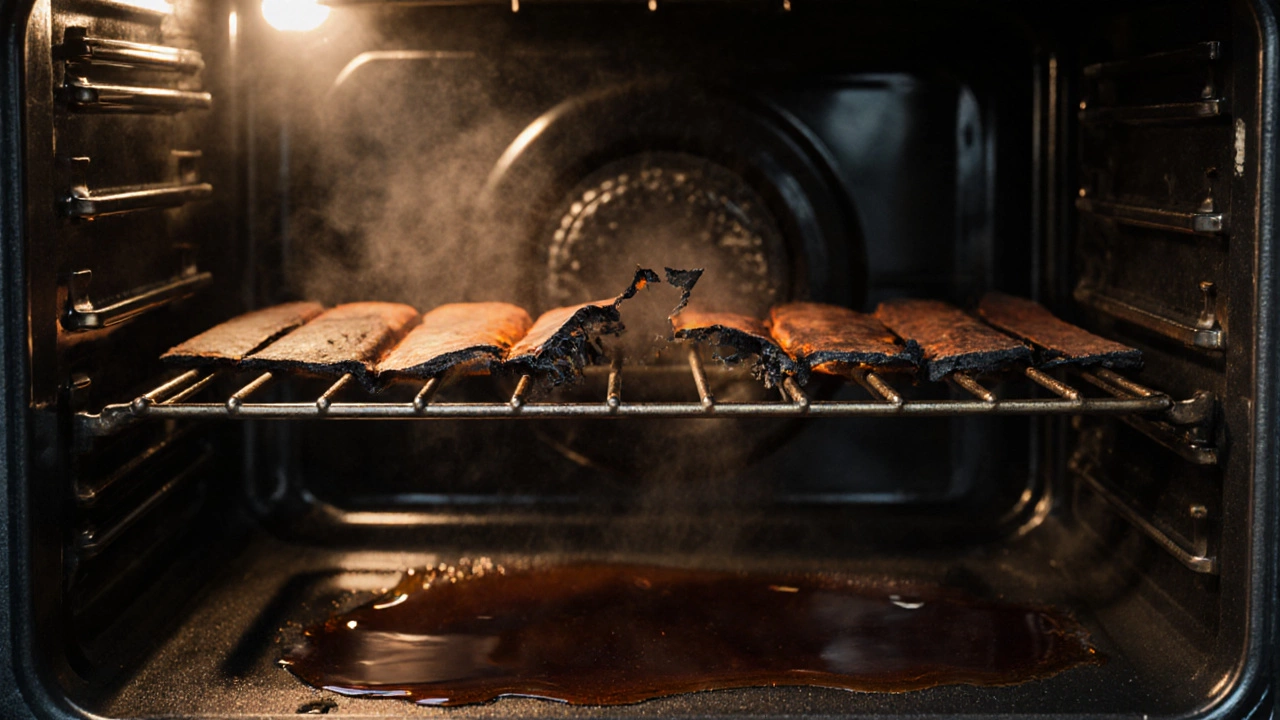
A broken oven heating element makes your oven unsafe to use-even if other parts still work. Learn why you shouldn't risk it, how to confirm the damage, and what to do next.

When your electric oven not heating, a malfunction in the heating system that prevents the oven from reaching or maintaining temperature. It’s one of the most common appliance failures in UK kitchens, and it’s rarely as expensive or complicated as it seems. You might think it’s time for a new oven—but more often than not, it’s just one small part that’s failed. The heating element, the metal coil inside the oven that glows red when powered. Also known as bake element, it’s the main component responsible for generating heat. If it’s cracked, burnt out, or not glowing at all, that’s your culprit. Replacing it takes under an hour and costs less than £50. Most people don’t even need a technician.
But if the element looks fine, the problem could be the oven thermostat, the control that tells the oven when to turn the heating element on and off. Also known as temperature control, it’s like the brain of your oven. If it’s misreading the temperature, your oven might think it’s already hot when it’s not. This is why food cooks unevenly or takes forever to preheat. A faulty thermostat doesn’t always show visible damage—you need a multimeter to test it. But before you buy tools, check the simpler stuff: is the oven getting power? Are the settings correct? Did you accidentally turn on grill mode instead of bake?
Another frequent issue is the oven temperature sensor, a probe that monitors internal heat and sends data back to the control board. It’s usually a thin metal rod near the oven wall. If it’s bent, covered in grease, or broken, it can trick the oven into thinking it’s too hot and shutting off the element. Cleaning it with a soft cloth often fixes the problem. If it’s damaged, replacement is cheap and easy.
Less common, but still possible, is a blown fuse, a faulty control board, or a tripped thermal fuse—especially if the oven suddenly stopped working mid-bake. These require more skill to diagnose, but they’re still fixable without replacing the whole appliance. Many of the ovens we repair in Nuneaton are 10, 15, even 20 years old—and still working fine after a simple part swap. You don’t need to upgrade just because the heat stopped.
What you’ll find below are real fixes from actual repairs we’ve done in homes across Nuneaton. No fluff. No theory. Just what breaks, how to spot it, and how to fix it—whether you’re doing it yourself or deciding whether to call in a pro. Some posts show you how to test the heating element with a multimeter. Others walk you through resetting a stuck thermal fuse. One even explains why your oven heats up but never gets to the right temperature. All of them come from the same kind of kitchen you’re standing in right now.
A broken oven heating element makes your oven unsafe to use-even if other parts still work. Learn why you shouldn't risk it, how to confirm the damage, and what to do next.