
- 8 Dec 2025
- Gideon Thornton
- 0
Glass Hob Safety Risk Assessment
Critical Safety Information
This tool helps identify unsafe conditions. The article states: "Glass hobs cannot be safely repaired." If your hob shows any risk factors, stop using it immediately and contact a professional.
Assess Your Hob's Condition
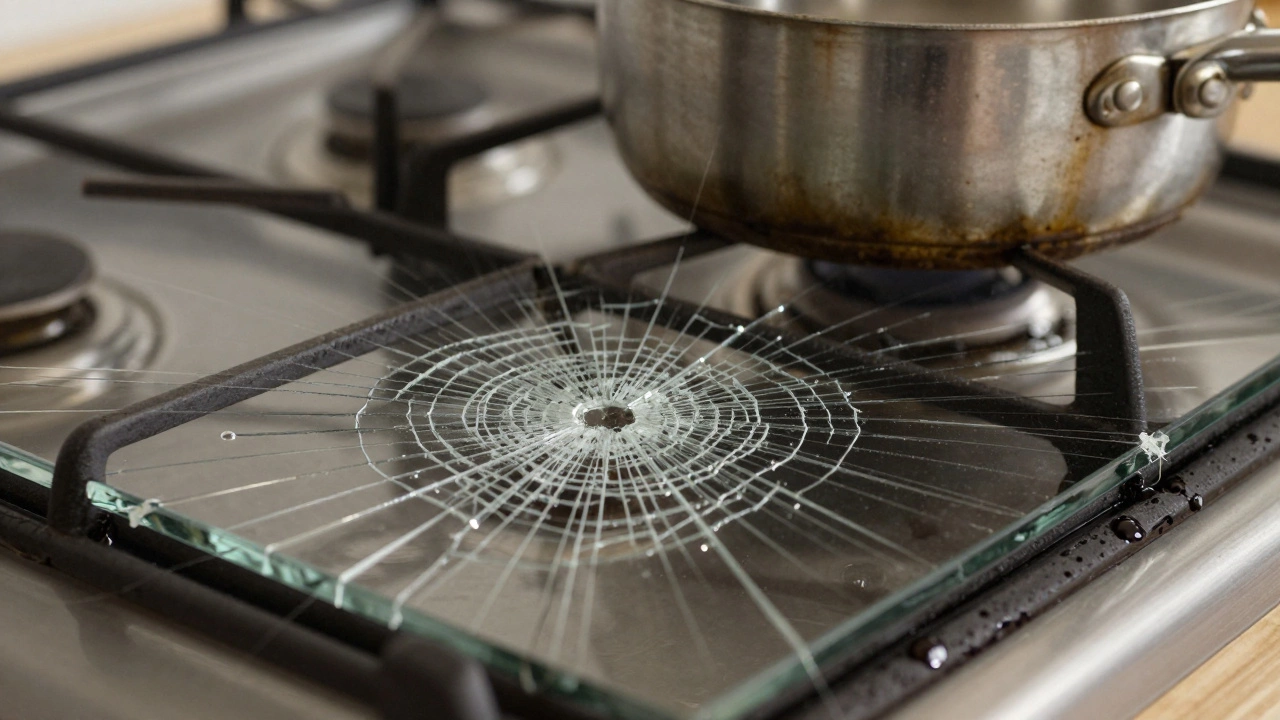
When your glass hob cracks, you don’t just lose a cooking surface-you lose confidence. One moment you’re boiling pasta, the next you’re staring at a spiderweb of fractures spreading across the surface. It looks dangerous. It feels expensive. And the big question pops up: can you repair a glass hob?
The short answer? No, not safely or reliably. Not really.
There are plenty of YouTube videos showing epoxy fixes, clear sealants, and DIY patch jobs. They look convincing. But if you’ve ever cooked on a cracked glass hob, you know it’s not just about looks. It’s about safety, heat distribution, and the real risk of electrocution or shattering under pressure.
Why Glass Hobs Are Not Like Regular Glass
Most people think a glass hob is just a toughened glass panel. It’s not. It’s a layered composite: a top layer of ceramic glass, bonded to a heating element underneath, with insulation and electronics packed in between. This isn’t a window or a coffee table. It’s a precision appliance designed to handle temperatures up to 800°C and sudden thermal shocks from cold pans.
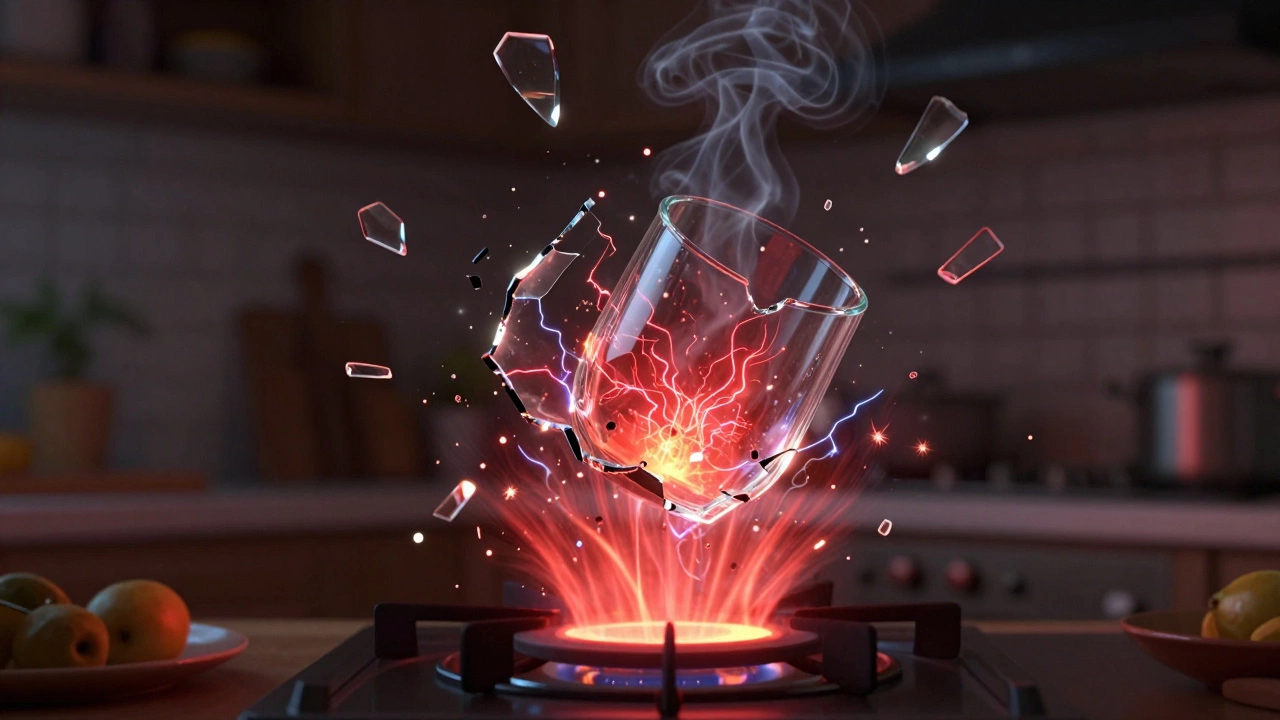
When it cracks, the structural integrity is gone. Even a hairline fracture can let moisture seep into the wiring. That’s how you get short circuits. That’s how you get sparks. That’s how you get a fire.
Manufacturers like Bosch, Indesit, and Neff don’t sell repair kits for a reason. They know what happens when amateurs try to fix this.
What Happens When You Try to Glue It
You’ve probably seen the advice: “Use high-temp epoxy.” Or “Clean it, sand it, fill the crack with clear resin.” It sounds logical. But here’s what actually happens:
- The epoxy doesn’t bond to the ceramic glass properly-it just sits on top.
- Heat expands the glass. The epoxy doesn’t. That creates new stress points.
- After a few uses, the crack widens. The epoxy turns yellow or flakes off.
- Moisture gets trapped under the surface. Condensation forms inside the hob. Corrosion starts on the heating coils.
- Eventually, the glass shatters. Not slowly. All at once.
A friend in Bristol tried this last year. He used a $15 kit from Amazon. It held for three weeks. Then his daughter dropped a saucepan. The entire panel exploded into 47 pieces. He had to replace the whole unit-and the kitchen floor underneath was scorched.
There’s no such thing as a “permanent” fix. Not with consumer-grade products. Not with any glue or sealant sold online.
What About Professional Repair Services?
Some companies claim they can “repair” glass hobs. They use industrial-grade resins and UV curing. They charge £150-£300. Sounds better than a new hob, right?
Here’s the catch: they’re not repairing the hob. They’re covering up the damage. The internal structure is still compromised. The heating elements are still vulnerable. The warranty is void. And if it fails later, you’re on your own.
Most certified appliance engineers I’ve worked with in the Southwest refuse to touch cracked hobs. Not because they’re lazy. Because they’ve seen the aftermath. A repair that looks fine on the surface can fail catastrophically during a busy Sunday roast.
When Is Replacement the Only Real Option?
If your glass hob has:
- A crack longer than 2cm
- Any chips near the edges or control buttons
- Discoloration or bubbling under the surface
- Sparking or erratic heating
- Moisture inside the panel (you’ll see fogging or water spots)
Then replacement isn’t just recommended-it’s necessary.
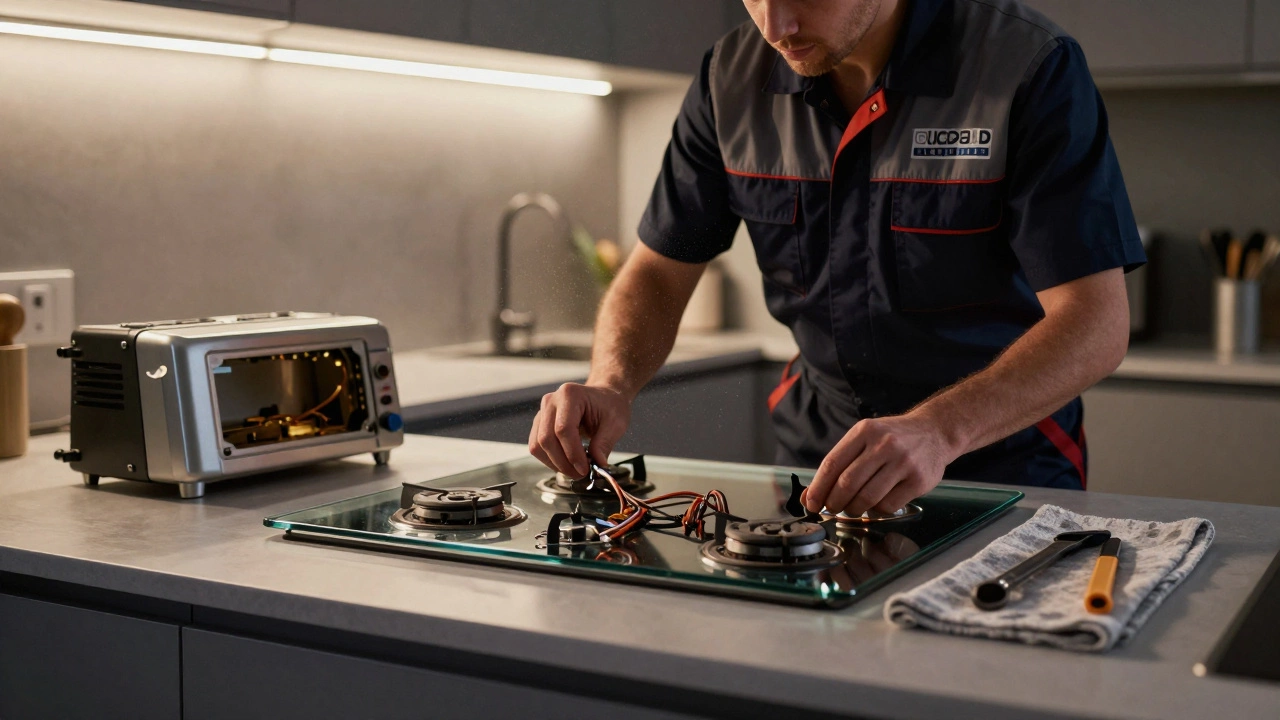
Replacing a glass hob isn’t as hard as it sounds. Most modern hobs are designed for drop-in installation. You unplug it, unscrew the mounting clips, lift it out, and slot in the new one. It takes a qualified technician about 90 minutes.
Prices vary. A basic 60cm replacement unit starts around £300. Mid-range models with induction and touch controls run £500-£800. High-end brands like Miele or Siemens can hit £1,200.
But here’s the thing: if your hob is over 8 years old, replacing just the glass isn’t always the smartest move. The control board, sensors, and wiring may be aging too. You could be paying £400 for a new top… only to have the electronics fail next year.
Should You Replace Just the Glass or the Whole Hob?
This is where most people get stuck. You find a replacement glass panel online for £120. It seems like a steal. But here’s what you might not know:
- Replacement glass panels are rarely sold to the public. Most are only available to certified repair centers.
- Even if you get one, the fit is often off by a millimeter. That means uneven pressure, stress points, and new cracks.
- Installation requires precise torque on the mounting screws. Too tight? You crack the new glass. Too loose? It rattles and breaks under heat.
- Wiring connections must be perfectly aligned. One wrong plug and you fry the control board.
Unless you’re a trained appliance technician with the right tools and manufacturer-specific manuals, you’re better off replacing the entire unit.
And if you’re replacing the whole hob, you might as well upgrade. Induction hobs are faster, safer, and use 40% less energy than traditional ceramic hobs. They also cool down instantly when you turn them off-no more accidental burns.
What to Do Right Now
If your hob is cracked today:
- Stop using it. Immediately.
- Unplug it from the wall. Don’t just turn it off.
- Keep children and pets away from the area.
- Don’t try to clean it with water or steam. Moisture will seep in.
- Take a photo of the damage. You’ll need it for insurance or quotes.
- Call two local appliance repair services. Ask for a replacement quote, not a repair quote.
Most reputable companies in Bristol offer free assessments. They’ll tell you if it’s worth replacing the hob or if your whole kitchen setup needs an upgrade.
What About Insurance?
Home insurance often covers appliance damage from accidental impact-like dropping a heavy pot. Check your policy. If you’re covered, you might only pay the excess. Some policies even cover the cost of temporary cooking solutions while you wait for the new hob.
Don’t assume it’s excluded. Many people don’t realize their policy includes appliance breakdown cover.
Why This Matters More Than You Think
A cracked glass hob isn’t just a kitchen problem. It’s a fire hazard. The UK Fire Service reports over 1,200 domestic fires each year caused by faulty cooktops. A third of those involve cracked or damaged glass hobs.
It’s not a “minor repair.” It’s a safety issue. And waiting to fix it doesn’t save money-it just increases the risk.
People think, “It’s still working.” But that’s like saying your car’s still driving even though the brake line is frayed. It might be. Until it isn’t.
Replacing a glass hob isn’t a luxury. It’s basic home safety.