
- 29 Jan 2026
- Gideon Thornton
- 0
Electric Oven Repair vs Replacement Calculator
Determine if repairing your oven is worth it based on age, repair cost, and issue type. Using the rule: If repair costs exceed 50% of a new oven price ($700), replacement is recommended.
Most people don’t think about how long their electric oven will last until it stops working. Then they’re stuck deciding whether to spend $800 on a new one or try to fix what’s broken. The truth? An electric oven doesn’t have a magic expiration date. But there are clear signs-some obvious, some hidden-that tell you when it’s time to walk away.
What’s the average lifespan of an electric oven?
On average, a well-maintained electric oven lasts between 10 and 15 years. That’s the number you’ll see from manufacturers and repair professionals alike. But this isn’t a guarantee. Some ovens die at 7 years. Others still bake cookies perfectly at 20. What makes the difference? Usage, care, and build quality.
Low-end models from big-box stores often use thinner heating elements, cheaper thermostats, and plastic components that warp under heat. These tend to fail sooner. Higher-end brands like Wolf, Thermador, or even mid-tier models from GE or Whirlpool with stainless steel interiors and solid-state controls often hit the 15-year mark-or beyond.
Here’s what real users report: A 2019 survey by Appliance Repair Network tracked 1,200 households. Those who cleaned their ovens regularly and avoided self-cleaning cycles every month got 13-16 years. Those who used the self-clean function weekly? Half of them needed repairs before year 8.
What kills an electric oven faster?
It’s not just age. It’s habits.
Self-cleaning cycles are the #1 killer. They heat the oven to over 800°F to burn off grease. That extreme heat stresses the wiring, warps the door seal, and cracks the ceramic elements. Doing it once a year? Fine. Doing it every few months? You’re basically running a mini furnace inside your kitchen. One homeowner in Ohio replaced her oven at 7 years because the door wouldn’t latch after six self-clean cycles.
Spills and moisture matter too. A spilled sugar solution that hardens over time can corrode the heating element’s contacts. Water from a leaky dishwasher or steam from boiling pots near the oven can seep into control panels and fry the circuit board. You won’t see the damage until the oven stops responding to temperature settings.
Overloading also shortens life. Stacking heavy roasting pans on racks that aren’t designed for them bends the rails. Bent rails mean uneven heat, which forces the oven to work harder. That extra strain wears out the heating elements faster.
Signs your oven is nearing the end
You don’t need to wait for total failure. Watch for these red flags:
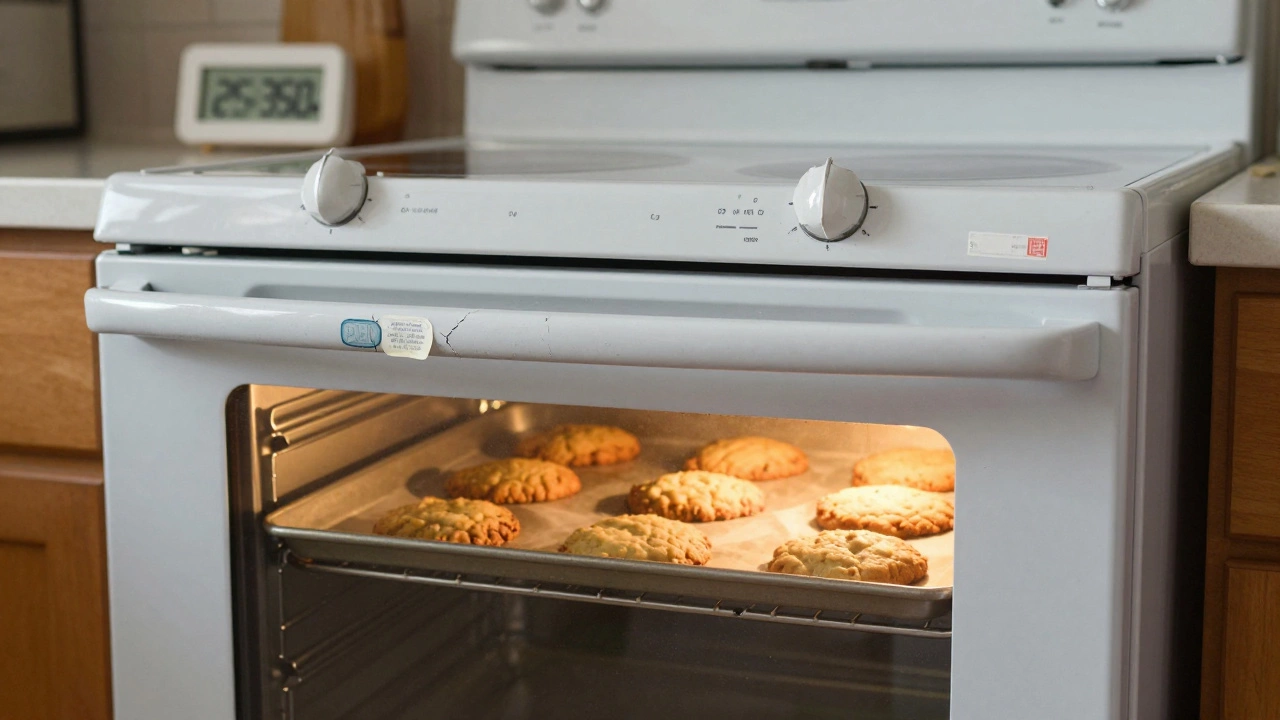
- Uneven baking - Cookies burn on one side, cakes stay raw in the middle. This isn’t just a bad recipe. It’s a failing heating element or broken thermostat.
- Longer preheat times - If it now takes 25 minutes to hit 350°F instead of 12, the element is losing power. Replacing it might cost $150. But if the control board is also failing, you’re throwing money into a sinking ship.
- Strange noises - Clicking, buzzing, or humming when the oven isn’t on? That’s usually the relay switch or thermostat failing. It’s not dangerous, but it’s a sign of aging electronics.
- Display errors - Flickering, random codes like “F3” or “E1,” or a blank screen. These aren’t always fixable. Many modern ovens use integrated control boards that cost more to replace than a new oven.
- Door doesn’t seal - If you can see light around the door when it’s closed, the gasket is cracked. That lets heat escape, forcing the oven to run longer and hotter. It also makes your energy bill spike.
Repair vs. Replace: When does it make sense?
Here’s a simple rule: If repair costs more than half the price of a new oven, walk away.
Let’s say your oven is 12 years old. A new mid-range model costs $700. If the repair is $350 or more, it’s not worth it. Why? Because even if you fix it, the next part is likely to fail soon. You’re buying time, not value.
Common repairs and their typical costs:
| Repair | Average Cost | When It’s Worth It |
|---|---|---|
| Heating element replacement | $100-$200 | Only if oven is under 8 years old |
| Thermostat replacement | $150-$250 | Only if oven is under 10 years old |
| Control board replacement | $300-$500 | Rarely worth it - buy new instead |
| Door gasket replacement | $50-$80 | Always worth it - easy fix |
There’s one exception: If your oven is part of a built-in kitchen suite and replacing it means tearing out cabinets or rewiring, then a repair might make sense-even if it’s expensive. But that’s rare. Most modern ovens are plug-in or use standard 240V circuits.
How to make your oven last longer
Simple habits add years:
- Wipe spills right away - don’t let them bake on.
- Use the self-clean cycle no more than once a year - and only if the oven is empty and not greasy.
- Don’t slam the door. The latch and seal are fragile.
- Check the door seal annually. If it’s cracked or brittle, replace it ($20-$40).
- Keep the area around the oven dry. No leaking pipes or damp towels on the counter.
- Don’t overload racks. Use the middle rack for most baking.
These aren’t fancy tricks. They’re basic maintenance - like changing your car’s oil. Skip it, and everything breaks sooner.
What to look for in a new oven
If you’re replacing it, here’s what actually matters:
- Heating elements - Look for dual elements (top and bottom) with thick, visible coils. Thin wires burn out faster.
- Thermostat accuracy - Models with digital temperature probes (not just dials) are more reliable. Brands like Bosch and KitchenAid lead here.
- Warranty - At least 1 year on parts, 5 years on the heating element. Avoid no-warranty models.
- Self-clean options - Steam clean is gentler than high-heat. If you must have self-clean, pick steam.
- Energy Star rating - Newer ovens use 15-20% less energy. That saves money over time.
Don’t get tricked by smart features. Wi-Fi connectivity, voice control, and camera monitoring don’t make the oven cook better. They just make it more expensive.
When to call a pro - and when not to
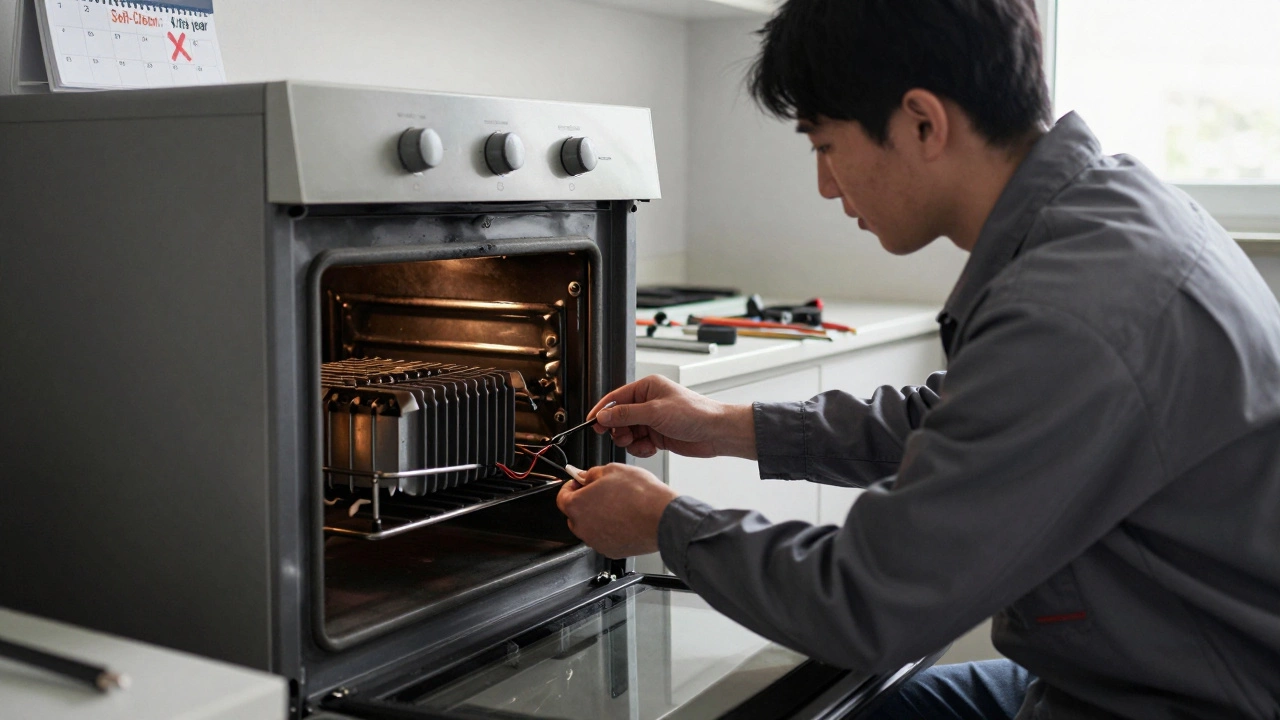
Some repairs you can do yourself: replacing the door gasket, cleaning the heating element, resetting the breaker. YouTube tutorials make this easy.
Don’t try to fix:
- Control boards - they’re complex and dangerous to handle without training.
- Wiring issues - if you smell burning plastic or see charred wires, turn off the circuit and call a licensed technician.
- Gas leaks - even if it’s electric, some ovens have gas igniters. Never ignore that smell.
Most repair techs charge $75-$125 just to show up. If they say the oven is "on its last legs," take them seriously. They’ve seen hundreds. They know the patterns.
Final advice: Track your oven’s age
Write the purchase date on a sticker and stick it inside the oven door. That way, when it starts acting up, you’ll know if it’s 9 years old or 16. Age is your best clue.
There’s no shame in replacing an oven. Appliances aren’t meant to last forever. But knowing the signs helps you avoid panic buys and unnecessary repairs. A 12-year-old oven that still heats evenly? Keep it. A 7-year-old oven that takes 30 minutes to preheat and sparks when you turn it on? Replace it. Simple as that.
Is it worth repairing a 10-year-old electric oven?
It depends on the repair. Replacing a heating element or thermostat at this age is usually worth it if the cost is under $200. But if the control board or wiring is failing, spending $300+ is rarely smart. At 10 years, you’re nearing the end of its useful life - and other parts will likely fail soon after.
Can an electric oven last 20 years?
Yes, but it’s rare. Ovens that last 20 years are usually high-quality models (like Viking or Thermador), used lightly, cleaned carefully, and never subjected to frequent self-clean cycles. Most homeowners who get 20 years out of an oven are the same people who wipe spills the moment they happen and avoid slamming the door.
Why does my oven take so long to preheat?
A slow preheat usually means one of two things: the heating element is weakening, or the thermostat is inaccurate. Over time, elements lose resistance and can’t generate heat as efficiently. A faulty thermostat might not signal the element to turn on long enough. Both are signs of aging - not user error.
Does using the self-clean feature shorten oven life?
Absolutely. Self-clean cycles heat the oven to over 800°F, which stresses the wiring, warps the door seal, and cracks ceramic components. Doing it once a year is fine. Doing it every month will cut your oven’s life in half. Use steam clean or manual wiping instead.
Should I replace my oven if it’s still working but old?
Only if you want better efficiency, more features, or peace of mind. If your oven heats evenly, doesn’t have safety issues, and doesn’t cost you extra on your electric bill, there’s no urgent need to replace it. But if you’re spending $150+ a year on repairs or your energy bill is rising, it’s time to upgrade.