- 1 Feb 2026
- Gideon Thornton
- 0
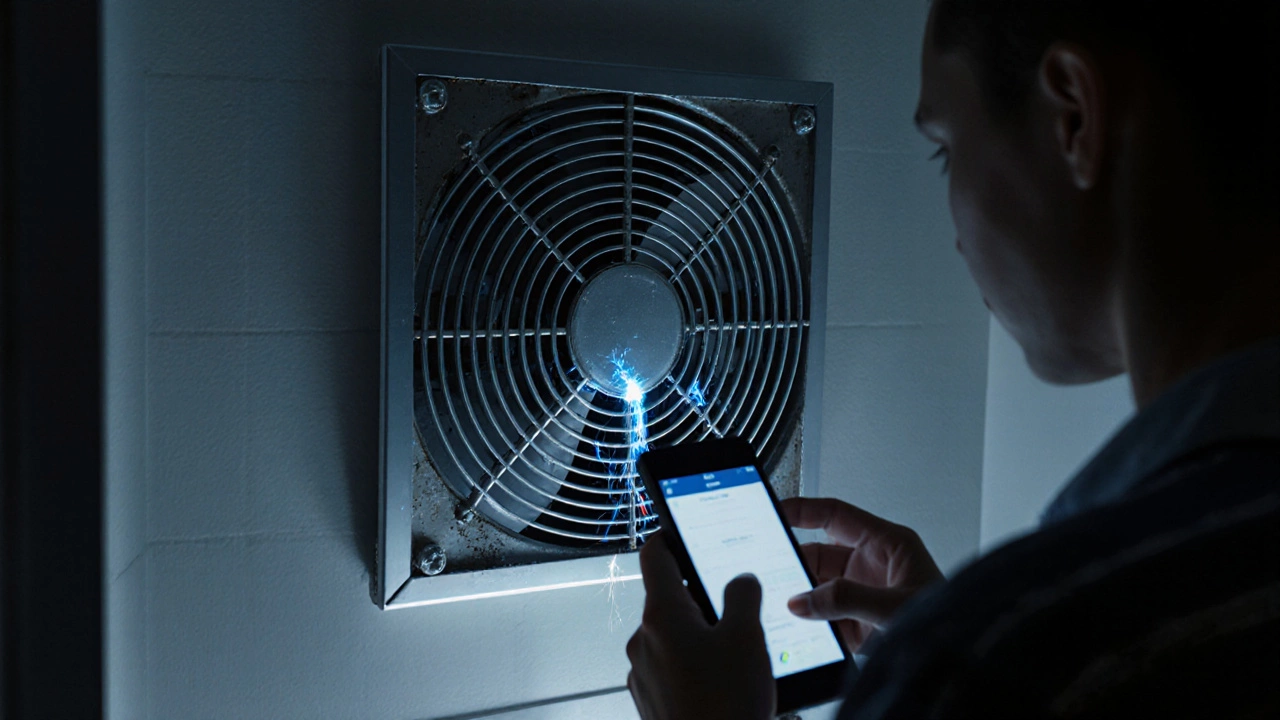
Ever turned on your extractor fan and heard nothing but silence? Or worse - a loud grinding noise that sounds like it’s about to give up for good? If you’re wondering whether an electrician is the right person to call, you’re not alone. Many people assume fixing a broken extractor fan is just a quick electrical job. But it’s not always that simple.
What Exactly Does an Extractor Fan Do?
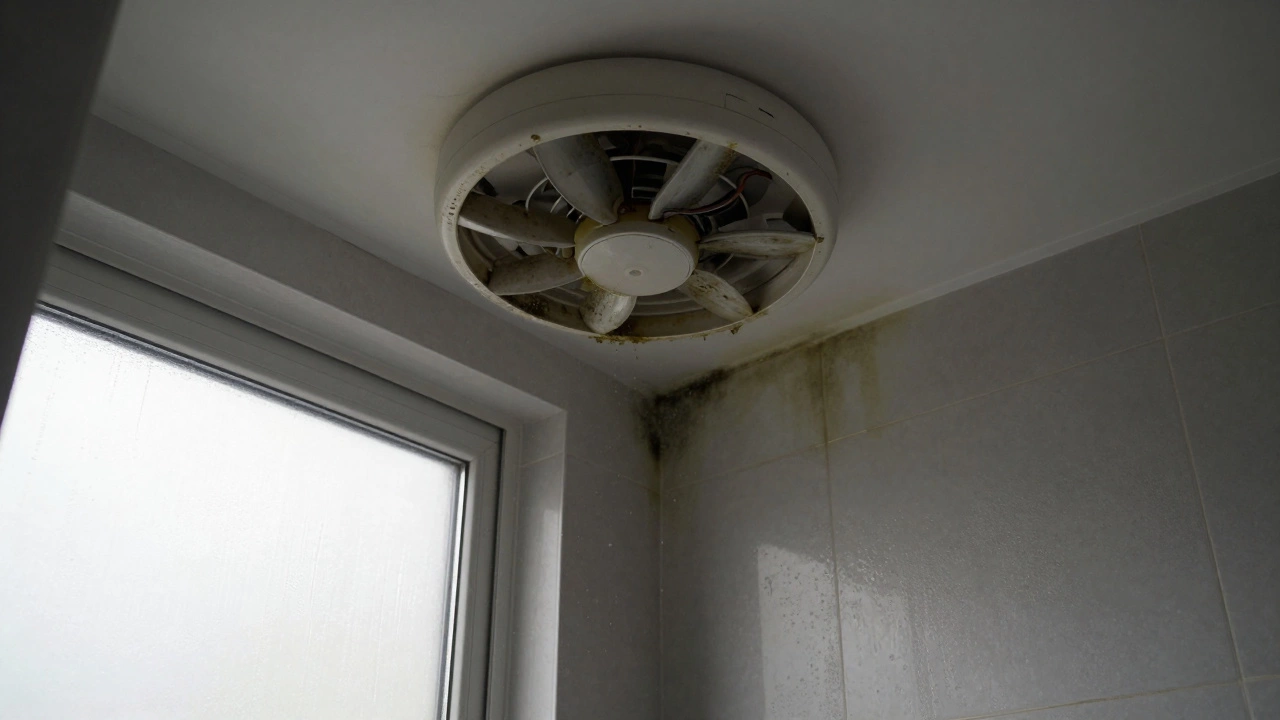
Extractor fans aren’t just there to make your bathroom feel less steamy after a shower. They pull out moist air, reduce condensation, stop mould from growing on walls and ceilings, and get rid of cooking smells in the kitchen. In the UK, building regulations actually require them in new bathrooms and kitchens - so they’re not optional. A broken fan isn’t just annoying; it can lead to long-term damage to your home.
Most extractor fans have three main parts: the motor, the blade assembly, and the ducting. The motor is what spins the blades. The blades push air out. And the ducting is the pipe that carries that air to the outside. When something goes wrong, it’s usually one of these three.
When an Electrician Is the Right Choice
If your extractor fan won’t turn on at all, and you’ve checked the switch and the circuit breaker, the problem is likely electrical. That’s where an electrician comes in. They can test the wiring, check if power is reaching the fan, and replace faulty switches or fused connections. In older homes, wiring can be outdated or corroded. A qualified electrician will spot this before it becomes a fire risk.
Also, if your extractor fan is wired into the lighting circuit - which is common in bathrooms - and the light works but the fan doesn’t, that’s a sign the fan’s separate circuit has failed. Electricians know how to trace these circuits without tearing apart your walls. They’ll also make sure any new installation meets Part P of the Building Regulations, which covers electrical safety in dwellings.
When You Need Someone Else
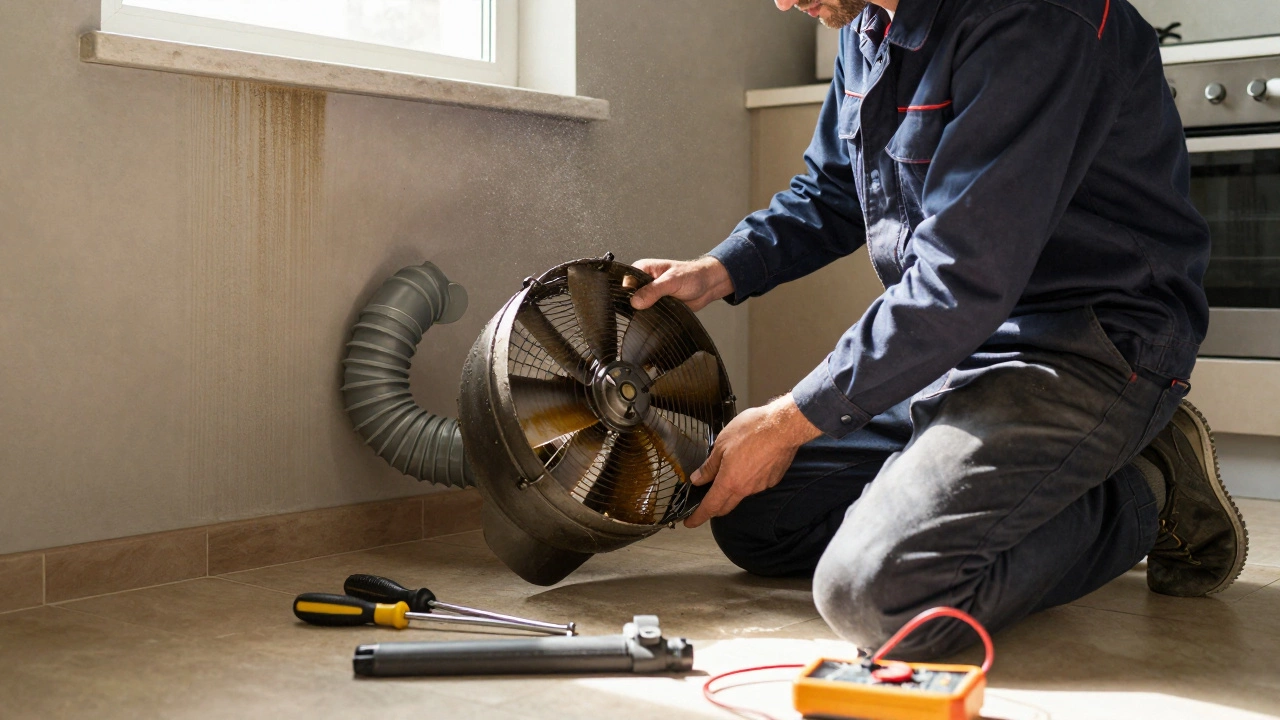
But here’s the catch: not every extractor fan problem is electrical. If the fan is making a rattling noise, spinning slowly, or vibrating badly, the issue is probably mechanical. The motor bearings might be worn out. The blades could be clogged with grease and dust. Or the ducting might be crushed, blocked, or disconnected.
These are the jobs for a ventilation technician or an appliance repair specialist. They know how to dismantle the fan unit, clean the blades, replace the motor, or reconnect the ducting. An electrician might not have the tools or experience to do this. And if they try, they might end up replacing the whole unit unnecessarily - which costs more than a simple repair.
In Bristol, I’ve seen too many cases where homeowners paid an electrician £150 just to confirm the fan was dead - then had to call someone else to fix the actual problem. The electrician didn’t have the right parts or training. It’s not their fault - they just weren’t the right person for the job.
How to Tell What’s Wrong
You don’t need to be an expert to figure out what’s going on. Here’s how to do a quick DIY check:
- Turn off the power at the circuit breaker.
- Remove the fan cover. Look for thick layers of grease or dust on the blades - especially in kitchens.
- Try spinning the blades by hand. If they’re stiff or don’t turn smoothly, the motor bearings are likely seized.
- Check the ducting behind the fan. Is it kinked? Has it come loose from the wall?
- Turn the power back on and test the switch. If the fan hums but doesn’t spin, the motor is probably dead.
If you’re not comfortable doing this, don’t force it. But knowing these signs helps you ask the right questions when you call someone.
What’s the Cost Difference?
Electricians in the UK typically charge between £50 and £80 per hour. A simple electrical fault - like a blown fuse or faulty switch - might take 30 minutes to fix. That’s £30 to £50.
But if the motor needs replacing, a ventilation specialist will charge £80 to £150 for the whole job, including parts. A new extractor fan unit costs between £40 and £120, depending on the model. A good quality one with a timer and humidity sensor can last 10-15 years.
Here’s the thing: if you just replace the motor, you might save £50. But if the housing is cracked or the ducting is old, it’s better to replace the whole unit. Cheap repairs often lead to repeat calls.
What to Look for in a Technician
Not all handymen are created equal. Here’s what to check before you hire anyone:
- Are they registered with NICEIC or ELECSA? That means they’re qualified to do electrical work safely.
- Do they carry spare parts? A good technician won’t need to make a second trip.
- Do they offer a warranty? At least 12 months on parts and labour is standard.
- Do they handle both electrical and mechanical issues? Some companies do both - that’s ideal.
Ask if they’ve worked on extractor fans before. If they say, “I’ve done a few,” that’s not enough. Look for someone who says, “I replace motors and clean ducting weekly.”
Why This Matters for Your Home
A faulty extractor fan might seem like a small thing. But in the UK’s damp climate, it’s one of the most common causes of black mould. Mould isn’t just ugly - it can trigger asthma, allergies, and respiratory problems. The Health and Safety Executive says poor ventilation contributes to over 200,000 cases of damp-related illness each year.
Fixing your fan isn’t just about comfort. It’s about health. And it’s about protecting your property. Water damage from condensation can rot floorboards, peel paint, and ruin insulation. That kind of repair costs thousands.
What If You Just Ignore It?
Some people think, “It’s just a fan. I’ll open a window.” But in winter, that’s not practical. And in a sealed modern home, opening a window doesn’t move enough air. You’re just trading one problem for another - cold air and high heating bills.
Plus, if you ever sell your home, a broken extractor fan will show up on a survey. Buyers will ask for repairs or knock £1,000-£2,000 off the price. It’s not worth the risk.
Final Advice
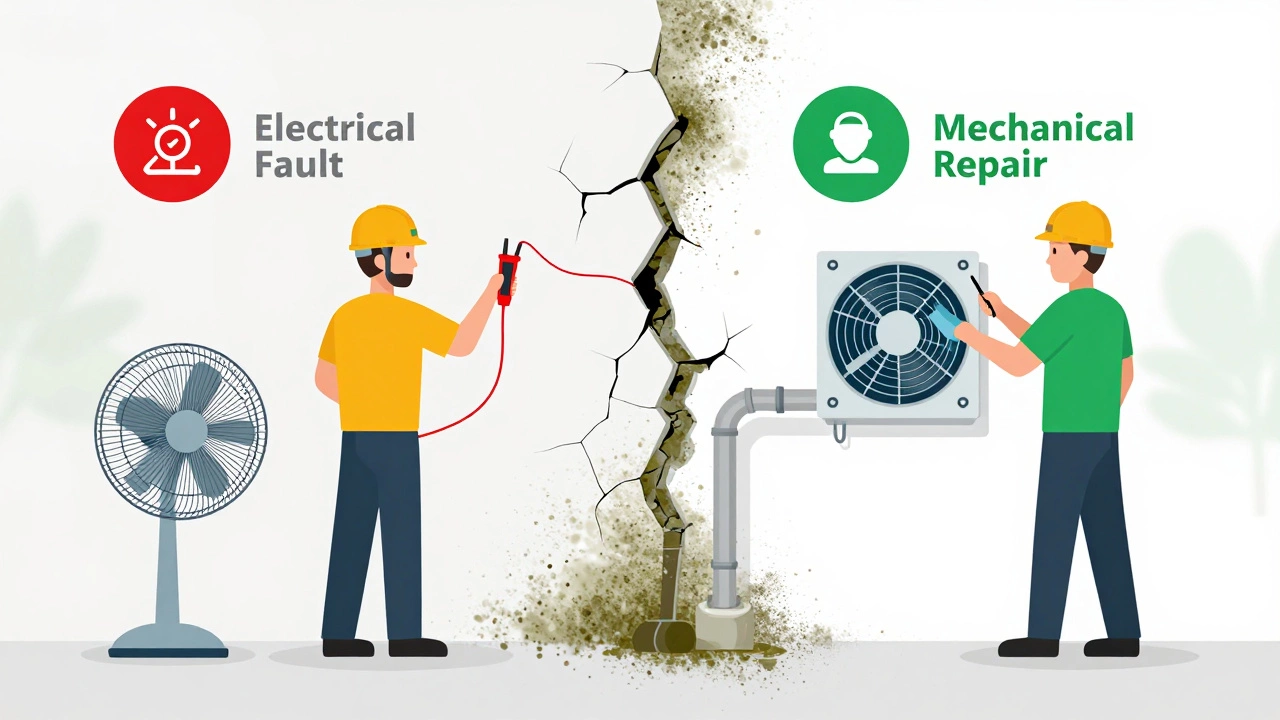
So, do electricians fix extractor fans? Sometimes. But only when the problem is electrical. For everything else - the noise, the slow spin, the grease buildup - you need someone who understands ventilation systems.
Best approach? Call a company that does both electrical and mechanical repairs. Or if you’re not sure, call a ventilation specialist first. They can tell you whether it’s a wiring issue or a motor problem - and charge you only for what’s needed.
Don’t let a broken fan turn into a bigger, costlier problem. Fix it right the first time.
Can I fix my extractor fan myself?
You can do basic cleaning - like removing grease from the blades - if the power is off. But if you need to replace the motor, check wiring, or reconnect ducting, it’s best to leave it to a professional. DIY electrical work in bathrooms is illegal in the UK without certification under Part P. Mistakes can cause shocks or fires.
How long does an extractor fan last?
A good-quality extractor fan lasts between 10 and 15 years. Cheaper models, especially those under £30, often fail in 3 to 5 years. Regular cleaning helps extend life. If your fan is over 10 years old and starting to make noise, replacement is usually cheaper than repair.
Do extractor fans need to be vented outside?
Yes. In the UK, building regulations require extractor fans in bathrooms and kitchens to vent directly outside. Recirculating fans - which just filter air and blow it back into the room - don’t meet these rules. They’re not effective at removing moisture and can make mould worse.
Why does my extractor fan turn on by itself?
This usually means it’s connected to a humidity sensor or a timer. Many modern fans turn on automatically when moisture levels rise - even if you didn’t flip the switch. It’s a feature, not a fault. Check the manual or look for a small sensor on the unit. If it’s turning on randomly and you didn’t install one, there may be a wiring fault - call an electrician.
Is it cheaper to repair or replace an extractor fan?
If the motor is dead and the unit is over 8 years old, replacement is almost always cheaper. Replacing just the motor costs £40-£70, plus labour. A new fan unit costs £50-£120, and installation is £80-£150. You get a quieter, more efficient fan with a warranty. Repairing an old unit often leads to another breakdown within a year.