
- 12 Feb 2026
- Gideon Thornton
- 0
Dryer Repair Cost Calculator
Enter your dryer details to see if repair makes sense.
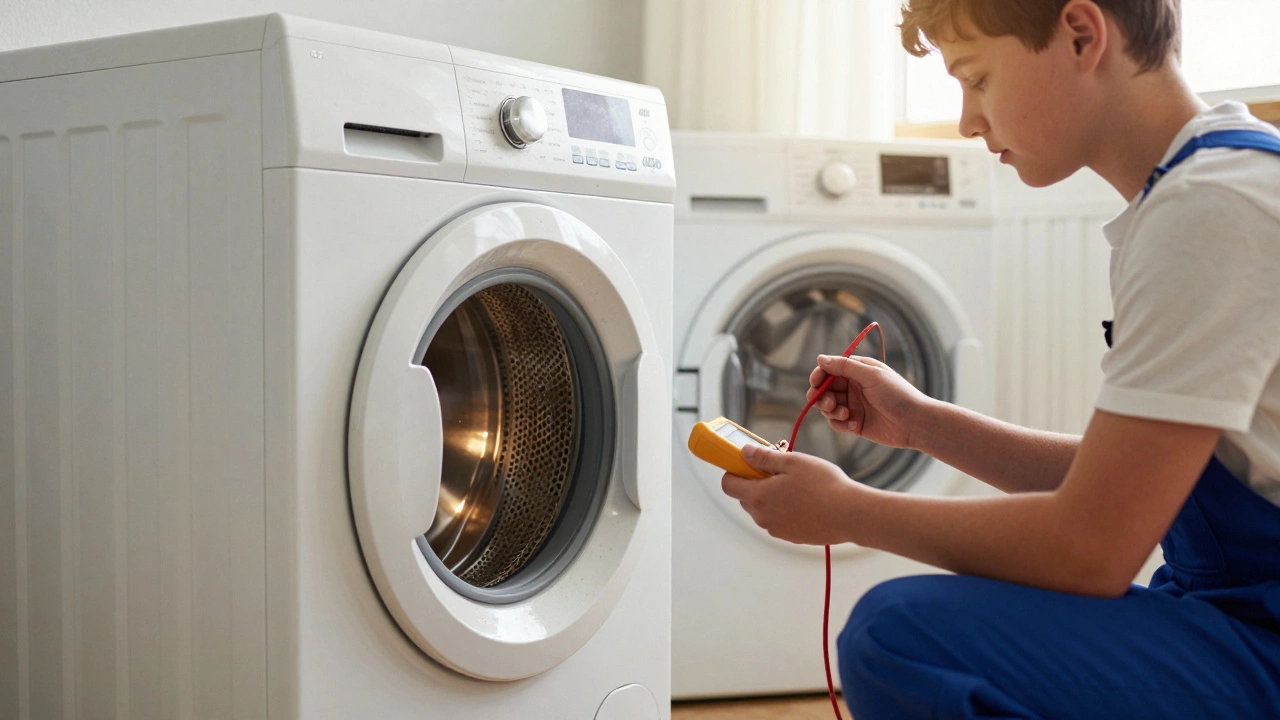
Let’s cut to the chase: if your tumble dryer is ten years old and it’s acting up, should you fix it-or just buy a new one? There’s no single answer, but there are clear signs that tell you whether it’s worth spending money on repairs-or if you’re just throwing cash down the drain.
How long do dryers really last?
Most tumble dryers are built to last between 10 and 12 years. That’s not a guess-it’s what manufacturers design for, and what repair technicians in Bristol see every week. A dryer that’s hit ten years is at the edge of its expected life. Not broken yet, but not new either. Think of it like a car with 120,000 miles on it. It still runs, but you start noticing more frequent issues.
There are two big factors that shorten a dryer’s life: heavy use and poor maintenance. If you run it daily, especially with lint buildup in the vent or a clogged filter, you’re putting extra strain on the motor and heating element. That’s why dryers in homes with kids or large families often fail earlier than those in quiet households.
What’s broken? The repair cost tells you everything
Not all repairs are created equal. Some fixes cost £50. Others cost £200-and still leave you with a ten-year-old machine. Here’s what to look for:
- Heating element failure - Common. Costs £80-£120 to replace. If the dryer runs but doesn’t heat, this is likely the culprit. Easy fix.
- Thermal fuse blown - Cheap fix. £30-£50. Often caused by blocked vents. Fix the vent, replace the fuse, and you’re good.
- Drum bearing noise - Loud rumbling or grinding? That’s the drum support bearing. Replacement costs £100-£150. You’ll notice the noise gets worse over time.
- Motor failure - If the drum won’t spin at all, the motor might be dead. Replacement is £150-£220. That’s more than half the price of a new mid-range dryer.
- Control board failure - The dryer turns on but won’t start cycles. Modern dryers have complex electronics. Replacing the board? £180-£250. And it might fail again in a year.
Rule of thumb: if the repair cost is more than 50% of what a new dryer costs, walk away. A decent new tumble dryer in the UK ranges from £300 to £500. So if you’re being quoted £175 or more, you’re already close to the tipping point.
Energy use: the hidden cost of an old dryer
Here’s something most people forget: older dryers waste electricity. A 10-year-old model likely uses 5-7 kWh per cycle. Newer A-rated dryers use 2-3 kWh. That’s a 60% drop in energy use.
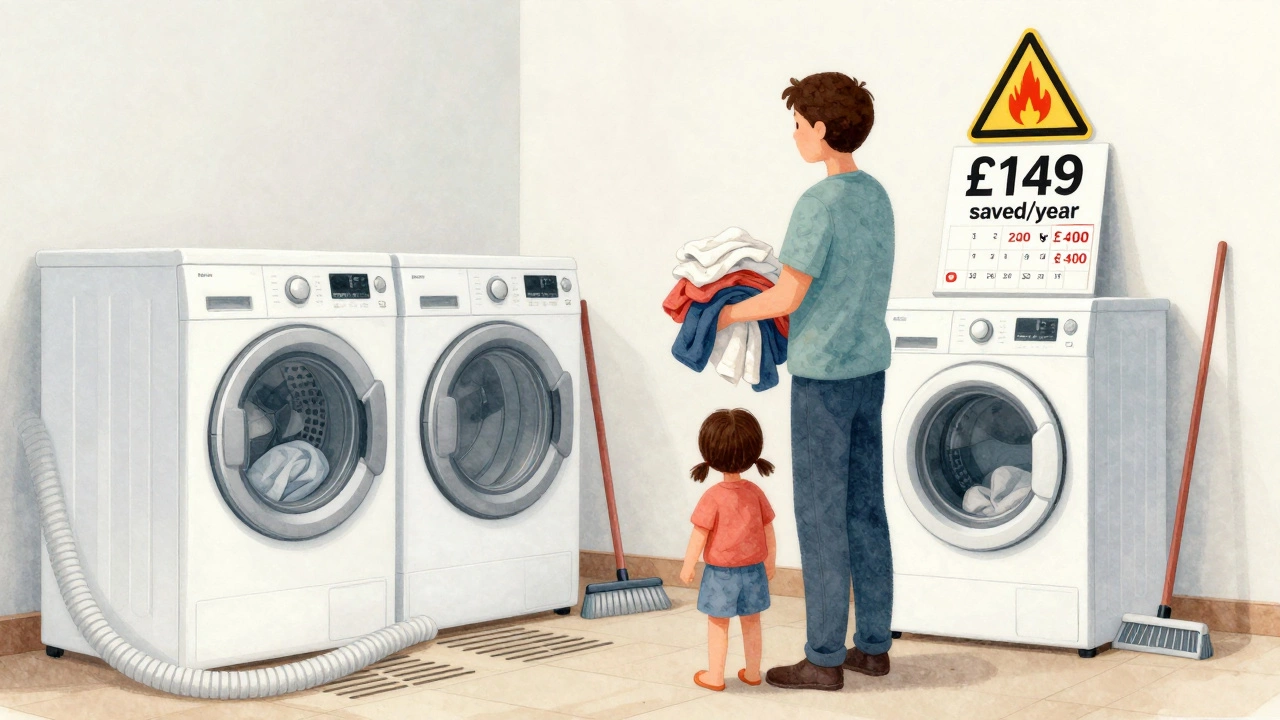
Let’s say you dry five loads a week. At current UK electricity rates (around 24p/kWh as of early 2026), your old dryer costs you £6.72 a week. That’s £349 a year. A new efficient dryer? Just £200 a year. You save £149 a year-just on electricity.
That means if you spend £200 to fix your dryer, you’ll break even on energy savings in under a year and a half. After that? Pure savings. And if you’re on a fixed tariff or plan to stay in your home for another 5 years? The math gets even better.
Warranty and reliability: what you’re not getting
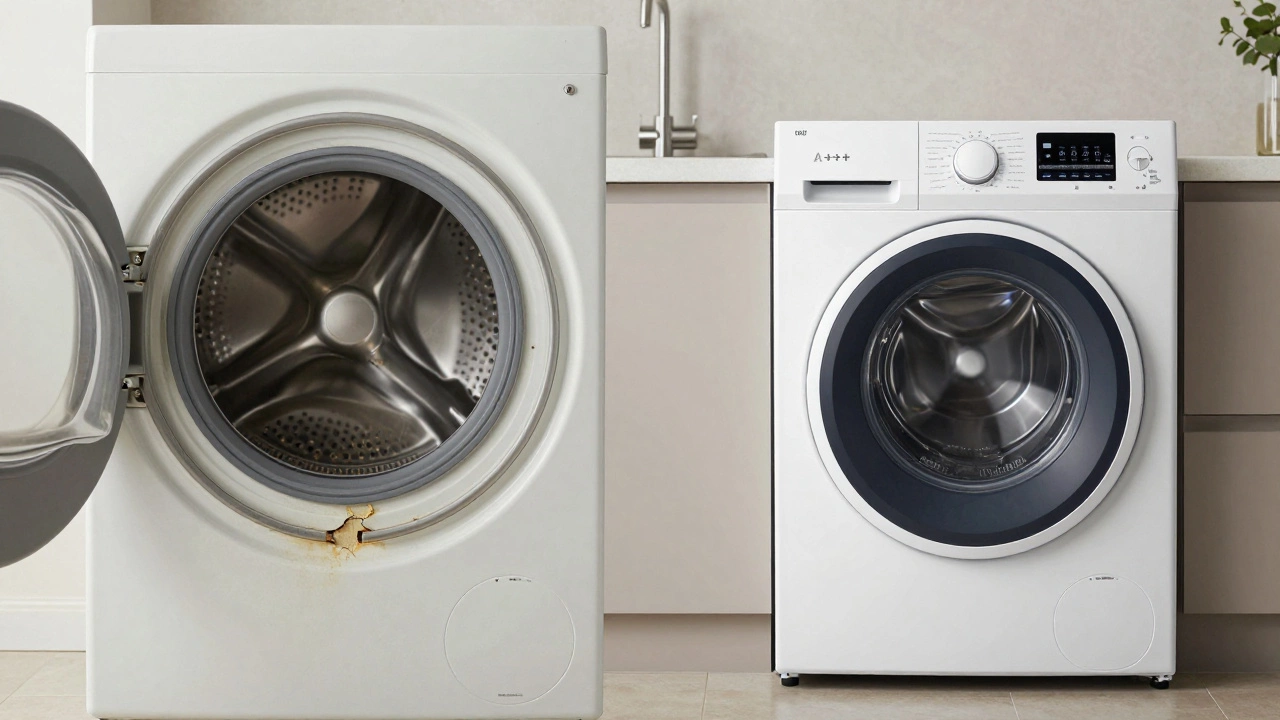
A new dryer comes with at least a one-year manufacturer warranty. Some brands offer two or even three years. Repairs on an old dryer? You get maybe 90 days from a technician-sometimes none at all. If the same part fails again, you pay again. No guarantees.
Also, spare parts for older models are harder to find. Brands like Hotpoint, Bosch, or Samsung stop making parts for dryers after 7-10 years. If your dryer breaks again in six months, you might not be able to fix it at all. You’ll be stuck.
When you should fix it
Fix it if:
- The repair is under £100
- The dryer still heats properly and spins without noise
- You’re on a tight budget right now
- You’re planning to move in the next year
- You’ve cleaned the vents and filter regularly
For example, if your dryer stopped heating and you find out it’s just a £40 thermal fuse-and the vent is clean-go ahead. It’s a smart, low-risk fix.
When you should replace it
Replace it if:
- The repair costs more than £150
- The drum is noisy, or it’s taking twice as long to dry clothes
- You’ve had two or more repairs in the last two years
- The control panel is flickering or showing error codes
- You’re using it for more than 4 loads a week
Also, if you’ve been ignoring lint buildup or haven’t cleaned the vent in over a year, replacing the dryer is safer. A clogged vent is a fire hazard. No repair fixes that risk.
What to look for in a new dryer
Don’t just grab the cheapest one. Look for:
- A-rated energy rating - Saves money long-term
- Reverse tumble - Reduces creasing and wear on clothes
- Moisture sensor - Stops the cycle when clothes are dry. No over-drying.
- Easy-to-clean filter - Saves time and prevents overheating
- 2-year warranty - At least
Brands like Miele, Bosch, and Samsung have proven reliability in UK homes. Avoid no-name brands from discount stores-they’re often made with cheaper parts and lack support.
Final call: Is it worth fixing?
Here’s your quick decision guide:
| Condition | Fix? | Replace? |
|---|---|---|
| Repair cost under £100 | ✓ Yes | ✗ No |
| Repair cost over £150 | ✗ No | ✓ Yes |
| Noisy drum or motor | ✗ No | ✓ Yes |
| Runs slowly or over-dries | ✗ No | ✓ Yes |
| Has had 2+ repairs in 2 years | ✗ No | ✓ Yes |
| Dirty vent or filter | ✗ Clean first | ✓ Replace if repeated |
If you’re still unsure, ask yourself this: if your dryer died tomorrow, would you be okay waiting a week to buy a new one? If the answer is yes, then it’s probably time to let it go.
Is it safe to keep using a 10-year-old dryer?
It can be, if it’s well-maintained. But older dryers are more likely to have worn-out wiring, clogged vents, or faulty thermostats-all fire risks. If you notice burning smells, excessive heat on the outside, or lint buildup around the machine, stop using it immediately. Regular cleaning helps, but safety isn’t guaranteed after ten years.
Can I fix my dryer myself?
Some repairs are DIY-friendly. Replacing a thermal fuse, cleaning the vent, or swapping a lint filter are simple. But anything involving the motor, drum bearings, or control board? Leave it to a professional. Mistakes can damage the machine further or create electrical hazards. Always unplug the dryer before attempting any repair.
Do new dryers really save money?
Yes, especially over time. A new A-rated dryer can cut your drying costs by 50-60%. If you do 5 loads a week, you’ll save £150+ a year on electricity. That adds up fast. Plus, modern dryers dry clothes faster, which means less wear on your fabrics and lower laundry bills.
What if I can’t afford a new dryer right now?
If you’re short on cash, fix the cheapest issue first-like the thermal fuse or a clogged vent-and use the dryer sparingly. Hang clothes to dry when you can. Use a dehumidifier in the bathroom to speed up drying. These stopgaps can buy you time. But don’t delay replacing it forever. An old, overworked dryer is more likely to break suddenly, leaving you without options.
Are extended warranties worth it for new dryers?
Usually not. Most breakdowns happen in the first year, which is already covered by the manufacturer’s warranty. After that, repairs are often cheaper than extended warranty costs. Save your money unless you’re buying a premium model with complex electronics-then consider it.
Next steps
If you’re thinking about replacing your dryer, start by checking energy ratings. Look for models with the A+++ label. Compare prices on retailer sites like John Lewis, Currys, or Amazon. Many offer free delivery and old appliance removal. If you’re fixing it, clean the vent first-it fixes 30% of common problems for free. Then call a local technician for a quote. Don’t accept a price without knowing what part is failing. Ask for the part number and the cost of the replacement. If it’s over £150, start shopping for a new one.