- 22 Jan 2026
- Gideon Thornton
- 0
Oven Replacement Cost Calculator
Oven Replacement Calculator
Determine if repairing your 15-year-old oven is smarter than replacing it
You turn on your oven and it takes forever to heat up. The door doesn’t seal right. The control panel flickers. You’ve had this oven for 15 years. It’s not broken yet-but is it worth fixing?
How long do electric ovens actually last?
Most electric ovens are built to last between 13 and 18 years. That’s the average. If yours is 15, you’re right in the middle of its expected life. That doesn’t mean it’s about to die. It means you’re past the sweet spot where repairs make sense financially.
Manufacturers don’t design ovens to last forever. They design them to last long enough that you’ll buy a new one before it completely falls apart. A 15-year-old oven has already outlasted the warranty, the manufacturer’s recommended service window, and most people’s patience. It’s not a failure-it’s just aging.
What’s the cost of repair vs. replacement?
Let’s say your oven’s heating element has gone out. Replacing it costs £80-£150, including labour. That’s not bad-until you realise the control board might be next. Or the thermostat is failing. Or the door hinge is worn. These aren’t rare issues in older ovens. They’re expected.
A new mid-range electric oven costs between £400 and £700. That sounds steep. But here’s what you’re not counting: energy bills. A 15-year-old oven uses up to 30% more electricity than a modern one. That’s £50-£80 extra a year on your utility bill. In five years, that’s £250-£400 in wasted power. Add in repair costs, and you’re already close to the price of a new oven.
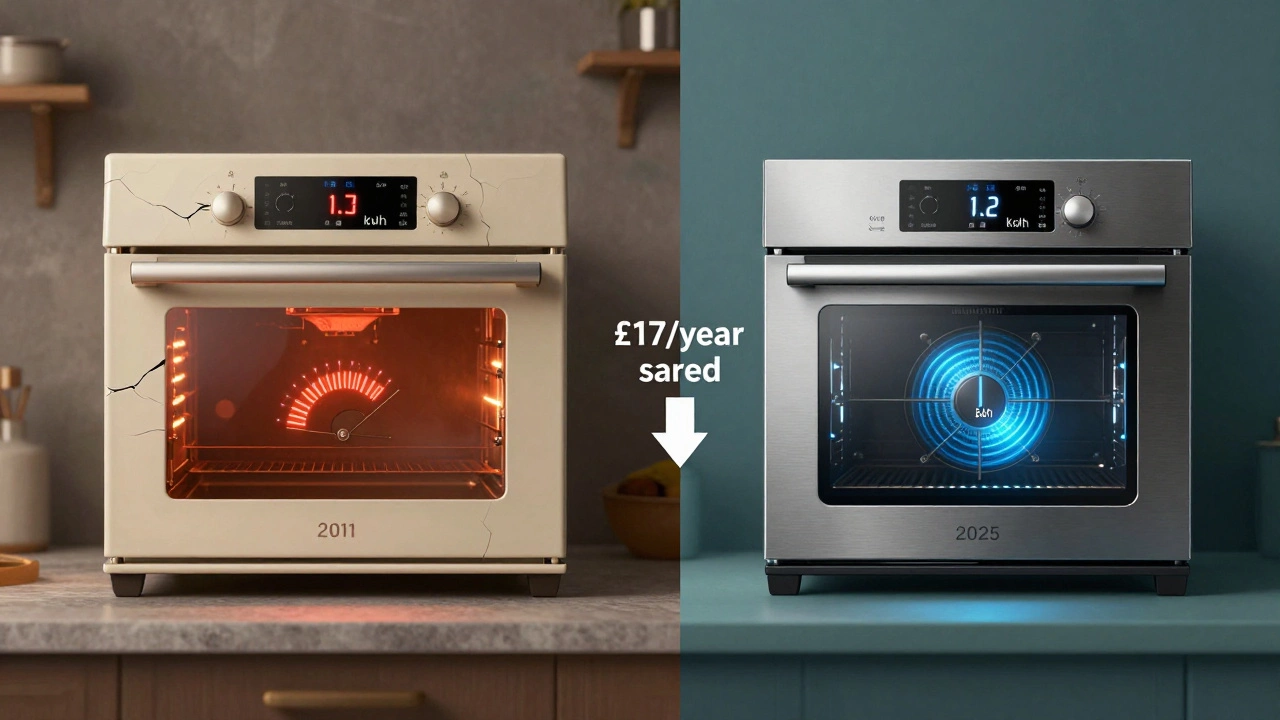
And don’t forget efficiency ratings. New ovens from 2024 onwards must meet stricter EU energy standards. They heat faster, hold temperature better, and use less power. That’s not marketing-it’s measurable. A 2025 model uses 1.2 kWh per hour at 180°C. Your 2011 model? Probably 1.7 kWh. That’s 40% more energy. Over 100 uses a year? That’s 50 kWh wasted. At 34p per kWh (UK average in 2026), that’s £17 a year. Just for baking cookies.
What repairs are worth it-and which aren’t?
Some fixes make sense. Others are money down the drain.
- Worth fixing: Heating element, oven light, door seal, thermostat calibration. These are simple, cheap, and don’t signal deeper failure.
- Not worth fixing: Control board, timer module, touchpad, internal wiring harness. These are complex, expensive (£200+), and often mean other parts are close to failing too.
If your oven has a digital display that’s fading, or buttons that don’t respond, you’re looking at a control board replacement. That’s almost never worth it. The board is the brain of the oven. If it’s failing, the whole system is tired. Replacing it is like putting a new heart in a 15-year-old car. It might work-but the engine’s worn out, the suspension’s rattling, and the paint’s peeling.
Is your oven safe?
Older ovens don’t always have modern safety features. No child lock? No automatic shut-off? No overheat protection? That’s not just inconvenient-it’s risky.
In 2023, the UK Fire and Rescue Service reported over 1,200 home fires linked to faulty ovens. Many involved appliances older than 12 years. Older wiring can overheat. Faulty thermostats can cause runaway temperatures. Door seals that don’t close properly let heat escape and can ignite nearby cabinets.
Modern ovens have sensors that shut down if they detect abnormal heat. They lock the door during self-clean cycles. They beep when they’re done. Your 15-year-old oven? It doesn’t know when it’s too hot. It just keeps heating.
What you’ll gain by replacing it
Replacing your oven isn’t just about fixing a broken appliance. It’s about upgrading your kitchen.
- Smart features: Wi-Fi control, remote preheating, recipe suggestions. Not essential-but nice.
- Even cooking: New convection fans and better insulation mean no more undercooked chicken or burnt pastry.
- Easier cleaning: Self-clean cycles with catalytic liners or steam cleaning. No more scrubbing for hours.
- Resale value: A modern oven adds to your home’s appeal. Buyers notice kitchens. A 15-year-old oven looks dated. A sleek, energy-efficient one looks cared for.
And if you’re on a low-income energy support scheme, upgrading to an energy-efficient oven could make you eligible for additional grants. The UK government’s Energy Company Obligation (ECO4) scheme still offers support for low-income households replacing inefficient appliances in 2026.
When to walk away
Here’s the simple rule: if a repair costs more than 50% of the price of a new oven, walk away. That’s not a suggestion-it’s a financial rule of thumb.
So if your oven needs a £300 control board, and a new one costs £500, don’t fix it. You’re paying 60% of a new oven’s price for a 15-year-old appliance that’s already used up most of its life.
Also, if you’ve had to repair it twice in the last year, it’s time. One repair? Maybe a fluke. Two? That’s a pattern. Your oven is winding down.
What to look for in a new oven
You don’t need the most expensive model. Just one that fits your needs.
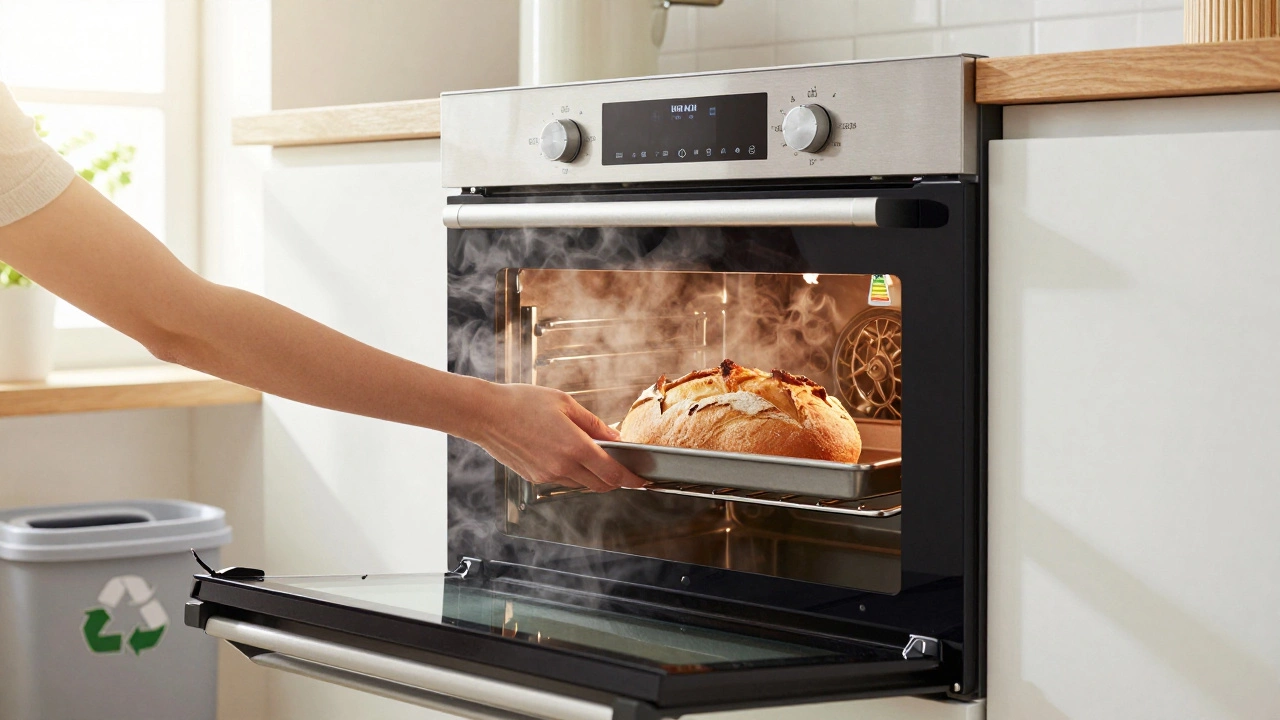
- Choose a 60cm wide oven if you’re replacing a standard UK size.
- Look for an A-rated energy label (or better). Anything below C is not worth it in 2026.
- Self-cleaning? Only if you hate scrubbing. Steam clean is gentler and cheaper to run.
- Check the warranty. At least two years. Some brands offer five.
- Buy from a retailer that offers free removal of your old appliance. Many do.
Brands like Bosch, Neff, and Hotpoint offer reliable mid-range models around £500. You can find sales in January and September. Don’t rush-but don’t wait either. Stock is tight for some models in early 2026.
Final decision: repair or replace?
Ask yourself these three questions:
- Has the oven cost you more than £200 in repairs over the last two years?
- Do you notice your food cooking unevenly or taking longer than it used to?
- Would you feel safer, happier, or more efficient with a new one?
If you answered yes to two or more-you’re already halfway to a new oven.
Repairing a 15-year-old oven feels like the frugal choice. But it’s not. It’s the expensive habit. You’re paying for outdated tech, higher bills, and the stress of waiting for the next breakdown.
Replacing it isn’t a luxury. It’s a smart upgrade. One that saves you money, time, and peace of mind.
Is it safe to keep using a 15-year-old oven?
It can be, if it’s working properly. But older ovens lack modern safety features like automatic shut-off, child locks, and overheat sensors. If you notice flickering lights, strange smells, or uneven heating, it’s a sign the internal components are failing. These aren’t just inconveniences-they’re fire risks. The UK Fire Service reports that 30% of oven-related fires involve appliances over 12 years old.
How much does it cost to repair an old oven?
Simple repairs like replacing a heating element or door seal cost £80-£150. More complex fixes-like a control board or thermostat-can run £200-£350. Labour adds £50-£80. If you’ve had two or more repairs in the past year, you’re likely spending more than you’d save by keeping it.
Can I get a grant to replace my old oven?
Yes, if you qualify for government support. The UK’s ECO4 scheme helps low-income households replace inefficient appliances with energy-efficient ones. You may be eligible if you receive benefits like Universal Credit, Pension Credit, or Child Tax Credit. Contact your energy supplier or visit the GOV.UK website for details.
How long does a new oven last?
A well-maintained modern oven lasts 15-20 years. Brands like Bosch and Neff have reliability ratings above 90% after 10 years. With regular cleaning and proper ventilation, you can expect your new oven to serve you well into the 2040s.
Should I buy a built-in or freestanding oven?
If you’re replacing a built-in oven, stick with built-in. If you have a freestanding range, replace it with another. Mixing types can require new cabinetry or wiring, adding £300-£800 in extra costs. Stick to the same style unless you’re doing a full kitchen renovation.
Next steps
If you’re thinking about replacing your oven:
- Check your energy bills from the last year. Multiply your oven usage by 30%-that’s how much you’re wasting.
- Call a local appliance repair technician for a quote. If it’s over £200, start looking at new models.
- Visit a local appliance store. See the new models in person. Feel the door seal. Test the controls.
- Ask about free removal of your old oven. Most retailers offer it.
- Check if you qualify for ECO4 or local council grants.
Don’t wait until your oven dies in the middle of Christmas dinner. Plan ahead. A new oven isn’t just a purchase-it’s an investment in your kitchen, your safety, and your peace of mind.