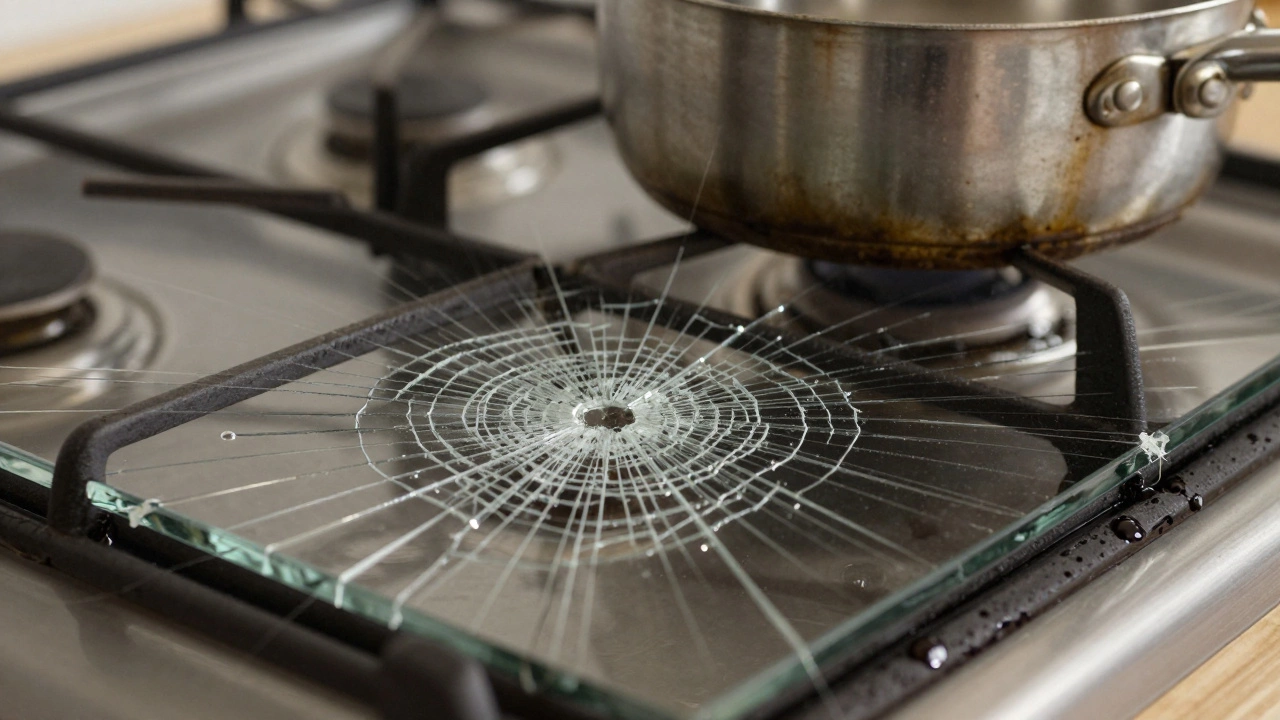
Cracked glass hobs can't be safely repaired-here's why DIY fixes fail, when replacement is necessary, and how to handle it safely. Learn the real risks and what to do next.

When your cracked glass hob, a smooth, flat cooking surface made of tempered glass or ceramic glass used on modern electric cooktops. Also known as a glass cooktop, it provides even heat and easy cleaning—but one hot pot or dropped pan can turn it into a safety hazard. A small crack might look like a scratch, but it’s not. That crack lets moisture in, weakens the structure, and can lead to full shattering under heat or pressure. Even if the hob still turns on, using it is risky. You’re not just risking a mess—you’re risking fire, electric shock, or injury from flying glass.
Most people assume a cracked glass hob means a full replacement, and often, they’re right. But not always. The damage matters. A hairline crack near the edge, caused by a heavy pan dropped from a few inches, might be repairable with a special high-temp ceramic filler if caught early. But a spiderweb crack from thermal shock—like pouring cold water on a hot surface—means the glass is compromised all the way through. No patch will hold. You’ll need a new glass hob, a flat, electric cooking surface made of durable ceramic glass designed to withstand high temperatures and daily use. And if your hob is older than 8 years, replacing the whole unit might make more sense than just swapping the glass. Older models use parts that are hard to find, and new hobs are more energy-efficient.
What causes these cracks? It’s not always user error. Some brands use thinner glass to cut costs. Others have poor installation—uneven legs or a warped countertop put pressure on the glass. Even normal use can trigger it: placing a cold pan on a hot zone, or using cast iron with rough bottoms that scratch the surface over time. If you’ve noticed your hob getting hotter in spots or the glass looking foggy, that’s a sign the internal heating elements are stressing the surface. That’s not normal wear—it’s a warning.
You might see online videos showing people gluing their hobs back together. Don’t try it. Most DIY kits don’t handle the heat or pressure. What looks fixed today can fail tomorrow with your dinner on it. And if you’re using the hob while it’s cracked, you’re already in danger. The real fix isn’t glue—it’s knowing when to call a professional. A technician can check if the heating elements are still working, test for electrical leaks, and tell you if the frame or wiring is damaged too. Sometimes, the glass is just the symptom. The real problem could be a failing control board or a faulty sensor that overheated the surface.
If you’re in Nuneaton and your cracked glass hob is giving you trouble, you’re not alone. We’ve fixed hundreds of them. Some customers wait weeks, hoping it’ll hold. Others panic and buy a whole new range. The truth? Most cracked hobs can’t be safely repaired. But you can avoid overpaying for a replacement if you know what to ask. Our guides below show you how to spot the real signs of failure, understand repair costs, and decide if it’s time to upgrade. You’ll find real stories from people who waited too long—and those who acted fast. No fluff. Just what works.
Cracked glass hobs can't be safely repaired-here's why DIY fixes fail, when replacement is necessary, and how to handle it safely. Learn the real risks and what to do next.