Learn the most common electric oven faults-from broken heating elements to faulty sensors-and how to fix them yourself. Save money and get your oven working again without calling a technician.

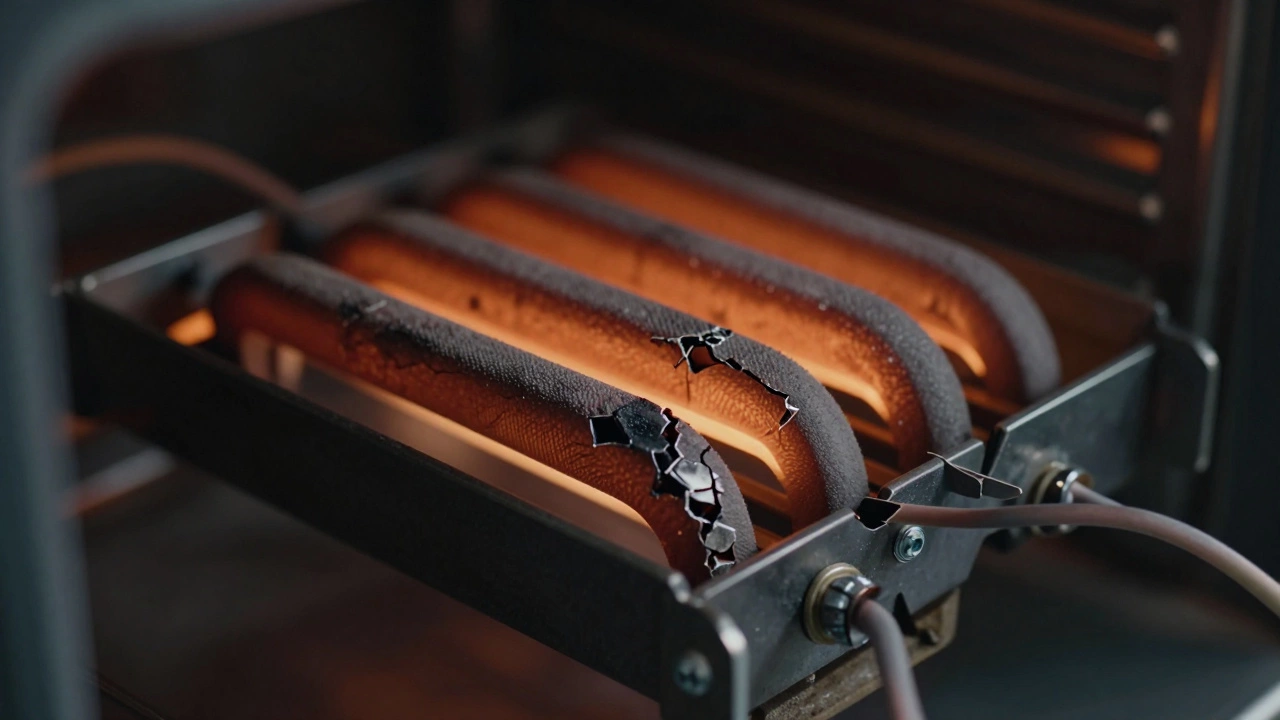
When your electric oven, a key appliance in most UK kitchens that uses electrical current to generate heat for cooking. Also known as electric range oven, it’s designed to last years—but when it stops working, it’s not just an inconvenience, it’s a daily disruption. You might think it’s time to replace it, but often, the fix is simple and cheap. The most common cause? A broken oven heating element, the metal coil inside the oven that glows red when powered and transfers heat to cook food. If the element looks blackened, warped, or doesn’t glow at all, it’s likely dead. Replacing it costs under £50 and takes less than an hour. Many people don’t realize this part can fail without warning—and yes, you should stop using the oven until it’s fixed. Even if the light and fan work, a broken element means no proper cooking temperature, and that’s a safety risk.
Another big culprit is the oven thermostat, the device that senses internal temperature and tells the heating element when to turn on or off. If it’s off by even 20 degrees, your cakes burn or your roasts stay raw. It’s not always obvious—your oven might seem to be heating, but the temperature is wrong. A faulty thermostat often trips the circuit breaker or causes uneven baking. You can test it with a multimeter, but if you’re not comfortable with electronics, a technician can replace it in under an hour. Less common, but just as frustrating, are wiring issues, damaged or loose connections between the control panel and the heating elements. Rodents chewing through wires, old insulation cracking, or even a power surge can cause this. You might notice the oven turning on randomly, or not at all, with no error codes. These problems often get misdiagnosed as a failed control board, but the real issue is just a loose wire or a burnt connector.
Don’t assume your oven is beyond repair just because it’s 10 or 15 years old. Many electric ovens last 20 years or more with basic care. Cleaning the interior regularly, checking the door seal for gaps, and avoiding harsh cleaners can extend its life. If you’ve had the same oven since you moved in, chances are the problem isn’t the whole unit—it’s one part. And fixing one part is almost always cheaper than buying a new one. Below, you’ll find real fixes from actual repairs in Nuneaton: what failed, how it was fixed, and how much it cost. No guesswork. No fluff. Just what works.
Learn the most common electric oven faults-from broken heating elements to faulty sensors-and how to fix them yourself. Save money and get your oven working again without calling a technician.