- 4 Dec 2025
- Gideon Thornton
- 0
Oven Repair Cost Calculator
Determine if repairing your oven is worth it. Enter your oven's age and the component you're replacing to see costs and energy savings.
Repair Estimate
If your electric oven isn’t heating properly, takes forever to preheat, or shuts off randomly, you’re not alone. These aren’t rare glitches-they’re the top five issues that show up in repair shops year after year. Most people assume it’s time to replace the whole unit, but in many cases, it’s just one broken part. Fixing it yourself can save hundreds of dollars and get your oven back in working order in under an hour.
Heating Element Failure
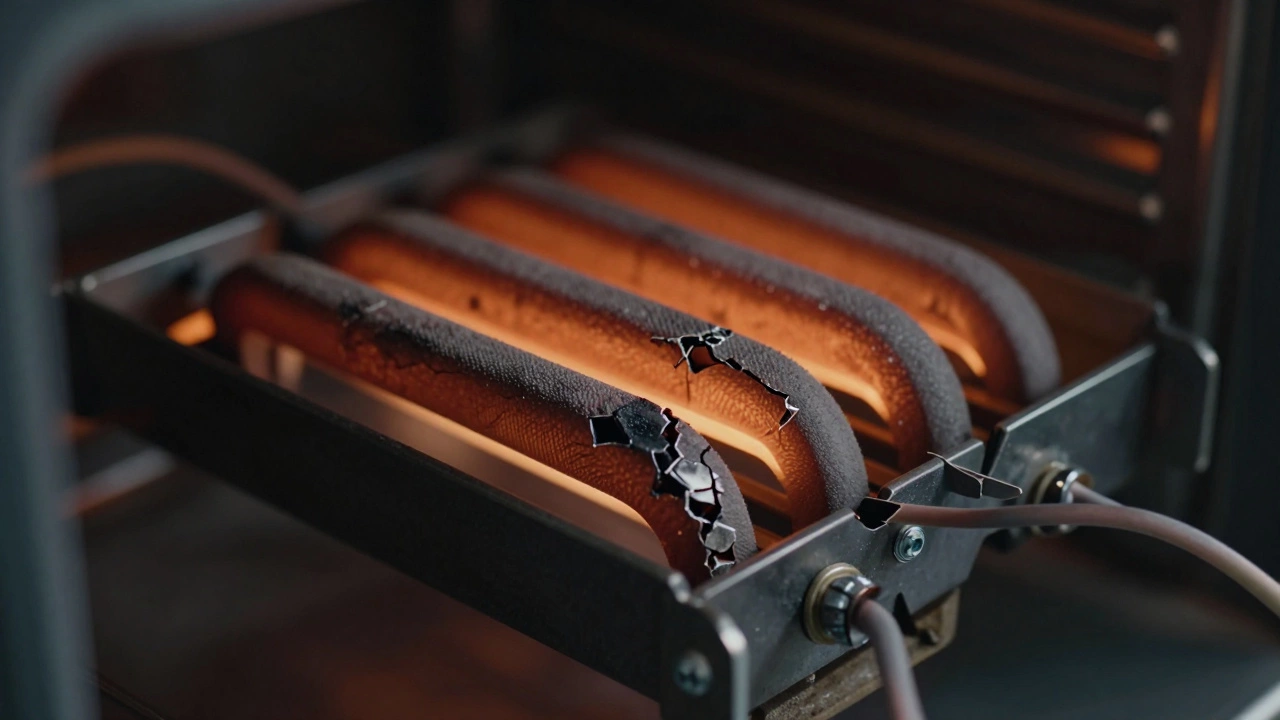
The heating element is the most common point of failure in electric ovens. It’s the coiled wire you see at the top and bottom of the oven cavity. Over time, the metal fatigues from repeated heating and cooling cycles. You’ll know it’s gone when one side of the oven is cold while the other heats normally, or when the element doesn’t glow red at all.
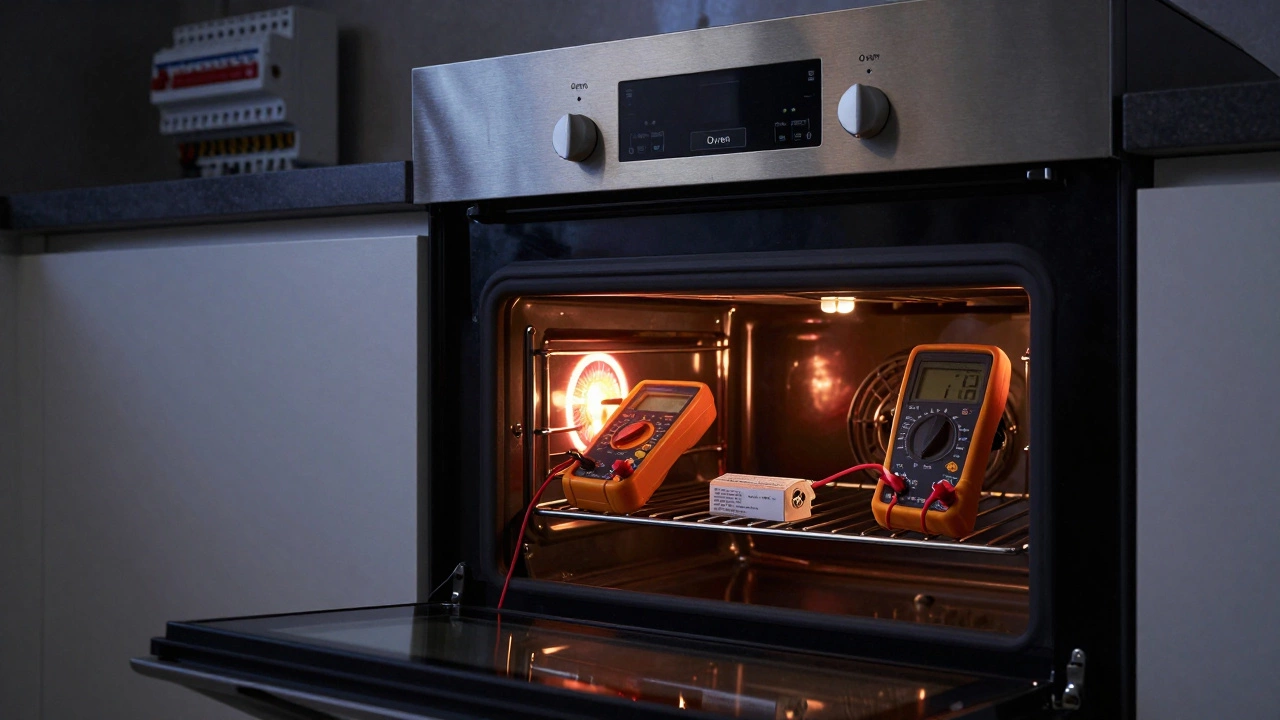
Check for visible signs: cracks, blisters, or sections that are discolored or burnt out. If you see any of these, the element is dead. You can test it with a multimeter for continuity-no reading means it’s broken. Replacement elements cost between $25 and $60, depending on your oven model. Unplug the oven, remove the screws holding the element in place, disconnect the wires, and swap it out. Most homeowners can do this safely without professional help.
Thermostat or Temperature Sensor Malfunction
A faulty thermostat or temperature sensor causes uneven cooking, undercooked food, or the oven turning off before reaching the set temperature. This isn’t always obvious-your oven might seem to be working fine, but it’s actually cycling on and off at the wrong times.
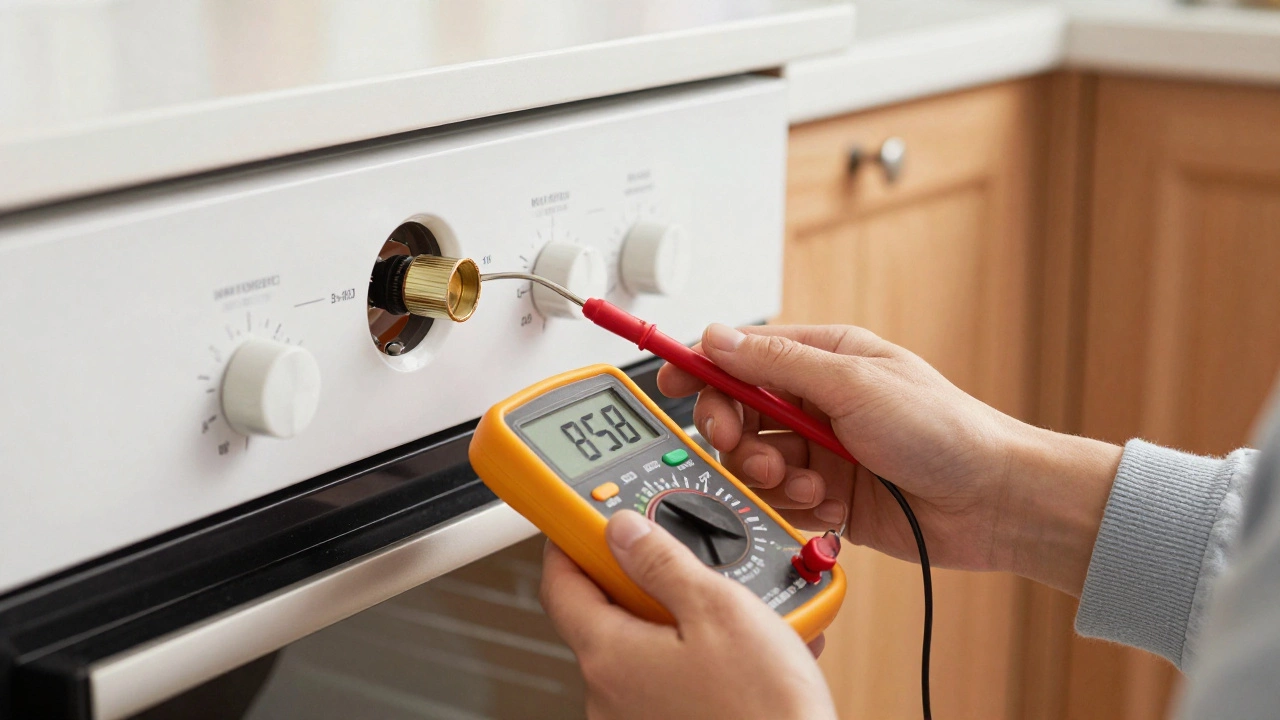
The temperature sensor is a thin metal probe usually located on the back wall of the oven. If it’s bent, corroded, or covered in grease, it sends wrong signals to the control board. You can test it with a multimeter: at room temperature, it should read between 1,000 and 1,100 ohms. If it’s way off, replace it. Sensors cost $30 to $50 and are easy to install. Just unplug the oven, remove the old sensor by unscrewing it from the wall, and plug in the new one.
Many people mistake this issue for a broken heating element. If your element glows fine but the oven still doesn’t reach temperature, the sensor is the likely culprit.
Broken Oven Door Seal
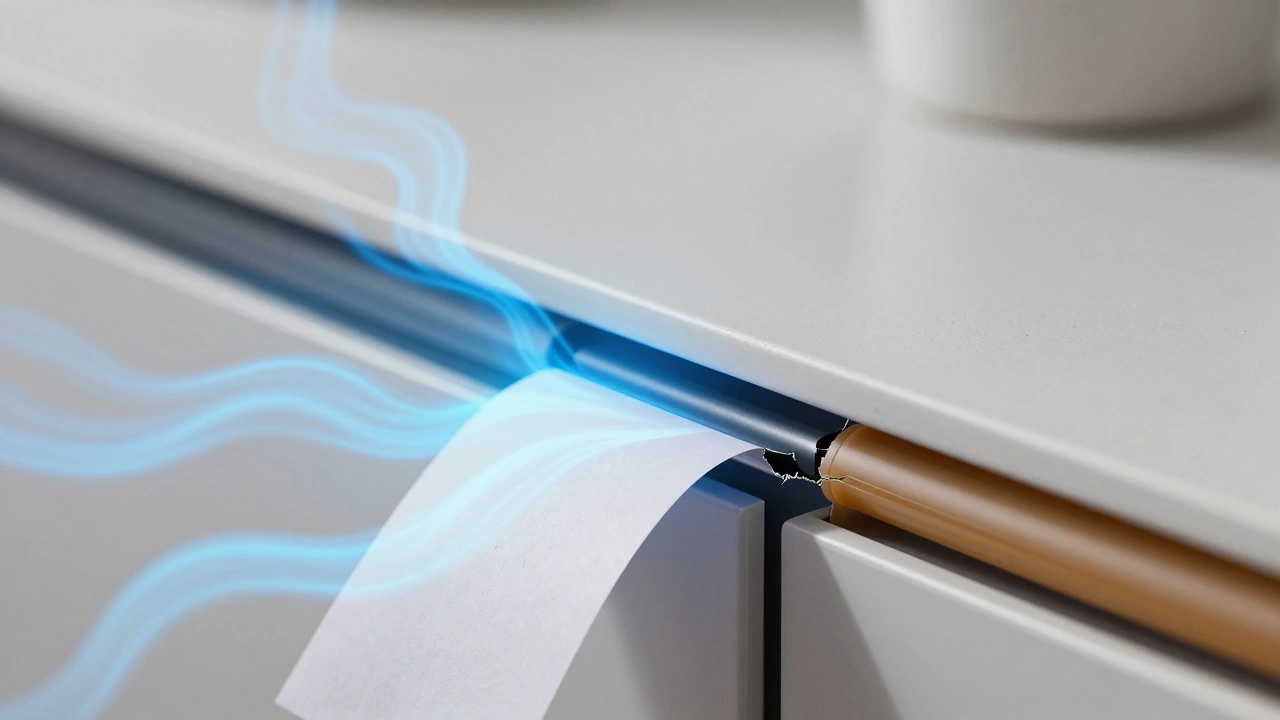
A damaged door seal lets heat escape, which makes the oven work harder to maintain temperature. This leads to longer preheat times, higher energy bills, and food that cooks unevenly. The seal is the rubbery strip around the door frame. Over time, it cracks, hardens, or falls out of place.
Test the seal by closing a piece of paper in the door. If you can pull it out easily, the seal isn’t holding. You can also feel for drafts near the door when the oven is hot. Replacing the seal is simple: peel off the old one, clean the track with rubbing alcohol, and press the new seal into place. It’s a $15 to $30 part and takes less than 20 minutes.
Don’t ignore this. A bad seal doesn’t just waste energy-it can cause the oven’s safety system to shut it down early to prevent overheating.
Control Board or Relay Issues
The control board is the brain of the oven. It tells the heating elements when to turn on and off. If your oven displays error codes like F1, F3, or E0, or if the display is flickering, the board might be failing. Relays on the board can also stick, causing the oven to stay on even after you’ve turned it off.
Unlike elements or sensors, you can’t easily test the control board without specialized tools. But there are clues: if all other parts check out (element glows, sensor reads right, seal is intact), and the oven still won’t heat or behaves erratically, the board is likely the issue.
Replacement boards cost $100 to $250, depending on the brand. Installation requires removing the front panel and disconnecting several wires. If you’re not comfortable with wiring, call a technician. But if you’ve replaced other parts already and it still doesn’t work, the board is your next stop.
Faulty Igniter (in Gas-Electric Hybrid Ovens)
Some modern electric ovens, especially higher-end models, use a combination of electric and gas heating for faster preheating. These ovens have a glow bar igniter that lights the gas burner. If the oven heats slowly or only partially, the igniter might be weak.
A good igniter glows bright orange within 30 seconds. If it glows dimly or takes longer than a minute, it’s failing. Even if it glows, it might not draw enough current to open the gas valve. You can test it with an ammeter-it should draw 3.2 to 3.6 amps. If it’s below that, replace it. Igniters cost $40 to $70 and are usually located near the bottom of the oven cavity.
This issue is often mistaken for a heating element problem. If you have a hybrid oven and the electric element works fine but the oven still heats slowly, check the igniter first.
Power Supply Problems
Before you start replacing parts, make sure the oven is getting power. Electric ovens need 240 volts, supplied by two separate circuit breakers. If one breaker trips, the oven might still light the display and turn on the fan-but the heating elements won’t work.
Check your home’s breaker panel. Look for a double-pole breaker labeled “Oven” or “Range.” If one side is tripped, reset it. If it trips again, there’s a short in the wiring or a component drawing too much current. Don’t keep resetting it-this can damage the control board.
Also check the outlet. Some ovens are hardwired, but others plug into a dedicated 240V receptacle. If the plug is loose, corroded, or the outlet is warm to the touch, it’s a fire hazard. Have an electrician inspect it.
What to Do When Nothing Seems to Work
If you’ve checked the element, sensor, seal, control board, and power supply-and the oven still doesn’t work-it’s time to consider age. Most electric ovens last 10 to 15 years. If yours is older than 12 years, repeated repairs may not be worth it.
Compare repair costs to the price of a new unit. A new mid-range electric oven costs $500 to $900. If you’ve already spent $200 or more on parts and labor, it’s often smarter to replace it. New models are more energy-efficient, have better temperature control, and come with smart features you might actually use.
But if your oven is under 10 years old and you’re handy, most faults are fixable. Start with the cheapest and easiest fixes first: the door seal, then the sensor, then the heating element. Save the control board for last-it’s expensive and harder to install.
Preventing Future Problems
You can extend your oven’s life with simple habits:
- Clean spills quickly. Burnt-on food can damage the heating element and insulation.
- Don’t use oven cleaner on the door seal. It hardens the rubber and causes cracks.
- Keep the vents clear. Blocked vents cause overheating and strain the control board.
- Use the self-cleaning function sparingly. High heat (over 900°F) accelerates wear on elements and sensors.
- Check the door seal every six months. A quick pull test takes 10 seconds.
These small steps can add 5 to 7 years to your oven’s life-and save you from a costly repair down the road.
Why does my electric oven take so long to preheat?
A slow preheat usually means one of three things: a weak heating element, a faulty temperature sensor, or a damaged door seal. The sensor might be telling the oven it’s already hot when it’s not, or the seal is letting heat escape. Start by checking the seal-if you can pull a piece of paper out easily, replace it. Then test the sensor with a multimeter. If both are fine, the element may be failing.
Can I replace an oven heating element myself?
Yes, most homeowners can replace a heating element safely. Just unplug the oven, remove the screws holding the element, disconnect the wires, and swap in the new one. Make sure the replacement matches your oven’s model number. You’ll find the part number on a label inside the oven door or on the back panel. Replacement elements cost under $60 and take about 30 minutes to install.
Is it worth repairing a 15-year-old electric oven?
Usually not. Ovens older than 12 years start to wear out faster, and parts become harder to find. If you’re spending more than half the cost of a new oven on repairs, replacement is the better choice. Newer models use 20% to 30% less energy and have better temperature accuracy, which means better cooking results and lower bills.
Why does my oven shut off before reaching the set temperature?
This is almost always a faulty temperature sensor. The sensor sends incorrect readings to the control board, making it think the oven is hotter than it is. Clean the sensor probe with a soft cloth and isopropyl alcohol. If that doesn’t help, test it with a multimeter. If the resistance reading is outside the 1,000-1,100 ohm range at room temperature, replace it.
Can a dirty oven cause heating problems?
Yes. Heavy grease and food buildup can insulate the heating element, making it work harder and overheat. It can also block airflow around the temperature sensor, causing inaccurate readings. Regular cleaning-especially under the racks and around the element-helps prevent this. Avoid abrasive cleaners that can scratch the element’s surface.