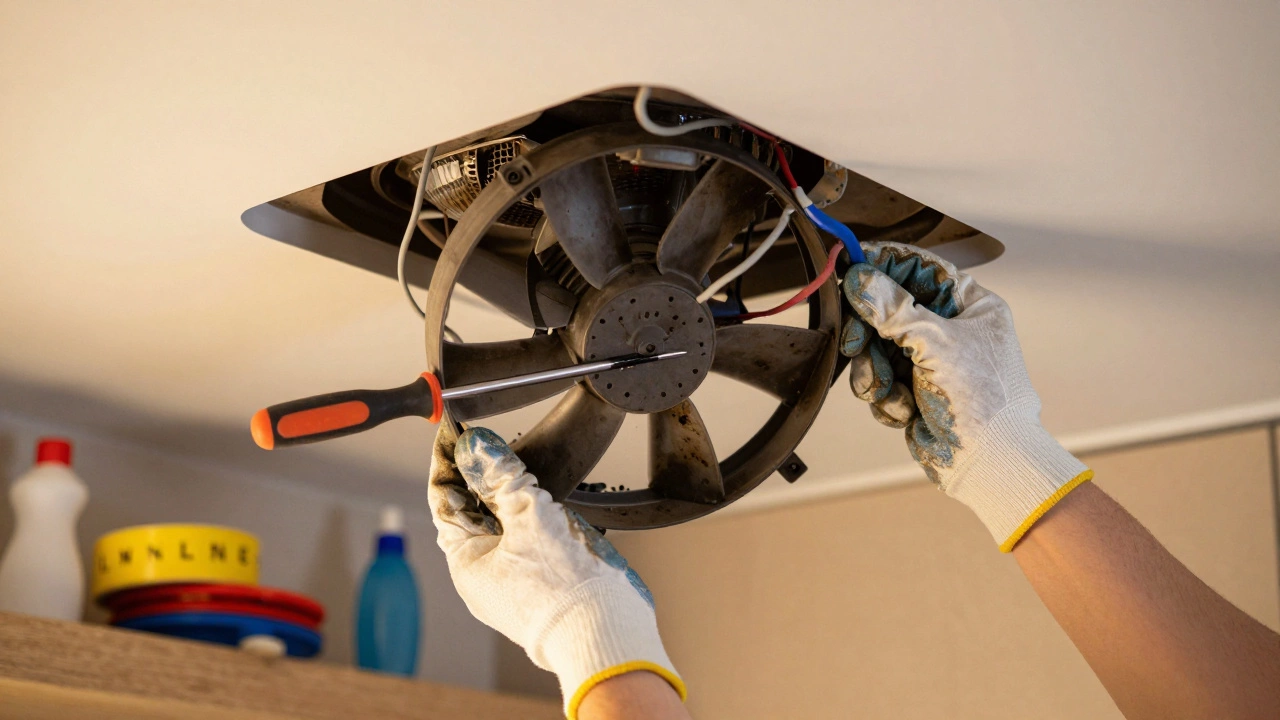
Servicing an extractor fan is simple and saves money. Clean the blades, check the duct, and replace filters regularly to keep it running quietly and efficiently. Most failures are due to grease buildup-not broken parts.

Ever notice your bathroom or kitchen fan getting louder, smelling stale, or not pulling air out like before? That’s a sign it needs a little TLC. Keeping an extractor fan clean and checked costs a few minutes and saves you from mold, damp, and higher energy bills.
First, turn the fan off at the switch and, if possible, switch off the circuit breaker – safety first. Remove the cover; most fans have a simple clip or screw. Give the grille a good shake to drop loose dust, then soak it in warm, soapy water for five minutes.
While the cover is soaking, reach up into the fan housing with a soft brush or a vacuum with a narrow nozzle. Scrape away any visible grime, especially around the motor blades. If you see black build‑up, that’s grease or mould – wipe it with a cloth dampened with half‑vinegar, half‑water solution.
Rinse the cover, dry it thoroughly, and snap it back in place. Turn the power back on and listen. A clean fan should run smoother and quieter.
If you hear a buzzing noise, the fan doesn’t turn on, or you spot frayed wiring, stop DIY and call a qualified electrician or a specialist. Bad wiring can be dangerous, and a motor that’s seized needs professional tools to replace.
Another red flag is persistent damp smell even after cleaning. That often means the ductwork is blocked or the fan is undersized for the room. A pro can assess the duct route, clean it from the inside, or recommend a higher‑capacity fan.
Lastly, if the fan is more than 10‑12 years old and you’re already spending time on upkeep, consider a replacement. New fans are more energy‑efficient and quieter, plus installation is quick for a qualified tech.
Overall, a quick monthly wipe‑down and an annual deep clean keep most extractor fans humming along for years. Keep a screwdriver and brush handy, check the switch, and you’ll spot problems before they turn into costly repairs.
Remember: regular cleaning, checking for loose wires, and knowing when to get help are the three pillars of good fan maintenance. Your home stays fresher, your bills stay lower, and you avoid nasty mould surprises. Give your fan a bit of love today – it’ll repay you with clean, dry air tomorrow.
Servicing an extractor fan is simple and saves money. Clean the blades, check the duct, and replace filters regularly to keep it running quietly and efficiently. Most failures are due to grease buildup-not broken parts.

Ever wondered if extractor fans need maintenance? This article explains the nuts and bolts of why it matters, what can go wrong if you skip it, and how regular upkeep can save you from bigger headaches later. We’ll talk about signs of trouble, practical tips for DIY care, and when you should call in the pros. Expect relatable examples, clear instructions, and easy wins for better air quality and quieter fans. Everything you need to know is right here.