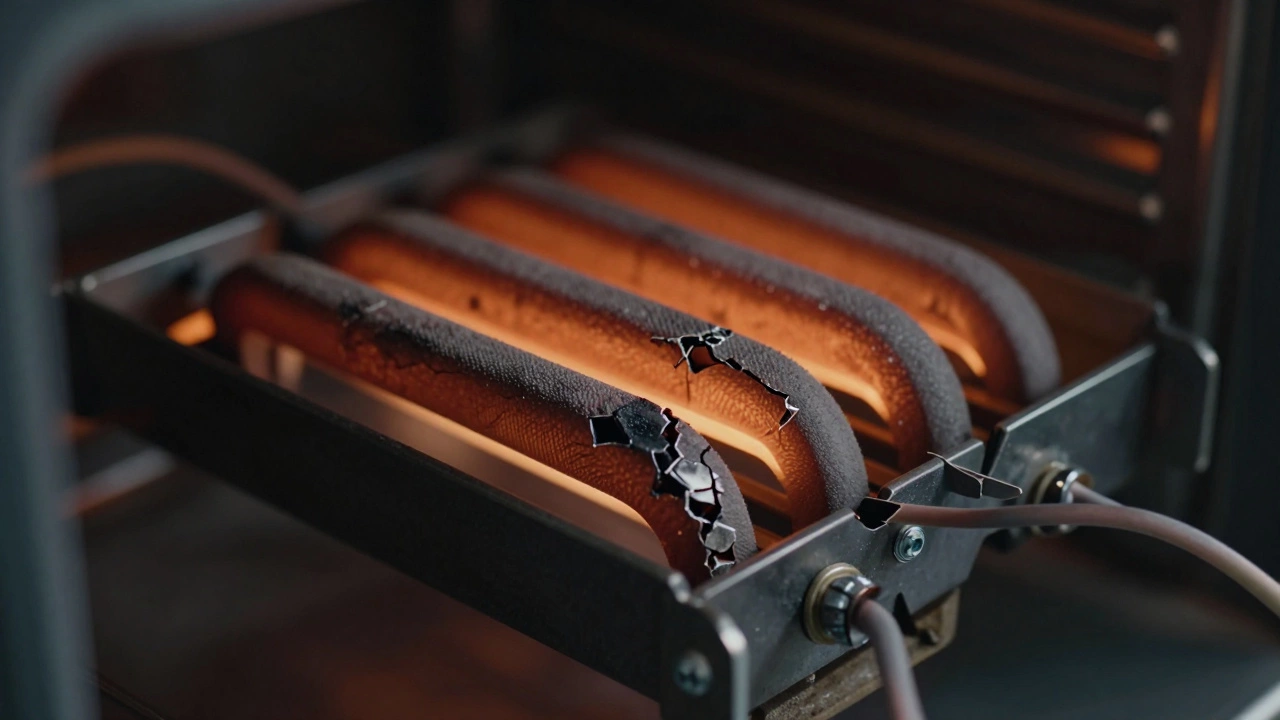
Learn the most common electric oven faults-from broken heating elements to faulty sensors-and how to fix them yourself. Save money and get your oven working again without calling a technician.

When your oven door seal, the rubber or fibrous strip around the oven door that keeps heat inside and cold air out. Also known as a oven gasket, it's one of the most overlooked but critical parts of your oven. A damaged seal doesn’t just let heat escape—it makes your oven work harder, spikes your energy bill, and can even make your kitchen uncomfortably warm. If you’ve noticed your oven taking longer to heat up, or if the door feels loose or lets out a puff of hot air when you open it, your seal might be failing.
Most oven door seals wear out from years of heat cycles, cleaning with harsh chemicals, or physical damage—like slamming the door or scraping it with a metal tool. Over time, the rubber cracks, shrinks, or falls away in spots. You might see gaps where light shines through, or notice food cooking unevenly because the temperature inside isn’t stable. A broken seal also lets smoke and fumes escape, which isn’t just annoying—it’s a fire hazard if grease or debris builds up nearby. The oven heating element, the coil that generates heat inside the oven might still be fine, but without a good seal, it’s working overtime. And if you’re replacing the element but the seal is torn, you’re just throwing money away.
Fixing this isn’t always a job for a pro. Many oven seals are easy to replace yourself with a new part that costs under £30. You just need to remove the old one (it usually clips or screws in), clean the door frame, and snap the new one in place. But if the door itself is warped or the hinges are loose, the seal won’t hold no matter how new it is. That’s when you need to check the oven door alignment, how well the door sits flush against the oven frame. A misaligned door puts extra stress on the seal, causing premature wear. If you’ve tried replacing the seal and it’s still leaking, the problem might be deeper.
What you’ll find below are real fixes from people who’ve dealt with this exact issue—whether it’s a cracked seal on a 15-year-old oven, a warped door that won’t close right, or someone who thought their oven was broken but just needed a new gasket. You’ll see how to test your seal with a simple dollar bill trick, what parts to look for when ordering replacements, and when it’s smarter to replace the whole oven instead. No fluff. Just what works.
Learn the most common electric oven faults-from broken heating elements to faulty sensors-and how to fix them yourself. Save money and get your oven working again without calling a technician.