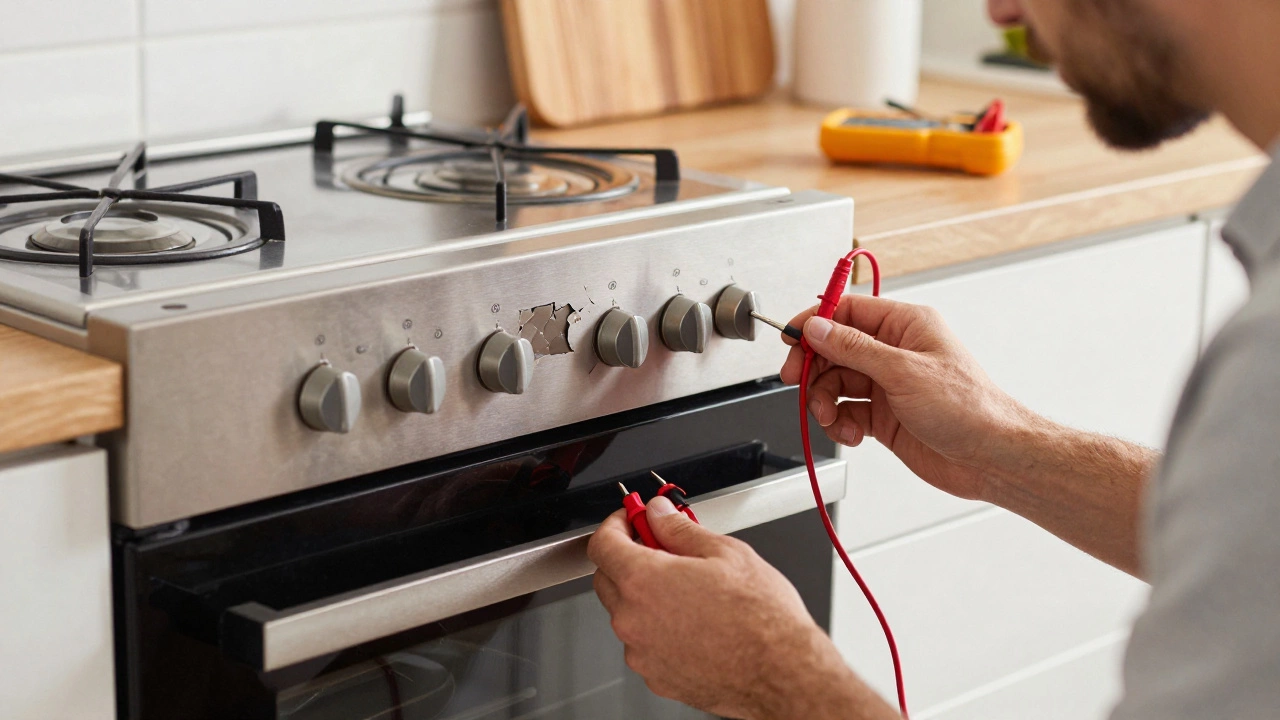
Troubleshoot your oven with simple, step-by-step fixes for common problems like no heat, faulty elements, gas ignition issues, and thermostat errors. Save time and money before calling a technician.

Got an oven that won’t heat, makes weird noises, or just isn’t acting right? Before you book a pricey call‑out, try a few quick checks. Most homeowners can spot the obvious issues and either fix them themselves or decide if a pro is really needed.
First, make sure the oven is actually getting power. Look at the circuit breaker – a tripped switch is the easiest culprit. Reset it and see if the oven lights up. If you have a separate fuse for the oven, give it a glance too.
Next, check the door seal. A worn or cracked gasket lets heat escape, which means longer cooking times and higher bills. Run a finger around the edge; if you feel gaps, the seal probably needs replacing. It’s a cheap part you can swap yourself with a screwdriver.
For electric ovens, the heating element is often the problem. When you turn the oven on, look inside – a glowing element should get red-hot. If it stays cold, the element may be burnt out. You can test it with a multimeter for continuity; no reading means it’s time for a new one.
Gas ovens have a different set of checks. If you hear a click but no flame, the igniter might be dirty or broken. Turn off the gas, let the oven cool, and wipe the igniter with a soft cloth. If the flame still won’t spark, the igniter usually needs replacement.
Even with the best DIY spirit, some issues are best left to trained technicians. If you suspect a faulty thermostat, control board, or wiring problem, keep safety first and call a professional. These parts involve electricity or gas, and a mistake could be dangerous.
Another red flag is a persistent error code on the display. Modern ovens show codes like "E1" or "F2" to point to specific faults. While you can look up what they mean, resetting the code usually requires a qualified engineer who can also test the underlying components.
Lastly, if your oven is more than ten years old and repairs keep piling up, it might be cheaper in the long run to replace it. New models are more energy‑efficient and often come with warranties, saving you money on future fixes.
At Nuneaton Appliance Repair Experts, we specialize in quick, reliable oven repair. Our technicians know the common pitfalls and have the right tools to get your oven back to full heat in no time. Give us a call if you hit a wall – we’ll handle the heavy lifting while you enjoy a hot meal again.
Bottom line: start with power, door seals, and heating elements or igniters. If those basics don’t solve the issue, don’t gamble with gas or electricity – call a trusted pro. With the right approach, you’ll spend less time waiting and more time cooking.
Troubleshoot your oven with simple, step-by-step fixes for common problems like no heat, faulty elements, gas ignition issues, and thermostat errors. Save time and money before calling a technician.
Leaving an electric oven on all night can pose safety hazards and increased energy costs. It's important to understand the risks involved and take preventive steps to ensure the safety of your home. This article explores potential dangers, energy efficiency concerns, and provides practical tips for using your electric oven safely. We also discuss common oven repair issues and how to address them promptly.

A malfunctioning gas oven igniter can cause several issues, from the oven not heating properly to unusual sounds and smells. Understanding the symptoms of a bad igniter helps you diagnose the problem more efficiently and decide if it's time to repair or replace the igniter. This guide explores common signs like delayed ignition, uneven heating, and safety hazards, with practical tips for fixing minor issues. Knowing when to call a professional is vital to ensure your kitchen appliance operates safely and efficiently.