Learn the most common electric oven faults-from broken heating elements to faulty sensors-and how to fix them yourself. Save money and get your oven working again without calling a technician.

When your oven thermostat failure, a malfunction in the component that controls and maintains oven temperature. Also known as temperature sensor failure, it’s one of the most common reasons ovens don’t heat properly—even when the element is fine. You might notice food cooking unevenly, the oven running too hot or too cold, or the display showing error codes like F3 or E1. It’s not just about burnt cookies—it’s about safety, energy waste, and food that never reaches the right temperature.
Most oven thermostats fail because of age, repeated heating cycles, or a buildup of grease and debris near the sensor. The thermostat is a small but critical part: it reads the air temperature inside the oven and tells the heating element when to turn on or off. If it’s off by even 20 degrees, your roast could be raw inside while the outside is charred. This isn’t a guesswork problem—it’s a measurable one. Many homeowners try resetting the oven or cleaning the element, but if the thermostat is faulty, those steps won’t fix it. You might also see the oven light stay on constantly, or the oven turning itself off mid-cycle. These are classic signs the thermostat is no longer reading correctly.
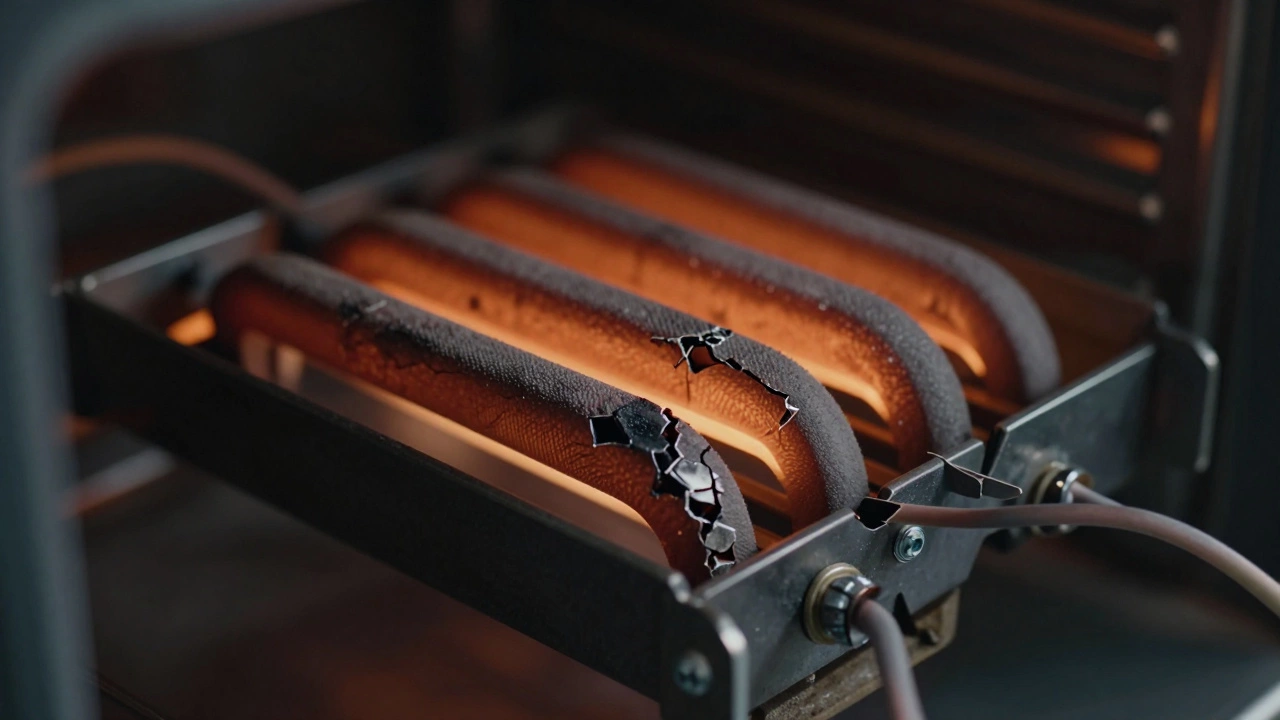
Related issues often show up alongside thermostat failure. A broken oven heating element, the coil that generates heat inside the oven can mimic thermostat problems, but the two are different. If the element is dead, the oven won’t heat at all. If the thermostat is bad, it might heat too long or not enough. You can test the element visually—if it’s cracked or doesn’t glow red, replace it. But if the element looks fine and the oven still acts up, the thermostat is the likely culprit. Another related part is the oven temperature sensor, a probe that sends real-time heat data to the control board. In many modern ovens, this sensor is what fails, not the mechanical thermostat. Both need testing with a multimeter, which most homeowners won’t have—or know how to use safely.
Don’t risk cooking with a faulty thermostat. Overheating can damage your oven’s wiring, warp the door seal, or even trigger a fire. If you’ve checked the power, cleaned the vents, and confirmed the element works, the thermostat is the next place to look. Most repairs take under an hour and cost less than replacing the whole oven. And if you’re in Nuneaton, local experts know exactly which models have thermostat issues—and how to fix them fast. Below, you’ll find real-world guides on diagnosing oven problems, spotting when to repair vs. replace, and what other parts commonly fail alongside the thermostat. No fluff. Just clear, practical fixes.
Learn the most common electric oven faults-from broken heating elements to faulty sensors-and how to fix them yourself. Save money and get your oven working again without calling a technician.