- 2 Feb 2026
- Gideon Thornton
- 0
If your water heater is only giving you cold water, you’re not alone. It’s one of the most common complaints in homes, especially during winter. You turn on the shower, and instead of steam, you get a shiver. You fill the sink for dishes, and the water stays icy. No matter how long you wait, nothing changes. This isn’t normal. Your water heater is supposed to work - and when it doesn’t, it’s usually not as complicated as you think.
Check the power first
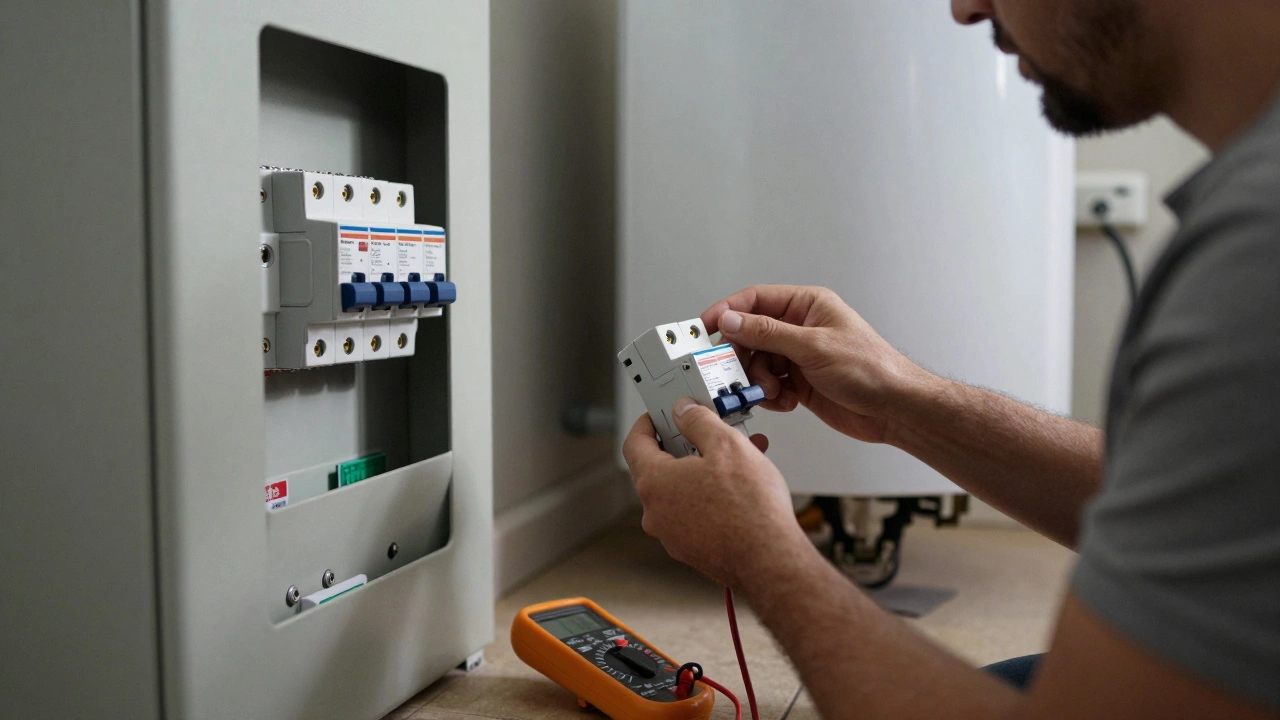
If you have an electric water heater, the most likely culprit is a power issue. Water heaters don’t just stop working out of nowhere. They usually go quiet because something cut the juice. Start by checking your breaker panel. Look for the circuit labeled "water heater" or "hot water." If it’s flipped to the off position, reset it. That’s it. Sometimes, that’s all it takes.But if the breaker trips again right after you reset it, something’s wrong. A short circuit, a faulty heating element, or a bad thermostat could be pulling too much current. Don’t keep resetting it. That’s dangerous. You need to dig deeper.
Electric water heaters have two heating elements - one near the top, one near the bottom. If the top element fails, you might get a little warm water at first, then nothing. If the bottom one goes, you get cold water from the start. You can test both with a multimeter. Unplug the heater or turn off the breaker first. Remove the access panels and insulation. Set your multimeter to ohms. Touch the probes to the terminals on each element. If you get no reading or infinite resistance, the element is dead. Replace it. They cost under $30 and take 30 minutes to swap.
Gas water heaters don’t light up
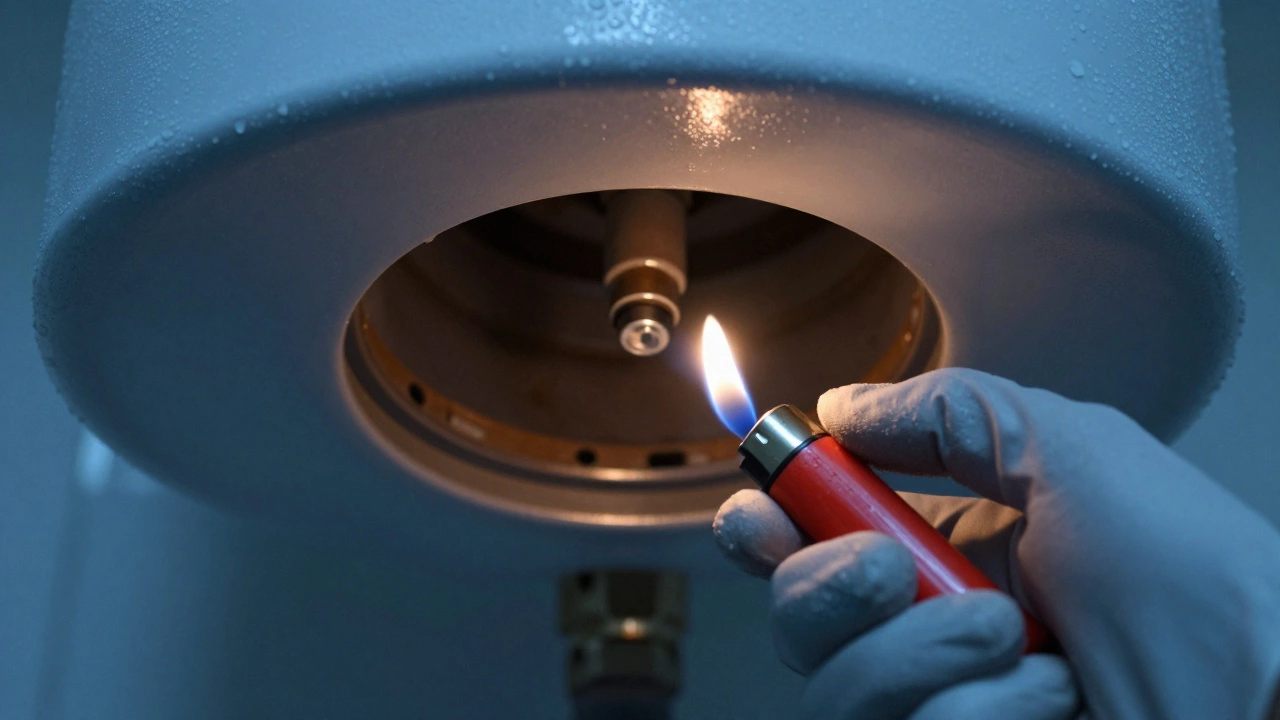
Gas water heaters don’t use electricity to heat water - they use a pilot light or electronic ignition. If you’re getting cold water and you have a gas unit, check if the pilot light is still on. Look through the viewing port on the bottom of the tank. If you don’t see a blue flame, the pilot’s out.Some newer models have electronic ignition and won’t have a standing pilot. If your unit has a control knob with "On, Off, Pilot," turn it to "Pilot," press and hold the button, and use a long lighter to ignite it. Hold for 30 seconds after it lights, then release. If it goes out again, the thermocouple is likely bad. The thermocouple is a small metal rod that senses whether the pilot is lit. If it’s faulty, the gas valve shuts off. Replacing it costs $20 and takes 15 minutes.
If your unit doesn’t have a pilot light at all and uses electronic ignition, listen for a clicking sound when you turn the knob to "On." If you hear nothing, the ignition module or control board may be dead. These are harder to test without tools. If you’re not comfortable with gas lines, call a pro.
The dip tube broke
This one’s sneaky. The dip tube is a long plastic pipe that runs from the top of the tank down to the bottom. Its job is to send cold water to the bottom of the tank, where it gets heated. If the dip tube cracks or breaks, cold water shoots straight back out the hot water outlet. You get lukewarm or cold water even when the tank is full of hot water.It’s common in older heaters - especially ones made between 1993 and 1997. Some brands used cheap plastic that degraded fast. If your heater is older than 15 years and you’ve noticed a sudden drop in hot water, the dip tube is suspect.
How to check? Turn off the water supply and power. Disconnect the hot water line at the top of the tank. Use a flashlight to look inside. If you see white or gray plastic chunks in the pipe or the tank, the dip tube is gone. You’ll need to replace it. It’s not a DIY job for most people. The tank has to be drained, and the pipe is hard to reach. A plumber can do it in an hour.
The tank is full of sediment
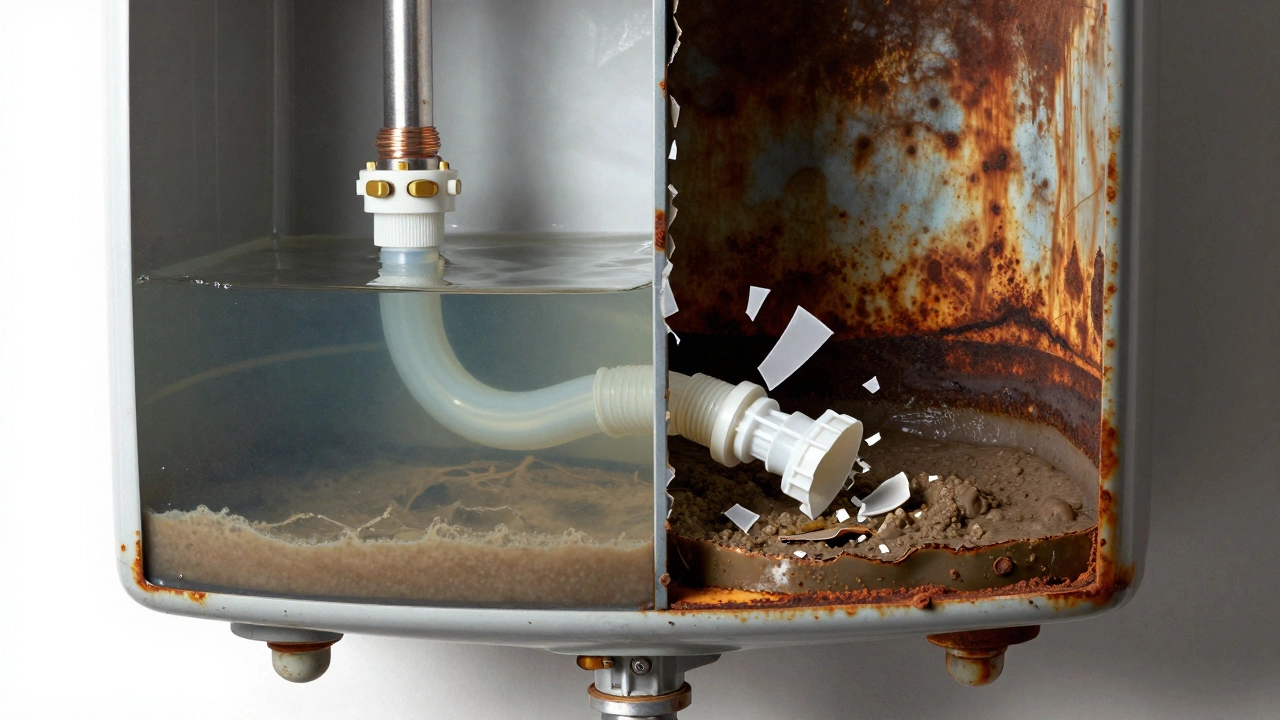
Over time, minerals in your water settle at the bottom of the tank. That’s normal. But if you never flush it, that sludge builds up. A thick layer of sediment acts like insulation. The heating element can’t reach the water. The water stays cold, even though the element is working.Here’s how to test: Turn off the power or gas. Attach a garden hose to the drain valve at the bottom of the tank. Open the valve and let water flow into a bucket. If the water comes out brown, gritty, or cloudy, you’ve got heavy sediment. Drain the tank completely. Then refill it slowly and turn the power back on. Do this once a year to prevent it.
If you’ve never flushed your tank and it’s over 8 years old, this is probably the issue. Sediment doesn’t break the heater - it just makes it useless. Flushing it can restore 90% of your hot water capacity.
Thermostat settings are wrong
It sounds simple, but people forget. The thermostat might’ve been turned down by accident. Maybe a kid played with it. Maybe you set it low to save money and forgot. Check both thermostats on electric models. On gas models, check the dial on the front. It should be set between 120°F and 140°F. Below 120°F, you won’t get enough hot water for showers. Above 140°F, you risk scalding.On electric heaters, the top thermostat controls the top element. The bottom one controls the bottom. If the top is set too low, you’ll get cold water after a few minutes of use. Adjust both to 125°F and wait an hour. Test the water again.
It’s just old
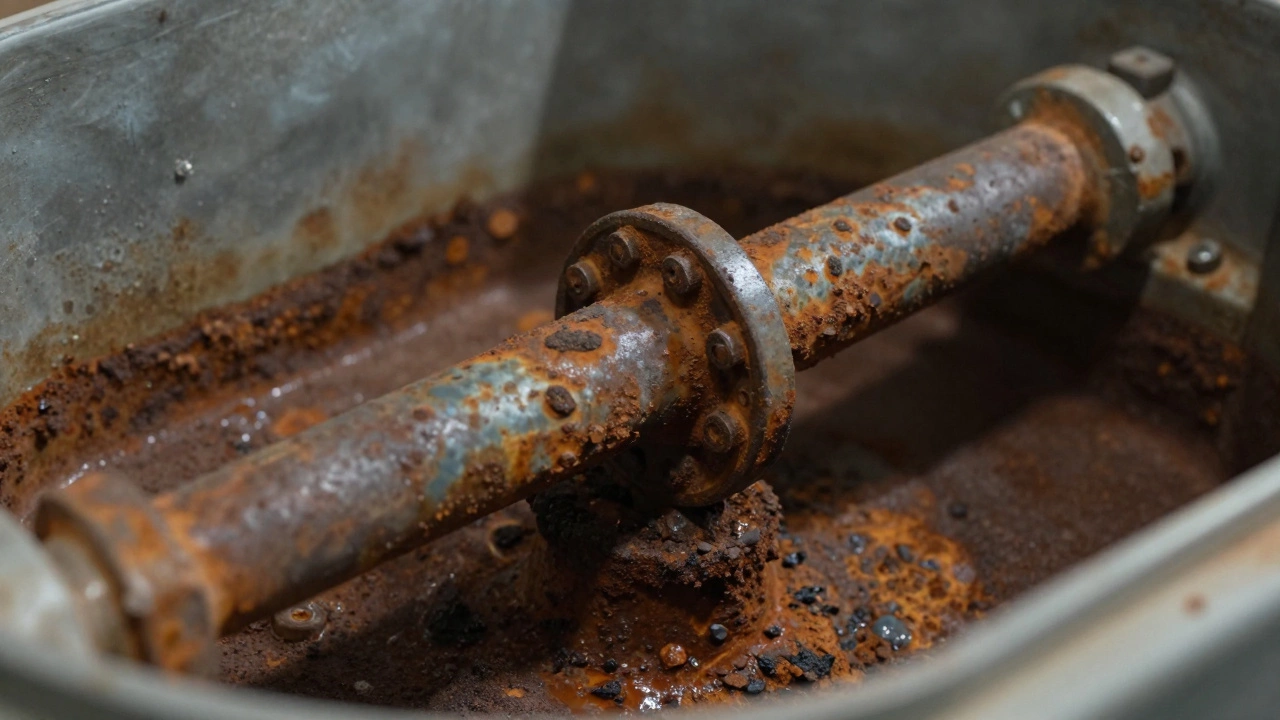
Water heaters last 8 to 12 years. If yours is 15 years or older and suddenly giving cold water, it’s not a repair job - it’s a replacement job. The tank may have rusted inside. The heating elements are worn out. The insulation has degraded. Even if you fix one part, another will fail soon.Look for signs: rust on the pipes near the top, puddles under the tank, strange noises like popping or rumbling. These mean the tank is dying. Replacing it now saves you from a burst tank in the middle of the night. New tankless models are more efficient, but a standard 40- to 50-gallon tank is still the most reliable choice for most homes.
What to do next
Start with the easiest fixes: check the breaker, test the pilot light, verify the thermostat. If those don’t work, drain a few gallons to check for sediment. If the water’s dirty, flush the tank. If it’s clean and you still have no hot water, test the heating elements or thermocouple.If you’re not comfortable with electrical work or gas lines, don’t risk it. Call a licensed plumber. A $100 service call is cheaper than a flooded basement. But if you’re handy, most of these fixes are cheap and quick. You can save hundreds by doing it yourself.
And if you’re replacing the unit, look for one with a 10-year warranty. That’s the industry standard for reliability. Avoid the cheapest models. They cut corners on insulation and tank lining. You’ll regret it in three years.
Why is my water heater making noise but not heating water?
If your water heater is making popping or rumbling sounds but the water stays cold, it’s likely due to heavy sediment buildup at the bottom of the tank. The sediment traps heat, causing it to boil and create noise. The water above it never gets hot enough. Flushing the tank usually fixes this. If the noise continues after flushing, the heating element may be damaged.
Can a broken thermostat cause no hot water?
Yes, especially in electric water heaters. If the top thermostat fails, the top heating element won’t turn on, so you’ll get cold water after using the first few gallons. If the bottom thermostat fails, the water never heats past lukewarm. Both thermostats need to be tested with a multimeter. Replacing them costs less than $50 each and is a simple DIY fix.
Is it safe to reset the breaker on my water heater?
It’s safe to reset the breaker once if it tripped. But if it trips again immediately, something is drawing too much power - like a shorted heating element or faulty wiring. Keep resetting it and you risk overheating wires or starting a fire. Turn off the power and call a professional if the breaker keeps tripping.
Why do I only get hot water for a few minutes?
This usually means the top heating element is working but the bottom one isn’t - or the dip tube is broken. Cold water is mixing with hot water before it leaves the tank. If you have an electric heater, test both elements. If you have a gas heater, check the thermocouple and burner. A broken dip tube will also cause this issue, especially in older units.
Should I replace my water heater if it’s over 10 years old?
If your water heater is over 10 years old and you’re having frequent problems, replacement is smarter than repair. Older units lose efficiency, rust from the inside, and are more likely to leak suddenly. A new model will save you money on energy bills and prevent water damage. Look for one with a 10-year warranty and good energy factor (EF) rating.