- 8 Jan 2026
- Gideon Thornton
- 0
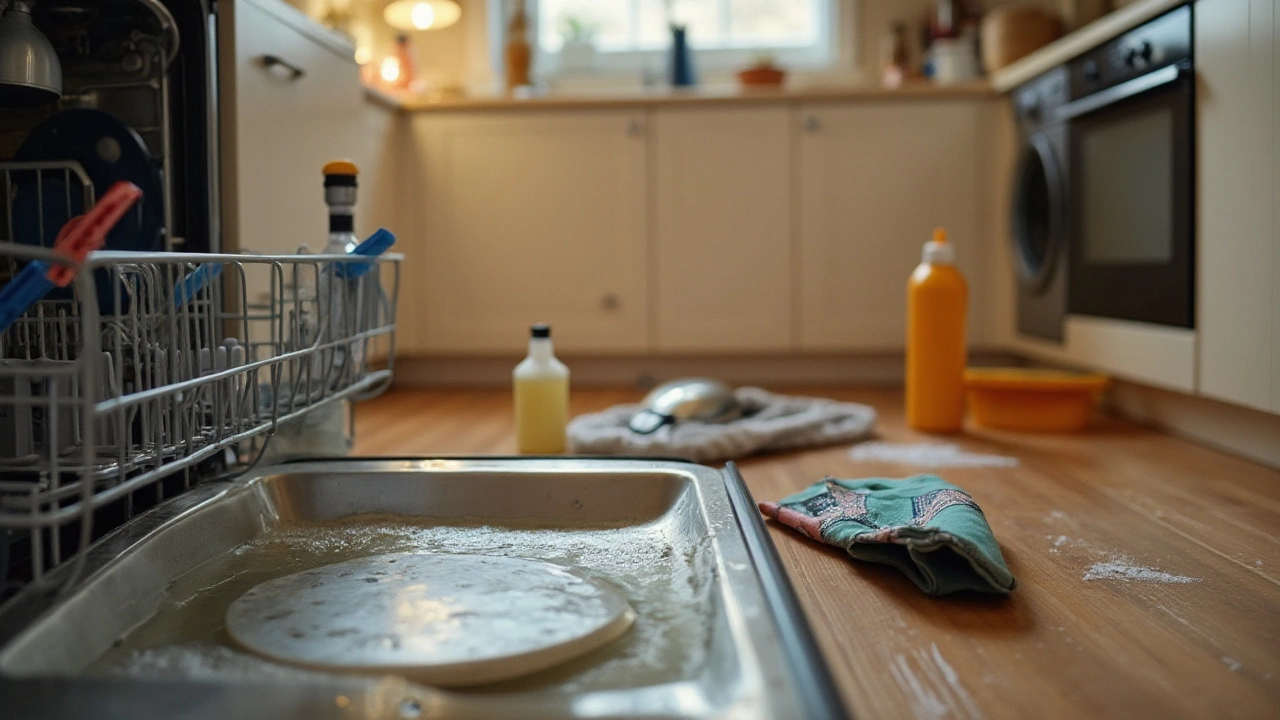
Most people assume dishwashers are simple machines-just spray water, heat it, and call it a day. But when your dishwasher stops draining, leaks, or refuses to start, that simplicity vanishes. You might wonder: dishwasher repair is it really something you can handle yourself? The answer isn’t yes or no-it’s "maybe, but only if you know what you’re looking for."
Most dishwasher problems aren’t mysterious
Dishwashers break for the same five reasons 90% of the time. No magic circuits, no hidden sensors, no proprietary software. Just worn parts, clogged lines, or simple user errors. If your dishwasher isn’t cleaning well, doesn’t drain, or makes a loud grinding noise, chances are it’s one of these:- Food debris clogging the drain filter
- A broken pump or impeller
- A faulty door latch or switch
- A clogged or broken spray arm
- A failed heating element
None of these require an engineering degree. But they do require patience, a screwdriver, and the willingness to get your hands dirty. If you’ve never opened up an appliance before, start with the filter. It’s the easiest fix and the most common culprit.
Step-by-step: Cleaning the drain filter
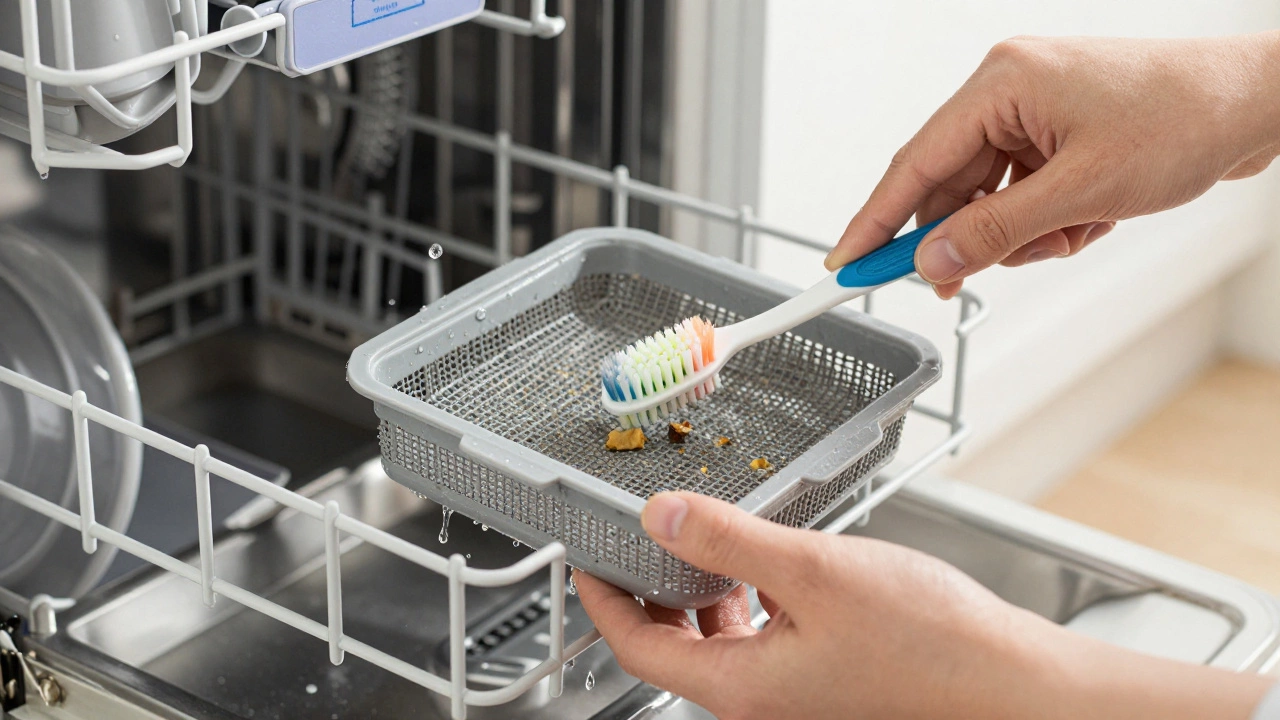
Almost every modern dishwasher has a removable filter at the bottom, near the spray arm. Over time, it traps food bits, grease, and even small pieces of plastic. When it gets clogged, water can’t drain. The result? Stinky water pooling at the bottom, or dishes coming out grimy.- Turn off the power at the circuit breaker. Safety first.
- Remove the bottom rack.
- Locate the filter-usually a cylindrical or flat mesh unit in the center or back of the tub.
- Turn it counterclockwise (or pull it straight up, depending on the model) and lift it out.
- Rinse it under hot water. Use an old toothbrush to scrub away gunk.
- Check the drain channel underneath. Remove any debris with tweezers or pliers.
- Reinstall the filter and run a short cycle with no dishes.
This takes 10 minutes. If your dishwasher starts draining properly afterward, you just saved $150 on a service call. Most manufacturers recommend cleaning the filter monthly. If you haven’t done it in over six months, you’re already behind.
When a part is truly broken
Not every problem is a clog. If the dishwasher fills with water but never drains, the pump might be dead. If it runs but never heats the water, the heating element could be burned out. These are real hardware failures.Replacing a heating element sounds scary, but it’s often just a matter of disconnecting two wires and unscrewing the old part. Most elements cost under $40. The same goes for spray arms, door latches, and even pumps in many models. Brands like Bosch, Whirlpool, and GE use standardized parts across multiple models. That means you can often find the exact replacement by searching your dishwasher’s model number online.
Here’s what you need to do:
- Find your model number (usually inside the door frame or on the side of the tub).
- Search for "[Your Model] parts diagram" on sites like RepairClinic or PartSelect.
- Identify the faulty part and order it.
- Watch a YouTube video for your exact model-most have step-by-step repair guides.
- Turn off power and water before you start.
Some repairs take an hour. Others take two. But you’ll know exactly what you fixed, and you won’t have to pay someone to tell you the same thing.
What you shouldn’t try to fix
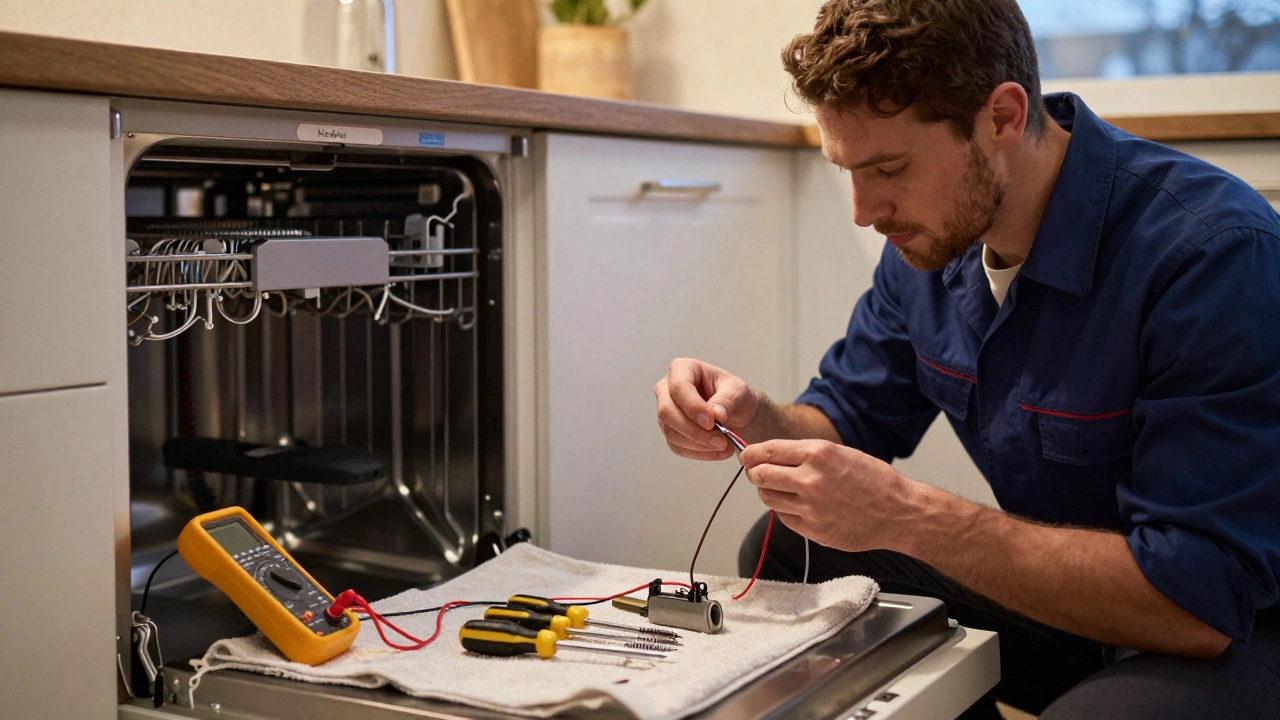
There are limits. If your dishwasher has a control board error code you can’t find in the manual, don’t guess. Control boards are expensive ($150-$300) and hard to diagnose without a multimeter and training. If the display shows "F1," "E4," or "PF," it’s usually not something you can fix by unplugging it.Same goes for water inlet valves if they’re leaking internally. They’re sealed units. Replacing them requires disconnecting water lines, which can lead to flooding if you’re not careful. And if your dishwasher is over 10 years old, the cost of parts might be close to the price of a new one.
Here’s a quick rule: If the fix requires you to touch electrical wiring, plumbing, or a circuit board, and you don’t have a multimeter or know what continuity means-call a pro.
Cost comparison: DIY vs. professional
| Repair Type | DIY Cost | Professional Cost | Time to Fix |
|---|---|---|---|
| Filter cleaning | $0 | $75-$120 | 10 minutes |
| Heating element replacement | $35-$50 | $150-$250 | 1-2 hours |
| Pump replacement | $80-$120 | $250-$400 | 2-3 hours |
| Control board replacement | $150-$300 | $300-$500 | 2-4 hours |
| New dishwasher | $500-$1,200 | $800-$1,500 (with installation) | 3-5 hours |
You can see the pattern: the simpler the fix, the more you save by doing it yourself. But once you’re spending over $150 on parts, it’s worth asking if a new machine makes more sense.
When to replace instead of repair
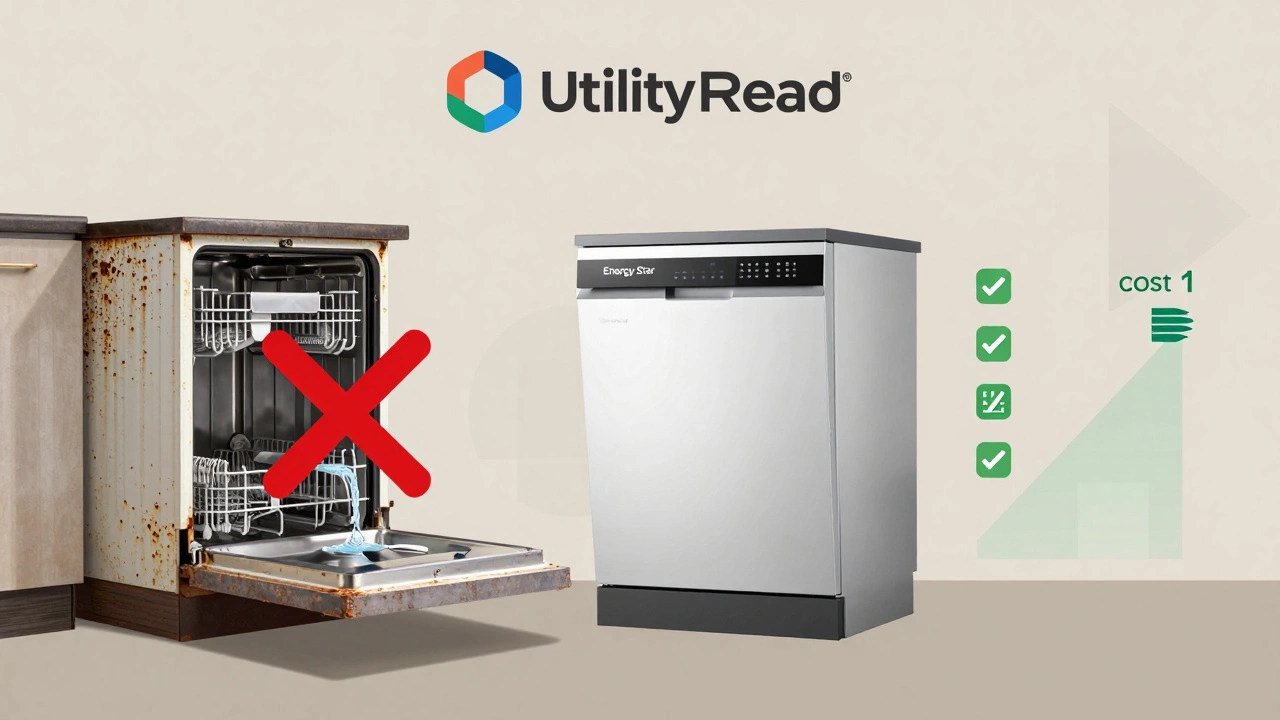
There’s a tipping point. If your dishwasher is older than 10 years, and you’re facing multiple repairs, replacement is smarter. Modern dishwashers use 30% less water and 20% less energy than models from 2010. That adds up over time.Also, if your unit is noisy, leaks, or takes two cycles to clean dishes, it’s not just broken-it’s inefficient. New models have better spray patterns, soil sensors, and quiet motors. You’ll notice the difference.
Check if your current dishwasher qualifies for a utility rebate. Many cities and power companies offer $50-$150 cash back for swapping an old dishwasher for an Energy Star model.
Common mistakes DIYers make
People rush. They skip turning off the power. They force parts that don’t come out easily. They use the wrong screwdriver and strip screws. They buy the wrong part because they didn’t check the model number.Here’s how to avoid them:
- Always unplug the dishwasher or flip the breaker. Even when it’s off, there’s live voltage inside.
- Take photos before disconnecting wires. Label them with tape if needed.
- Don’t use pliers on plastic parts. They crack.
- Use genuine or OEM parts. Cheap aftermarket ones fail faster.
- Don’t ignore the manual. Even if it’s old, it has diagrams and error codes.
Final reality check
Are dishwashers easy to fix? Yes-if you’re patient, willing to learn, and start with the simple stuff. No-if you expect to fix a control board without tools or experience.Most people who try DIY repair succeed on their first try. They clean the filter, replace the spray arm, or swap the heating element. They feel proud. They save money. They learn something.
But if you’re uncomfortable with tools, or if your dishwasher is still under warranty, call a technician. There’s no shame in that. The goal isn’t to fix everything yourself. It’s to fix what you can-safely and effectively.
Start small. Clean the filter today. If that doesn’t help, look up your model number. You might be one part away from a working dishwasher again.
Can I fix my dishwasher without any tools?
You can clean the filter and check for obvious clogs with just your hands and a toothbrush. But most repairs-like replacing a pump or heating element-require a screwdriver, pliers, and possibly a multimeter. If you have no tools, you’re limited to basic cleaning. For anything deeper, you’ll need basic hand tools.
How do I find my dishwasher’s model number?
Look inside the dishwasher door frame, on the side panel, or on the top edge of the tub. It’s usually printed on a sticker with letters and numbers like "WDT730PAHZ" or "KUDS301XSS2." Write it down before you start any repair. You’ll need it to order the right parts.
Is it worth repairing a 12-year-old dishwasher?
Generally, no. Dishwashers last 8-12 years on average. After that, parts become harder to find, efficiency drops, and repairs cost more than 50% of a new unit’s price. If you’re spending over $200 on repairs for a 12-year-old model, replacing it is the smarter financial move-and better for your utility bills.
Why does my dishwasher smell bad even after cleaning?
A lingering odor usually means mold or food residue in the drain hose or garbage disposal connection. Run a cycle with a cup of white vinegar on the bottom rack and baking soda sprinkled in the detergent cup. Also, disconnect and clean the drain hose if it’s accessible. If the smell persists, the pump or seal might be degraded and need replacement.
Can a clogged drain cause my dishwasher to leak?
Yes. If water can’t drain properly, it backs up and can overflow through the door seal or overflow tube. This looks like a leak, but it’s actually a drainage issue. Clean the filter and check the drain hose for kinks or blockages. If the problem continues, the pump may be failing.