
- 8 Oct 2026
- Gideon Thornton
- 0
Boiler Repair vs. Replace Calculator
Enter your details below to estimate total repair costs and receive a recommendation on whether to repair or replace your boiler.
Repair Cost Estimator
Estimated Total Repair Cost
£0
- Callout:
- Labour:
- Parts:
Repair vs. Replace Decision
Recommendation:
--You’re standing in your kitchen, shivering because the hot water just stopped, and the radiator upstairs is as cold as a slab of ice. The first thing flashing through your mind isn’t the engineering fault-it’s the bill. How much is this going to hurt? If you’re looking for a straight answer, here it is: most standard boiler repair jobs in the UK will set you back between £150 and £350. But that number can swing wildly depending on whether you need a simple part swap or a major component replacement like a heat exchanger.
The reality is that boiler repair pricing isn’t one-size-fits-all. It’s a mix of labour time, part availability, and urgency. A Tuesday morning appointment with a local Gas Safe registered engineer costs very different money than a Sunday night emergency callout when the temperature outside is dropping below freezing. Understanding what drives these costs helps you avoid getting ripped off and ensures you’re paying for actual value, not just panic.
Breaking Down the Cost Components
When an engineer quotes you, they aren’t just picking a number out of thin air. They are calculating three distinct elements: the callout fee, the hourly labour rate, and the parts. Knowing how these stack up lets you question quotes intelligently.
First, there’s the Callout Fee, which is essentially the cost for the engineer to drive to your property and diagnose the issue. In most UK cities, including Bristol where I live, this ranges from £40 to £80. Some engineers waive this if you proceed with the repair, but many charge it regardless because their van time is valuable.
Next comes the Labour Rate. This is the hourly wage for the skilled work. Expect to pay between £45 and £70 per hour for a qualified professional. Complex jobs, like replacing a printed circuit board (PCB) or flushing a sludged system, might take two to four hours. That’s why a "simple" job can quickly escalate into a £300+ bill if the diagnosis takes longer than expected.
Finally, there are the Spare Parts. This is where prices vary the most. A generic diverter valve might cost £20-£40, while a proprietary heat exchanger for a specific Vaillant or Worcester Bosch model could run upwards of £200. Always ask for the part cost separately from the labour cost so you know exactly what you’re paying for.
Common Repairs and Their Typical Prices
Not all faults are created equal. Here is a realistic look at what common issues cost to fix in 2026, based on average market rates across the UK.
| Component/Fault | Average Part Cost | Average Labour Time | Total Estimated Cost |
|---|---|---|---|
| Thermocouple | £10 - £25 | 1 hour | £90 - £130 |
| Diverter Valve | £20 - £50 | 1-2 hours | £150 - £250 |
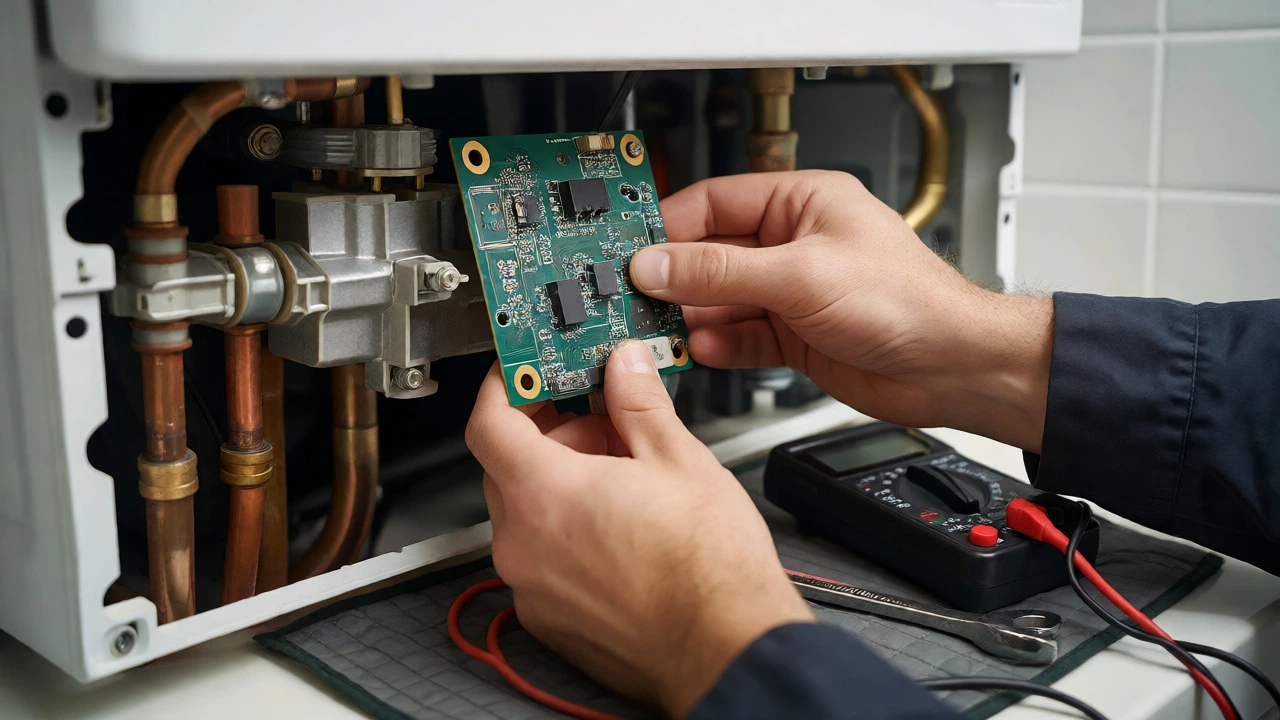
| Printed Circuit Board (PCB) | £80 - £200 | 1-2 hours | £200 - £400 |
| Heat Exchanger | £150 - £400+ | 2-4 hours | £300 - £700 |
| Fan Motor | £50 - £120 | 1-2 hours | £150 - £300 |
| Gas Valve | £60 - £150 | 1-2 hours | £180 - £350 |
Notice the gap between a thermocouple fix and a heat exchanger replacement. If your boiler is over 10 years old and needs a heat exchanger, you’re spending nearly half the cost of a new unit. This brings us to the critical decision point: repair or replace?
Repair vs. Replace: When Does It Make Sense?
This is the million-dollar question-or rather, the thousand-pound question. There is a general rule of thumb among heating engineers: if the repair cost exceeds 50% of the price of a new boiler, consider replacing it. But it’s not just about the math; it’s about reliability.
If your Combi Boiler is under warranty, get the repair done. You’ve already paid for the peace of mind, so use it. However, if the boiler is out of warranty and more than 10-12 years old, frequent breakdowns are likely. Replacing an older model with a modern condensing boiler can improve energy efficiency by up to 30%, saving you money on gas bills long-term. A new boiler installation typically costs between £2,000 and £3,500, depending on complexity and brand.
Conversely, if you have a relatively new boiler (under 7 years) and the issue is a minor part like a fan or sensor, repair is almost always the cheaper option. Don’t let a pushy salesman talk you into a new system for a £100 PCB fix.
Hidden Costs and Emergency Callouts
The quoted price on the phone rarely matches the final invoice if things go wrong. What are the hidden traps?
- Access Issues: If your boiler is in a tight cupboard or requires scaffolding to reach, expect extra charges. Engineers hate crawling into awkward spaces without compensation.
- System Flushing: If the heat exchanger failed due to sludge buildup, simply replacing the part won’t fix the underlying problem. You’ll need a power flush, which adds £300-£500 to the bill. Skipping this often leads to the new part failing within months.
- Emergency Rates: Needing help on a bank holiday or after 8 PM? Add 25% to 50% to the labour rate. It’s annoying, but it’s the cost of convenience.
Also, be wary of "fixed-price" services that seem too good to be true. Some companies offer a £60 diagnostic fee that includes a free repair quote. While this sounds great, they often make their margin on expensive, overpriced spare parts. Always check reviews specifically mentioning "hidden costs" before booking.
How to Save Money on Boiler Repairs
You don’t have to accept the first quote. Here are practical ways to keep costs down without sacrificing quality.
- Get Three Quotes: Never rely on a single opinion. Get quotes from independent Gas Safe registered engineers and compare them. If one is significantly higher, ask why. Is it the brand of part used? Is it their reputation?
- Check Your Warranty: Even if you think it’s expired, check the paperwork. Many manufacturers offer extended warranties if you had annual servicing done. If you have proof of service, the repair might be covered entirely.
- Maintain Regularly: An annual service costs around £80-£120. It catches small leaks or pressure drops before they become catastrophic failures. Prevention is infinitely cheaper than cure.
- Buy Your Own Parts (Carefully): For simple fixes like a diverter valve, some DIY-savvy homeowners buy the part online and pay the engineer only for labour. Note: Most engineers will refuse to install third-party parts if it voids their own workmanship guarantee, so ask first.
Frequently Asked Questions
Is it worth repairing an old boiler?
Generally, no. If your boiler is over 15 years old and requires a major component replacement like a heat exchanger or PCB, the repair cost often approaches the price of a new, more efficient model. New boilers also come with long warranties (often 7-10 years), whereas repaired old units have limited guarantees.
How long does a typical boiler repair take?
Most standard repairs, such as replacing a fan, pump, or diverter valve, take between 1 and 3 hours. More complex jobs involving a heat exchanger replacement or system flushing can take a full day. The engineer will usually give you a time estimate after diagnosing the fault.
Do I need to turn off my boiler before the engineer arrives?
No, leave it as is. The engineer needs to see the error codes on the display and test the system's operation. Turning it off might clear the fault code, making diagnosis harder. Just ensure the area around the boiler is accessible.
What should I do if my boiler breaks down completely?
First, check your gas supply and electricity. Then, try resetting the boiler once according to the manual. If it doesn't restart, note the error code displayed. Contact a Gas Safe registered engineer immediately, especially if you smell gas or suspect a leak. Do not attempt to open the casing yourself unless you are qualified.
Are boiler repair costs higher in London than elsewhere?
Yes, labour rates in London and the South East are typically 20-30% higher than in the North or Midlands due to higher operating costs for businesses and greater demand. A standard repair costing £200 in Manchester might cost £260 in Central London.