- 10 Aug 2026
- Gideon Thornton
- 0
Boiler Service Cost & Savings Calculator
Your Situation
Service Costs
Efficiency Losses
Total Estimated Impact
Includes service fees + lost efficiency money
- DIY Kit Cost: ~£30 (One-time)
- Risk Factor:
- Warranty Status:
Enter your details to see how much you might save or lose over time.
It is August 2026. The house is warm, the water is hot, and for a moment, you might think your boiler is a complex heating system that provides hot water and central heating to homes will run forever without attention. Then you remember the annual service reminder. Your mind immediately jumps to the cost of calling a professional. It can easily run between £80 and £120 in places like Bristol or London. So, the question strikes you: "Can I just do it myself?"
The short answer is no, not entirely. But the long answer is more nuanced. You can perform several critical maintenance tasks yourself to keep your system efficient and extend its life. However, touching the internal combustion components of a gas boiler without certification is illegal in the UK and incredibly dangerous. This guide breaks down exactly what you can safely handle as a homeowner and where you absolutely need a qualified professional.
What Does a Professional Boiler Service Actually Involve?
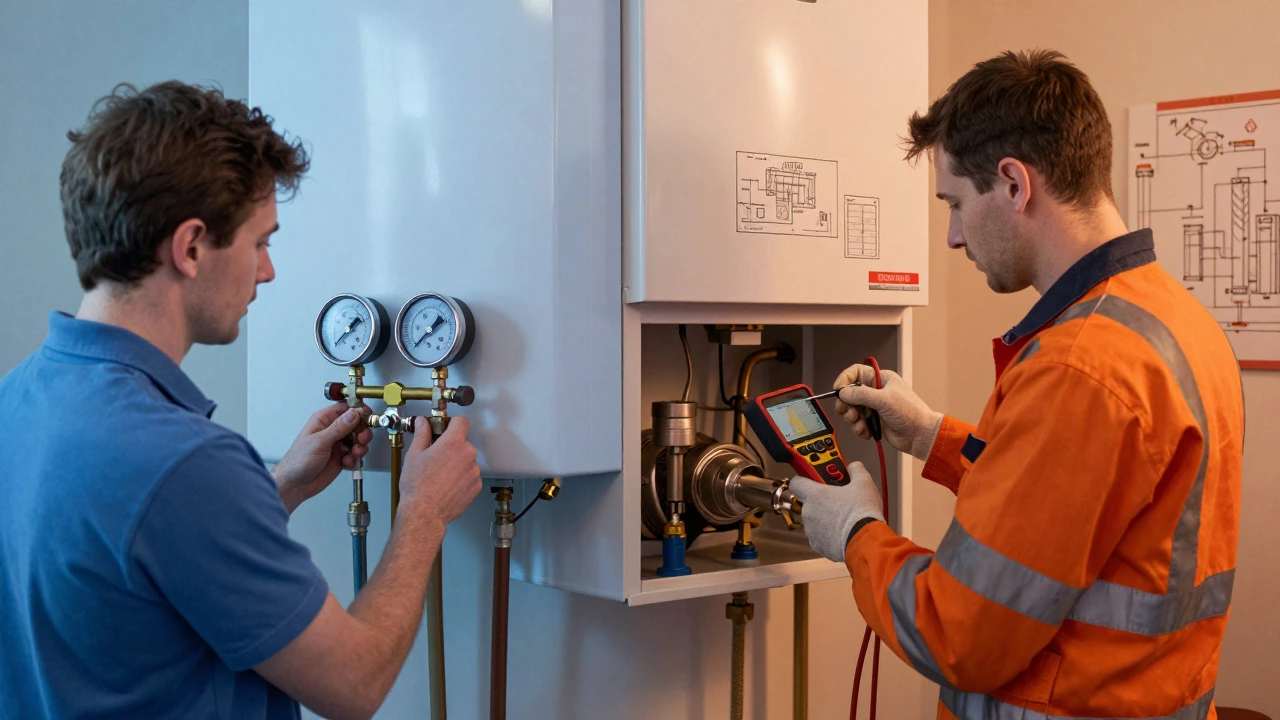
To understand what you can skip, you first need to know what a full service entails. A registered Gas Safe Engineer is a technician certified by Gas Safe Register to work legally on gas appliances in the UK performs a series of checks that go beyond a simple visual inspection. They are looking for signs of wear, carbon monoxide leaks, and efficiency drops.
During a standard service, the engineer will:
- Strip the casing: Remove the outer panels to access internal components.
- Check combustion: Use a flue gas analyzer to measure the ratio of oxygen, carbon dioxide, and carbon monoxide. This ensures the gas is burning cleanly.
- Inspect seals and gaskets: Look for cracks in the heat exchanger or door seals that could let gas escape.
- Test safety devices: Ensure the flame failure device works correctly if the flame goes out unexpectedly.
- Clean key parts: Vacuum out dust from the fan and clean the condensate trap.
These steps require specialized tools and legal certification. If you tamper with these parts without being Gas Safe registered, your home insurance may become void if an accident occurs. More importantly, you risk poisoning yourself and your family with carbon monoxide, a silent killer that has no smell or taste.
DIY Maintenance: What You Can (and Should) Do Yourself
While you shouldn't open up the boiler's combustion chamber, there are several external maintenance tasks that are perfectly safe for a homeowner to perform. In fact, doing these regularly can prevent many common breakdowns and save you money on emergency call-outs.
1. Bleeding Radiators
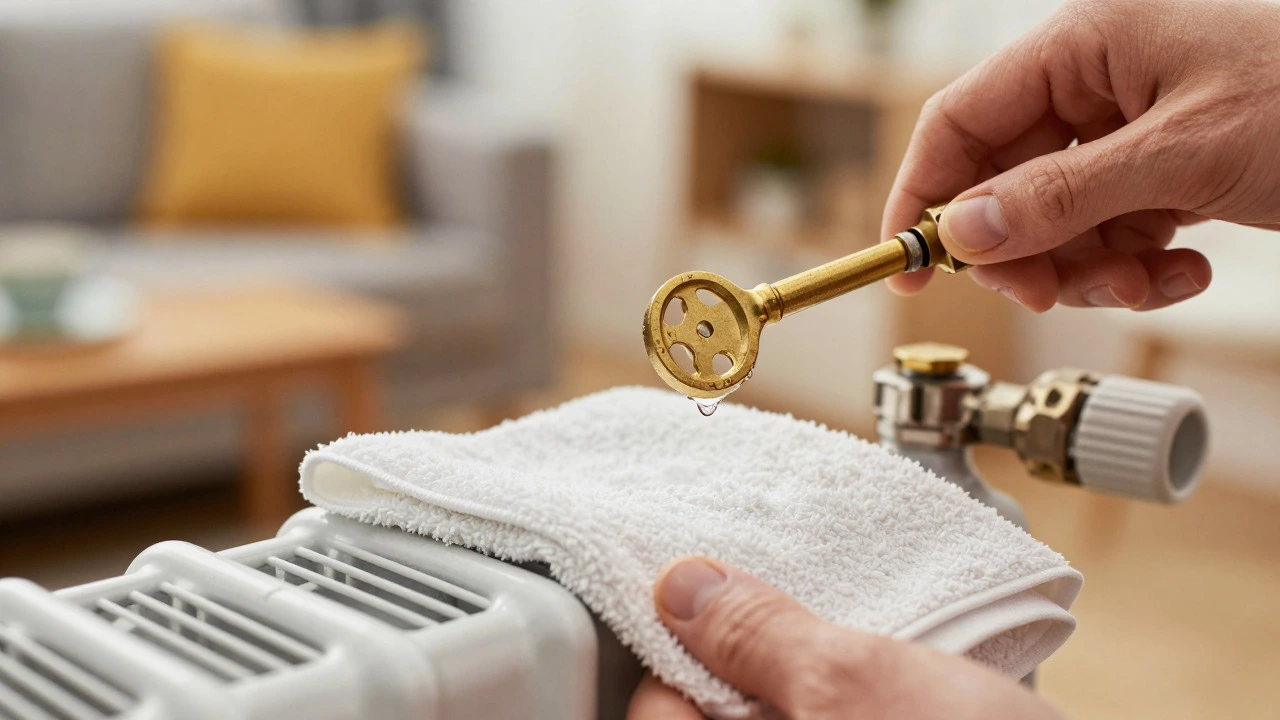
If your radiators feel cold at the top but warm at the bottom, they have air trapped inside. This reduces efficiency and makes your boiler work harder. You can fix this with a radiator key or a flat-head screwdriver, depending on your valve type.
- Turn off the heating and let the system cool down.
- Place a towel under the bleed valve (usually at the top corner).
- Insert the key or screwdriver and turn it counter-clockwise slightly. You will hear a hissing sound as air escapes.
- Once water starts to drip out, tighten the valve again.
- Repeat for all radiators.
2. Checking Boiler Pressure
Most modern combi boilers operate best between 1 and 1.5 bar. If the pressure drops below 0.8 bar, the boiler may lock out. You can check this via the pressure gauge on the front of the unit. If it’s low, you can repressurize it using the filling loop-a flexible hose connecting the mains water supply to the heating system. Open the valves slowly until the needle hits 1.2 bar, then close them immediately. Over-pressurizing can trigger the pressure relief valve, causing water to leak from the side of the boiler.
3. Cleaning the Condensate Pipe
In colder months, the plastic pipe running from your boiler to the outside drain can freeze. This causes the boiler to shut down as a safety precaution. While you can’t prevent freezing entirely, you can ensure the pipe isn’t blocked by debris. Check the outdoor outlet regularly. If it’s frozen, pour a kettle of warm (not boiling) water over it to thaw it. For prevention, insulating the pipe with foam lagging is a cheap and effective DIY job.
4. Keeping the Area Clear
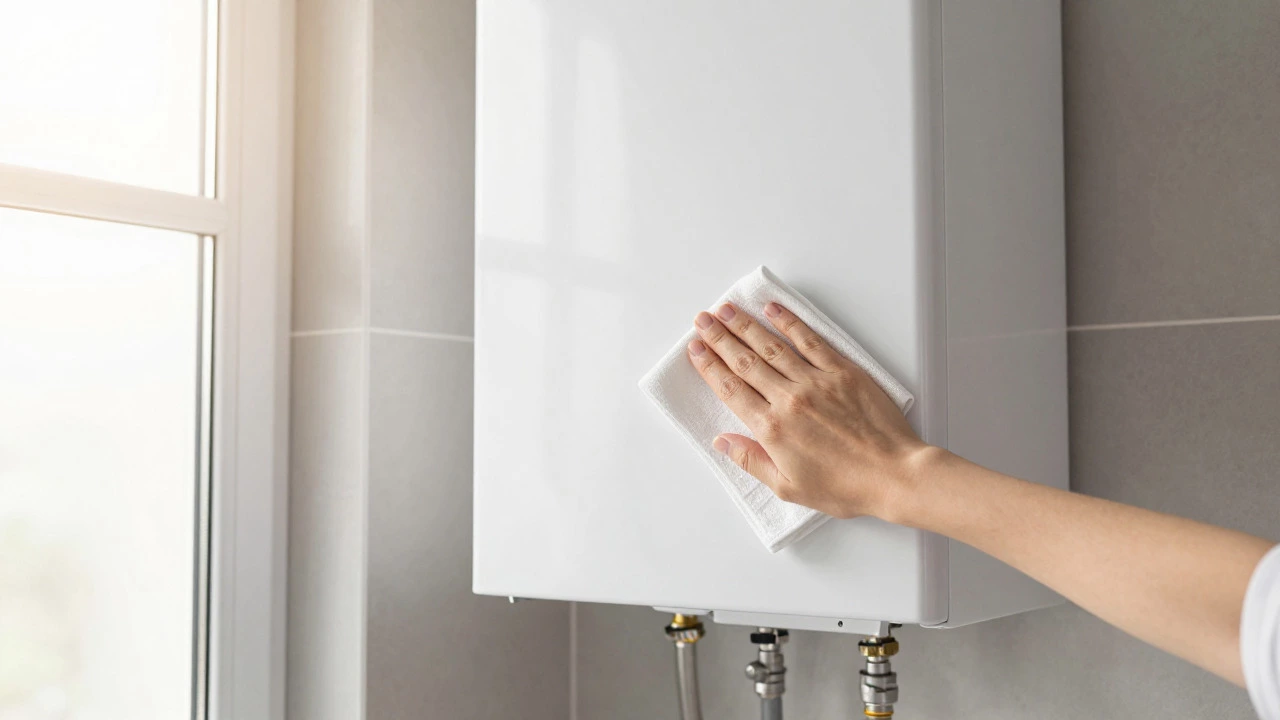
Your boiler needs adequate ventilation. Never store boxes, paint cans, or cleaning supplies directly against the boiler or within one meter of it. Dust buildup around the intake vents can restrict airflow, causing overheating. Wiping down the exterior and ensuring the room is well-ventilated takes five minutes a month but pays off in reliability.
The Legal Reality: Gas Safe Registration in the UK
In the United Kingdom, working on gas appliances is strictly regulated. Since 2009, only engineers registered with the Gas Safe Register is the official body responsible for registering gas engineers in Great Britain can legally carry out work on gas fittings. This replaced the old CORGI registration.
If you are a landlord, an annual gas safety check is mandatory by law. Tenants can request to see the certificate. For homeowners, it is not legally required to have an annual service, but it is highly recommended. Why? Because most boiler manufacturers require proof of annual servicing to keep the warranty valid. If your boiler breaks down after three years and you cannot show service records, the manufacturer may refuse to cover repair costs, leaving you with a bill of hundreds of pounds.
Risks of DIY Boiler Repairs
Let’s be clear about the dangers. A boiler burns gas to heat water. If that process is interrupted or inefficient, two major risks arise:
- Carbon Monoxide Poisoning: Incomplete combustion produces CO. It binds to hemoglobin in your blood faster than oxygen, leading to suffocation at a cellular level. Symptoms include headaches, dizziness, nausea, and confusion. By the time you realize something is wrong, it may be too late. Installing a CO alarm near the boiler is non-negotiable.
- Gas Leaks: Loose connections or cracked pipes can release methane into your home. Methane is explosive. A single spark from a light switch could cause a catastrophic explosion.
Even if you are handy with tools, you lack the calibrated instruments needed to detect microscopic leaks or analyze flue gases accurately. A multimeter won’t tell you if your burner is producing lethal fumes.
| Task | Who Should Do It? | Risk Level | Tools Required |
|---|---|---|---|
| Bleeding Radiators | Homeowner | Low | Radiator key, towel |
| Repressurizing System | Homeowner | Low | Filling loop (built-in) |
| Cleaning Condensate Trap | Homeowner (External Only) | Medium | Warm water, cloth |
| Checking Flue Gas Analysis | Gas Safe Engineer | High | Flue gas analyzer |
| Replacing Heat Exchanger | Gas Safe Engineer | Very High | Specialized wrenches, sealant |
| Electrical Component Testing | Gas Safe Engineer | High | Multimeter, isolation procedures |
When to Call a Professional Immediately
Don’t wait for the annual service date if you notice any of these warning signs. These indicate immediate safety hazards or impending failure:
- Noisy operation: Kettling sounds (like a boiling kettle) suggest limescale buildup in the heat exchanger. While you can flush the system, internal descaling often requires professional chemicals and equipment.
- Yellow flame: A healthy gas flame should be blue. A yellow or orange flame indicates incomplete combustion and potential CO production.
- Condensate leaks: Water pooling around the base of the boiler usually means a blocked condensate pipe or a cracked pump seal.
- Error codes: Modern boilers display fault codes (e.g., F.28, E.12). While you can look these up online, resetting them without fixing the root cause is temporary at best and dangerous at worst.
- Dropped pressure despite repressurizing: If you have to add water every week, you have a leak in the system. Finding small leaks in pipework behind walls requires professional detection tools.
Cost-Benefit Analysis: DIY Maintenance vs. Annual Service
Let’s talk numbers. An annual service in Bristol typically costs between £75 and £120. A DIY maintenance kit (radiator key, pressure test gauge, insulation foam) costs less than £30 upfront.
If you only do DIY tasks, you save £80+ per year. However, consider the lifespan of a boiler. A well-maintained condensing boiler lasts 10-15 years. A neglected one may fail in 7-8 years due to corrosion or scale. Replacing a boiler costs between £2,000 and £4,000 including installation. That’s a massive difference.
Furthermore, efficiency matters. A dirty burner or scaled heat exchanger can reduce efficiency by 5-10%. On an average household energy bill of £2,500 per year, a 5% loss is £125 wasted annually. Over ten years, that’s £1,250 lost to inefficiency-far more than the cost of services.
How to Choose a Reliable Gas Safe Engineer
If you decide to hire a pro, don’t just pick the first name on Google. Here is how to vet them:
- Check their ID: Every Gas Safe engineer must carry a photo ID card with a unique registration number. Verify this number on the official Gas Safe Register website.
- Read recent reviews: Look for consistency in feedback regarding punctuality, cleanliness, and transparency in pricing.
- Avoid cash-only deals: Reputable companies provide invoices. Cash-only operators may be uninsured or unregistered.
- Ask about warranty implications: Confirm that their service will be accepted by your boiler manufacturer for warranty purposes.
Conclusion: The Smart Hybrid Approach
You don’t have to choose between total neglect and handing over complete control. The smart approach is a hybrid model. Perform the external maintenance tasks yourself monthly: bleed radiators, check pressure, clear vents, and inspect the condensate pipe. Then, schedule a professional Gas Safe engineer once a year for the internal safety checks and combustion analysis.
This strategy keeps your home safe, your warranty valid, and your energy bills lower. It respects the complexity of the machinery while empowering you as a proactive homeowner. Remember, when it comes to gas, caution is never excessive. Your comfort is worth the investment in professional peace of mind.
Is it illegal to service your own gas boiler in the UK?
Yes, it is illegal for anyone who is not registered with the Gas Safe Register to carry out work on gas appliances. This includes servicing, repairing, or installing gas boilers. While homeowners can perform minor external maintenance like bleeding radiators, opening the boiler casing to touch internal gas components requires certification.
How often should I get my boiler serviced?
You should get your boiler serviced annually. Most manufacturers require yearly servicing to keep the warranty valid. Additionally, annual checks help identify small issues before they become expensive repairs and ensure the appliance is operating safely without emitting carbon monoxide.
What happens if I don't service my boiler?
Neglecting boiler servicing can lead to reduced efficiency, higher energy bills, and increased risk of breakdowns. More critically, it poses safety risks such as carbon monoxide leaks or gas explosions. If your boiler breaks down and lacks service records, the manufacturer may void your warranty, leading to costly replacement expenses.
Can I repressurize my boiler myself?
Yes, repressurizing your boiler is a common DIY task. Most modern boilers come with a built-in filling loop. You simply open the valves to let water in until the pressure gauge reads between 1 and 1.5 bar. However, if you find yourself needing to repressurize frequently, it indicates a leak in the system that requires a professional to fix.
How much does a boiler service cost in 2026?
In 2026, the cost of a standard boiler service in the UK typically ranges from £75 to £120, depending on your location and the provider. Prices may be higher in major cities like London or Bristol. Some companies offer annual maintenance plans that bundle servicing with priority call-out rates, which can be cost-effective for older systems.
What are the signs of a faulty boiler?
Common signs include unusual noises (kettling), a drop in pressure, leaks around the unit, a yellow flame instead of blue, and error codes on the display. Other indicators are slow heating, cold radiators, or the smell of gas. If you suspect a gas leak, evacuate the property immediately and call the National Gas Emergency Number.