- 5 Jan 2026
- Gideon Thornton
- 0
Boiler Cost Calculator
Calculate Your Boiler Replacement Cost
Get an estimate of what your boiler replacement will actually cost based on your specific situation.
Estimated Total Cost: £0
Boiler Unit: £0
Installation: £0
Additional Work: £0
Note: Prices shown are averages. Actual costs may vary based on location, property, and installer.
0
Replacing a boiler isn’t just another home repair job-it’s one of the biggest single expenses most UK households face. If you’re asking how much a new boiler costs, you’re not just looking for a number. You want to know if you’re getting ripped off, what you’re actually paying for, and whether it’s worth it right now. The answer isn’t simple. A boiler can cost anywhere from £1,500 to over £5,000. But the real question is: what’s behind those numbers?
What Type of Boiler Are You Replacing?
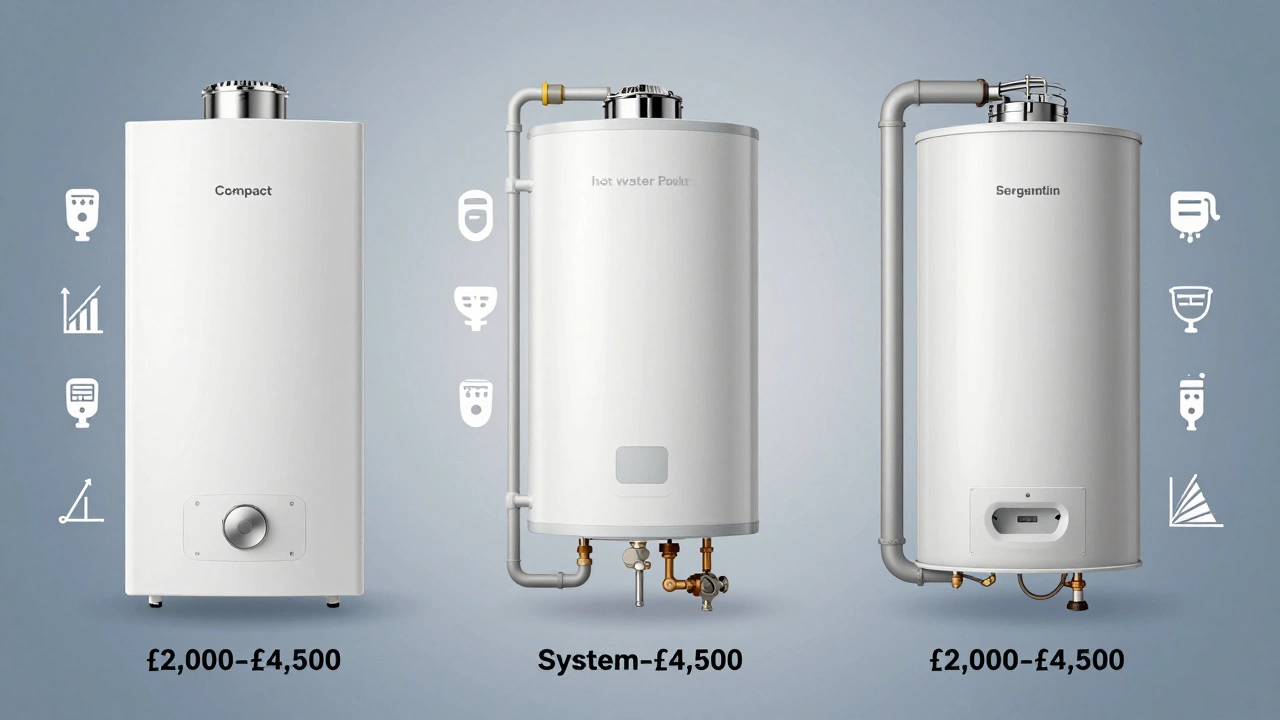
The type of boiler you choose drives the price more than anything else. In the UK, three main types dominate the market: combi, system, and regular boilers. Most homes built after 1990 use a combi boiler. These units heat water on demand and don’t need a tank, making them compact and efficient. They’re the most popular-and the most affordable to install. A standard combi boiler, including fitting, usually runs between £2,000 and £3,200.
If your home has a separate hot water tank, you likely have a system boiler. These are common in larger houses or places with multiple bathrooms. They’re more complex to install because they connect to existing tanks and pipes. Expect to pay £2,500 to £4,000 for a system boiler, depending on the brand and whether your system needs upgrades.
Regular boilers are the oldest type. They need a cold water tank in the loft and a hot water cylinder. They’re rare in new builds but still found in older terraced houses. Replacing one is trickier and more expensive because it often means working around old pipework. Prices range from £2,800 to £4,500, and sometimes higher if you’re upgrading the whole system.
Brands Matter-But Not as Much as You Think
When you search online, you’ll see ads pushing premium brands like Worcester Bosch, Vaillant, or Baxi. These companies spend millions on advertising, and yes, their boilers are reliable. But here’s the truth: a budget boiler from Ideal, Glow-worm, or Intergas can last just as long if installed properly. The difference isn’t in longevity-it’s in warranty length and noise levels.
Worcester Bosch Greenstar i, for example, costs about £1,200 for the unit alone. A comparable Ideal Logic Combi might be £800. But the installation cost? That’s the same. A good engineer charges £600 to £900 to fit either one. So if you’re choosing between them, don’t pay extra for the name unless you need the 10-year warranty. Most people never use it.
Installation Costs Are Where the Real Money Goes
Here’s what most people miss: the boiler itself is only about 40% of the total price. The rest? Labour, pipework, flue changes, and system flushing. If your old boiler was installed in 2005, chances are your pipes are full of sludge. A good installer will insist on a power flush before fitting the new unit. That’s £300 to £500 extra.
Then there’s the flue. If your old boiler vented through the wall and your new one needs a chimney flue, you’re looking at £500-£800 for structural work. Some homes need new gas pipes too. Older properties often have 15mm pipes, but modern boilers require 22mm. That’s another £400-£700.
And don’t forget the thermostat. If you’re still using a manual timer from the 90s, upgrading to a smart thermostat adds £150-£300. It’s not mandatory, but it cuts your gas bill by 10-15% in the first year. That pays for itself.
What’s Included in a Typical Quote?
A proper quote should list everything. Watch out for vague terms like “full installation” or “complete service.” Ask for a breakdown. Here’s what a real quote should include:
- Boiler unit (make, model, output in kW)
- Installation labour (hours and rate)
- Power flush (yes or no)
- Thermostat upgrade
- Flue extension or modification
- Gas pipe upgrades
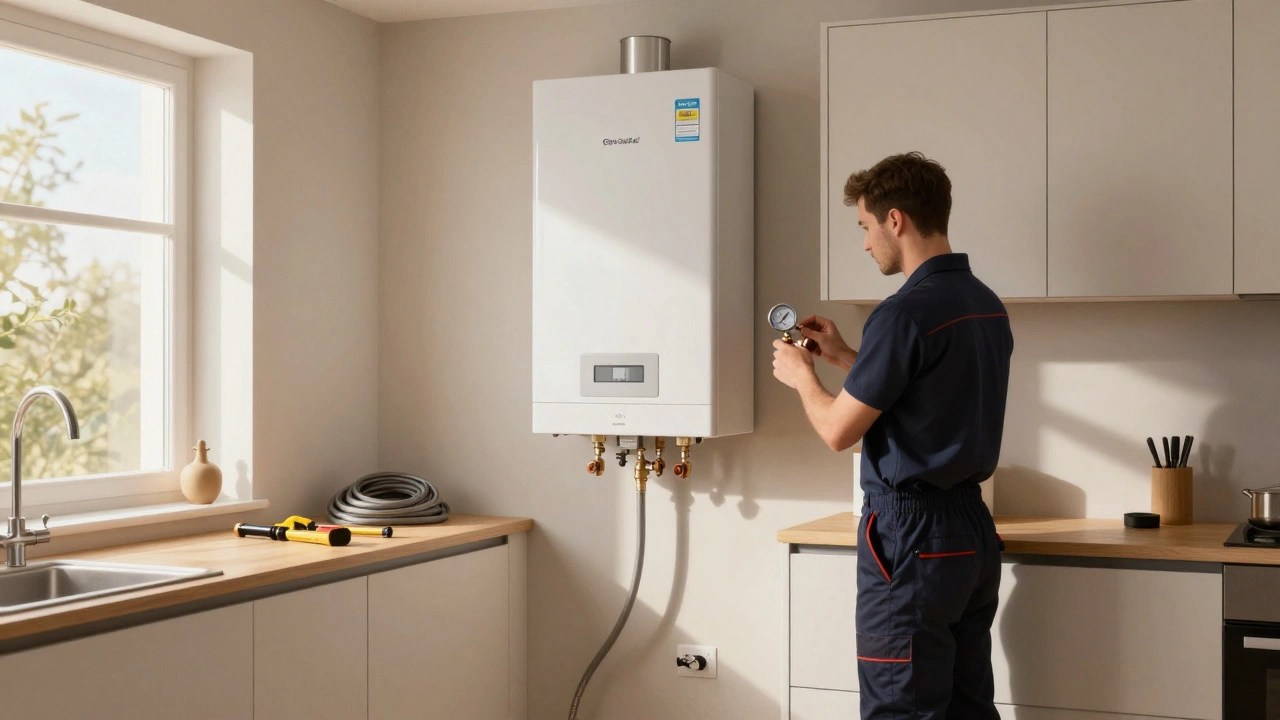
- System pressure test
- Manufacturer warranty registration
- Building regulations compliance certificate
If any of these are missing, the quote is incomplete. Some companies offer “£1,500 boiler deals.” They mean the boiler only. Add installation, flushing, and a new thermostat, and you’re at £3,200. Always ask: “Is this the total price?”
When You Shouldn’t Replace Your Boiler
Not everyone needs a new boiler right now. If your boiler is still working, isn’t leaking, and heats your home evenly, you might be better off waiting. The average boiler lasts 10-15 years. If yours is 8 years old and you’re only paying £100 a year in repairs, it’s not broken-it’s aging.
Replace it only if:
- It’s over 15 years old
- Repair costs exceed £500 in a year
- You’re losing heat or pressure frequently
- Your energy bills are rising without explanation
- You’re planning to sell and want to boost your EPC rating
Some homeowners replace boilers just because they’re “old.” That’s a mistake. A 12-year-old boiler can still be efficient. Check its SEDBUK rating. If it’s an A-rated model, it’s still performing well.
Grants and Schemes That Actually Help
The UK government doesn’t give free boilers anymore-but some help is still out there. The Boiler Upgrade Scheme offers £7,500 toward heat pumps, but only if you’re replacing a fossil fuel boiler. That’s not useful if you want a gas boiler.
What you can get is the Warm Home Discount if you’re on certain benefits. It gives you £150 off your electricity bill. Not a boiler discount, but it helps with winter bills.
Some local councils in Bristol, Gloucester, and Bath offer grants for low-income households. Contact your council’s housing department. They might fund part of the cost if you’re on Pension Credit or Universal Credit and your home is poorly insulated.
There’s also the Energy Company Obligation (ECO4) scheme. If your home has an EPC rating of D or below, you might qualify for a free or heavily discounted boiler. You’ll need proof of income and your EPC certificate. Apply through your energy supplier or a registered installer.
How to Avoid Being Overcharged
Boiler scams are common. Here’s how to stay safe:
- Get at least three quotes. Don’t pick the cheapest. Look for the most detailed.
- Check if the installer is Gas Safe registered. Ask for their ID number and verify it on the Gas Safe Register website.
- Never pay the full amount upfront. Pay 10% deposit, the rest after work is done and you’ve received the certificate.
- Ask for a 12-month guarantee on labour, not just the boiler warranty.
- Don’t let them pressure you into buying extras like water softeners unless you have hard water (check your postcode on a hard water map).
One Bristol homeowner paid £4,200 for a boiler after a door-to-door salesperson claimed his boiler was “dangerous.” An independent engineer checked it and said it was fine. The unit was a cheap model with a fake warranty. He got his money back after reporting the company to Trading Standards.
What Happens After Installation?
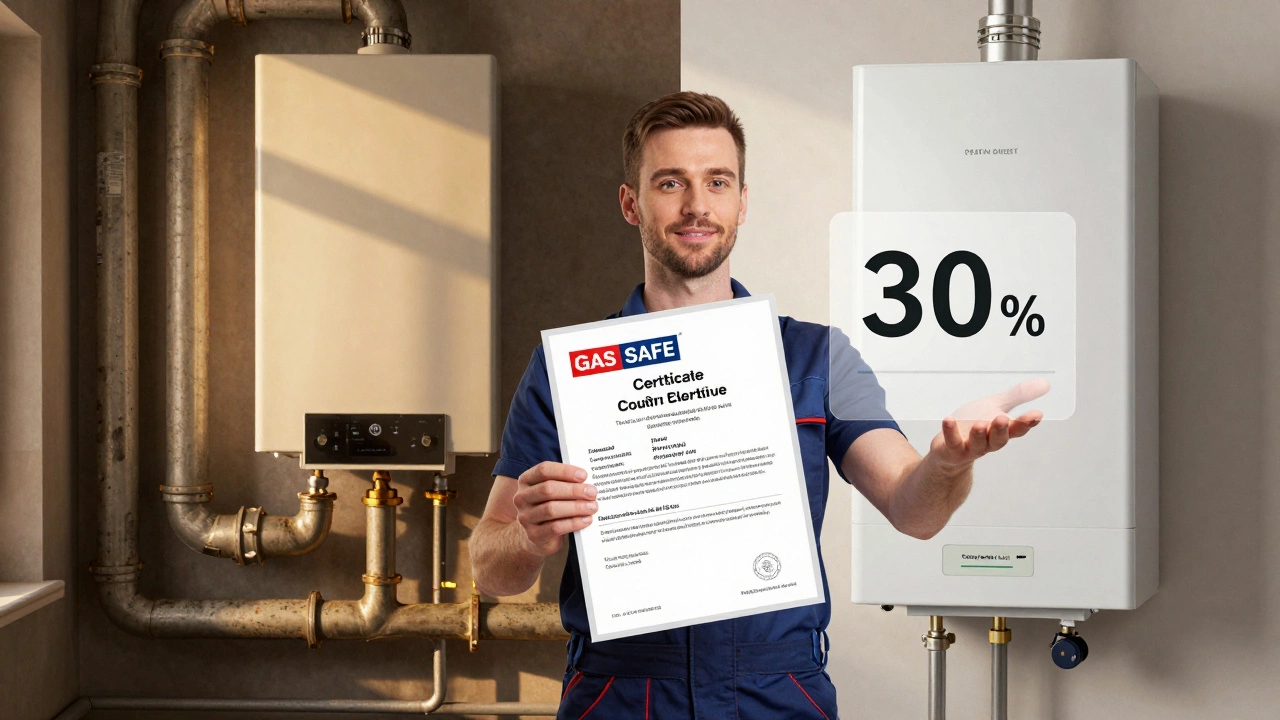
Once the new boiler is in, you’ll get a Gas Safe certificate. Keep it. You’ll need it for insurance and when you sell your home. The installer should also register your warranty with the manufacturer. Don’t assume they did it-check your email or call the company directly.
Set up a yearly service. Most warranties require it. A service costs £80-£120. It’s not optional. Skipping it voids your warranty and increases breakdown risk.
And don’t forget to update your home insurance. Some policies require proof of a working boiler. Others offer discounts for new, efficient models.
Most people don’t think about the long-term savings. A modern A-rated combi boiler can cut your gas bill by 20-30%. If you’re spending £1,200 a year on heating, that’s £240-£360 saved annually. That pays for the boiler in 5-7 years. After that? Pure savings.
How long does a boiler installation take?
Most boiler installations take one full day. If you’re replacing a combi boiler with another combi boiler and no major pipework changes are needed, it can be done in 6-8 hours. If you’re switching from a regular boiler to a combi, or if your system needs flushing or pipe upgrades, it can take two days. Always ask your installer for a timeline before they start.
Can I get a free boiler in 2026?
There are no free boiler schemes for everyone in 2026. However, if you’re on qualifying benefits like Pension Credit, Universal Credit, or Income Support, and your home has a low EPC rating, you might qualify for a free or heavily subsidised boiler through the ECO4 scheme. You’ll need to apply through an approved installer or your energy supplier. Don’t trust companies that promise “free boilers” without asking for proof of eligibility.
Is it cheaper to repair or replace my boiler?
If your boiler is over 10 years old and the repair costs more than £500, replacement is usually the better choice. Older boilers are less efficient, and repairs are temporary fixes. For example, a £400 pump replacement on a 12-year-old boiler might last 18 months. A new boiler costs £2,500 but will last 15 years and save you hundreds in energy bills. Think long-term savings, not just upfront cost.
What size boiler do I need for my home?
For a small flat or one-bedroom home, a 24-27kW boiler is enough. For a three- to four-bedroom house with two bathrooms, go for 28-35kW. Larger homes with multiple bathrooms or underfloor heating need 35-42kW. Don’t oversize-too powerful a boiler cycles on and off too often, wasting energy. Your installer should calculate your heat loss based on your home’s insulation and size.
Do I need to replace my radiators when I get a new boiler?
No, you don’t have to replace radiators unless they’re leaking, corroded, or too small for the new boiler’s output. But if your radiators are cold at the bottom, they’re full of sludge. A power flush can fix this. If you’re installing a high-efficiency condensing boiler, make sure your radiators are large enough to work with lower water temperatures. Older radiators might need upgrading for optimal performance.