- 7 Sep 2026
- Gideon Thornton
- 0
Fixture or Appliance? Repair Guide
Staring at a broken device? Use this decision tree to find out if you need a Plumber or an Appliance Technician.
Step 1: Power Source
Does the device plug into a wall socket or require electricity/gas to function?
You’re standing in your bathroom, staring at a running toilet, and you wonder: should I call an appliance technician or a plumber? It’s a question that trips up plenty of homeowners. The short answer is no, a toilet is not an appliance. It is classified as a plumbing fixture. But why does this distinction matter when both involve water and moving parts? And what exactly separates a washing machine from a toilet in the eyes of manufacturers, insurers, and repair services?
This confusion isn’t just semantic nitpicking. Misclassifying your equipment can lead to calling the wrong professional, voiding warranties, or even misfiling insurance claims. If you’ve ever struggled to find the right person to fix a leaking tap versus a broken dishwasher, this guide will clear up the blurry line between fixtures and appliances. We’ll look at how these categories are defined, why toilets fall into one bucket while fridges sit in another, and what you actually need to know before picking up the phone.
The Core Definition: What Makes Something an Appliance?
To understand why a toilet doesn’t fit the bill, we first need to agree on what an appliance actually is. In general terms, an appliance is a device designed to perform a specific household task, typically requiring electricity, gas, or batteries to operate. Think of it as a machine with a job. A toaster heats bread. A vacuum cleans floors. A fridge keeps milk cold.
Key characteristics of appliances include:
- Power Source: They require energy input (electricity, gas, etc.) to function.
- Mechanical/Electronic Components: They have motors, heating elements, circuits, or sensors.
- Active Function: They actively change the state of something (cooling food, spinning clothes, cooking meals).
- Portability (often): Many appliances can be moved, though built-in units exist.
Now, compare that to a toilet. Does it use electricity? No. Does it have a motor? No. Does it actively cook or clean using power? No. Instead, a toilet relies entirely on gravity and water pressure. It is a passive system. Water flows in, waste flows out, and that’s the extent of its mechanical capability. This fundamental lack of active power consumption places it firmly outside the appliance category.
Plumbing Fixtures vs. Appliances: The Critical Distinction
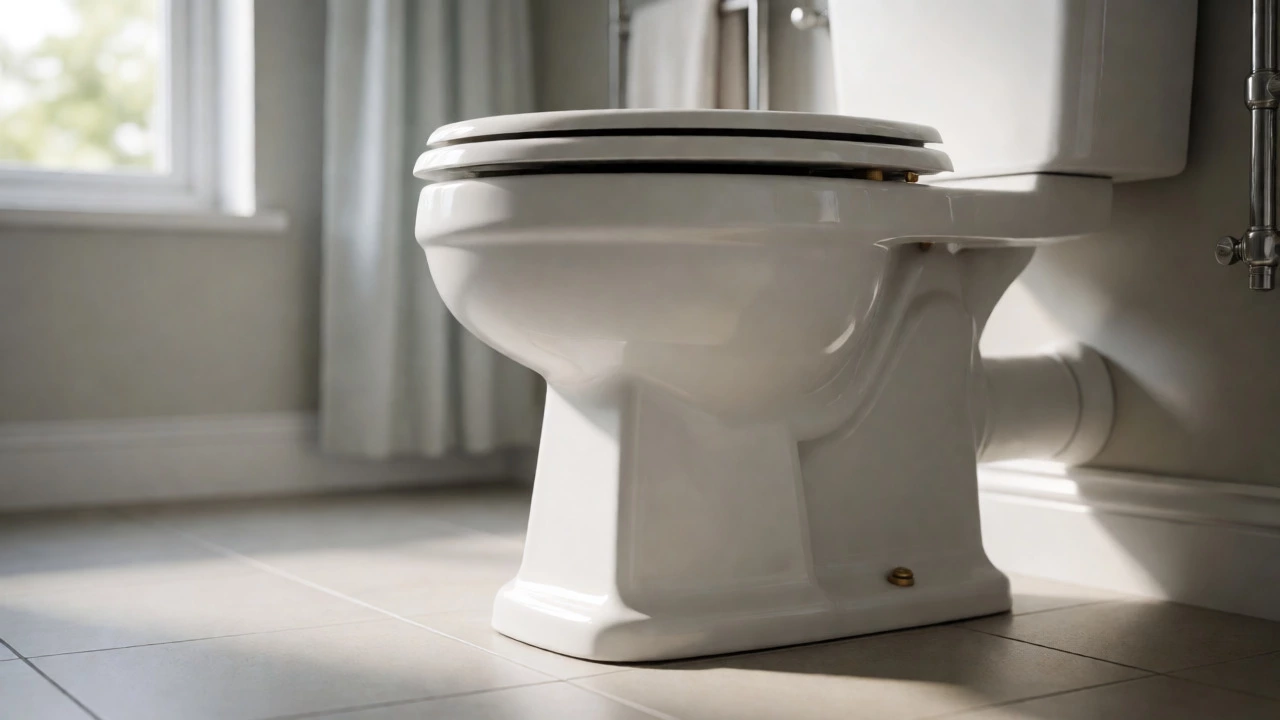
If a toilet isn’t an appliance, what is it? It is a plumbing fixture. A plumbing fixture is any component connected to the plumbing system that delivers water or removes waste. Other examples include sinks, bathtubs, showers, and taps.
The difference comes down to integration and dependency. Appliances are often standalone units that plug into a wall outlet or connect to a gas line. Plumbing fixtures are permanently installed into the building’s infrastructure. You don’t “plug in” a toilet; you bolt it to the floor and connect it to a drain pipe and a water supply line. Remove the toilet, and you leave a hole in the floor. Remove a fridge, and you just have an empty space.
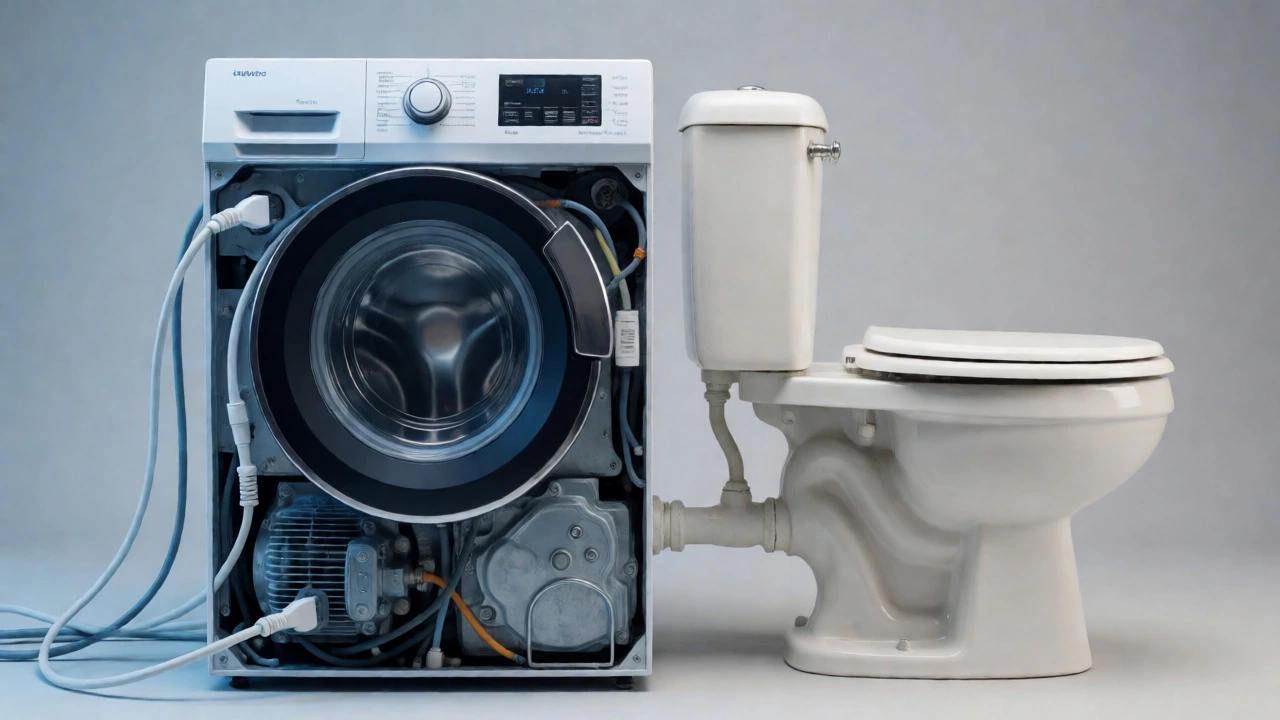
Here’s where it gets tricky for some people: dishwashers and washing machines. These are hybrids. They are appliances because they use electricity to run pumps and heaters, but they also require plumbing connections. However, because their primary function depends on electrical power to drive the cycle, they remain classified as appliances. A toilet has no such electrical dependency. Even smart toilets, which do use electricity for features like heated seats or bidets, are often still categorized under plumbing fixtures by insurers and builders because the core flushing mechanism remains non-electric.
| Feature | Toilet (Plumbing Fixture) | Washing Machine (Appliance) |
|---|---|---|
| Primary Power Source | Water Pressure & Gravity | Electricity |
| Moving Parts | Flapper valve, fill valve | Motor, pump, drum bearings |
| Installation | Permanent connection to pipes | Plug-in + water/drain hose |
| Repair Specialist | Plumber | Appliance Technician |
| Lifespan | 10-20 years (ceramic lasts longer) | 7-12 years (mechanical wear) |
Why the Classification Matters for Repairs and Insurance
You might think, “Who cares what it’s called? It’s broken.” But the label dictates who fixes it and who pays for it. When you search for help online, algorithms and directories separate services based on these categories. Searching for “appliance repair Bristol” might get you someone who specializes in circuit boards and compressors. Show them a cracked ceramic bowl, and they’ll likely turn you away. They aren’t trained to work with PVC pipes, wax rings, or flange bolts.
Insurance policies are equally strict. Homeowners’ insurance typically covers sudden accidental damage to the structure of the home (including plumbing fixtures) but may exclude mechanical breakdowns of appliances unless you have a specific warranty or add-on cover. Conversely, if your washing machine breaks due to normal wear and tear, standard home insurance usually won’t touch it. That’s an appliance issue. If your toilet overflows because a pipe burst inside the wall, that’s a plumbing/structural issue. Knowing the difference saves you from denied claims and wasted time on hold.
Consider a scenario common in older homes in Bristol: a slow leak under the toilet base. Is this an appliance fault? No. It’s usually a failed wax seal or a loose closet bolt. An appliance tech wouldn’t carry replacement wax rings. A plumber would. Calling the wrong person means paying a call-out fee for someone who can’t solve the problem.
The Gray Area: Smart Toilets and Bidet Attachments
Technology is blurring the lines. Enter the smart toilet. These units feature heated seats, automatic lids, warm water sprays, and air dryers. They require an electrical outlet. So, are they appliances now?
Legally and practically, most still classify the main unit as a fixture. The electronic components are secondary accessories. If the flush mechanism fails, you call a plumber. If the heated seat stops warming, you might contact the manufacturer’s electronics support team. Bidet attachments that retrofit onto existing toilets follow similar logic. The attachment itself acts like a small appliance-it needs power-but it’s mounted on a fixture. Most professionals treat the entire assembly as part of the plumbing system for installation purposes, but acknowledge the electrical component for troubleshooting.
If you’re buying a smart toilet, check the warranty carefully. Some manufacturers offer two separate warranties: one for the ceramic/plumbing parts and another for the electronic components. Mixing these up can lead to headaches when you try to return a faulty unit.
How to Identify If Your Device Needs a Plumber or an Appliance Tech
Still unsure? Use this quick decision tree before making a call.
- Does it plug into a wall socket?
- No: Likely a plumbing fixture. Call a plumber.
- Yes: Continue to step 2.
- Is the main function driven by electricity (e.g., cooling, heating, spinning)?
- Yes: It’s an appliance. Call an appliance repair service.
- No: (e.g., a smart toilet where only the seat warms). Call a plumber first for the flush issue; check the manual for electrical issues.
- Is the problem related to water flow, drainage, or leaks?
- Yes: Plumbing issue. Call a plumber.
- No: (e.g., error code E4 on a dishwasher). Appliance issue. Call an appliance tech.
This heuristic works for 95% of household devices. Remember, if it moves things using power, it’s an appliance. If it holds or moves water using gravity/pressure, it’s a fixture.
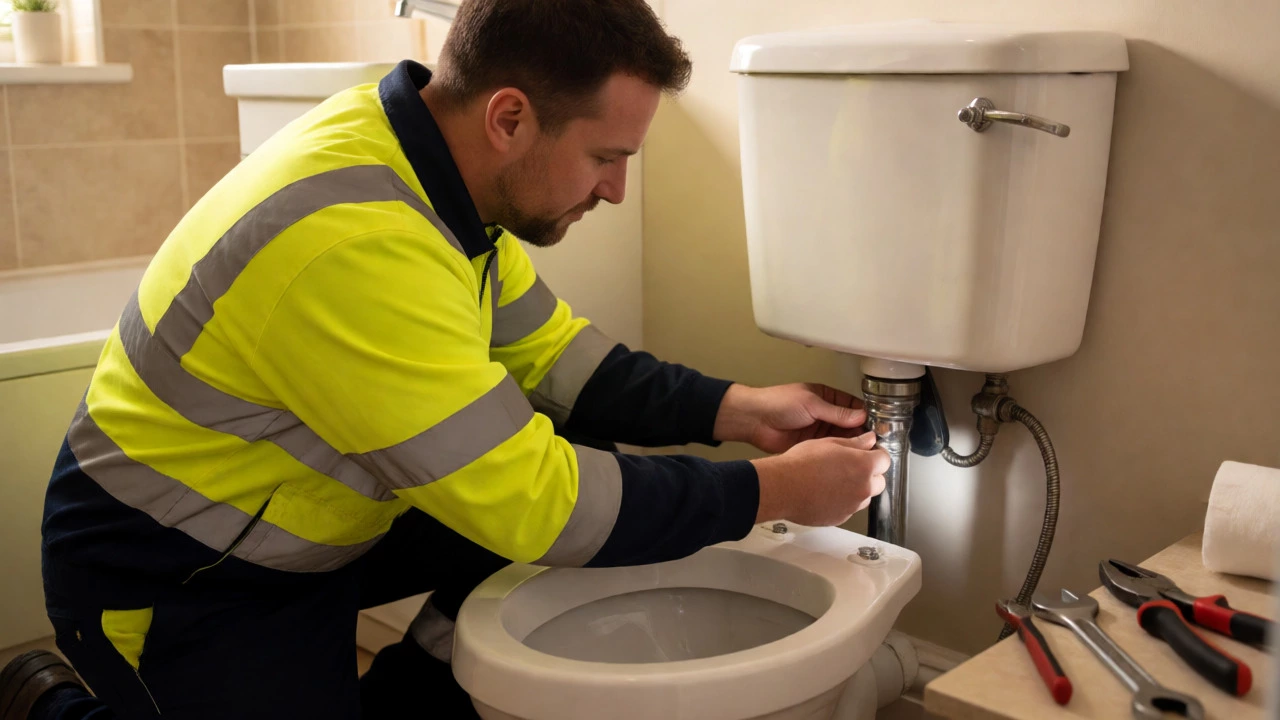
Common Misconceptions About Bathroom Equipment
Many people assume anything in the kitchen is an appliance and anything in the bathroom is a fixture. That’s incorrect. A kitchen sink is a fixture. A bathroom extractor fan is technically an appliance (it uses electricity to move air), though many plumbers handle basic installations. Similarly, a boiler is a complex hybrid-it’s a heating appliance, but it’s deeply integrated into the plumbing system. In the UK, boilers are often serviced by Gas Safe registered engineers who specialize in heating, distinct from general appliance repairers.
Another myth: “If it’s white and ceramic, it’s a fixture.” Not always. Some modern urinals have electronic sensors (appliances) attached to ceramic bowls (fixtures). Always look at the failure point. If the sensor dies, it’s an electronics/appliance issue. If the bowl cracks, it’s a fixture issue.
Practical Tips for Maintaining Your Toilet
Since we’ve established that your toilet is a low-tech fixture, maintenance is simpler than you might think. You don’t need to worry about firmware updates or compressor failures. Focus on these three areas:
- The Flapper Valve: This rubber seal inside the tank degrades over time. If your toilet runs constantly, replacing this $5 part usually solves the problem. No tools required beyond turning off the water.
- The Wax Ring: If you see water pooling around the base, the wax seal underneath has likely failed. This requires lifting the toilet-a job for a confident DIYer or a plumber.
- Mineral Buildup: Hard water in areas like Bristol can clog the rim jets. Use vinegar to dissolve calcium deposits. Don’t use harsh chemicals that can damage the internal plastic components.
Treating your toilet as a simple mechanical system rather than a high-tech gadget makes troubleshooting less intimidating. You’re dealing with water physics, not software bugs.
Is a shower considered an appliance?
No, a standard shower is a plumbing fixture. It relies on water pressure and gravity. However, electric showers (which heat water instantly via an element) contain electrical components, but the shower head and tray themselves remain fixtures. The heating unit is often serviced by electricians or specialized shower technicians, not general appliance repairers.
Why do some websites list toilets under appliances?
Retailers sometimes group toilets with appliances for convenience in shipping or catalog organization, especially for high-end smart models. However, trade professionals, insurers, and building codes strictly categorize them as plumbing fixtures. Always trust the technical definition over marketing labels.
Can I claim my broken toilet on home contents insurance?
Usually, no. Contents insurance covers movable items like furniture and electronics. Structural items, including plumbing fixtures like toilets, sinks, and baths, are typically covered under buildings insurance. Mechanical breakdowns of fixtures are rarely covered unless caused by sudden accidental damage.
Do I need an electrician for a smart toilet?
For installation, yes, if you need a new socket near the toilet, as bathrooms have specific electrical safety regulations (IP ratings). For repairs, if the electronic control board fails, you may need an electrician or the manufacturer’s specialist. For plumbing issues like leaks or blockages, stick with a plumber.
What is the lifespan of a toilet compared to an appliance?
A ceramic toilet bowl can last 50+ years if not physically damaged. Internal mechanisms (flappers, fill valves) need replacement every 5-10 years. In contrast, major appliances like washing machines or fridges typically last 7-15 years before significant mechanical failure occurs due to motor or compressor wear.