Learn the most common electric oven faults-from broken heating elements to faulty sensors-and how to fix them yourself. Save money and get your oven working again without calling a technician.

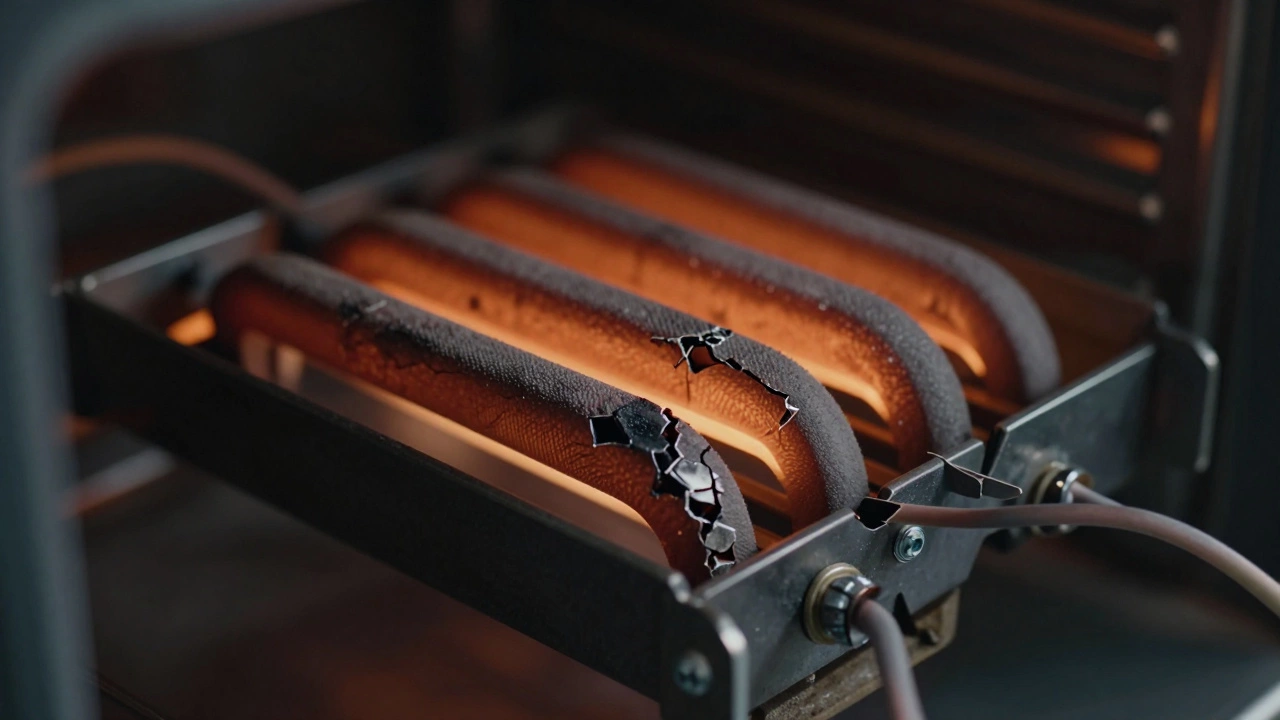
When your faulty oven element, the heating coil inside an electric oven that generates heat to cook food. Also known as oven heating element, it’s one of the most common parts to fail in modern kitchens. Your oven might still light up, the fan might run, and the display might work—but no heat comes out. That’s not a power issue. It’s not a thermostat glitch. It’s usually the oven element itself. Unlike a blown fuse or a broken knob, a damaged element doesn’t just stop working—it can become a safety risk. If it’s cracked, bulging, or has black burn marks, it’s not just broken. It’s dangerous to use.
Most oven elements last 5 to 10 years, but they wear out faster if you’re using high heat often, cleaning with harsh chemicals, or if your home has voltage fluctuations. The element heats up to over 500°F every time you bake or broil. That kind of repeated expansion and contraction eventually causes metal fatigue. You might notice the element glowing unevenly, or see sparks when you turn the oven on. Sometimes, you’ll smell burning plastic or hear a faint popping sound before it fully fails. These aren’t just annoyances—they’re warning signs. A oven heating element, a resistive coil designed to convert electricity into radiant heat. It’s the core of any electric oven’s cooking function. is not something you should ignore. Even if the oven still turns on, using it with a damaged element can overheat other parts, damage the oven cavity, or in rare cases, start a fire.
Fixing it isn’t always a job for a pro. Many homeowners replace the element themselves in under an hour with basic tools: a screwdriver, a multimeter, and a replacement part that matches your oven model. But first, you need to confirm it’s the element and not something else—like a faulty thermostat, a broken relay, or a blown thermal fuse. That’s why knowing the signs matters. If your oven heats unevenly, takes forever to preheat, or only works on broil but not bake, the issue is likely the element. If neither function works, it could be the element, or it could be the control board. That’s where a quick diagnostic saves time and money.
You’ll find plenty of guides online that say "just unplug it and swap it out." But if you don’t know your oven model or buy the wrong part, you’ll end up with a part that doesn’t fit—or worse, one that’s unsafe. That’s why the posts below cover real cases: how to test the element with a multimeter, which brands have the most reliable replacements, what to look for when ordering online, and why some repairs cost less than £50 while others need a technician. We also cover what happens if you keep using a damaged element, how to spot counterfeit parts, and why some ovens are easier to fix than others.
Whether you’re trying to save money, avoid a service call, or just understand why your oven stopped working, the articles here give you the facts—not guesses. No fluff. No theory. Just what actually works when your oven won’t heat up.
Learn the most common electric oven faults-from broken heating elements to faulty sensors-and how to fix them yourself. Save money and get your oven working again without calling a technician.