
- 8 Feb 2026
- Gideon Thornton
- 0
When your boiler breaks down, the first thing you think about is hot water. No shower in the morning. No warm dishes after dinner. No bath for the kids. It’s not just inconvenient-it feels like your home has stopped working. But here’s the truth: does a broken boiler mean no hot water? Not always. It depends on what’s broken, how old your system is, and whether you’ve got a combi boiler or a traditional one.
How Your Boiler Actually Makes Hot Water
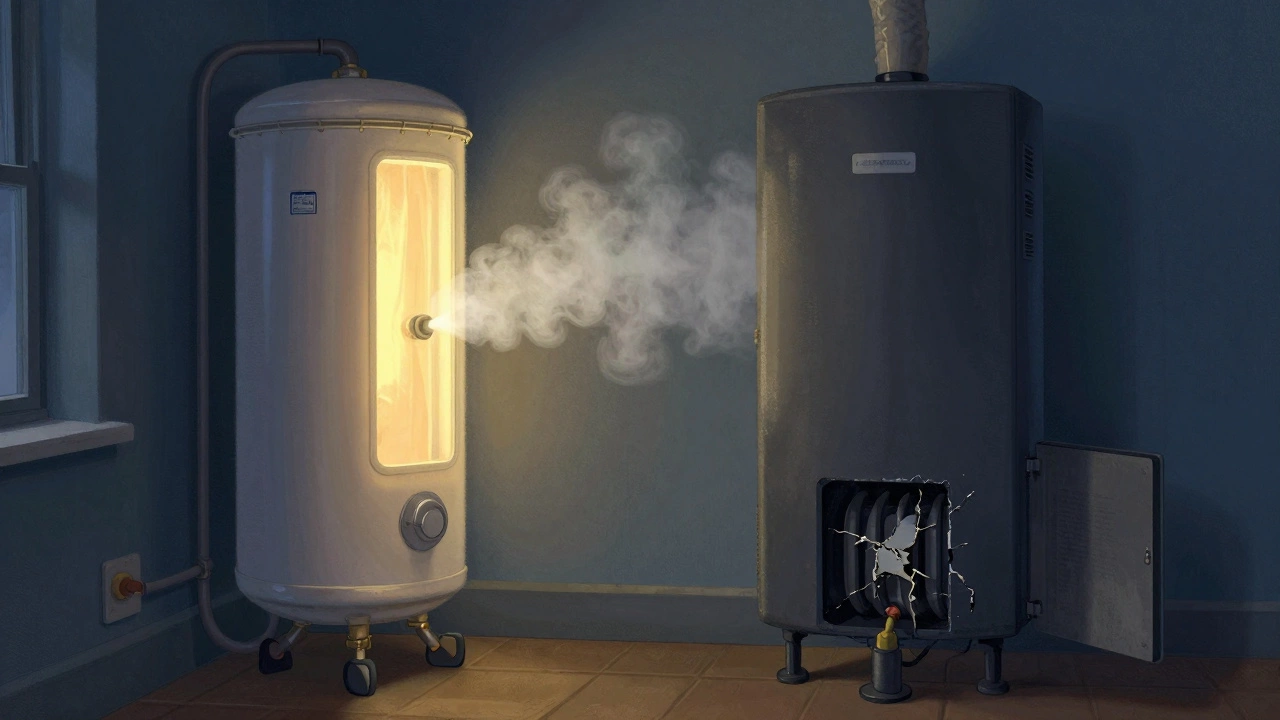
Most UK homes use either a combi boiler or a system boiler. Combi boilers, which make up over 80% of new installations, heat water on demand. When you turn on the tap, cold water rushes through the boiler, gets heated instantly, and flows out as hot water. No tank. No waiting. System boilers, on the other hand, heat water and store it in a cylinder. That means even if the boiler stops working, you might still have some hot water left in the tank-until it runs out.
So if your combi boiler dies, hot water stops immediately. No backup. No buffer. But if you’ve got a system boiler with a full hot water cylinder, you could have 30 to 90 minutes of warm water left, depending on how much was stored and how much you’ve already used. That’s why some people think their boiler is fine-until the last shower turns cold.
Common Boiler Failures That Kill Hot Water
Not every boiler fault means total blackout. Here are the top five reasons you lose hot water-and what they really mean:
- Thermostat failure: If the thermostat reads wrong, the boiler might think the water’s already hot. Result? Cold taps. Easy fix: replace the thermostat. Costs £50-£120.
- Pressure drop: Boilers need 1-1.5 bar pressure to work. If it drops below 0.5 bar (common after bleeding radiators or leaks), the boiler locks out. You’ll get no hot water, but topping up the pressure fixes it in minutes.
- Pump failure: The circulation pump moves water through the system. If it dies, water doesn’t flow. You might still hear the boiler firing, but no heat reaches your taps. A new pump costs £150-£300, including labour.
- Heat exchanger crack: This is serious. The heat exchanger transfers heat from gas to water. If it cracks, water leaks into the boiler’s internal parts. You’ll lose hot water fast, and the boiler may show error codes like E119 or E22. Replacement costs £500-£900. Often not worth it on older units.
- Ignition or gas valve fault: If the boiler won’t light, no heat. Sometimes it’s just a dirty spark electrode. Other times, the gas valve has failed. Gas valve replacement: £200-£400.
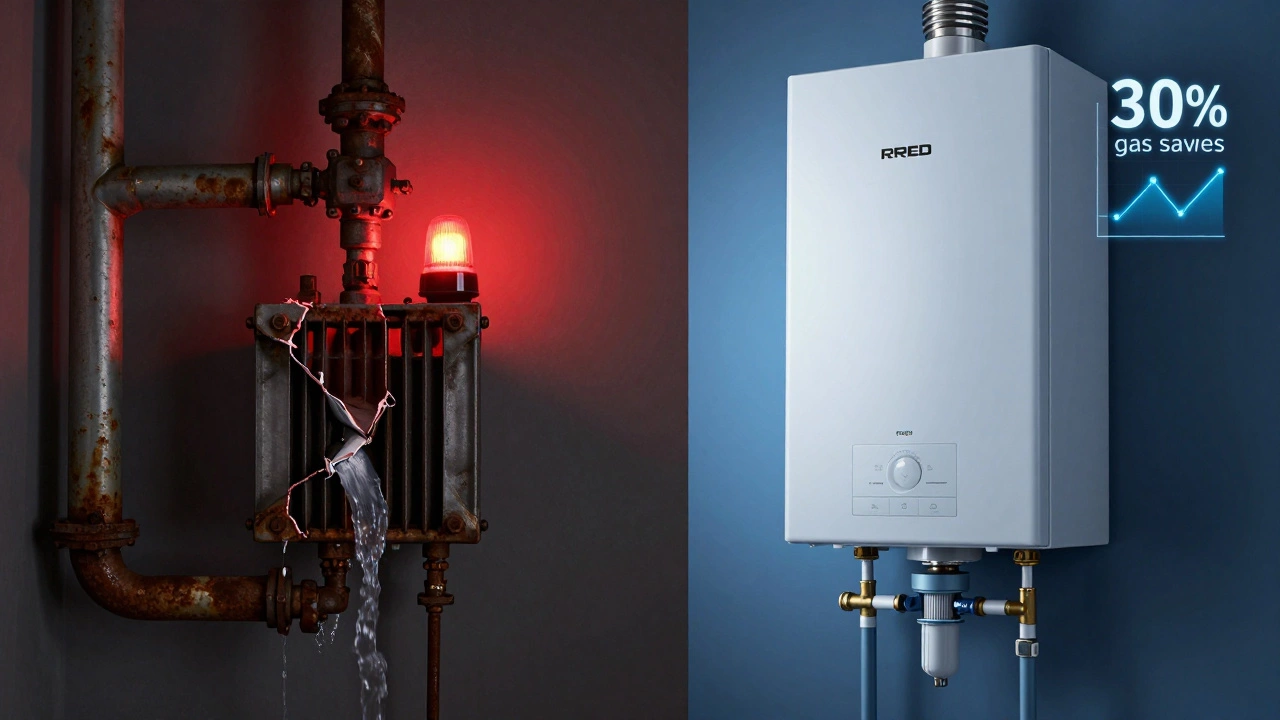
Many of these faults are fixable. But if your boiler is over 10 years old, the cost of repair often outweighs the value. A new A-rated combi boiler costs £2,000-£3,000 installed, but it’ll cut your gas bill by 20-30% and last 15+ years.
What to Do When You Have No Hot Water
Don’t panic. Don’t call a repairman immediately. Do this first:
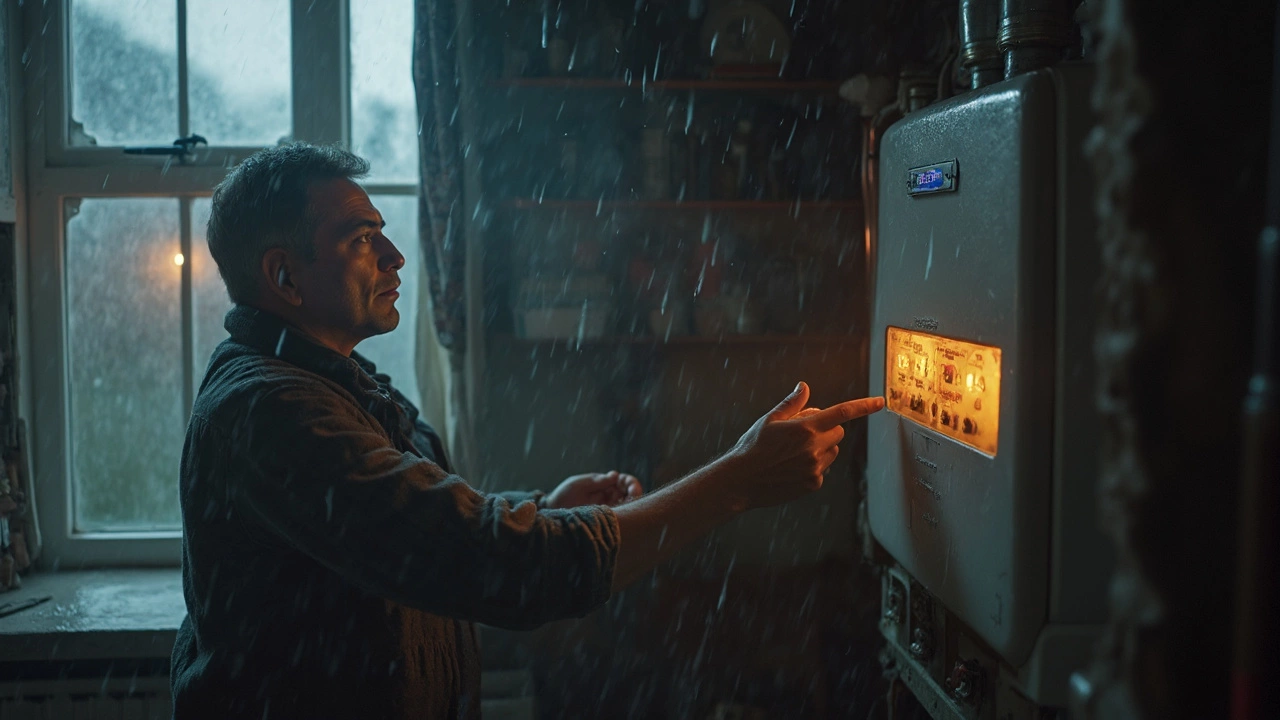
- Check the boiler display. Is it showing an error code? Look up the code in your manual or search online. Many codes point to simple fixes.
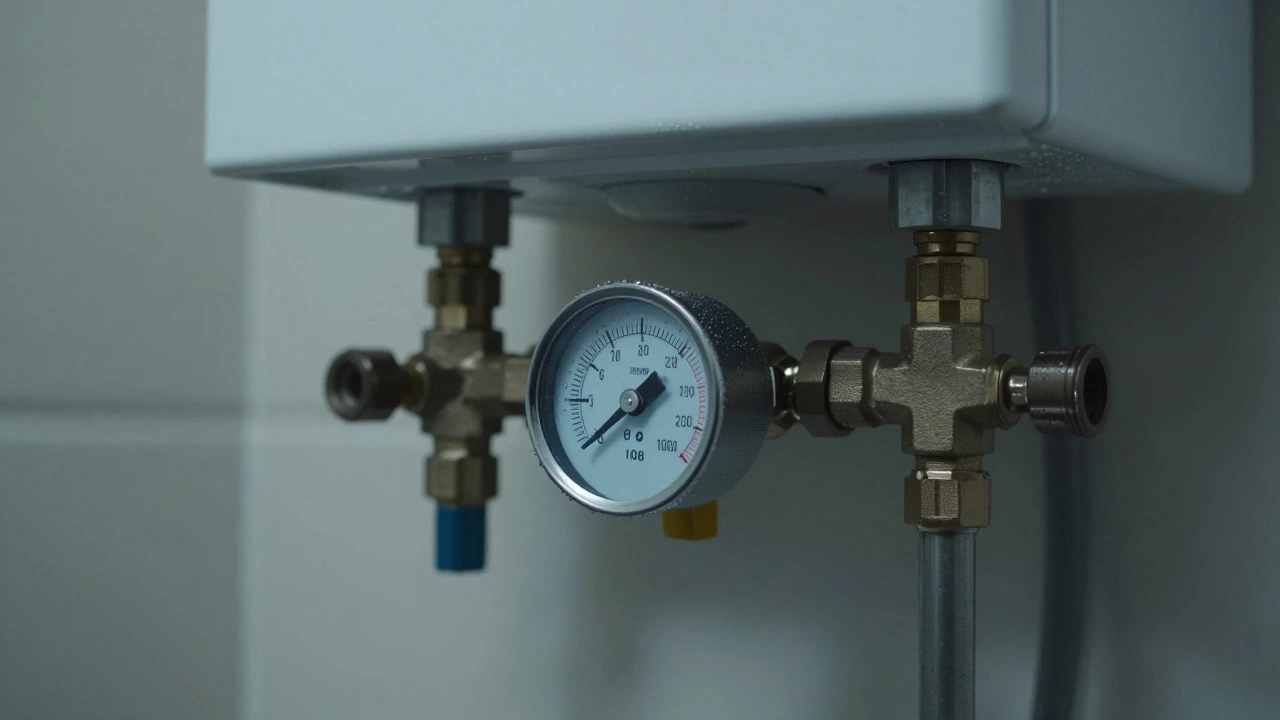
- Check the pressure gauge. If it’s below 1 bar, top it up using the filling loop. Most combi boilers have a small lever or knob under the unit. Turn it slowly until pressure hits 1.3 bar.
- Reset the boiler. Turn it off, wait 60 seconds, turn it back on. This clears minor faults. Do this twice. If it still doesn’t light, move on.
- Test the hot water tap. Turn on the kitchen tap and let it run for 2 minutes. If it’s cold, the boiler isn’t heating. If it’s lukewarm, you might have a partial fault or low cylinder temperature.
- Check your thermostat settings. Make sure it’s not set to ‘off’ or ‘eco mode’. Some smart thermostats default to low heat after a power cut.
If none of that works, you’ve got a real fault. Don’t keep trying to reset it. That can damage the control board. Call a Gas Safe registered engineer. In Bristol, most emergency boiler repair services respond within 4 hours. Expect to pay £80-£150 for a call-out, even if you don’t fix it.
When to Replace Instead of Repair
Here’s a simple rule: if the repair cost is more than half the price of a new boiler, walk away.
For example:
- Your 12-year-old boiler needs a new heat exchanger: £700. A new boiler costs £2,500. You’re paying 28% of the replacement cost. Repair.
- Your 15-year-old boiler needs a new gas valve: £350. A new boiler costs £2,400. You’re paying 15% of the replacement cost. Repair.
- Your 10-year-old boiler has a cracked heat exchanger and leaks: £800. A new boiler costs £2,200. You’re paying 36% of the replacement cost-but the boiler is already aging. Replace.
Also consider this: older boilers are less efficient. A 2010 model might be 78% efficient. A 2026 model is 94%+. That’s a £300-£500 annual saving on gas. Payback time? 2-3 years. That’s cheaper than paying for repeated repairs.
What You Can Do Right Now
Even if you can’t fix the boiler today, you can still get hot water:
- Use electric kettles and immersion heaters. If you’ve got a hot water cylinder with an immersion heater (common in older systems), turn it on. It’ll heat the tank in 1-2 hours. Use it for washing up or a quick shower.
- Boil water on the stove. For washing, bathing, or cleaning, a kettle and a bucket can work in a pinch. Not ideal, but better than cold water.
- Turn off radiators. If the boiler is still firing but not heating water, it might be prioritising central heating. Turn off all radiators to force the boiler to focus on hot water. Try this only if you’ve got a combi boiler.
- Call your energy supplier. Some UK suppliers offer emergency boiler support-even if you don’t have a maintenance plan. British Gas, EDF, and Octopus all have emergency lines. They might send someone free if you’re elderly, disabled, or on a low income.
Preventing This Next Time
Boiler failure isn’t random. It’s usually caused by neglect:
- Annual service. A Gas Safe engineer checks pressure, flue, gas flow, and corrosion. Costs £80-£120. Skip it, and you risk a breakdown.
- Check pressure monthly. A drop of 0.2 bar every few months is normal. A drop of 0.5 bar in a week? You’ve got a leak. Find it before it kills the boiler.
- Flush the system. If your radiators are cold at the bottom, sludge is clogging the pipes. A power flush clears it. Costs £300-£500. Worth it every 5-7 years.
- Install a magnetic filter. A £100 device that catches rust and sludge before it enters the boiler. Saves £1,000 in repairs.
Most boiler breakdowns happen in winter. November to February. That’s when systems are under maximum strain. If you’ve got a boiler older than 8 years, get it checked in September. Don’t wait for it to die on Christmas Eve.
Final Answer: Does a Broken Boiler Mean No Hot Water?
Yes-if it’s a combi boiler and the fault affects water heating. No-not always, if you’ve got a system boiler with a full cylinder or an immersion heater. But in 9 out of 10 cases, a broken boiler means no hot water. And the longer you wait to fix it, the more expensive it gets.
Don’t treat it like a ‘maybe later’ problem. Hot water isn’t a luxury. It’s basic comfort. And in Bristol’s damp winters, it’s health. A boiler that fails in January can lead to mould, damp, even respiratory issues in kids and elderly. Fix it fast. Or replace it smarter.
If my boiler is broken, can I still use my immersion heater?
Yes-if you have a hot water cylinder with a built-in immersion heater, you can turn it on independently. It’s an electric element inside the tank that heats water directly. It’s slower than a boiler (takes 1-2 hours) and uses more electricity, but it’s reliable. Just make sure your fuse box hasn’t tripped and the immersion switch is turned on. It’s a great backup during boiler failure.
Why does my boiler keep losing pressure?
A boiler losing pressure usually means there’s a leak somewhere. Common spots: radiator valves, pipe joints, the expansion vessel, or the heat exchanger. If you’re topping up the pressure every few days, you have a slow leak. Don’t just keep refilling-call an engineer. Ignoring it can cause the boiler to overheat, crack internal parts, or shut down permanently. A pressure drop over time is one of the most common signs of boiler decay.
Can a boiler break without showing an error code?
Absolutely. Older boilers, especially ones without digital displays, can fail silently. Even modern boilers sometimes don’t show codes for issues like a seized pump, a blocked condensate pipe, or a faulty thermostat. If the boiler is running but not heating water, and you’ve checked pressure and reset it, the problem is likely mechanical-not electronic. That’s why annual servicing matters: engineers test components you can’t see.
How long does a boiler repair usually take?
Simple fixes like topping up pressure or resetting the boiler take 10 minutes. Replacing a thermostat or pump usually takes 1-2 hours. More complex jobs like replacing a heat exchanger or gas valve can take 3-5 hours. Emergency call-outs often get you a visit the same day, but parts might need ordering. If you need a new boiler, installation typically takes 1-2 days.
Is it safe to use hot water if the boiler is leaking?
No. If you see water pooling around the boiler, or if the floor is wet near the unit, turn off the water and gas supply immediately. A leaking boiler can cause electrical short-circuits, structural damage, or even carbon monoxide buildup if the flue is compromised. Even if the water is still warm, don’t use it. Call a Gas Safe engineer right away. Never try to fix a leaking boiler yourself.
Next Steps
If your boiler is broken and you’ve got no hot water:
- Try the 5-step check above-pressure, reset, thermostat, display, taps.
- If it’s still not working, call a Gas Safe registered engineer. Don’t delay.
- If your boiler is over 10 years old, start researching replacements. Look for A-rated combi boilers with 10-year warranties.
- Ask about government grants. The Boiler Upgrade Scheme in the UK still offers up to £7,500 off heat pumps for eligible households.
Hot water isn’t optional. It’s part of a healthy home. Don’t wait for it to break completely before you act.