- 25 Dec 2025
- Gideon Thornton
- 0
Heat Pump Repair Cost Estimator
* Based on your symptoms and system age
Estimated Cost
Heat pumps are one of the most efficient ways to heat and cool your home in the UK, especially with rising energy costs. But when they stop working, it’s not just an inconvenience-it’s a cold house in December. If your heat pump is making strange noises, blowing cold air when it should be warm, or just won’t turn on at all, something’s wrong. And it’s rarely just one thing. Most heat pump failures happen because of a combination of neglect, poor installation, or age.
Dirty Filters Are the #1 Killer
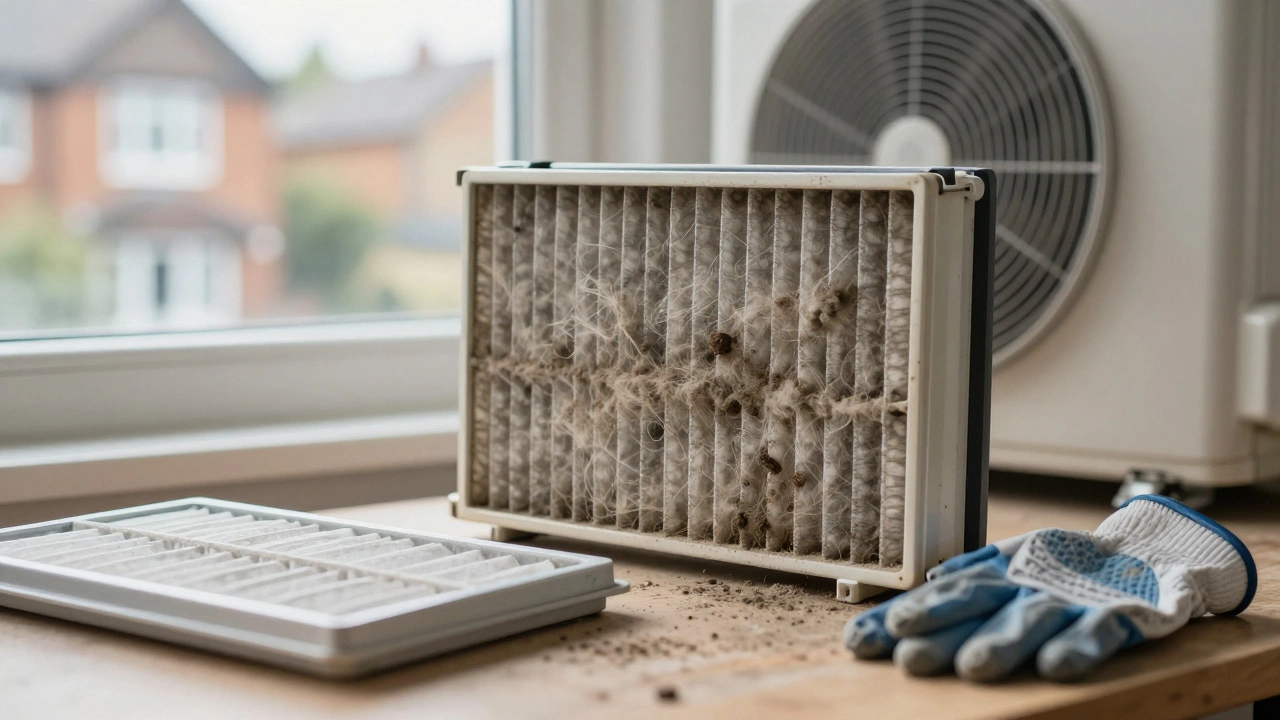
It sounds simple, but a clogged air filter is the most common reason heat pumps break down. Every month, your heat pump pulls in air through that filter to move heat between your home and the outside. When dust, pet hair, and debris pile up, airflow drops. The system has to work harder. That means the compressor runs longer, the coils freeze over, and the motor overheats. In winter, a dirty filter can cause your heat pump to shut off entirely to avoid damage.
Most manufacturers recommend changing the filter every 1-3 months. If you have pets or live in a dusty area like Bristol’s older suburbs, do it every month. A $10 filter can save you a £500 repair bill.
Refrigerant Leaks Don’t Fix Themselves
Heat pumps use refrigerant to move heat. It’s not fuel-it’s a chemical that flows through copper lines. If those lines get corroded, bent, or damaged during installation, refrigerant can leak out. Low refrigerant doesn’t mean you need a refill like a car’s oil. It means there’s a leak, and that leak will keep getting worse.
Signs of a leak: hissing sounds, ice on the outdoor unit, reduced heating power, or the system running non-stop but never reaching the set temperature. A professional will find the leak with a pressure test and dye, fix the pipe, then recharge the system. Just topping up without fixing the leak is a waste of money-and illegal in the UK under F-Gas regulations.
Bad Installation Leads to Early Death
Many heat pumps fail within 3-5 years because they were installed wrong. Too small? It’ll run constantly and wear out fast. Too big? It’ll short-cycle-turning on and off every 10 minutes-which stresses the compressor. Poor ductwork? Air leaks and pressure imbalances cause uneven heating and extra strain.
One common mistake we see in Bristol homes: installers skimp on insulation around refrigerant lines. That leads to condensation, rust, and eventually leaks. Another? Not checking the electrical supply. Heat pumps need clean, stable power. If your home has old wiring or a weak circuit breaker, the system can fry its control board.
Always use an MCS-certified installer. Ask for a load calculation (Manual J) and proof of refrigerant handling certification. A cheap quote now can cost you £2,000 in repairs later.
Thermostat Problems Are Often Blamed on the Heat Pump
Before you call a repair technician, check your thermostat. A dead battery, loose wire, or faulty sensor can make your heat pump behave like it’s broken. If the thermostat says 20°C but your house feels like 15°C, the issue might be the sensor-not the pump.
Smart thermostats like the Nest or Hive are great, but they can also glitch. Try switching to manual mode. If the heat pump turns on and runs normally, the problem is the thermostat’s programming or Wi-Fi connection. Reset it. Replace the batteries. If that doesn’t help, replace the thermostat. It’s cheaper than a service call.
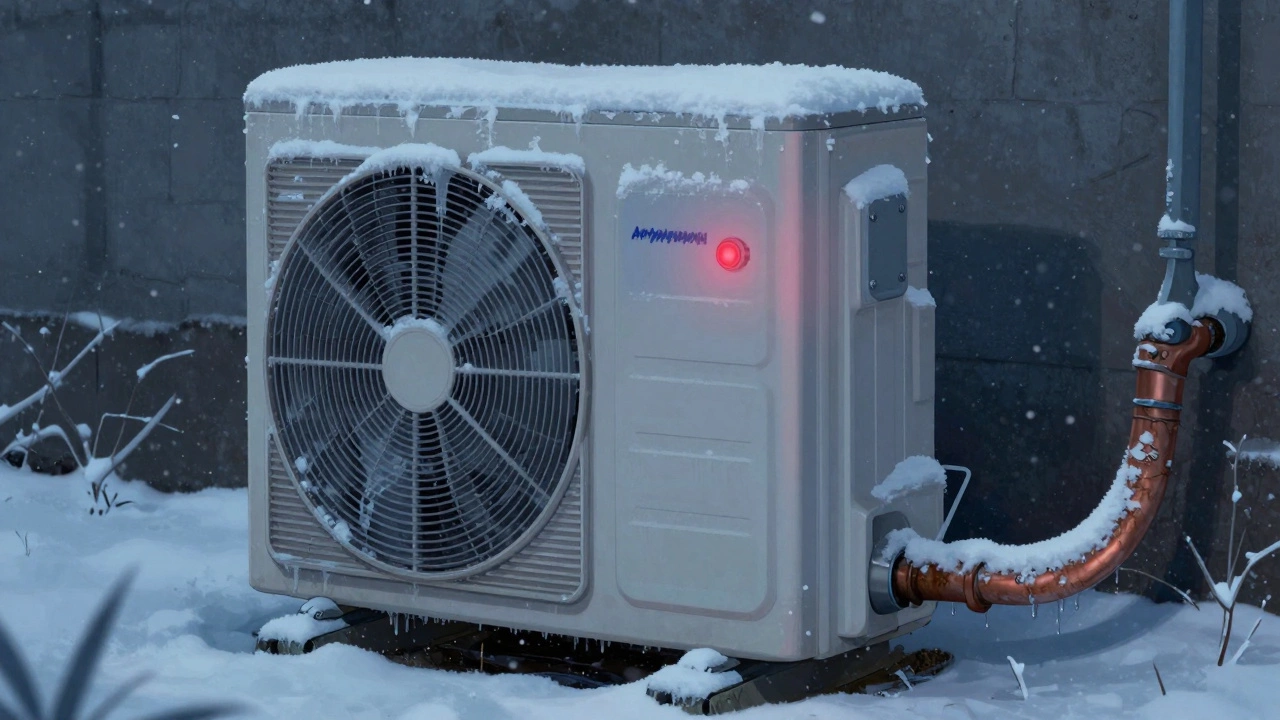
Outdoor Unit Freeze-Ups and Ice Buildup
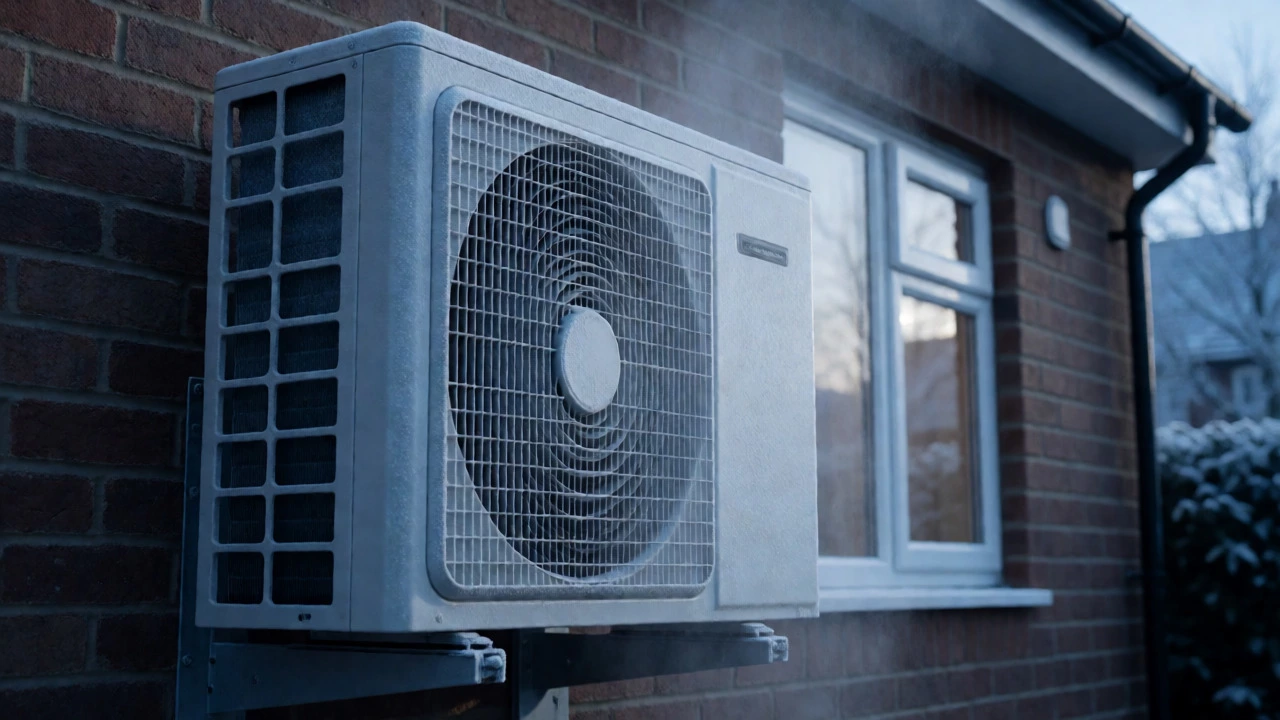
It’s normal for a heat pump to have a little frost on a cold morning. It’s not normal for it to be covered in a solid block of ice. That happens when the defrost cycle fails.
Every 30-90 minutes, your heat pump should reverse briefly to melt ice off the outdoor coils. If the defrost sensor is broken, the control board is faulty, or the reversing valve sticks, ice builds up. The unit can’t pull heat from frozen coils. It shuts down. Or worse-it keeps running, overloads the compressor, and burns it out.
Check your outdoor unit after heavy frost or snow. Clear snow away with a soft brush. Never use hot water or a shovel. If ice keeps forming even after cleaning, you need a technician. The defrost board or sensor needs replacing.
Compressor Failure Is Often the End
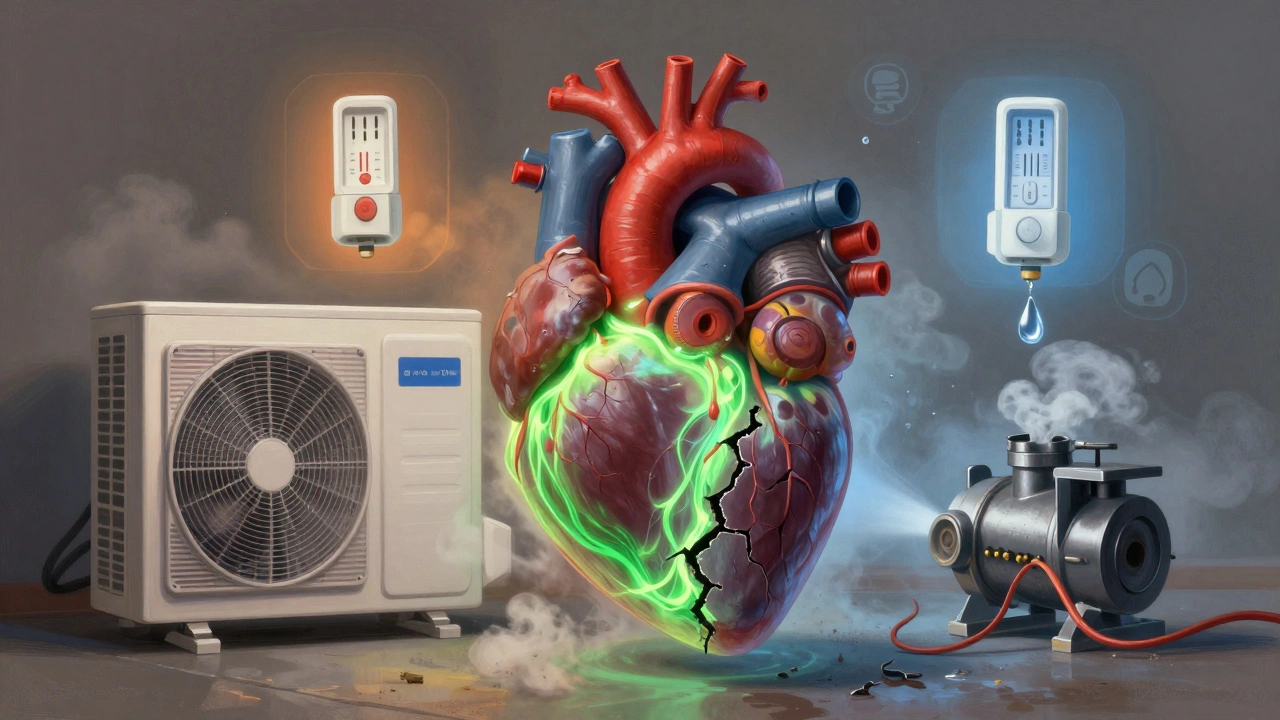
The compressor is the heart of your heat pump. It’s what moves the refrigerant. When it dies, you’re looking at a £1,500-£3,000 repair-or a full system replacement.
Compressors don’t just die randomly. They fail because of:
- Low refrigerant (causing overheating)
- Dirty coils (trapping heat)
- Electrical surges (from storms or faulty wiring)
- Running non-stop due to undersizing or poor insulation
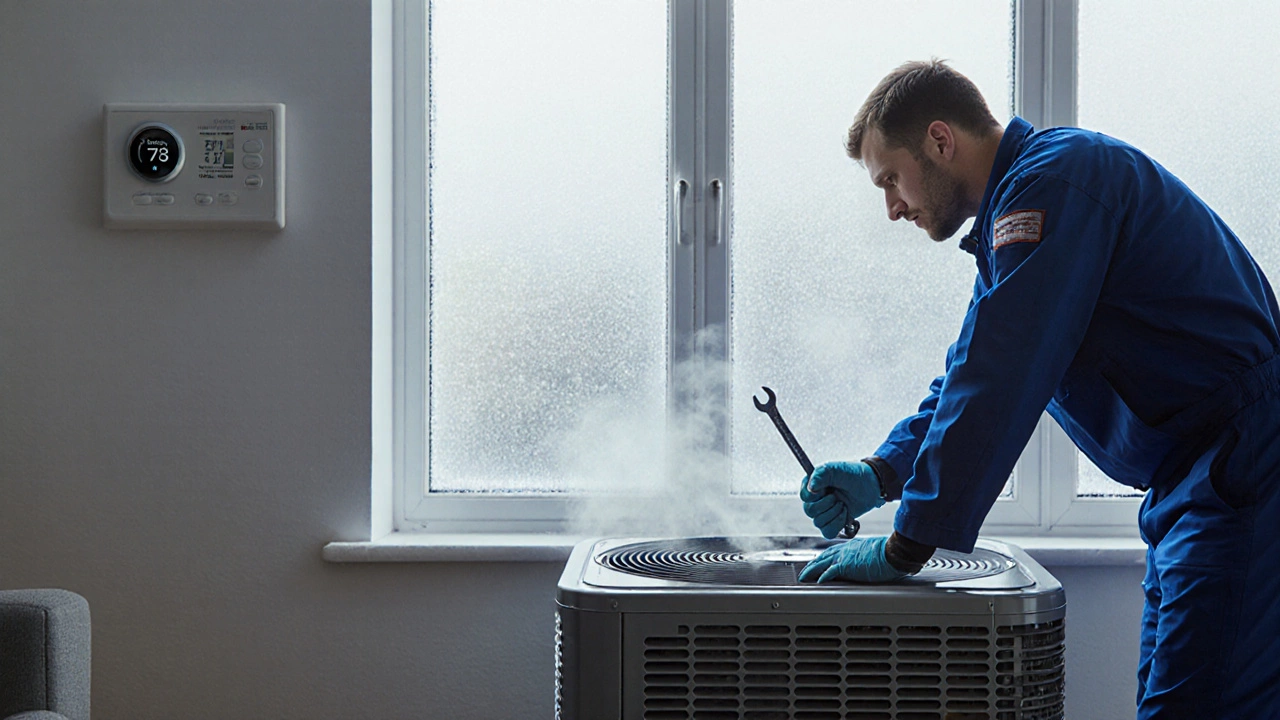
Signs of a failing compressor: loud banging or grinding noises, the unit turning on but not heating, or a burning smell. If you hear any of these, turn the system off. Running a compressor with internal damage can send metal shards through the whole system, ruining the coils and valves too.
Lack of Maintenance Is the Silent Killer
Most homeowners never clean their heat pump. They don’t check the coils. They don’t inspect the drain line. They don’t test the fan motor. And then, after 8 years, it stops working-and they’re shocked.
A yearly service should include:
- Checking and cleaning indoor and outdoor coils
- Inspecting refrigerant levels and looking for leaks
- Testing the defrost cycle and reversing valve
- Checking electrical connections and voltage
- Cleaning the drain line to prevent water leaks
- Verifying thermostat accuracy
It costs £80-£120 in the UK. That’s less than one month’s heating bill. Skip it, and you’re gambling with your system’s life.
Age and Wear Are Real-But Predictable
Most heat pumps last 12-15 years. Some hit 20 with perfect care. But after 10 years, parts start wearing out: capacitors, fan motors, sensors, and seals. Replacing a £50 capacitor might keep it going for another year. But if you’re already replacing multiple parts, it’s time to think about replacement.
Check your unit’s serial number. If it’s from before 2010, it’s likely using R22 refrigerant-which is banned in the EU. Newer models use R410A or R32, which are more efficient and environmentally safe. If your system is 12+ years old and needs a refrigerant refill, it’s not worth fixing. The cost of retrofitting or replacing the compressor will likely exceed the value of the unit.
What to Do When Your Heat Pump Fails
If your heat pump stops working:
- Check the power. Is the circuit breaker tripped? Is the disconnect switch turned on?
- Replace the air filter. It’s the fastest, cheapest fix.
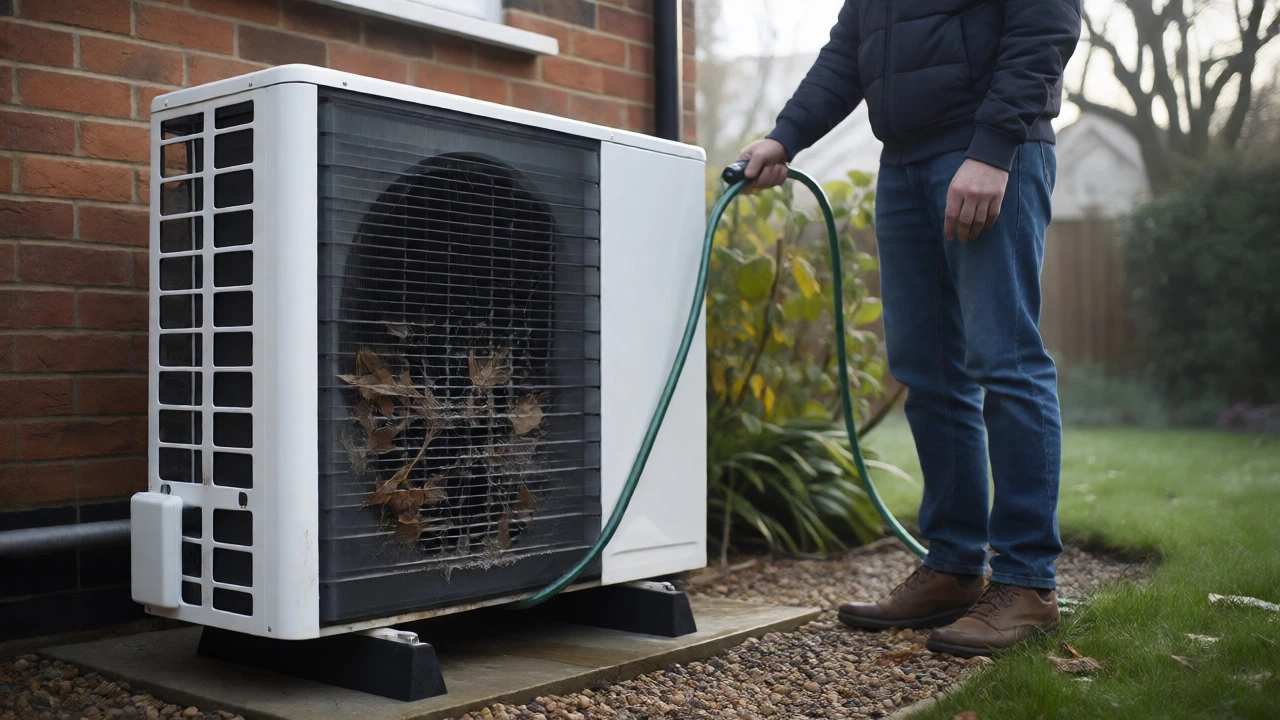
- Clear snow and debris from the outdoor unit.
- Set the thermostat to ‘Heat’ and a temperature higher than the room.
- If it still doesn’t work, turn it off. Don’t keep trying to restart it.
- Call a qualified technician. Ask if they’re MCS-certified and if they carry parts for your brand.
Never ignore warning signs. A strange noise, a spike in your energy bill, or uneven heating isn’t normal. It’s your system screaming for help.
How to Extend Your Heat Pump’s Life
Keep your heat pump running smoothly for 15+ years by doing these five things:
- Change the air filter every month during peak use
- Keep the outdoor unit clear of leaves, snow, and weeds
- Get a professional service once a year
- Install a surge protector on the circuit
- Improve your home’s insulation-less strain on the pump
Heat pumps are built to last. But they don’t fix themselves. Treat them like a car: regular oil changes mean fewer breakdowns. The same goes for your heat pump.
Why is my heat pump blowing cold air in heating mode?
This usually means the heat pump is in defrost mode, which is normal for a few minutes. But if it’s blowing cold air for more than 15-20 minutes, the issue could be low refrigerant, a faulty reversing valve, or a broken thermostat. Check the filter first-if it’s clogged, airflow drops and the system can’t transfer heat properly. If the filter is clean, call a technician to check refrigerant levels and the valve.
Can a heat pump be repaired, or should I replace it?
If your heat pump is under 10 years old and the issue is a simple part like a capacitor, fan motor, or thermostat, repair makes sense. But if it’s over 12 years old, needs a compressor replacement, or uses R22 refrigerant, replacement is usually better. Newer models are 30-50% more efficient, qualify for government grants, and come with 10-year warranties. Fixing an old unit is like putting a bandage on a broken bone-it might hold for a while, but it won’t last.
How much does it cost to repair a heat pump in the UK?
Repair costs vary. A simple fix like replacing a capacitor or thermostat is £100-£200. Cleaning coils and checking refrigerant is £150-£250. A compressor replacement runs £1,500-£3,000. If your system is over 10 years old, you’re better off replacing it. A new A-rated heat pump with installation costs £7,000-£12,000, but you can get up to £7,500 off through the Boiler Upgrade Scheme.
Do heat pumps need servicing every year?
Yes. Annual servicing isn’t optional-it’s essential. Without it, dust builds up, refrigerant leaks go unnoticed, and small electrical faults turn into big failures. Most manufacturers require yearly maintenance to keep the warranty valid. A qualified technician will check airflow, pressure, electrical safety, and defrost cycles. Skipping it doubles your risk of a breakdown in winter.
Can I clean my heat pump myself?
You can clean the air filter and gently brush snow or leaves off the outdoor unit. But don’t spray water into the coils, touch the refrigerant lines, or open the electrical panel. Those parts need professional tools and training. If you’re unsure, don’t risk it. A £10 brush and a few minutes of your time can prevent a £1,000 repair. But if you’re poking around inside, you might cause more damage.