
- 5 Mar 2026
- Gideon Thornton
- 0
If your water heater is dripping, pooling, or making strange noises, you’re not alone. Leaks are one of the most common reasons homeowners call for repair - and often, they’re not as mysterious as they seem. The truth is, water heaters don’t just start leaking for no reason. They have weak spots. And if you know where to look, you can catch a leak before it turns into a flood. In this guide, we’ll walk through the five most common places a water heater leaks, why it happens, and what you can do about it.
The Pressure Relief Valve
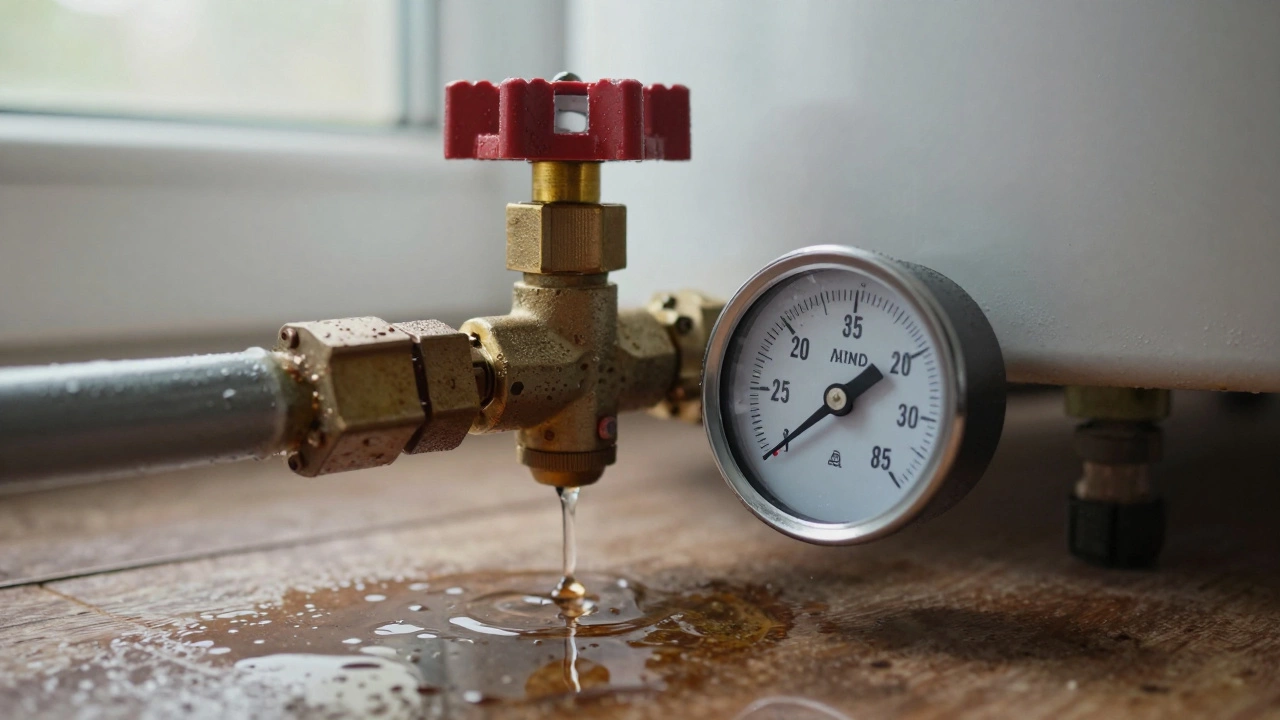
This is the number one culprit. The pressure relief valve (also called the T&P valve) is a safety feature designed to open if water pressure or temperature gets too high. It’s usually located on the top or side of the tank, connected to a pipe that runs down to the floor. If that pipe is wet, or water is dripping from the valve itself, it’s not a sign of a broken valve - it’s a sign of a bigger problem.
Most of the time, the valve is working exactly as it should. The real issue? High water pressure in your home’s plumbing system. In many UK homes, pressure exceeds 80 psi, which is above the recommended limit. When that happens, the valve opens to release the excess. Over time, this constant cycling causes mineral buildup and corrosion, leading to slow drips or even full leaks.
Check your water pressure with a simple gauge (available at hardware stores). If it’s over 80 psi, install a pressure-reducing valve on your main water line. If the valve is leaking and pressure is normal, replace it. They cost under £20 and take 20 minutes to swap out.
The Drain Valve at the Bottom
Right at the base of the tank, you’ll find a threaded drain valve - usually made of plastic or cheap metal. This is meant to be used once or twice a year to flush out sediment. But many people leave it open too long, or they use it as a faucet, which wears out the internal washer. Over time, the plastic cracks, the rubber washer disintegrates, or the threads strip.
It’s not a sign of tank failure - it’s a sign of poor maintenance. If you’ve never drained your tank, sediment has built up, and that sediment is eating away at the valve and the tank lining. The fix? Turn off the power and water, then replace the valve with a brass one. They last longer and handle pressure better. If you can’t get the old one out because it’s seized, don’t force it. Call a pro. Forcing it can crack the tank.
The Tank Itself - Rust and Corrosion
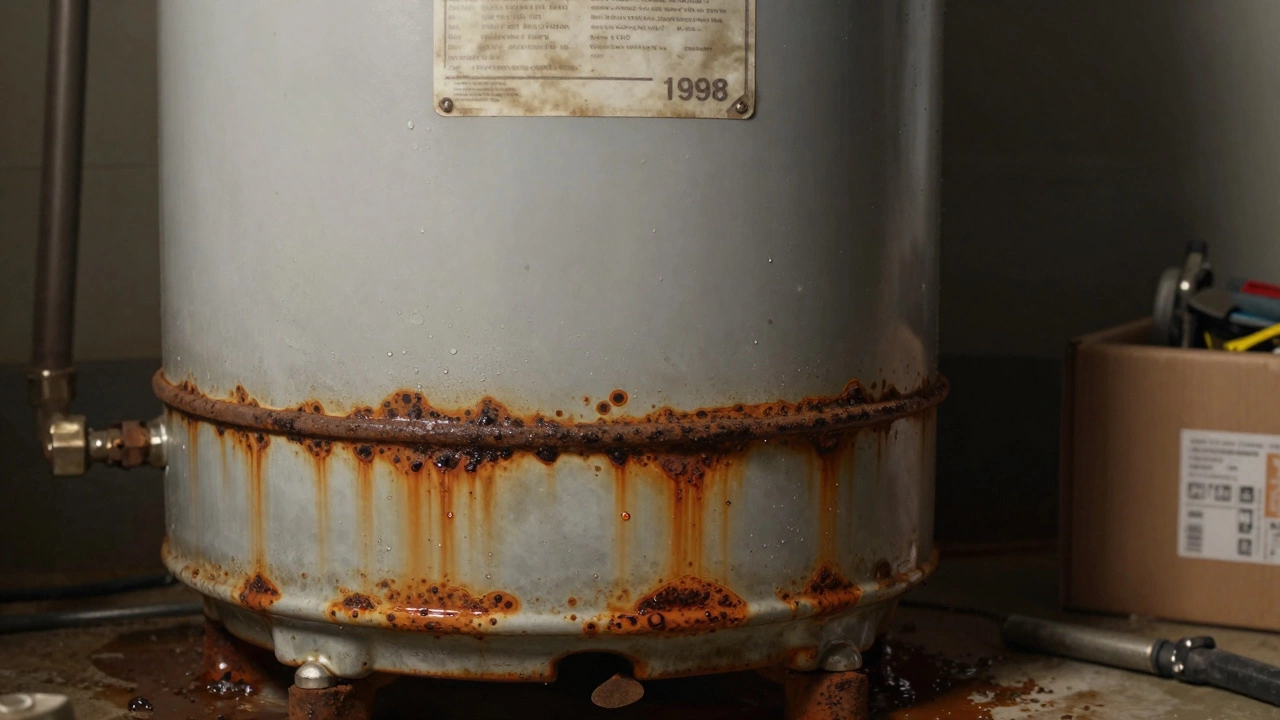
This is the worst-case scenario. If water is pooling around the bottom of the tank, and you see rust on the outside, especially near the seams or along the lower third, your tank is corroding from the inside out. This happens because water heaters have a sacrificial anode rod that attracts corrosive elements. When that rod wears out (usually after 3-5 years), the tank starts to rust.
In hard water areas like Bristol, mineral buildup speeds up the process. If your water heater is over 8 years old and you’ve never replaced the anode rod, you’re playing Russian roulette with your basement. A rusted tank can’t be repaired. Once it starts leaking from the body, replacement is the only option.
Check the age of your heater. Look for a manufacturer’s label on the side. If it’s older than 10 years, start budgeting for a new one. Modern tanks last 12-15 years, especially if you replace the anode rod every 3 years. That’s a £50 part that can save you £1,000 in water damage.
The Pipe Connections
Hot and cold water pipes connect to the top of the tank. Over time, the fittings loosen, or the rubber washers inside the connectors dry out and crack. You might see a slow drip where the pipe meets the tank - especially when the heater is heating up. Thermal expansion causes the metal to expand and contract, which stresses the joints.
Before you assume it’s the tank, check these connections. Turn off the water and power. Use a wrench to gently tighten the fittings. Don’t over-tighten - you’ll strip the threads. If tightening doesn’t stop the leak, replace the flexible supply lines. Copper or braided stainless steel lines are far more durable than cheap plastic ones. And always use Teflon tape on threaded connections.
Also, make sure the pipes aren’t pulling on the tank. If the cold water line is rigidly attached without a flexible connector, the weight and movement can crack the tank inlet. A little slack in the pipe can prevent major damage.
The Heating Element Holes (Electric Models)
If you have an electric water heater, there’s another sneaky leak point: the heating element ports. These are the holes where the elements screw into the tank. Over time, the rubber gaskets around them degrade. When they do, water seeps out slowly, often dripping down the side of the tank and hiding under insulation.
This leak is easy to miss because it doesn’t pool directly under the tank. Instead, water runs down the side and might look like condensation. If you’ve ruled out the pressure valve, drain valve, and pipes, remove the access panel and dry the area around the elements. Turn the heater on. Wait an hour. Check again. If it’s wet, one of the gaskets is bad.
Replacing an element is easy - just turn off power, drain a few gallons, unscrew the old one, and swap in a new one with a fresh rubber seal. It’s a £15 part and a 45-minute job. But if you’re not comfortable with electricity, call someone. A mistake here can fry your breaker or worse.
What to Do When You Find a Leak
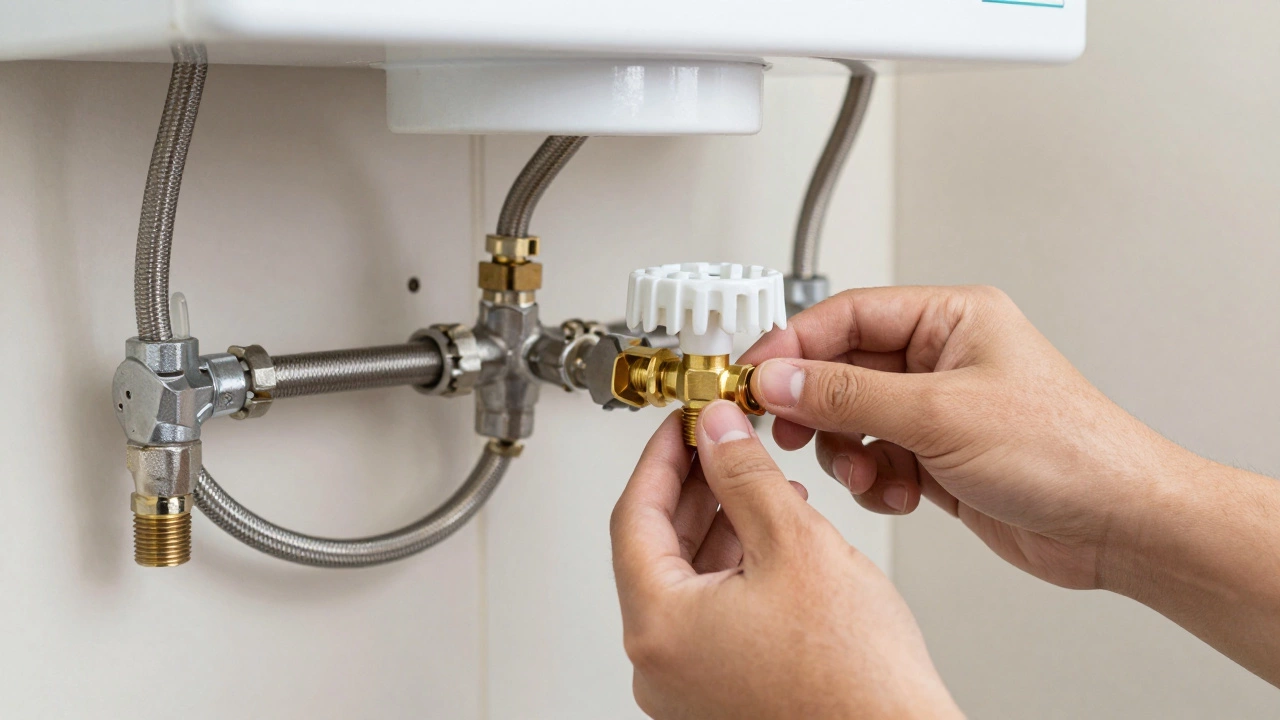
Don’t panic. The first thing to do is shut off the water supply. Look for the shutoff valve on the cold water line - it’s usually right above the heater. Turn it clockwise until it stops. Then turn off the power: flip the breaker for electric models, or turn the gas valve to “off” for gas heaters.
Next, drain the tank. Open the pressure relief valve and the drain valve. Let the water flow into a bucket or hose leading to a floor drain. This reduces pressure and prevents more water from leaking while you assess the damage.
Now, dry the area with towels. Look for the exact source. Is it the valve? The pipe? The tank? Once you know where, you can decide: fix it or replace it.
Here’s the rule: if the leak is from the tank itself, replace it. No exceptions. If it’s from a valve, pipe, or fitting - you can fix it. And if you’re unsure, take a photo. Send it to a local plumber. Most will give you a free diagnosis over text.
How to Prevent Future Leaks
Water heater leaks aren’t accidents - they’re symptoms. Here’s how to avoid them:
- Flush your tank every 6-12 months. Sediment buildup is the silent killer.
- Test the pressure relief valve once a year. Lift the lever - water should flow. If it doesn’t, replace it.
- Install a water pressure regulator if your pressure is over 80 psi.
- Replace the anode rod every 3 years. It’s the cheapest insurance policy on your home.
- Upgrade to a tankless heater if you’re replacing. They last 20+ years and don’t store water.
Most leaks happen because people treat water heaters like invisible appliances. They’re not. They’re pressure vessels full of hot water. Treat them with care, and they’ll last decades.
Why is my water heater leaking only when I use hot water?
This usually means the leak is at the pressure relief valve. When hot water is drawn, pressure builds in the tank, forcing the valve to open. If it’s leaking during use, your water pressure might be too high, or the valve is worn out. Test your pressure and replace the valve if needed.
Can a leaking water heater explode?
It’s extremely rare, but possible. If the pressure relief valve is blocked or faulty, and the thermostat fails, water can superheat and turn to steam. The tank can rupture under pressure. That’s why the valve exists - to prevent exactly this. Never disable or tape down the valve. If you suspect a malfunction, turn off the power and water immediately.
Is a small drip from the water heater dangerous?
Yes, even a small drip can cause serious damage over time. Water seeps into floors, walls, and insulation, leading to mold, rot, and structural damage. It can also increase your energy bill - a leaking tank loses heat faster. Don’t ignore drips. Fix them early.
How long do water heaters last before they start leaking?
Most last 8-12 years. But in hard water areas like Bristol, sediment builds up faster, shortening lifespan to 6-8 years. If your heater is over 8 years old and you’ve never flushed it, expect leaks soon. Regular maintenance can double its life.
Should I repair or replace my leaking water heater?
If the leak is from a valve, pipe, or fitting - repair it. If it’s from the tank itself, replace it. A tank leak means internal corrosion has started. No patch will stop it. Replacing a tank now costs £800-£1,500. Waiting until it bursts could cost £5,000+ in water damage and repairs.