
- 17 Sep 2026
- Gideon Thornton
- 0
Boiler Repair Professional Finder
Not sure who to call? Answer the questions below to find the right expert for your specific issue.
You hear that ominous clunking noise coming from your utility cupboard, or perhaps the radiators are stubbornly cold despite the thermostat being cranked up to max. Your first instinct might be to call the nearest handyman you know, but when it comes to boiler repair, who exactly should you call? Is it a plumber? A gas engineer? Or maybe just any competent tradesperson with a wrench?
Here is the uncomfortable truth: calling the wrong person can range from a minor inconvenience to a serious safety hazard. In the UK, boilers aren't just appliances; they are part of a complex system involving water pressure, electrical components, and combustible gas. Getting this right saves you money on unnecessary call-out fees and, more importantly, keeps your home safe.
The Short Answer: It’s Usually a Gas Safe Engineer
If your boiler runs on natural gas (which most do in the UK), the person you need is a Gas Safe registered engineer. This isn't just a job title; it's a legal requirement. The Gas Safety Register is the official body that records engineers who have passed specific competency assessments for working with gas appliances.
Why does this matter? Under the Gas Safety (Installation and Use) Regulations 1998, only a registered engineer can legally install, service, or repair gas boilers. If an unregistered person touches your gas line, you could face fines, voided insurance policies, or worse, carbon monoxide leaks that go undetected.
But here is where it gets tricky for homeowners: many people confuse "plumber" with "gas engineer." While there is overlap, they are not interchangeable roles. Let’s break down who does what so you never hire the wrong expert again.
Plumber vs. Heating Engineer: What’s the Difference?
A common misconception is that all plumbers work on boilers. While a general plumber specializes in installing and maintaining pipes, sinks, toilets, and drainage systems, their expertise often stops at the water supply side of things.
A heating engineer, specifically one who is Gas Safe registered, has additional qualifications focused on combustion, ventilation, flue integrity, and boiler diagnostics. Think of it this way:
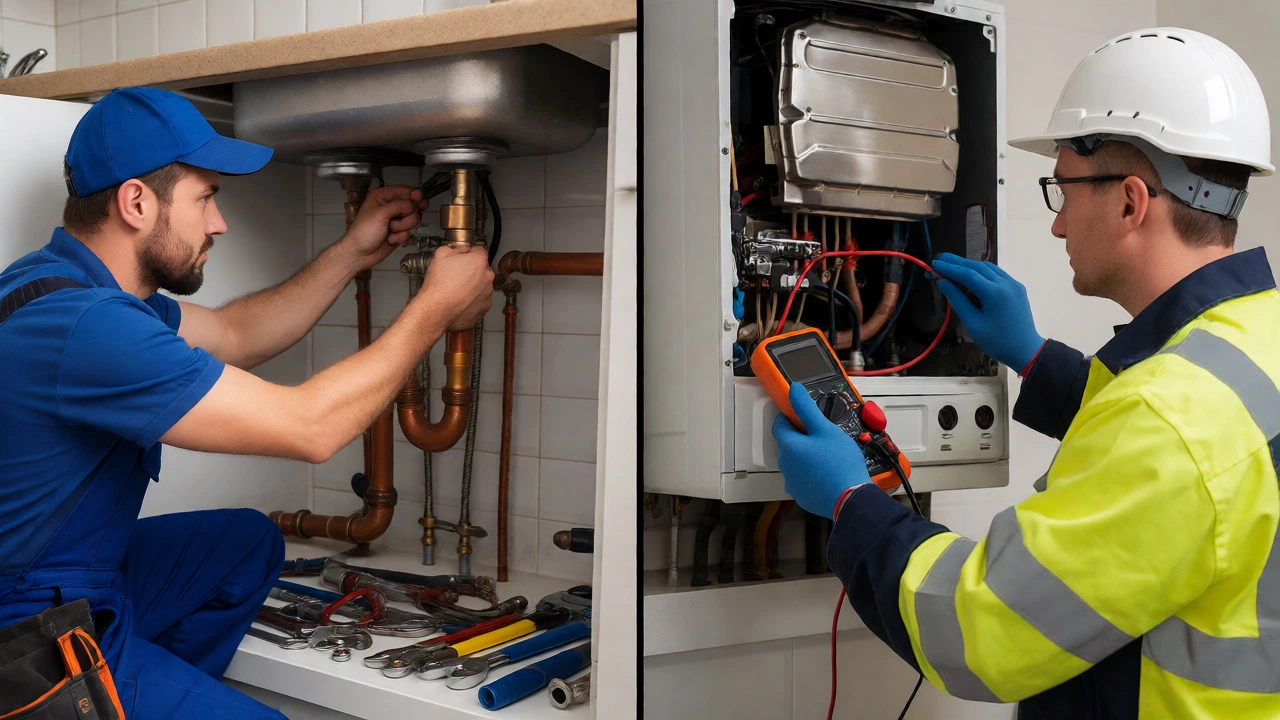
- General Plumber: Handles water flow, blockages, leaks, and fixture installation. They might fix a leaky tap under your kitchen sink or replace a broken shower head.
- Gas Safe Heating Engineer: Handles the appliance itself. They diagnose why the pilot light won’t stay lit, why the heat exchanger is cracked, or why the pressure is dropping. They understand the relationship between gas input and water output.
In reality, many skilled professionals hold both titles. A modern plumbing apprenticeship often includes gas qualification. However, always check the certificate. Just because someone calls themselves a plumber doesn't mean they are qualified to touch your gas valve.
When Can You Call a Regular Plumber?
There are scenarios where a non-gas-qualified plumber is perfectly fine-and actually cheaper. If your issue is strictly related to the water circuit outside the boiler unit, a plumber is sufficient.
For example, if your boiler is running hot but your radiators remain lukewarm, the problem might be a blocked pipe or a stuck radiator valve. These are hydraulic issues, not combustion issues. A plumber can bleed radiators, flush sludge from the system using power flushing equipment, or replace corroded pipework without needing gas certification.
Another scenario: replacing a faulty pump. Many modern boilers use external circulation pumps. If the pump fails, a plumber can swap it out easily. But remember, if the pump replacement requires disconnecting the main gas feed or altering the boiler’s internal wiring, you’re back in Gas Safe territory.
The Critical Role of Gas Safe Registration
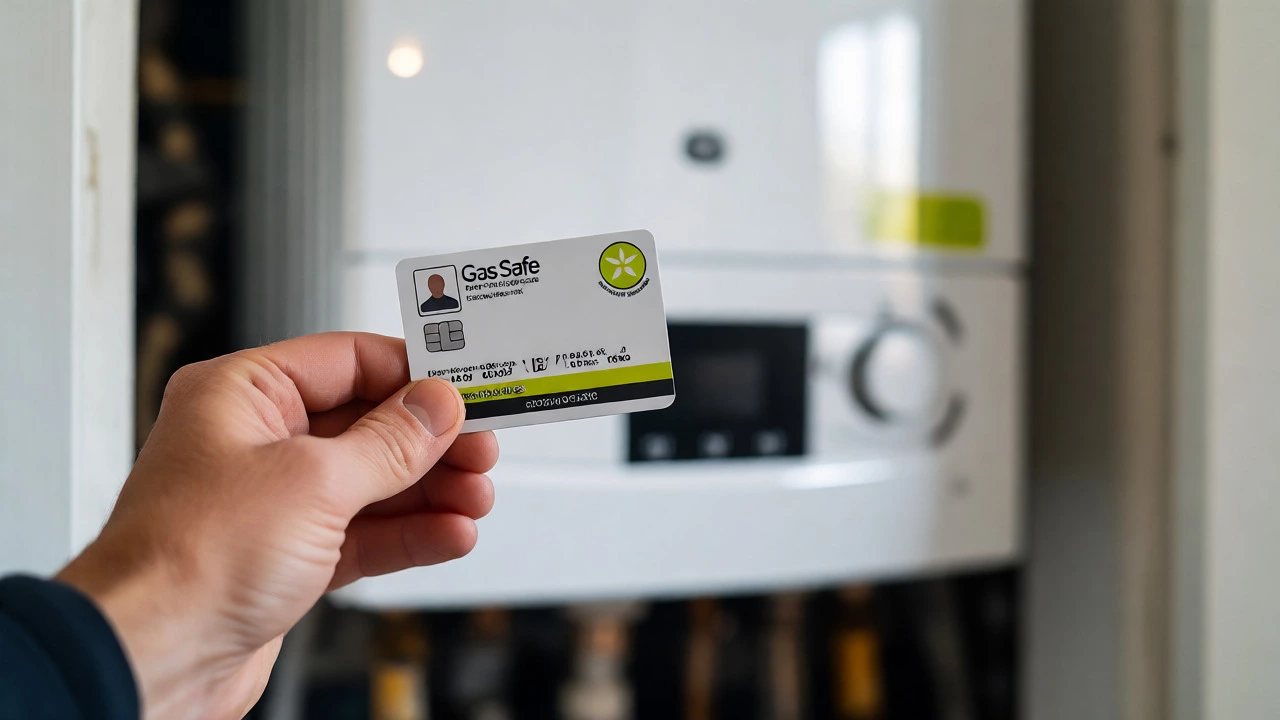
How do you verify if someone is legit? Don’t just take their word for it. Ask to see their Gas Safe ID card. It’s credit-card-sized, photo-bearing, and lists their registration number and the specific areas they are qualified in (e.g., Natural Gas, LPG).
You can cross-reference this number on the official Gas Safe Register website. This step takes thirty seconds and protects you from rogue traders. In Bristol alone, thousands of homes rely on these checks to ensure compliance after incidents like the tragic deaths linked to faulty installations years ago.
| Issue Type | Recommended Professional | Why? |
|---|---|---|
| Boiler won't ignite | Gas Safe Engineer | Requires diagnosis of ignition lead, gas valve, or PCB. |
| Leaking pipe under sink | Plumber | Water-only issue; no gas involvement. |
| Cold spots in radiators | Heating Engineer / Plumber | Could be air locks (DIY/Plumber) or pump failure (Engineer). |
| Annual Service | Gas Safe Engineer | Legal requirement for landlords; ensures safety and warranty validity. |
| New Installation | Gas Safe Engineer | Must be certified to connect gas lines and commission the unit. |
What About Electric Boilers?
Not every home uses gas. Some properties, particularly older flats or new eco-builds, use electric boilers. Here, the rules change slightly. Since there is no combustion involved, you don’t need a Gas Safe engineer. Instead, you need a qualified electrician or a specialist heating engineer experienced with electric systems.
Electric boilers are simpler mechanically but rely heavily on correct electrical load calculations. An amateur trying to wire a high-kW electric boiler into a standard consumer unit can trip breakers constantly or cause overheating. Always check if the installer holds NICEIC or NAPIT registration for electrical work.
Landlord Responsibilities: Who Pays and Who Hires?
If you rent your property, the law places the burden squarely on the landlord. By law, landlords must arrange an annual gas safety check by a registered engineer. This isn't optional. If you notice a fault, report it immediately, but don’t try to fix it yourself unless you are qualified.
Conversely, if you own your home, you have more flexibility. You can hire anyone, but doing so without checking credentials risks your building insurance. Most insurers will refuse claims for fire or explosion damage if the appliance wasn't maintained by a certified professional.

Red Flags When Hiring Someone
So, how do you spot a dodgy trader before they leave your house with your money and a half-fixed boiler?
- No physical ID: If they can’t show a valid Gas Safe card on site, walk away.
- Vague pricing: "I’ll charge you £50 to look, then we'll see" is risky. Ask for a fixed diagnostic fee upfront.
- Pushing replacements too fast: A good engineer will explain why a part failed. If they claim your ten-year-old boiler needs a £300 control board but won’t show you the error code, get a second opinion.
- Lack of local reputation: Check reviews on Trustpilot or Checkatrade. Look for comments about punctuality and cleanliness, not just technical skill.
In my experience helping neighbors in Bristol navigate these repairs, the best engineers are those who educate you. They’ll show you the dirty filter, point out the leaking seal, and explain why regular servicing prevents these breakdowns. Transparency is the hallmark of a pro.
DIY: What Can You Actually Fix Yourself?
Before you make a call, try these simple checks. They cost nothing and solve about 30% of minor boiler complaints.
- Check the Pressure: Most boilers have a gauge. If it’s below 1 bar, top it up via the filling loop. If it’s above 2.5 bar, bleed a radiator.
- Reset the Fault Code: Turn the boiler off, wait 30 seconds, and turn it back on. Sometimes it’s just a glitch.
- Check the Thermostat: Ensure your room thermostat batteries aren’t dead. It sounds silly, but I’ve seen countless "broken boilers" caused by empty AA batteries.
- Inspect the Pilot Light: On older models, if the flame is yellow instead of blue, stop using it and call an engineer. Yellow flames indicate incomplete combustion-a carbon monoxide risk.
If these steps don’t work, stop. Do not open the casing. Internal components operate at high voltages and gas pressures. Leave it to the pros.
Final Thoughts: Choose Based on Fuel and Function
Choosing the right person isn’t about finding the cheapest quote; it’s about matching the qualification to the problem. For gas boilers, the answer is almost always a Gas Safe registered heating engineer. For water-side issues, a plumber works fine. For electric units, trust an electrician.
Keep a list of two or three trusted local engineers saved in your phone. When that inevitable breakdown happens in January, you won’t be panicking over who to call-you’ll just pick up the phone.
Can a plumber fix a gas boiler?
Only if the plumber is also Gas Safe registered. Being a plumber refers to working with water pipes, while fixing a gas boiler requires specific gas safety qualifications. Many plumbers are dual-qualified, but you must check their current Gas Safe ID card to be sure.
Do I need a special license to fix my own boiler?
Legally, you can perform some maintenance on your own gas appliances, but it is highly discouraged for internal repairs. Working on gas connections without certification can invalidate your insurance and pose severe safety risks, including carbon monoxide poisoning. For anything beyond topping up pressure or bleeding radiators, hire a professional.
What is the difference between a heating engineer and a boiler engineer?
The terms are often used interchangeably. A heating engineer typically handles the entire central heating system, including radiators, pipework, thermostats, and the boiler. A boiler engineer might focus specifically on the appliance itself. In practice, most Gas Safe registered engineers cover both aspects.
How much does a boiler repair usually cost?
Call-out fees typically range from £60 to £90. Labor rates vary from £40 to £70 per hour. Parts costs depend on the fault; a simple diverter valve might cost £100-£150, while a heat exchanger replacement could exceed £400. Always ask for a written estimate before agreeing to major repairs.
Is a Gas Safe certificate required for selling a house?
While not strictly mandatory for private sales in England and Wales (unlike rentals), having a recent Gas Safety Record makes your property more attractive to buyers. It proves the boiler is safe and well-maintained, potentially speeding up the conveyancing process.