- 9 Nov 2026
- Gideon Thornton
- 0
Shower Hot Water Diagnostic Tool
Answer the questions below based on what you observe when trying to use your shower. This tool analyzes common plumbing issues described in the article.
You turn on the kitchen tap, and scalding hot water flows out. You walk into the bathroom, step into the shower, and get blasted with freezing cold water. It’s frustrating, confusing, and feels like your house is playing a prank on you. If your sink has heat but your shower doesn’t, it usually means one specific part in your plumbing system is failing or blocked. This isn’t always a broken boiler; often, it’s a simpler issue that you can diagnose yourself before calling a plumber.
Key Takeaways
- Diverter Valve Failure: The most common culprit for showers specifically lacking hot water while other taps work.
- Blocked Pipes: Limescale buildup restricts flow to the shower head more than larger pipes.
- Mixer Tap Issues: A faulty cartridge inside the shower mixer may be stuck in the 'cold' position.
- Pressure Imbalance: Mains pressure differences between hot and cold lines can prevent mixing.
- Boiler Flow Rate: Combi boilers may shut off if the shower demands too much flow at once.
The Diverter Valve: The Usual Suspect
If you have a traditional bathtub with a shower attachment, or a dedicated shower unit fed from a cylinder, the diverter valve is likely the problem. This small component directs hot water either to the bath spout or up to the shower head. Over time, rubber seals inside the valve wear out, or limescale jams the mechanism.
When the diverter fails, it might still let a trickle of hot water through, but not enough to warm a large volume of water quickly. You might notice that when you try to use the shower, the bath spout drips slightly, indicating the valve isn't sealing properly. This is a classic sign. Replacing a diverter valve is a standard job for a plumber, costing relatively little compared to a new boiler. If you are handy, you can sometimes free up a stuck valve by disassembling it and cleaning out debris, but replacement is often safer and more reliable.
Limescale Buildup and Blocked Pipes
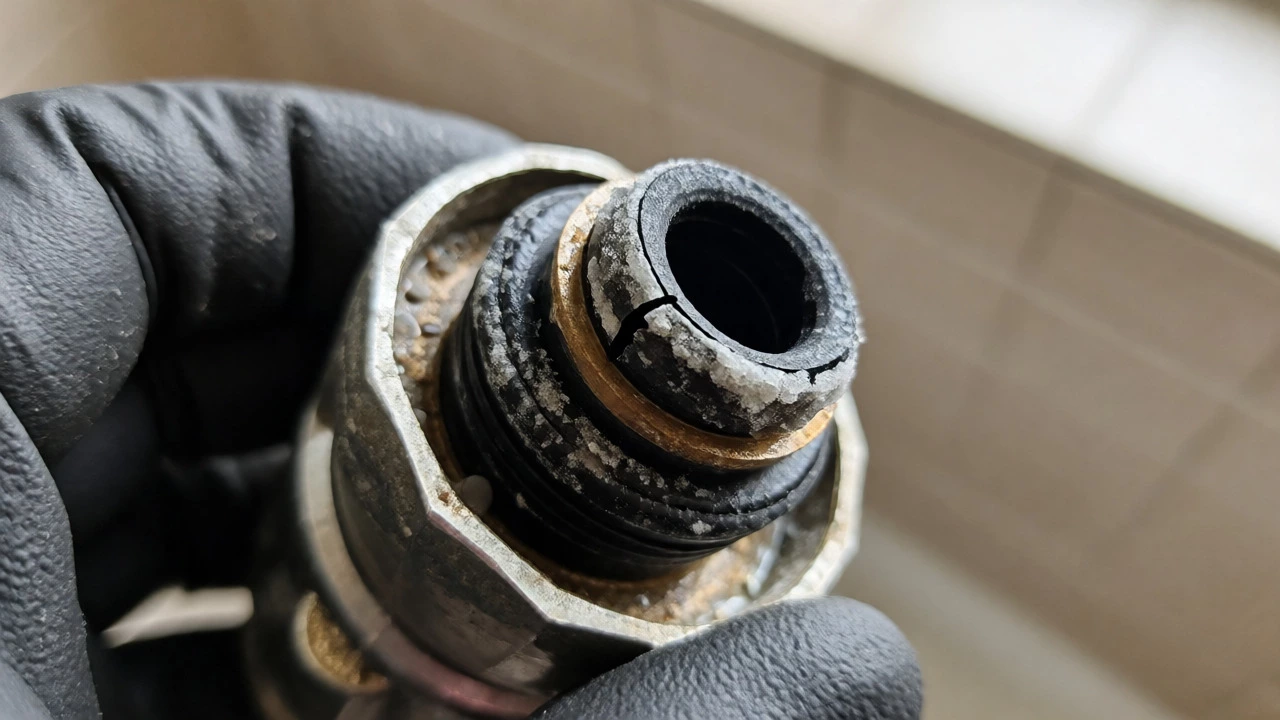
In many parts of the UK, hard water is a reality. Hard water contains high levels of calcium and magnesium. When heated, these minerals precipitate out as white, chalky deposits known as limescale. This scale builds up inside pipes, valves, and shower heads.
Why does this affect the shower but not the sink? Shower heads have tiny nozzles. Even a small amount of scale can block them completely or significantly reduce the flow rate. Kitchen sinks have wider drains and less restrictive fixtures. If your shower spray looks uneven or weak, unscrew the shower head and soak it in vinegar overnight. This dissolves the scale. If the hot water returns after cleaning the head, you’ve solved the problem without spending a penny. If not, the blockage might be deeper in the pipework leading to the shower arm.
Faulty Mixer Taps and Cartridges
Modern showers often use single-lever mixer taps. Inside these taps sits a ceramic disc cartridge that controls the mix of hot and cold water. If this cartridge breaks, the lever might feel loose, or it might only deliver cold water regardless of where you move the handle.
Sometimes, the issue is cross-flow. If the check valves within the mixer fail, cold mains water (which is under higher pressure) can push back into the hot line. This effectively dilutes the hot water supply to the shower, making it lukewarm or cold, while the kitchen sink, which might have a separate or older tap setup, continues to work fine. Testing this involves turning off the mains water and checking if water continues to flow from the shower when both taps are closed. If it does, you have an internal leak in the mixer.
Combi Boiler Limitations and Flow Rates
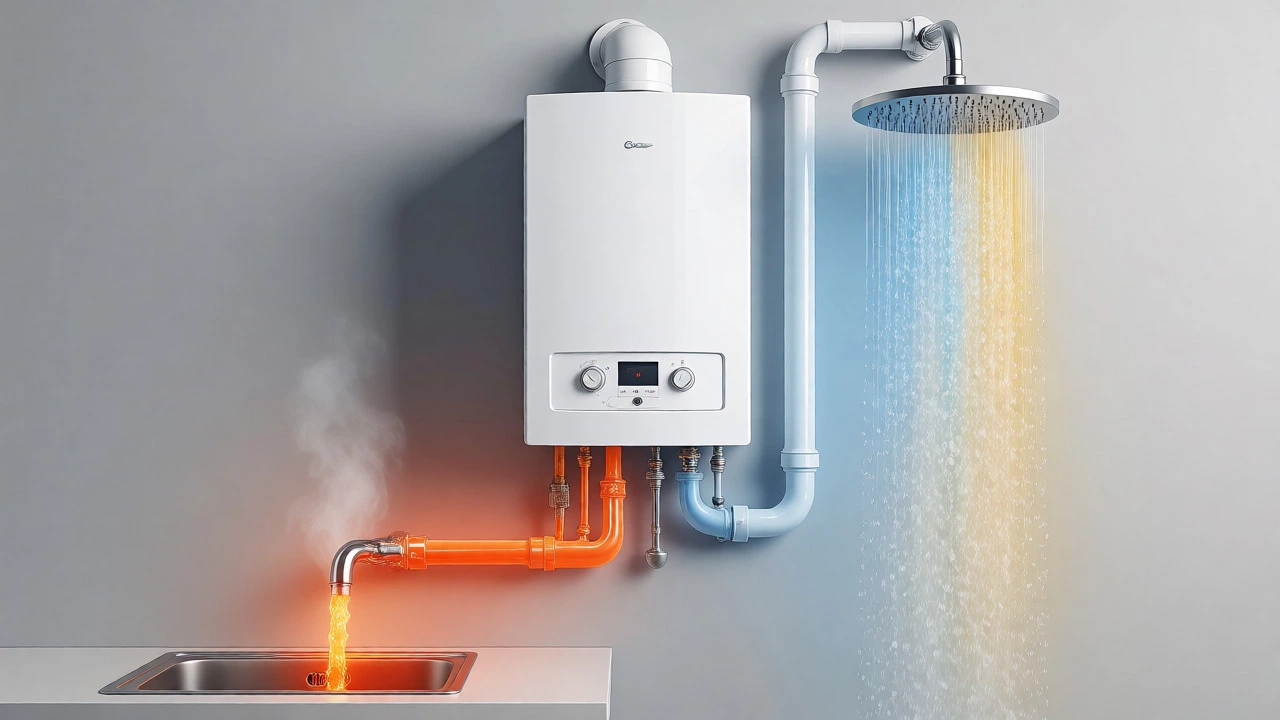
If you have a combi boiler, it heats water on demand. These units have a maximum flow rate, measured in liters per minute (LPM). A typical combi might provide 10-15 LPM of hot water. A power shower or a large rainfall shower head might demand 18-20 LPM.
When the demand exceeds the boiler's capacity, the temperature drops because there isn't enough time to heat the passing water. Your kitchen sink uses a lower flow rate, so the boiler keeps up easily. The shower, however, overwhelms the system. You can test this by partially closing the shower inlet valve to reduce the flow. If the water gets hotter when you slow the flow down, your boiler is struggling with the demand. Installing a thermostatic mixing valve or upgrading to a higher-capacity boiler are potential long-term fixes.
Thermostatic Mixing Valves (TMV)
Many modern showers include a built-in thermostatic mixing valve (TMV). This safety device prevents scalding by maintaining a set temperature. If the TMV fails, it often defaults to cold to prevent burns. This is a safety feature, not a bug, but it leaves you shivering.
A failed TMV cannot always be repaired; often, the entire shower unit needs replacing. However, some models allow for cartridge replacement. If your shower turns on cold and stays cold even when the hot tap elsewhere works perfectly, suspect the TMV. Look for error codes on digital displays if you have an electric shower, though mechanical failures are more common in standard mixed-water setups.
| Cause | Symptoms | DIY Fix? | Professional Help Needed? |
|---|---|---|---|
| Blocked Shower Head | Weak spray, uneven flow, visible white crust | Yes (Soak in vinegar) | No |
| Faulty Diverter Valve | Bath spout leaks during shower, low pressure | Maybe (Cleaning/Replacing) | Yes (If unsure) |
| Broken Mixer Cartridge | Lever feels loose, only cold water comes out | Yes (Replace cartridge) | Yes (If complex fitting) |
| Boiler Flow Limit | Hot water cools down after 1-2 minutes | No | Yes (Upgrade/Adjust) |
| Failed TMV | Stuck on cold, no adjustment possible | No | Yes |
How to Diagnose the Problem Yourself
Before calling a professional, run through these checks. They save money and help the plumber bring the right parts.
- Check Other Taps: Confirm that hot water works in the bathroom basin and the kitchen. If only the shower is affected, the issue is local to the shower unit or its immediate pipework.
- Inspect the Shower Head: Remove it. Run the hose alone. If hot water flows well from the hose but not the head, clean or replace the head.
- Test the Diverter: If you have a bath/shower combo, switch between spout and shower. Listen for clicks or changes in pressure. Look for leaks around the diverter knob.
- Feel the Pipes: With the shower running, touch the pipe leading to the shower mixer (if accessible). If the hot feed pipe is cold, the blockage or valve failure is upstream. If the hot pipe is hot but the output is cold, the mixer or TMV is at fault.
- Reduce Flow: Turn the shower on and slowly close the isolation valve under the bath or behind the panel. If the temperature rises as flow decreases, you have a flow rate mismatch with your boiler.
When to Call a Plumber
You should call a qualified engineer if:
- You suspect a gas-related issue with your boiler (smell of gas, yellow flame).
- The problem persists after cleaning the shower head and checking the diverter.
- You need to replace a sealed shower unit or internal boiler components.
- You live in a flat with shared systems, where altering valves might affect neighbors.
Plumbers charge hourly rates, typically £40-£60 per hour in the UK. Diagnosing a simple diverter issue takes less than an hour. Complex boiler faults take longer. Always ask for a fixed-price quote for repairs if possible to avoid surprises.
Why do I have hot water in the kitchen but not the bathroom?
This usually indicates a localized issue in the bathroom plumbing rather than a whole-house boiler failure. Common causes include a blocked shower head due to limescale, a faulty diverter valve in the bath/shower combo, or a broken mixer tap cartridge in the bathroom. Since the kitchen tap works, the boiler is producing hot water, so the problem lies in the distribution or control mechanisms specific to the bathroom.
Can limescale stop my shower from getting hot?
Yes, absolutely. Limescale buildup narrows the internal diameter of pipes and clogs the tiny holes in shower heads. This reduces the flow rate of hot water significantly. Because hot water pipes often run longer distances to bathrooms, they are more prone to significant scale accumulation. Cleaning the shower head with descaling solution or vinegar often restores proper hot water flow.
What is a diverter valve and how does it break?
A diverter valve is a mechanism that switches water flow between two outlets, such as a bath spout and a shower head. It breaks due to worn-out rubber O-rings, corrosion, or limescale jamming the internal moving parts. When it fails, it may not seal completely, allowing hot water to escape to the wrong outlet or reducing pressure to the shower, resulting in lukewarm or cold water.
Does a combi boiler cause cold showers?
Combi boilers can cause cold showers if the demand for hot water exceeds the boiler's maximum flow rate. Large shower heads require high volumes of water. If the boiler cannot heat the water fast enough at that flow rate, the temperature drops. Reducing the flow rate or installing a thermostatic mixing valve can help maintain a consistent temperature.
How much does it cost to fix a shower with no hot water?
Costs vary widely based on the cause. Cleaning a shower head is free. Replacing a diverter valve or mixer cartridge might cost £50-£100 including labor. Replacing a whole shower unit could range from £150 to £400. If the issue is a major boiler fault, repairs could exceed £200. Always get a diagnosis first to avoid unnecessary replacements.