- 15 Jan 2026
- Gideon Thornton
- 0
Heat Pump Cooling Diagnostic Tool
Troubleshoot Your Heat Pump
Answer these 4 questions about your symptoms to identify the most likely cause of cooling failure.
If your heat pump is running but the air coming out isn’t cool, you’re not alone. Thousands of homeowners in the UK face this exact problem every summer, especially as temperatures climb above 25°C. The unit hums, the fan spins, and the thermostat says it’s cooling-but your house feels like a sauna. This isn’t normal. Something’s wrong, and it’s usually fixable without replacing the whole system.
Check Your Thermostat Settings First
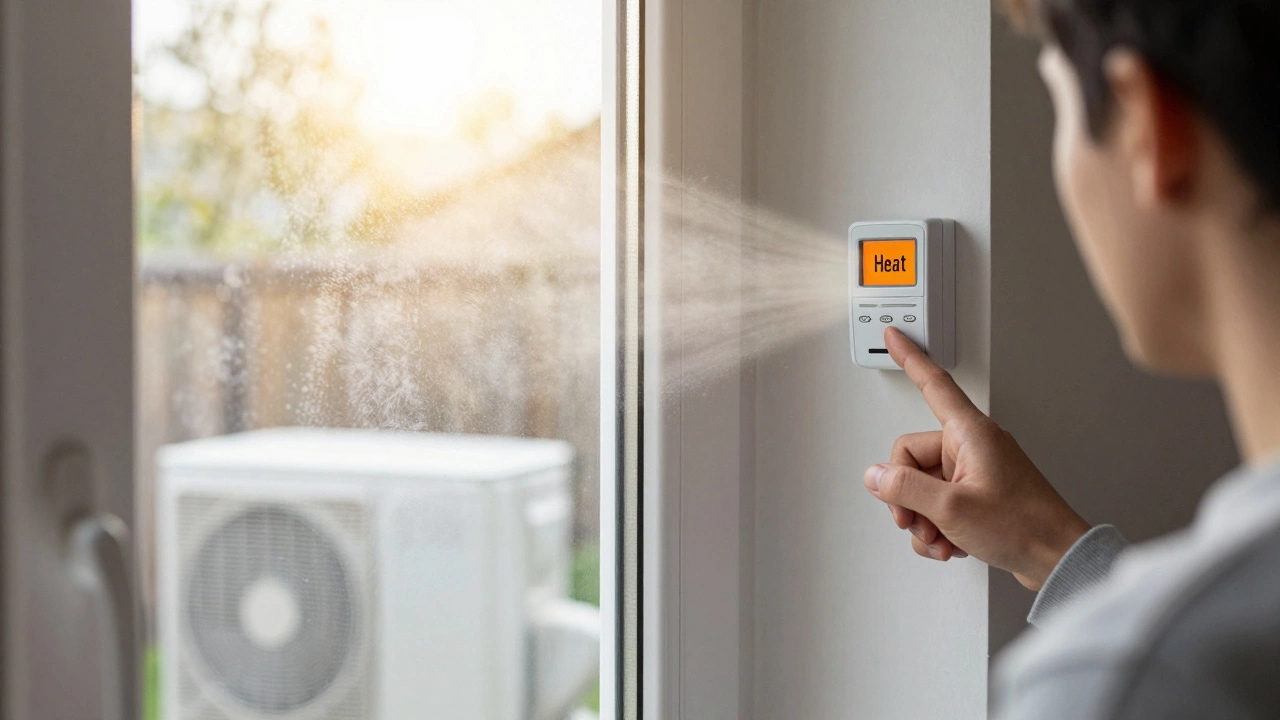
Before you call a technician, double-check your thermostat. It sounds simple, but most heat pump cooling problems start here. Make sure it’s set to cool mode, not heat or auto. Many people accidentally leave it on heat after winter, or switch it to "auto" thinking it’ll handle things. In auto mode, the system might cycle between heating and cooling based on minor temperature swings, which can feel like it’s not working at all. Also, check the fan setting. If it’s set to "on," the fan runs constantly, even when the compressor isn’t cooling. That means you’re blowing room-temperature air around, not cold air. Switch it to "auto" so the fan only runs when the system is actively cooling.Dirty Air Filter Is the #1 Culprit
A clogged air filter is the most common reason heat pumps stop cooling effectively. Dust and debris build up over time, restricting airflow. When air can’t move freely through the system, the evaporator coil freezes over. That’s why your heat pump runs but doesn’t cool: the coil is blocked with ice, not refrigerant. Check your filter. If it’s gray or black, or you can’t see light through it, replace it. Most filters need changing every 1-3 months, especially during peak usage. A clean filter improves airflow, reduces strain on the compressor, and can restore cooling in under 30 minutes after replacement.Ice on the Outdoor Unit? That’s a Red Flag
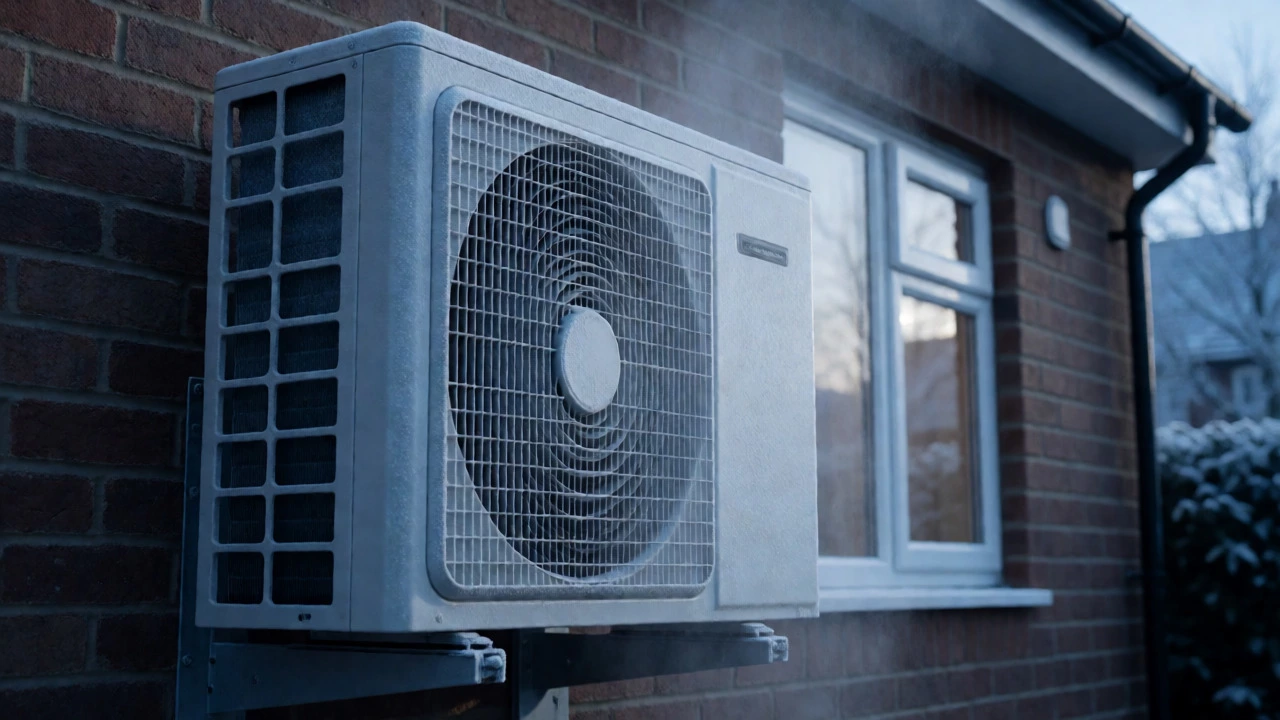
Look at the outdoor unit. If you see ice or frost covering the metal parts, your system is frozen. This happens when airflow is poor (often due to a dirty filter) or refrigerant levels are low. The coil gets too cold, moisture in the air freezes on it, and the system can’t absorb heat from your home anymore. Turn the heat pump off at the thermostat. Let it thaw completely-this can take 2-4 hours. Then turn it back on. If it cools normally after thawing, the problem was likely a dirty filter. If it freezes again within a few hours, you’ve got a refrigerant leak or a faulty metering device. Neither is a DIY fix.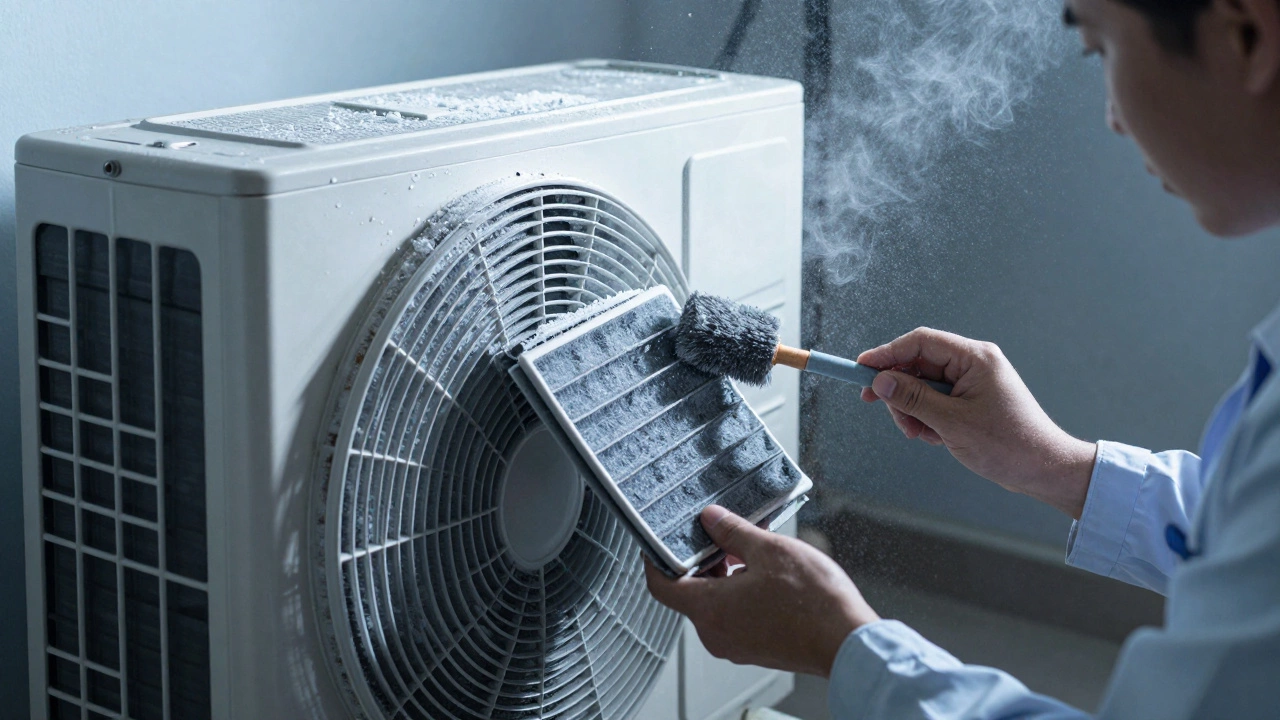
Low Refrigerant Means No Cooling
Heat pumps use refrigerant to transfer heat. If the level drops, cooling fails-even if everything else works. Refrigerant doesn’t get "used up" like fuel. If it’s low, there’s a leak. Common leak points include copper lines, valve stems, or connections at the indoor or outdoor unit. Signs of low refrigerant:- Hissing or bubbling sounds from the outdoor unit
- Ice buildup on copper lines near the indoor unit
- Warm air blowing even after replacing the filter and thawing the unit
Blocked or Dirty Evaporator Coil
The evaporator coil sits inside your indoor unit. It’s where refrigerant absorbs heat from your home’s air. Over time, dust, pet hair, and mold build up on the coil’s fins, acting like insulation. That stops heat transfer, so the air blowing out stays warm. This problem often hides behind access panels and isn’t visible without tools. If you’ve replaced the filter, thawed the unit, and still have no cooling, the coil might be dirty. A technician can clean it with a soft brush and coil cleaner. Left unchecked, a dirty coil can damage the compressor, which costs hundreds to replace.Compressor Problems Are Serious
The compressor is the heart of your heat pump. If it’s failing, the system runs but can’t pressurize refrigerant to create cooling. You might hear loud clicking, buzzing, or grinding noises when it tries to start. Sometimes, the compressor kicks on briefly then shuts off. A failing compressor usually means the system is near the end of its life-especially if it’s over 10 years old. Repairing it is often more expensive than replacing the whole unit. If your heat pump is older and you’re getting repeated cooling failures, replacement might be the smarter long-term choice.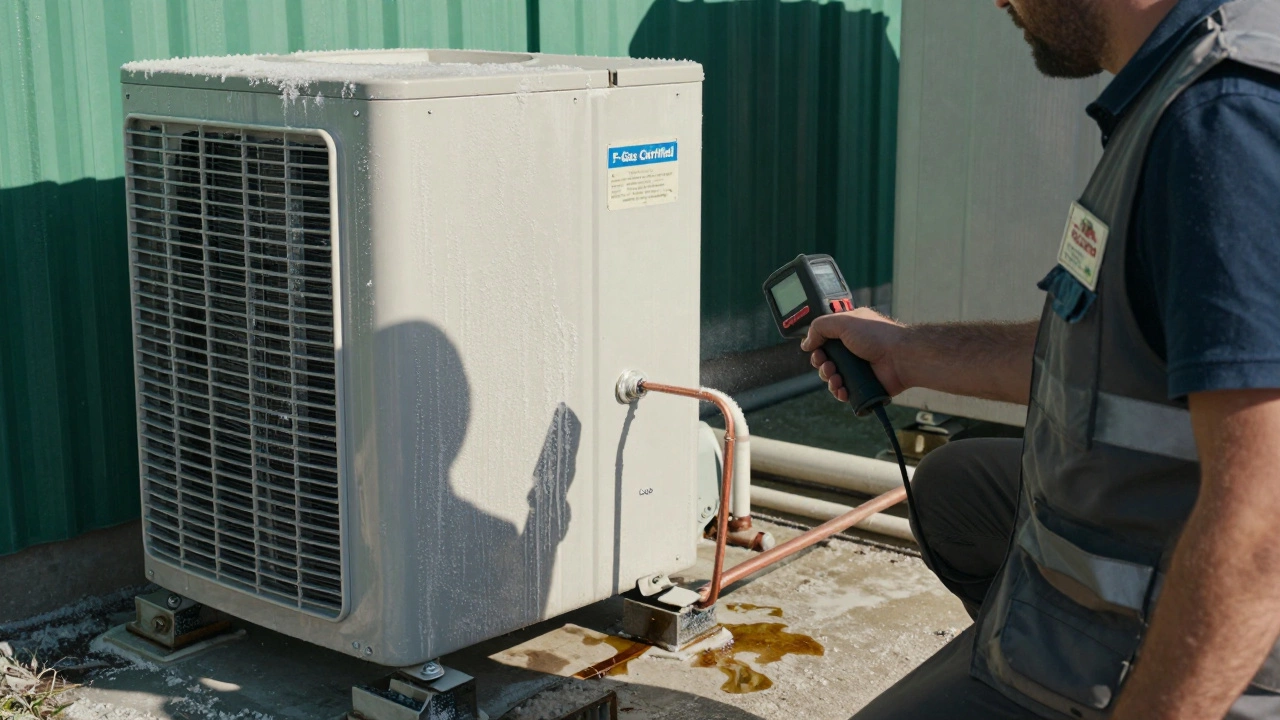
Thermostat or Control Board Failure
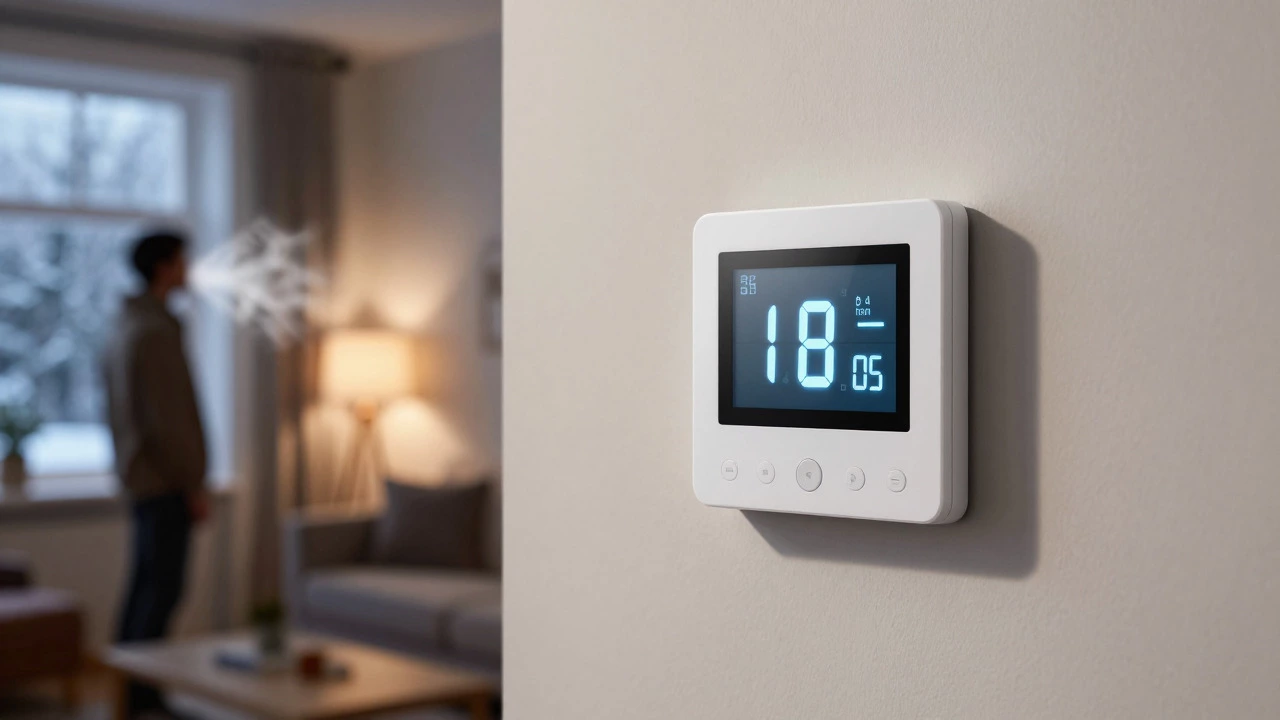
Sometimes the problem isn’t the heat pump-it’s the brain telling it what to do. A faulty thermostat might send the wrong signal. Older mechanical thermostats can stick. Digital ones can glitch from power surges or aging circuits. Test it: Set the thermostat to 18°C and wait 15 minutes. Then lower it to 16°C. If the system doesn’t respond, the thermostat is likely faulty. Try replacing the batteries. If that doesn’t help, bypass the thermostat temporarily by connecting the R and Y wires (turn power off first). If the heat pump turns on and cools, the thermostat is the issue. A bad control board inside the indoor unit can also cause similar symptoms. It’s harder to diagnose without tools, so this is usually a job for a professional.When to Call a Professional
You can handle the filter, thermostat, and thawing yourself. But if you’ve done those and still have no cooling, call a technician. Here’s when you absolutely need help:- Ice keeps forming on the outdoor unit
- You hear unusual noises from the compressor
- There’s a refrigerant leak (oil stains or hissing sounds)
- The unit runs constantly but never reaches the set temperature
- It’s over 10 years old and you’re spending more on repairs than you would on a new one
Prevention Tips to Avoid Future Problems
The best way to avoid a cooling failure is to prevent it:- Change the air filter every 60-90 days
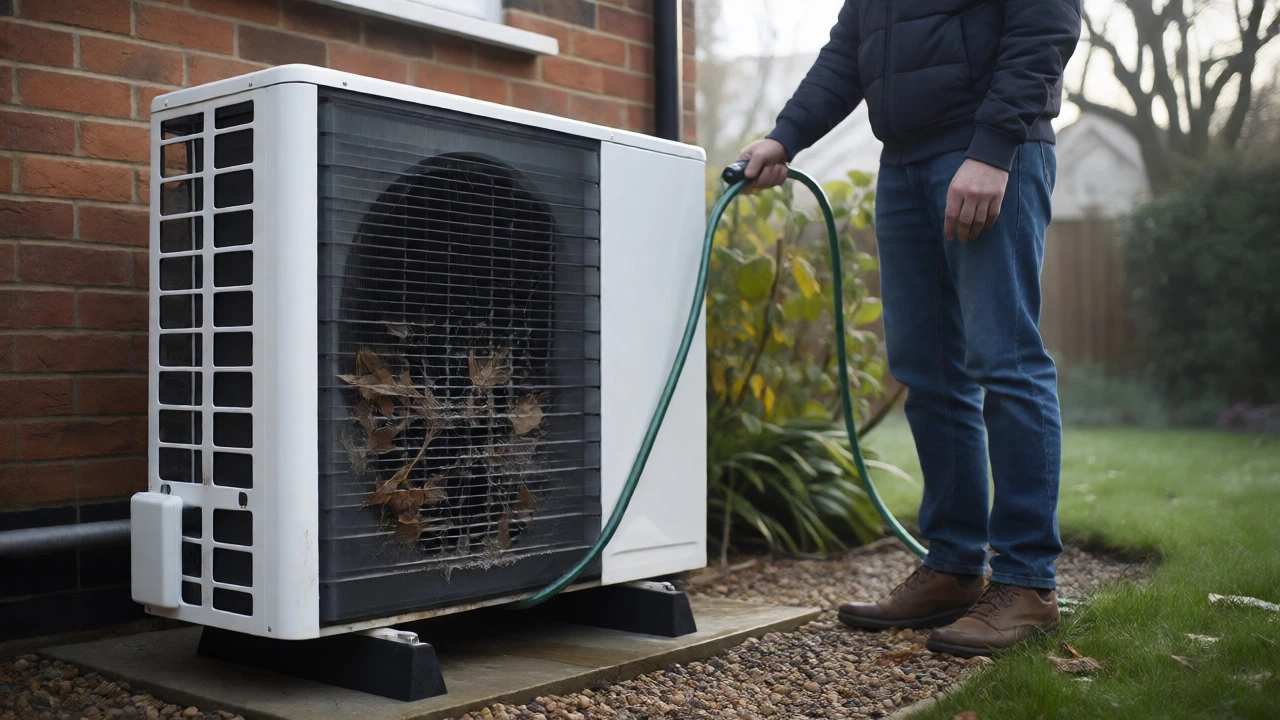
- Clear leaves, snow, or debris from around the outdoor unit
- Keep shrubs at least 2 feet away from the outdoor unit
- Have the system professionally cleaned and checked once a year, ideally in spring
- Install a surge protector for your heat pump to protect the control board
Why is my heat pump running but not cooling?
Your heat pump may be running but not cooling due to a dirty air filter, frozen evaporator coil, low refrigerant, blocked outdoor unit, or faulty thermostat. Start by checking and replacing the filter, ensuring the thermostat is set to cool, and letting the unit thaw if it’s icy. If the problem continues, you likely have a refrigerant leak or compressor issue that requires a professional.
Can I add refrigerant to my heat pump myself?
No. In the UK, only F-Gas certified technicians can handle refrigerant. Refrigerant is a controlled substance under environmental regulations, and adding it without fixing the underlying leak is illegal and wasteful. Attempting to do it yourself can also damage the system or cause injury.
How often should I clean my heat pump’s air filter?
Replace or clean the air filter every 60 to 90 days during peak usage-spring and summer. If you have pets, smoke indoors, or live in a dusty area, check it monthly. A dirty filter is the #1 cause of cooling problems and can cut your system’s efficiency by up to 15%.
Is it normal for my heat pump to run all day in hot weather?
It’s normal for a heat pump to run longer than a traditional air conditioner on very hot days, especially if your home isn’t well insulated. But if it runs non-stop and still can’t reach your set temperature, something’s wrong-likely poor airflow, low refrigerant, or a failing compressor.
How long do heat pumps last before needing replacement?
Most heat pumps last 15 to 20 years with proper maintenance. If yours is over 10 years old and you’re facing repeated cooling issues, especially compressor or refrigerant problems, replacement is often more cost-effective than repairs. Newer models are 30-50% more efficient and come with better warranties.