

- 1 Jun 2026
- Gideon Thornton
- 0
Boiler Emergency Decision Tool
Answer the questions below to find out exactly who you should call right now.
Is there a smell of gas?
It’s 7 AM on a Tuesday in January. Your radiators are cold, the house is freezing, and you’re staring at your phone trying to figure out who to call. You know your neighbor has a great plumber, so you dial their number. They answer, hear "boiler," and say, "I can’t help with that." You hang up confused. Why not? Isn’t a boiler just pipes and water?
This is one of the most common frustrations for homeowners in the UK. The short answer is: it depends. But the real answer involves safety laws, certification, and exactly what part of the system is broken. If you call the wrong person, you risk wasting money, getting an unsafe fix, or even voiding your insurance.
Let’s clear up the confusion once and for all. We’ll look at why regular plumbers often won’t touch your boiler, when they actually will, and how to spot the difference between a general plumber and a Gas Safe registered engineer who specializes in boiler installation and repair.
The Legal Line: Why Plumbers Can't Touch Gas
In the United Kingdom, working on gas appliances is strictly regulated. This isn’t about trade unions protecting territory; it’s about keeping people alive. Carbon monoxide leaks from faulty boilers kill dozens of people every year. Because of this, the law requires anyone working on gas-fired boilers to be registered with the Gas Safe Register which replaced the CORGI register in 2009.
A standard plumber might be excellent at fixing leaking taps, unblocking drains, or installing new bathrooms. They understand water pressure, pipe joints, and gravity. However, unless they have also completed specific gas training and passed rigorous exams, they are legally prohibited from opening up a gas boiler or adjusting its combustion settings.
Think of it like driving. A plumber knows how to drive a car (water systems). A Gas Safe engineer knows how to drive a car AND fly a plane (gas systems). Just because someone is a skilled driver doesn’t mean they can legally pilot an aircraft. If a non-Gas Safe plumber tries to fix your gas boiler, they are breaking the law. More importantly, if something goes wrong, your home insurance will likely refuse to cover the damage.
When a Plumber CAN Help With Your Boiler
So, do plumbers handle boilers? Yes, but only in specific scenarios. Most modern boilers are connected to a broader central heating system. While the boiler itself is a sealed gas unit, the pipes carrying hot water to your radiators are standard plumbing.
If your boiler is making noise, losing pressure, or showing an error code, you need a specialist. But if the problem is external to the sealed unit, a general plumber is often the right first call. Here are the situations where a plumber steps in:
- Radiator Issues: If your boiler is firing up but your radiators stay cold, it might be air trapped in the system or sludge buildup. A plumber can bleed radiators, power flush the system, or balance the valves.
- Leaking Pipes: If there is a leak in the copper pipe connecting the boiler to the wall, a plumber can fix that joint without touching the internal gas components.
- Cold Water Tanks: In older homes with loft tanks, issues with the feed cistern or ball valves are pure plumbing jobs.
- Electrical Tripping: Sometimes the issue isn't the boiler, but the consumer unit (fuse box) tripping due to an overload elsewhere in the house. An electrician handles this, but plumbers often coordinate with them.
However, as soon as the diagnosis points to the heat exchanger, the gas valve, the ignition electrode, or the pump inside the casing, the job hands off to a Gas Safe engineer.
Who Actually Fixes Boilers? Meet the Specialists
If you live in Bristol or anywhere else in the UK, you’ll hear three main terms thrown around. It helps to know the difference before you book anyone.
| Professional Type | Primary Focus | Certification Required | Can They Fix My Boiler? |
|---|---|---|---|
| General Plumber | Water supply, drainage, bathrooms, radiators | None specific (NVQ Level 2/3 in Plumbing) | No (unless it's a non-gas issue like a leaking pipe) |
| Gas Safe Engineer | Gas appliances, boilers, cookers, fires | Gas Safe Registration (CCN1, HTR1, etc.) | Yes, this is their core job |
| Heating Engineer | Central heating systems, underfloor heating, controls | Gas Safe + OFTEC (for oil) or electrical certs | Yes, often with broader system knowledge |
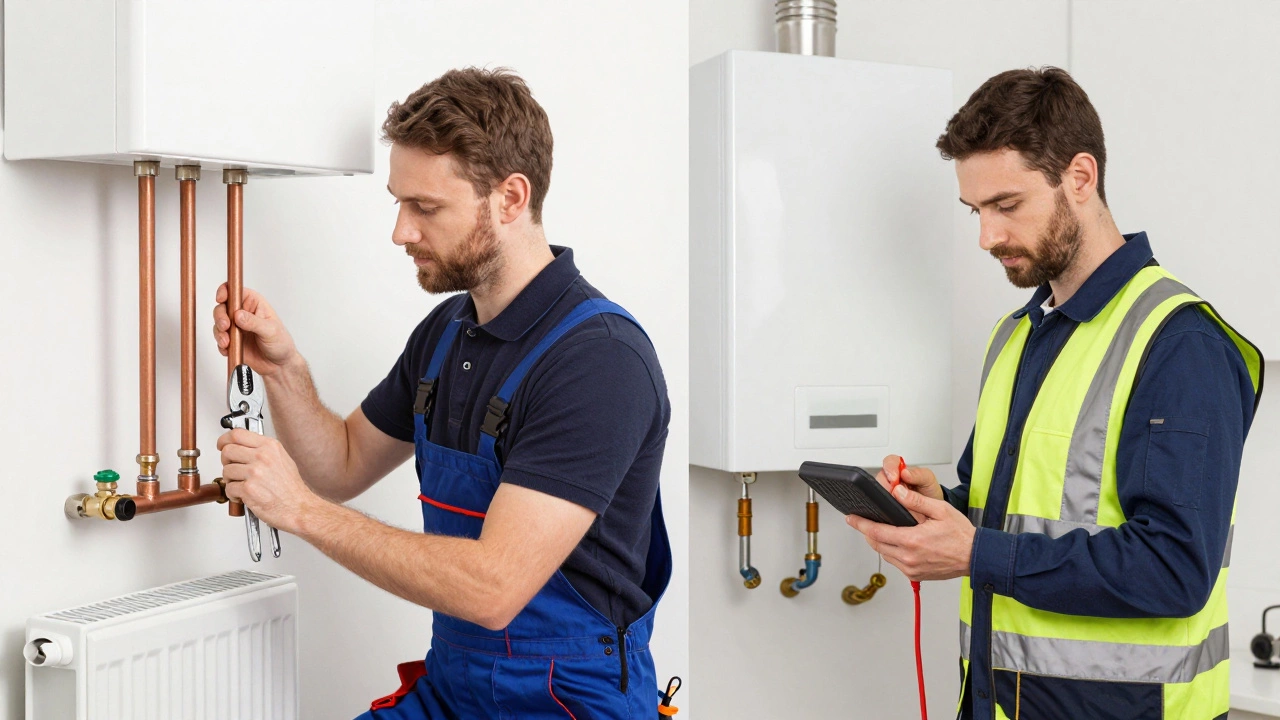
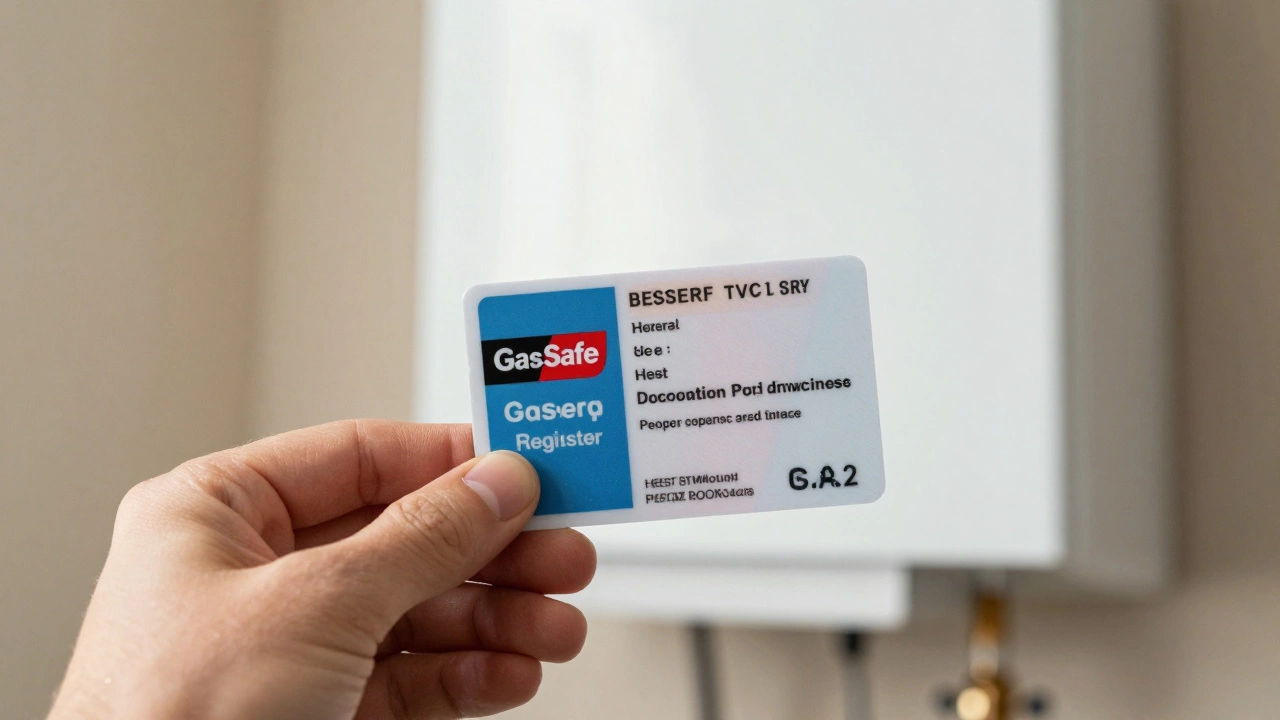
The key takeaway here is the Gas Safe Register. This is the official body for gas engineers in Great Britain. When you hire someone to work on your boiler, you must ask for their ID card. Every engineer carries one. It lists the specific codes they are certified to work on. For example, CCN1 covers domestic gas installation, while HTR1 covers servicing and maintenance. If they don’t show this card, walk away.
Why Not Just Hire One Person for Everything?
You might wonder why we don’t have more "super tradespeople" who are fully qualified in both plumbing and gas work. The truth is, many exist. These are often called "Plumbing and Heating Engineers." They hold both their plumbing NVQs and their Gas Safe tickets.
However, specialization has become more common for a few reasons:
- Complexity of Modern Boilers: Older boilers were simple mechanical devices. Modern condensing boilers are computer-controlled units with complex electronics, sensors, and high-efficiency heat exchangers. Diagnosing these requires specialized diagnostic tools and training that general plumbers rarely maintain.
- Liability Insurance: Insurance premiums for working on gas are significantly higher. Many general plumbing firms choose to subcontract the gas work rather than carry the liability themselves.
- Efficiency: A dedicated boiler company can stock parts for specific brands (like Worcester Bosch, Vaillant, or Ideal) and get technicians trained specifically on those models. A general plumber would have to learn ten different systems.
In cities like Bristol, you’ll find plenty of local firms that offer both services. But even then, the technician who shows up to fix your tap is usually different from the one who fixes your boiler. They might work for the same company, but they have different skill sets.
How to Spot a Fake or Unqualified Worker
With rising living costs, some people try to cut corners by hiring cash-in-hand workers who claim they can "sort it quickly." This is dangerous. Here is how to protect yourself:
- Check the Register Online: Don’t just look at the card. Go to the Gas Safe Register website and type in their name or business number. Verify it matches.
- Beware of "Gas Plumber": This term is misleading. There is no such legal title. It’s either a plumber OR a Gas Safe registered engineer. If they use vague language, ask directly: "Are you Gas Safe registered for this specific appliance?"
- Get a Written Quote: Legitimate engineers provide written estimates. If someone says "I'll take a look and tell you later," they might be fishing for extra charges once they’ve already opened the unit.
- Ask About Landlord Gas Safety Certificates (CP12): If you rent, your landlord must provide an annual CP12 certificate issued by a Gas Safe engineer. If your landlord hired a "friend who does plumbing," that certificate is invalid.
What Happens If You Hire the Wrong Person?
The risks go beyond just a broken boiler. If an unqualified person works on your gas system:
1. Carbon Monoxide Poisoning
Improperly adjusted burners can produce carbon monoxide, a colorless, odorless gas that causes headaches, nausea, and death. A proper engineer uses flue gas analyzers to ensure emissions are within safe limits. A plumber without this equipment is guessing.
2. Voided Warranty
Most boiler manufacturers require annual servicing by a Gas Safe engineer to keep the warranty valid. If a general plumber touches the internals, the manufacturer can deny future claims. This could cost you thousands if the heat exchanger fails.
3. Insurance Rejection
If a fire or explosion occurs due to unauthorized gas work, your home insurance policy will likely be voided. Insurers explicitly exclude damage caused by illegal modifications or repairs.
Practical Steps: Who Do I Call Right Now?
If you’re standing in your kitchen wondering who to call, follow this decision tree:
- Is there a smell of gas? Turn off the gas at the meter, open windows, and call the National Gas Emergency Service immediately. Do not turn lights on or off.
- Is the boiler displaying an error code? Call a Gas Safe registered engineer. Look up local reviews in Bristol or your area. Check their Gas Safe status online.
- Are radiators cold but the boiler is hot? Try bleeding the radiators yourself. If that doesn’t work, call a plumber or heating engineer to check for pump failure or sludge.
- Is there a visible water leak from the pipes? Turn off the water supply to the boiler and call a plumber. They can fix the pipe while you arrange for a Gas Safe engineer to inspect the boiler itself if needed.
Don’t panic. Most boiler issues are minor-a stuck switch, low pressure, or a failed thermostat. But knowing who holds the license to fix it saves you time, money, and potentially your life.
Can a plumber service my boiler?
Only if that plumber is also Gas Safe registered. A standard plumbing qualification does not allow someone to service a gas boiler. Always check for the Gas Safe ID card before allowing anyone to work on the appliance.
Is it cheaper to hire a plumber instead of a Gas Safe engineer?
It might seem cheaper upfront, but it is illegal and risky. If the job involves gas, you must use a Gas Safe engineer. Hiring an unqualified person can lead to costly repairs, voided warranties, and invalidated insurance claims.
What is the difference between a plumber and a heating engineer?
A plumber focuses on water systems, pipes, and drainage. A heating engineer specializes in central heating systems, including boilers, radiators, and controls. Many heating engineers are also Gas Safe registered, allowing them to work on both the water and gas aspects of your heating system.
Do I need a Gas Safe engineer for an electric boiler?
No. Electric boilers do not involve gas combustion, so they do not require a Gas Safe engineer. However, they should still be installed and repaired by a qualified electrician or a heating engineer with appropriate electrical certifications.
How often should I have my boiler serviced?
You should have your boiler serviced annually by a Gas Safe registered engineer. Regular servicing ensures efficiency, prevents breakdowns, maintains your warranty, and checks for dangerous gas leaks or carbon monoxide emissions.