- 13 Jul 2026
- Gideon Thornton
- 0
Oven Control Board Diagnostic Tool
What symptoms is your oven showing?
Select all that apply. This helps narrow down the potential cause.
Have you inspected the control board visually?
Check for physical signs of damage on the circuit board.
Multimeter Test Results
If you have a multimeter, check voltage at the heating element terminals when commanding the oven to heat.
Diagnostic Results
Estimated Repair Cost
Recommended Actions
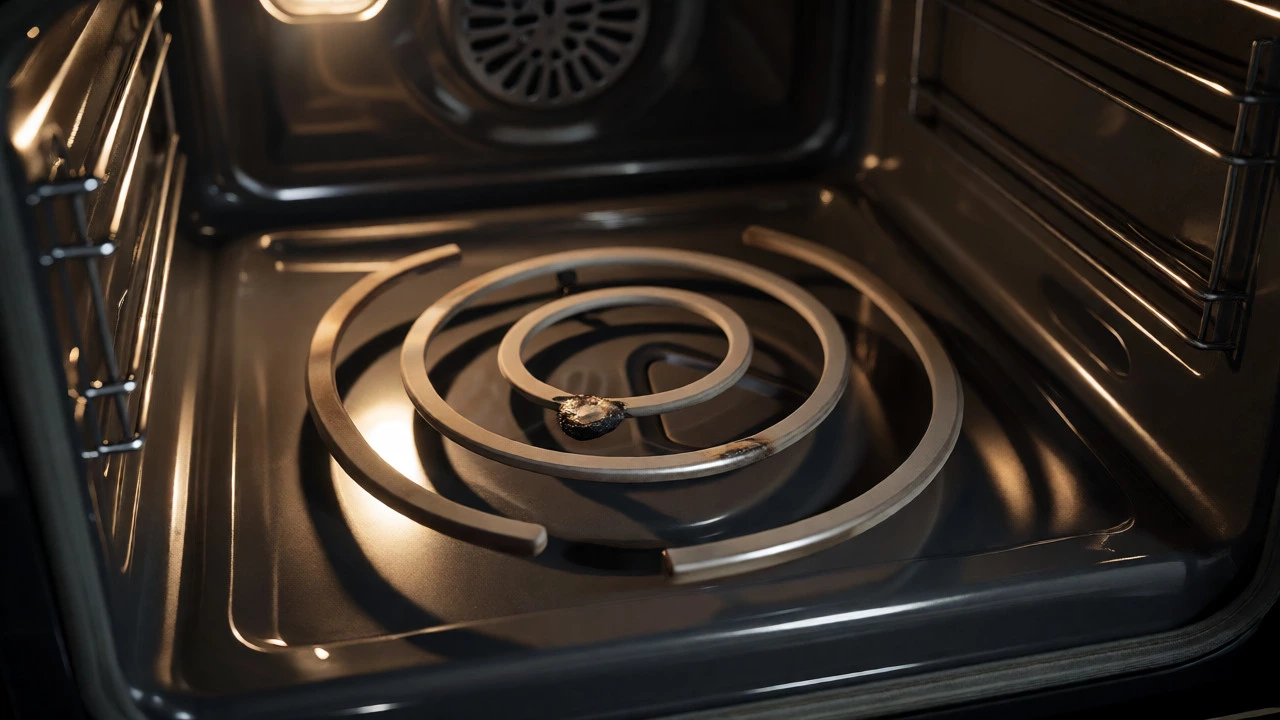
Your oven is the heart of your kitchen, but when it stops working, it feels like a broken promise. You put in the time, you set the temperature, and nothing happens. Or worse, the display flickers, the buttons don't respond, or the oven heats up way too hot. Before you call a technician for a pricey visit, you need to know if the culprit is the control board-the brain of your appliance-or something simpler like a loose wire or a blown fuse.
The control board, also known as the main control board or electronic control unit (ECU), manages every function of your modern electric oven. It sends signals to the heating elements, monitors the temperature sensor, and runs the clock and timer. When this component fails, the symptoms can be confusing because they often mimic other issues. Knowing exactly what to look for can save you hundreds of dollars in unnecessary service calls.
The Top Signs Your Control Board Has Failed
Diagnosing a bad control board starts with observation. While some issues are obvious, others are subtle. Here are the most common indicators that your oven’s brain is on the fritz.
- No Power at All: If the oven display is completely dark, the lights won’t turn on, and the door lock doesn’t engage, the first suspect is usually the power supply. However, if you’ve checked the circuit breaker and the outlet is live, the control board might have failed internally. A burnt smell near the back of the control panel is a dead giveaway.
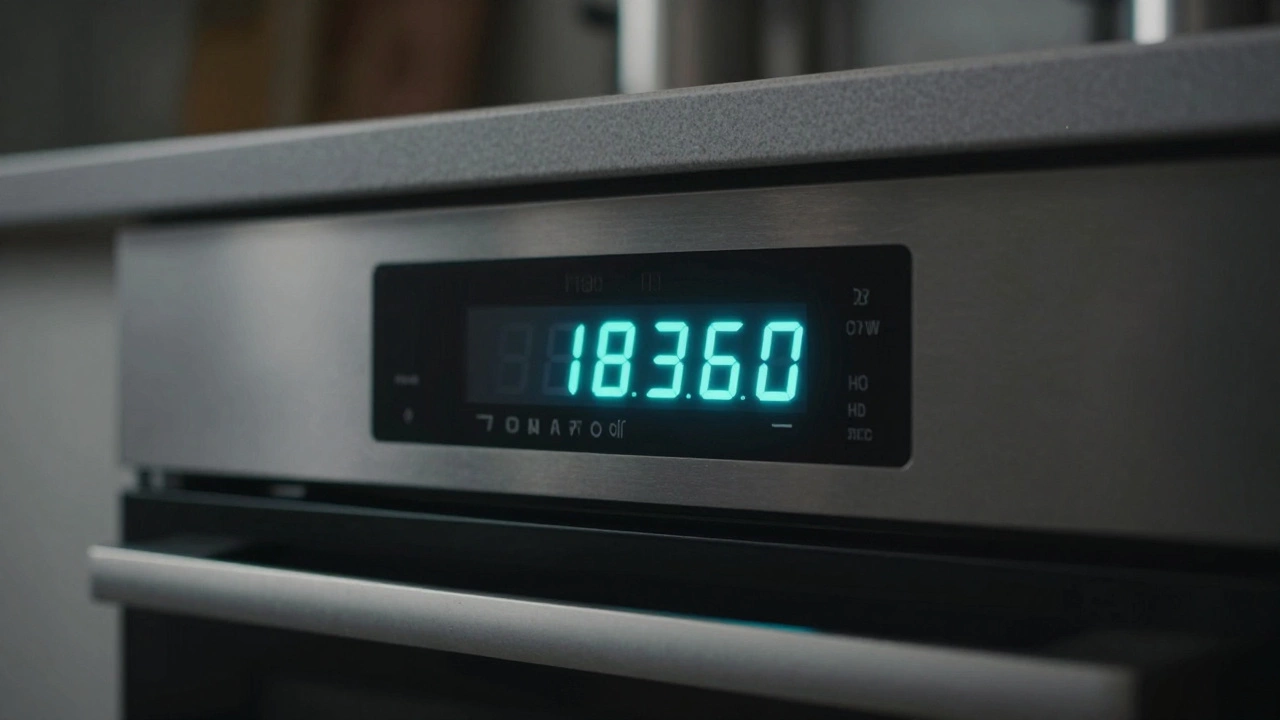
- Flickering or Glitching Display: Does the clock jump around? Do segments of the digital display appear missing or dim? This often points to a failing voltage regulator on the board or loose ribbon cables connecting the keypad to the main board.
- Unresponsive Keypad: If pressing buttons yields no result, the issue could be the touchpad itself. But if the touchpad works intermittently or only certain buttons work, the control board may not be processing the input signals correctly.
- Oven Won’t Heat or Overheats: The control board tells the relay to send power to the heating elements. If the relay sticks open, the oven won’t heat. If it sticks closed, the oven will stay on even after reaching the target temperature, potentially burning food or triggering safety shut-offs.
- Error Codes: Modern ovens communicate problems through error codes (like F9, E0, or H5). While these codes can indicate sensor failures, many specifically point to communication errors between the sensor and the control board.
Rule Out the Simple Stuff First
Before condemning the control board, you must eliminate easier fixes. Replacing a control board is expensive and requires technical skill. Don’t skip these basic checks.
- Check the Circuit Breaker: Go to your home’s electrical panel. Look for the breaker labeled "Kitchen" or "Oven." If it’s tripped, flip it off and then back on. If it trips again immediately, you have a short circuit somewhere, possibly in the wiring or an element, not necessarily the board.
- Inspect the Door Switch: Many ovens won’t start if the door switch thinks the door is open. Listen for a click when you close the door. If the light stays on, the switch might be stuck, preventing the control board from initiating a cook cycle.
- Test the Thermal Fuse: Located near the heating elements, the thermal fuse blows if the oven overheats. If this fuse is open, the control board won’t receive power. Use a multimeter to check for continuity. No continuity means the fuse is blown, not the board.
- Verify the Temperature Sensor: A faulty temperature sensor can send erratic readings to the control board, causing it to behave strangely. Check the resistance of the sensor with a multimeter; it should change predictably as the oven warms up.
How to Test the Control Board Yourself
If the simple checks pass, it’s time to inspect the control board directly. Warning: Always unplug the oven or turn off the circuit breaker before removing any panels. Electricity inside appliances can be lethal.
Start by locating the control board. In most electric ovens, it’s behind the rear access panel or tucked away under the console at the top front. Once you expose it, look for physical signs of damage.
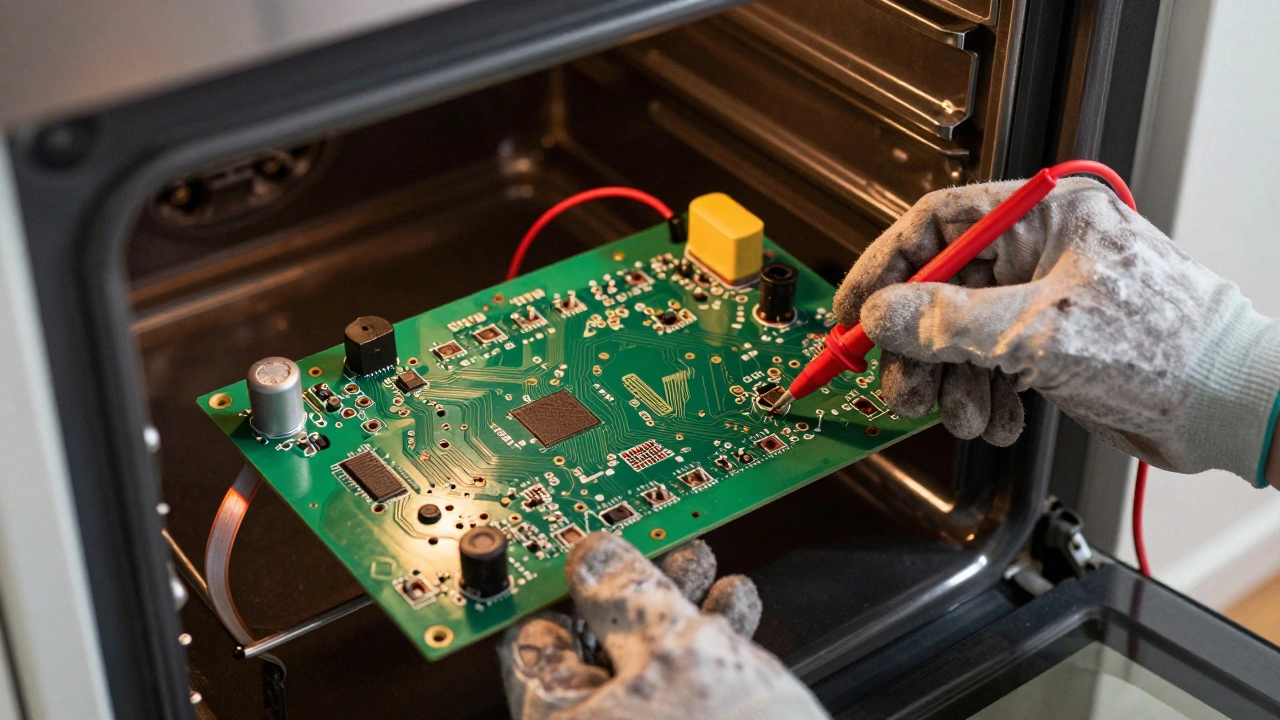
Visual Inspection: Look for burnt components, bulging capacitors, or black scorch marks on the green or blue circuit board. Smell the area; a sharp, acrid odor indicates burned electronics. If you see physical damage, the board needs replacement.
Multimeter Testing: This step requires a bit more expertise. With the oven plugged in and the breaker on (be extremely careful), use a multimeter set to AC voltage. Place one probe on a ground screw and the other on the terminals where the heating element connects. Command the oven to heat. If you get 240 volts at the wall socket but 0 volts at the element terminals, the control board isn’t sending power. This suggests a failed relay on the board.
Ribbon Cable Check: Disconnect and reconnect the ribbon cables linking the control board to the keypad and display. Sometimes, oxidation or loose connections cause intermittent failures that mimic board death. Clean the contacts with contact cleaner if needed.
Comparison: Control Board vs. Other Common Failures
| Symptom | Likely Culprit | Control Board Role |
|---|---|---|
| Oven won’t heat | Burnt-out heating element | Sends power signal; if signal is present but no heat, element is bad. |
| Oven won’t heat | Blown thermal fuse | Cuts power entirely; board receives no voltage. |
| Display flickers/glitches | Bad control board | Manages display logic; internal failure causes visual errors. |
| Buttons unresponsive | Dirty/stuck touchpad | Receives input; if input isn’t received, pad is likely dirty or broken. |
| Erratic temperature | Faulty temperature sensor | Reads sensor data; if data is wrong, board acts on bad info. |
| Error Code F9/E0 | Communication error | Often indicates board cannot talk to sensor or keypad. |
Should You Replace the Control Board?
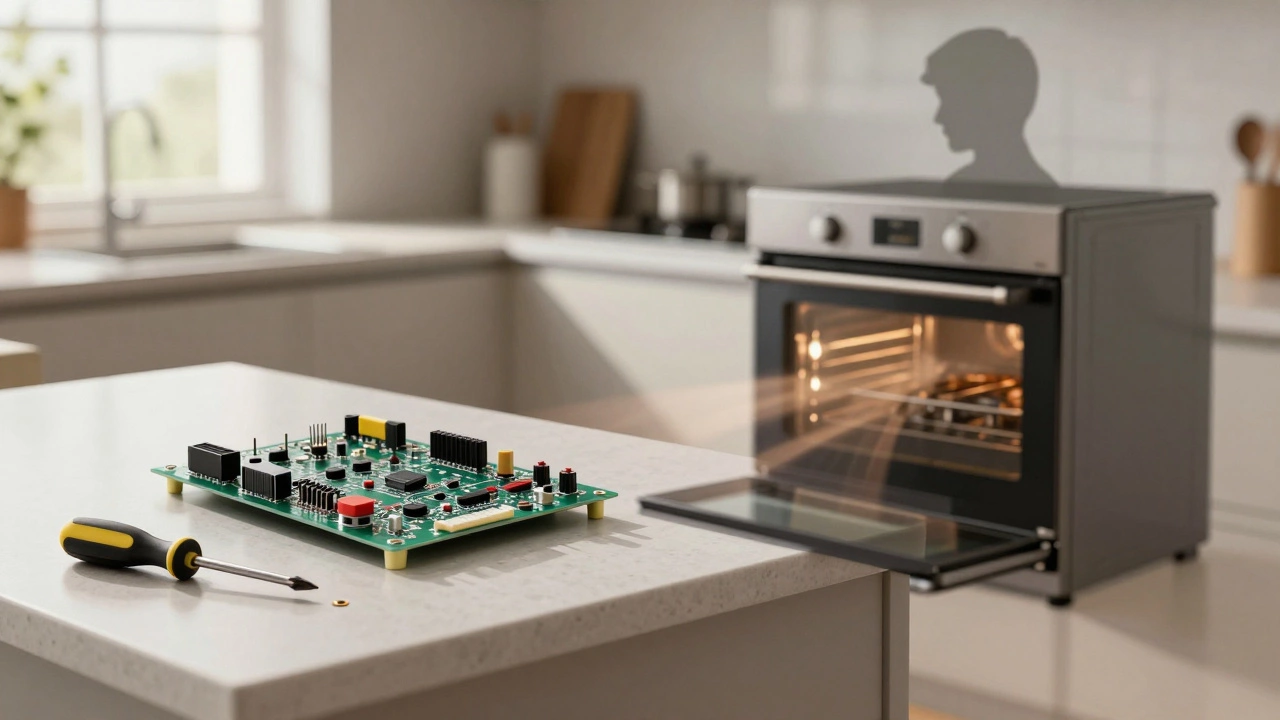
Replacing a control board is a moderate-difficulty repair. You’ll need a screwdriver, a multimeter, and the correct replacement part. Parts vary significantly by model number, so always verify the exact part number from your oven’s label before ordering. Generic boards rarely fit due to specific pinouts and software programming.
Cost-wise, a new control board can range from $100 to $300 depending on the brand. Labor adds another $100-$150 if you hire a pro. If your oven is older than 10 years, consider whether the investment makes sense compared to buying a new energy-efficient model.
When installing, take photos of all wire connections before disconnecting them. This ensures you reconnect everything correctly. After installation, run a self-test if your model supports it, or simply bake a simple item like cookies to verify temperature accuracy.
Preventing Future Control Board Issues
While control boards eventually wear out, you can extend their life. Keep the oven clean; grease and food debris can seep into the control panel and corrode circuits over time. Avoid slamming the oven door, which can jar loose connections. Finally, ensure your home’s electrical system provides stable voltage. Power surges are a leading cause of sudden board failure. Consider a surge protector for your kitchen outlets if your area experiences frequent storms or grid instability.
How much does it cost to replace an oven control board?
The cost varies by brand and model, typically ranging from $100 to $300 for the part alone. Professional installation adds $100 to $150 in labor costs. DIY replacement saves the labor fee but requires comfort with electrical safety procedures.
Can a bad control board cause a fire hazard?
Yes. If the control board fails to cut power to the heating elements, the oven can overheat, potentially igniting grease buildup or nearby materials. Burnt smells or visible scorch marks on the board indicate immediate danger; stop using the oven and seek professional help.
What do error codes like F9 or E0 mean?
These codes usually indicate a communication error between the control board and another component, such as the temperature sensor or keypad. While the board itself might be fine, it’s often the source of the diagnostic alert. Resetting the oven by turning off the breaker for 5 minutes can sometimes clear temporary glitches.
Is it worth repairing an old oven with a bad control board?
If your oven is less than 8-10 years old, repair is usually worthwhile. For older models, consider the total cost of repair versus the price of a new, more energy-efficient oven. New ovens often come with better insulation and smarter controls that reduce long-term electricity bills.
Can I test the control board without a multimeter?
Not accurately. Visual inspection can reveal burnt components, but functional testing requires measuring voltage and continuity. Without a multimeter, you risk misdiagnosing the problem and replacing a good board unnecessarily. Borrowing or buying a basic multimeter is a smart investment for home maintenance.