- 27 Aug 2026
- Gideon Thornton
- 0
Water Heater Lifespan & Replacement Calculator
Your water heater is one of the most reliable appliances in your home until it suddenly isn't. One day you have hot water; the next, you're standing under a cold shower wondering why. The answer usually comes down to age and maintenance. Understanding the lifespan of your unit helps you decide whether to repair or replace before a catastrophic failure floods your kitchen or bathroom.
Average Lifespan by Water Heater Type
Not all water heaters are created equal. The type of unit installed in your Bristol home dictates how long it will last. Here is what you can generally expect from the major categories found in UK households:
| Type | Average Lifespan | Key Factor Affecting Life |
|---|---|---|
| Conventional Tank (Gas) | 8-12 years | Sediment buildup and corrosion |
| Conventional Tank (Electric) | 10-15 years | Heating element wear and tank rust |
| Tankless (On-Demand) | 20+ years | Scale accumulation on heat exchanger |
| Heat Pump Water Heater | 13-15 years | Compressor fatigue and refrigerant leaks |
| Solar Thermal | 20-30 years | Collector panel degradation |
Conventional Tank Water Heaters are storage-based units that keep a large volume of water heated at all times, typically lasting between 8 and 15 years depending on fuel source and maintenance. Gas models tend to fail earlier than electric ones because the combustion process creates more heat stress on the internal components. Electric models, while slightly longer-lasting, suffer from worn-out heating elements if the water quality is poor.
Tankless Water Heaters are on-demand systems that heat water only when needed, offering a significantly longer operational life of over 20 years due to the absence of a storage tank prone to corrosion. Since there is no tank to rust out, these units often outlast the plumbing pipes they supply. However, they require regular descaling to prevent mineral buildup from clogging the heat exchanger.
Why Do Water Heaters Fail Early?
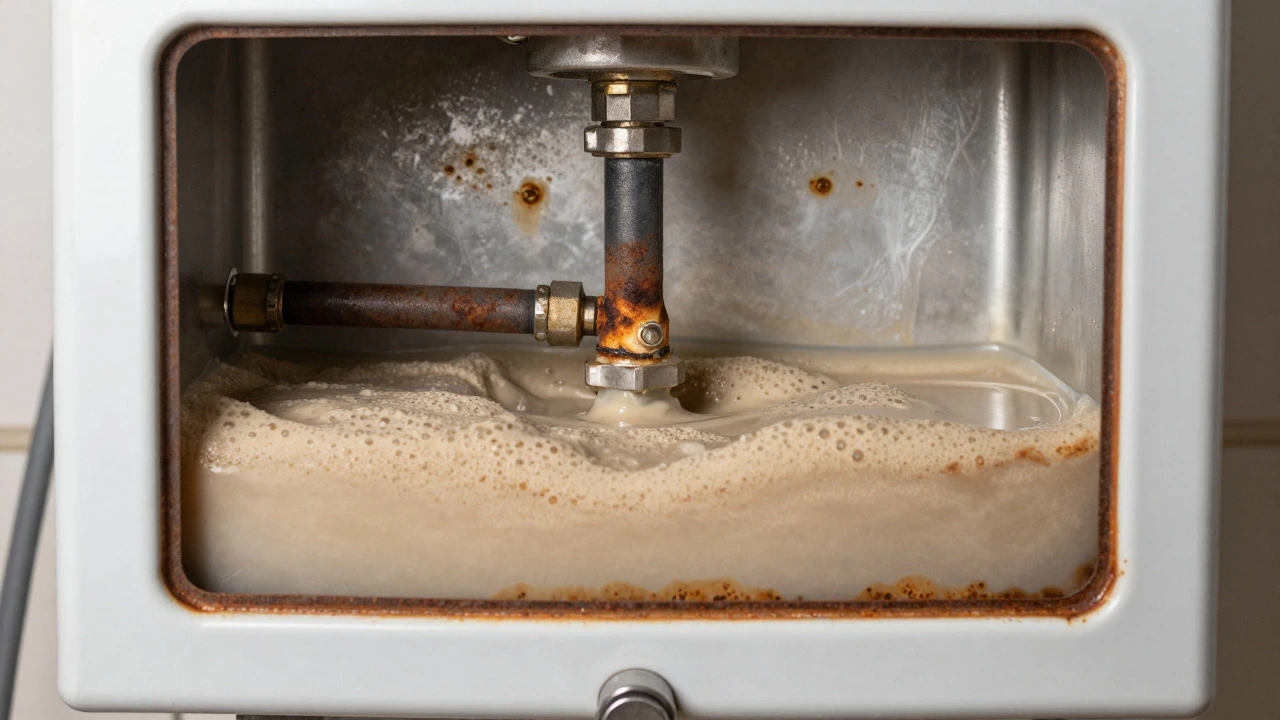
If your ten-year-old unit died at eight, something went wrong. It wasn't just bad luck. Several specific factors accelerate the aging process. The biggest culprit is sediment. In areas with hard water, minerals like calcium and magnesium settle at the bottom of the tank. Over time, this layer insulates the burner or heating element, forcing the unit to work harder and overheat the tank walls. This overheating causes the metal to weaken and eventually crack.
Corrosion is another silent killer. Every steel tank has a sacrificial Anode Rod, which is a magnesium or aluminum bar designed to corrode instead of the steel tank, protecting the interior from rust. If you never check or replace this rod, it burns out completely. Once the anode is gone, the steel tank becomes vulnerable to direct attack from the water. Within a few years, pinholes form, leading to leaks. Replacing a £20 anode rod every two to three years can add five or more years to your tank's life.
Usage patterns matter too. A household of four using the same amount of hot water as a single person puts double the thermal cycles on the unit. Thermal expansion and contraction stress the welds and seals. If you run your water heater at very high temperatures (above 60°C), you also increase scale formation and pressure stress. Keeping the thermostat at 45-50°C is a sweet spot for energy efficiency and longevity.
Signs Your Water Heater Is Near the End
You don't need to wait for a leak to know your unit is dying. Watch for these warning signs. They are your cue to start budgeting for a replacement rather than hoping for the best.
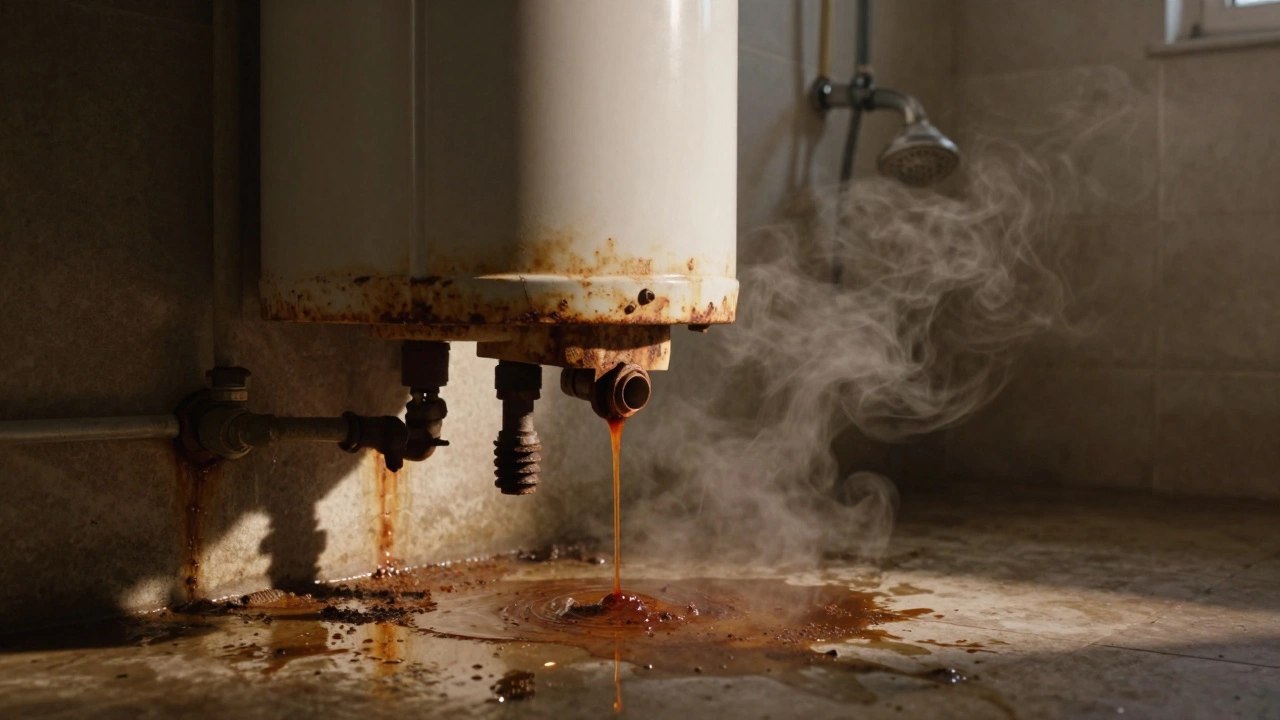
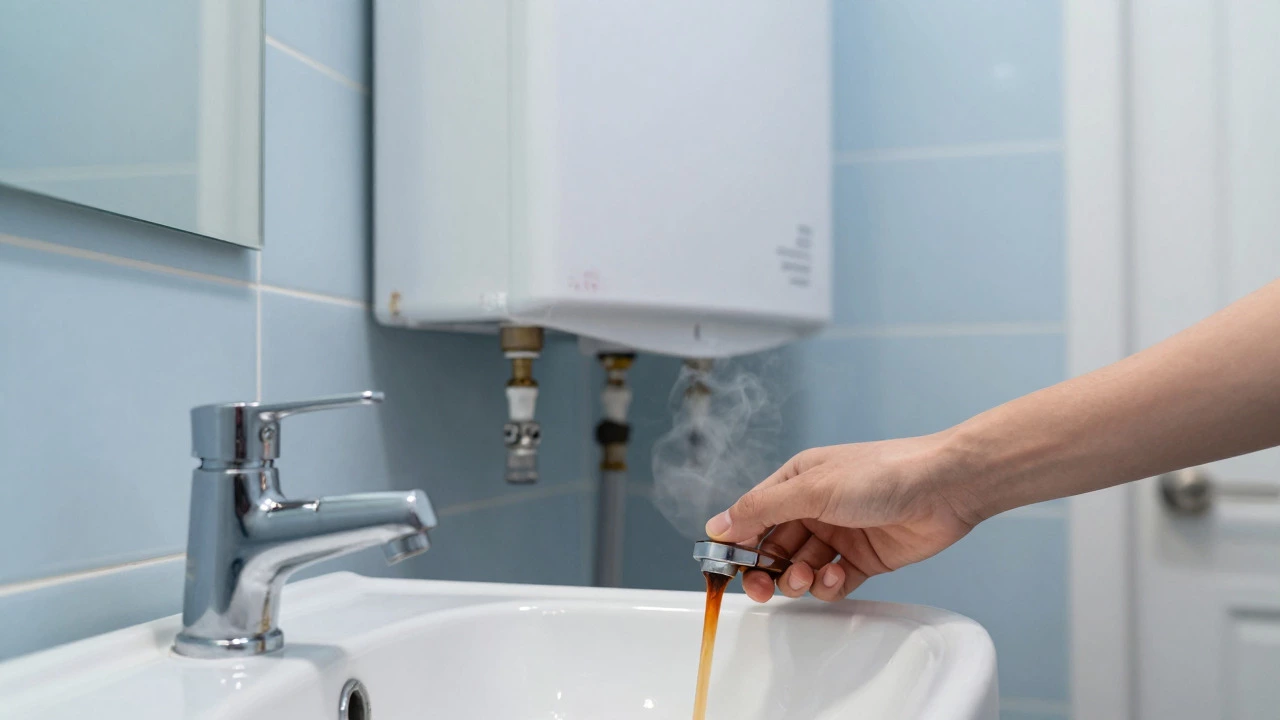
- Rust in the Water: If your tap water looks brown or reddish, rust is leaching from the tank. This means the internal corrosion has breached the protective lining.
- Popping or Banging Noises: These sounds indicate heavy sediment buildup. As water boils over the crusty layer, it creates steam pockets that pop. While not immediately fatal, it signals severe neglect.
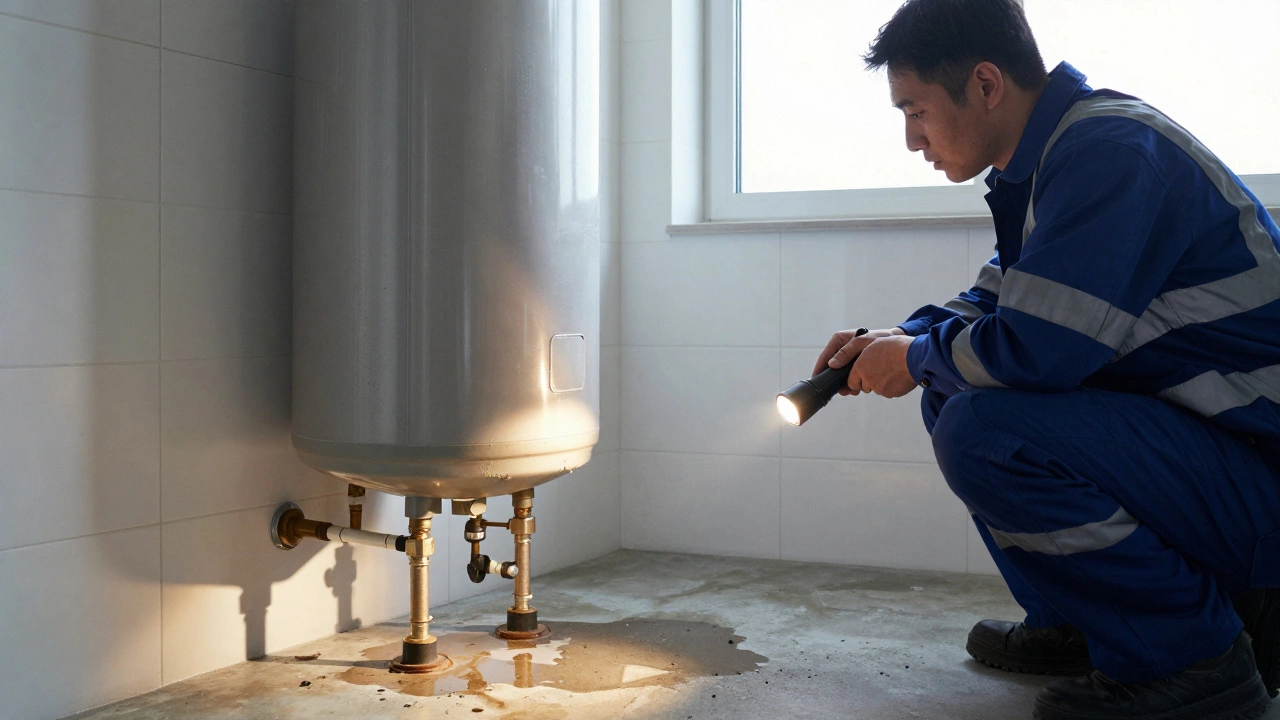
- Dampness Around the Base: Even a small puddle is a sign of a slow leak. Check if it's coming from the drain valve, the pressure relief valve, or the tank itself. If it's the tank, it's game over.
- Inconsistent Temperature: If the water goes from scalding to lukewarm quickly, the heating elements or burner may be failing, or sediment is blocking the flow.
- Age: If your conventional tank is over 10 years old and showing any of the above symptoms, assume it has less than two years left.
How Maintenance Extends Lifespan
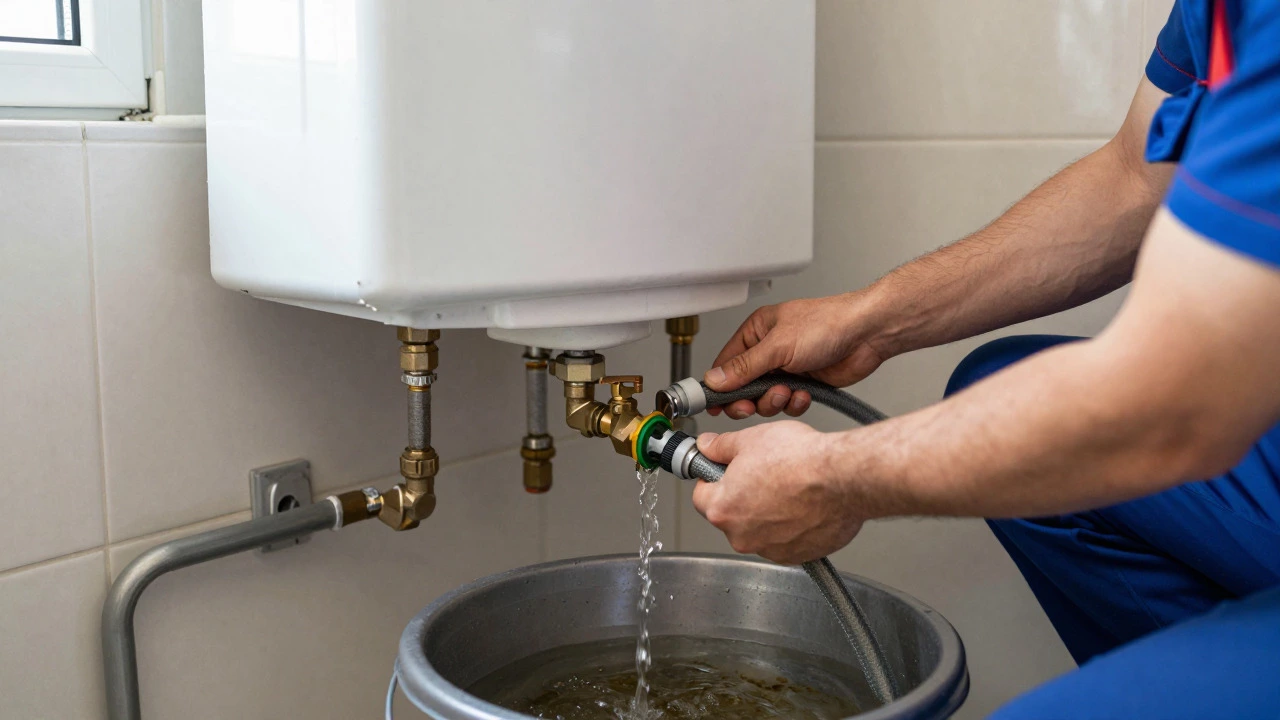
Maintenance is cheap insurance. You don't need to be a plumber to do the basics. Flushing the tank once a year removes sediment before it hardens into cement-like deposits. You simply connect a garden hose to the drain valve at the bottom of the tank, open a cold water tap elsewhere in the house to relieve pressure, and let the dirty water run out until it runs clear. This simple task takes 30 minutes and can double the life of a conventional unit.
For tankless systems, descaling is the equivalent. You use a vinegar solution pumped through the unit to dissolve scale on the heat exchanger. Neglect this, and the flow rate drops, causing the unit to shut off prematurely or fail entirely. Both tasks are far cheaper than a new installation, which in the UK can cost anywhere from £800 to £2,500 depending on the type and labor rates.
Repair vs. Replace: Making the Decision
When should you call a repair engineer? If the issue is minor-like a tripped breaker, a faulty thermostat, or a leaking drain valve-repair is almost always worth it. But if the problem is structural, such as a cracked tank or a corroded flue, repair is rarely viable. You cannot patch a rusted steel tank permanently. It will just leak again next month.
Use the "50% Rule" as a guideline. If the cost of the repair is more than half the price of a new unit, and the unit is older than half its expected lifespan, replace it. For example, if a 9-year-old gas tank needs a new burner costing £400, and a new tank costs £1,200, you might consider repairing it since it's still within its prime life. But if a 12-year-old electric tank needs a new heating element assembly for £350, and a new unit is £1,000, replacing it is smarter. You'll likely face another failure within a year anyway.
Frequently Asked Questions
Does turning down the temperature extend the life of a water heater?
Yes. Lowering the temperature reduces thermal stress on the tank and slows down scale formation. Setting it to 45°C is sufficient for most household needs and reduces the risk of overheating the internal components, thereby extending the unit's operational life.
Can a water heater last longer than 15 years?
It is possible but uncommon for conventional tanks. With meticulous annual flushing and anode rod replacements, some steel tanks survive beyond 15 years. However, plastic-lined tanks or tankless systems are much more likely to exceed this mark reliably.
What is the most common cause of water heater failure?
Corrosion of the inner tank is the primary cause. When the sacrificial anode rod fails to protect the steel, rust forms. Eventually, the tank develops holes. Sediment buildup accelerates this process by creating hot spots where corrosion happens faster.
Is it worth repairing a 10-year-old water heater?
Only for minor electrical or mechanical parts like thermostats or valves. If the repair involves the tank itself or major heating components, it is usually better to replace the unit, as the remaining useful life is limited and further failures are likely.
How does hard water affect water heater lifespan?
Hard water contains high levels of calcium and magnesium, which deposit as scale inside the tank or heat exchanger. This scale acts as an insulator, causing overheating and reducing efficiency. Regular descaling or flushing is essential in hard water areas to maintain longevity.