- 24 May 2026
- Gideon Thornton
- 0
Ice Maker Troubleshooter
What is the main symptom?
Select the issue that best describes what you are experiencing.
No Water Flow
Tray is dry or fills very slowly.
Water Fills, No Ice
Water enters but doesn't freeze properly.
Mechanical Issues
Strange noises, jammed gears, or stuck ice.
General / Unsure
It just stopped working suddenly.
Check the Water Supply
Let's rule out external plumbing issues.
Check all boxes that apply to your situation.
Check Freezer Temperature
Ice makers need a consistently cold environment (0°F / -18°C).
Inspect for Mechanical Jams
Gears can get stuck by ice shards or debris.
Perform a Hard Reset
Electronics can glitch. Let's reset the control board.
- Unplug the refrigerator from the wall outlet.
- Wait at least 5 minutes (allows capacitors to discharge).
- Plug it back in.
Diagnosis Complete
Analyzing...
Please wait.
Recommended Action:
Your ice bin is empty, the cubes are gone, and your favorite cold drink is about to be ruined. You check the freezer, but the ice maker is a mechanical component inside a refrigerator or standalone freezer that automatically freezes water into cubes. It seems completely dead.
This is one of the most frustrating household glitches. The good news? In most cases, you don’t need a technician right away. About 80% of ice maker failures are caused by simple user errors, clogged filters, or minor mechanical jams that you can fix in under ten minutes.
Before you call for service, let’s walk through the logic of how an ice maker works and where things usually go wrong. We’ll start with the easiest checks and move toward more complex repairs.
Check the Water Supply First
If there’s no water, there’s no ice. It sounds obvious, but it’s the number one reason people think their unit is broken when it isn’t. The water inlet valve is an electrically operated valve that controls the flow of water from the home supply line into the refrigerator. If this valve doesn’t open, the tray stays dry.
- Inspect the shut-off valve: Locate the valve on the wall behind or near your fridge. Is it fully open? Sometimes these get bumped during cleaning or moving furniture.
- Check the water line: Look at the plastic tubing connecting the wall to the fridge. Is it kinked, frozen, or crushed? A kink acts like a pinched hose, stopping flow instantly.
- Test the pressure: Disconnect the line at the back of the fridge (have a towel ready) and briefly turn on the valve. Does water shoot out with decent force? Weak pressure means a problem with your home plumbing, not the appliance.
If water flows freely from the line but the ice maker still doesn’t fill, the issue lies within the machine itself-likely the inlet valve or an internal blockage.
The Hidden Killer: Clogged Water Filters
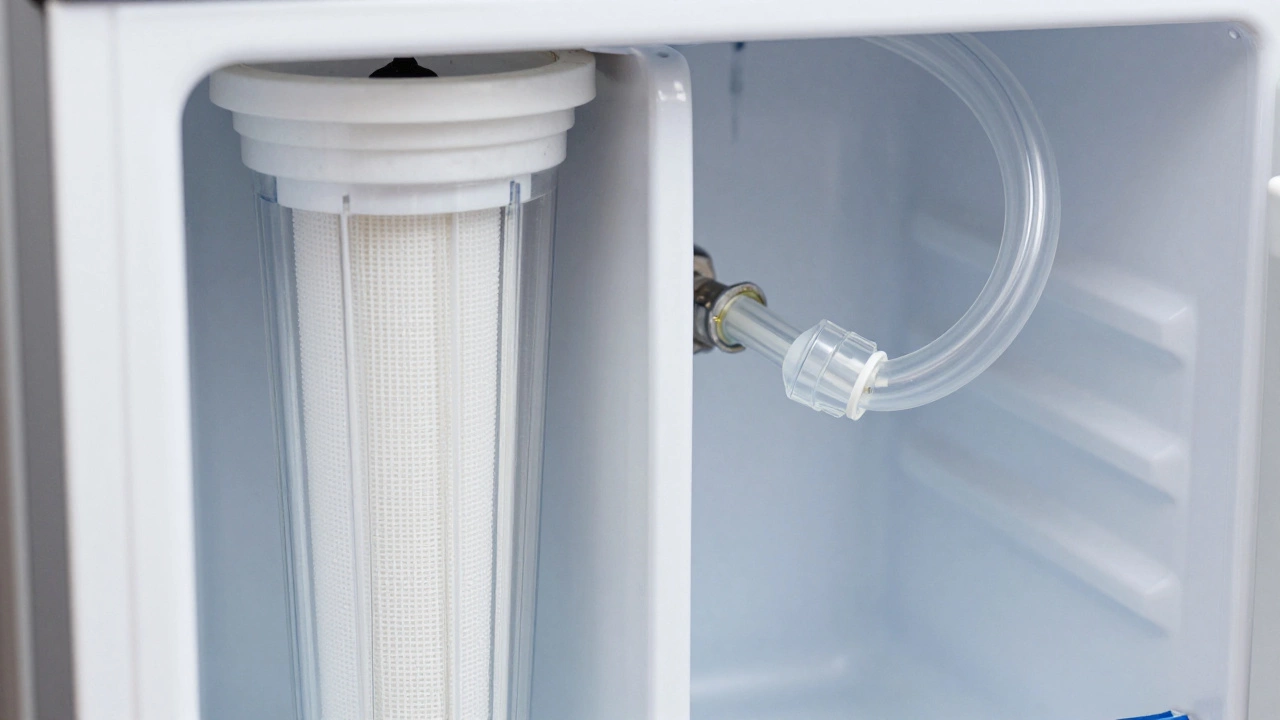
Many modern refrigerators have built-in water filtration systems. While great for taste, these filters have a limited lifespan. When they reach capacity, they restrict water flow significantly.
Here is the tricky part: the filter might not stop water entirely. It might just slow it down so much that the ice maker cycle times out before the tray fills enough to make cubes. Manufacturers typically recommend replacing refrigerator water filters are cartridge-based purification units installed in the fridge door or base grille every six months.
If you haven’t changed yours in over a year, swap it out immediately. It’s a cheap fix that solves countless "broken" ice makers. After replacing the filter, run two cycles of water through the dispenser to purge air bubbles, which can also confuse the sensor.
Temperature Matters More Than You Think
An ice maker needs a consistently cold environment to function. Most models require the freezer compartment to be at 0°F (-18°C) or lower. If the temperature rises above 10°F, the ice maker may pause production to prevent cubes from melting and sticking together.
Ask yourself these questions:
- Have you recently loaded the freezer with warm groceries?
- Is the freezer door seal damaged or dirty?
- Are the air vents inside the freezer blocked by food packages?
If the freezer feels warm, the problem might be with the compressor or evaporator fans, not the ice maker specifically. Use a standalone thermometer to verify the actual temperature. Digital displays on the door can sometimes lag behind reality.
Manual Reset and Error Codes
Sometimes, the electronics just glitch. Power surges, Wi-Fi interruptions (on smart fridges), or software bugs can cause the control board to halt operations.
Try a hard reset:
- Unplug the refrigerator from the wall outlet.
- Wait at least five minutes. This allows the capacitors in the control board to discharge completely.
- Plug it back in.
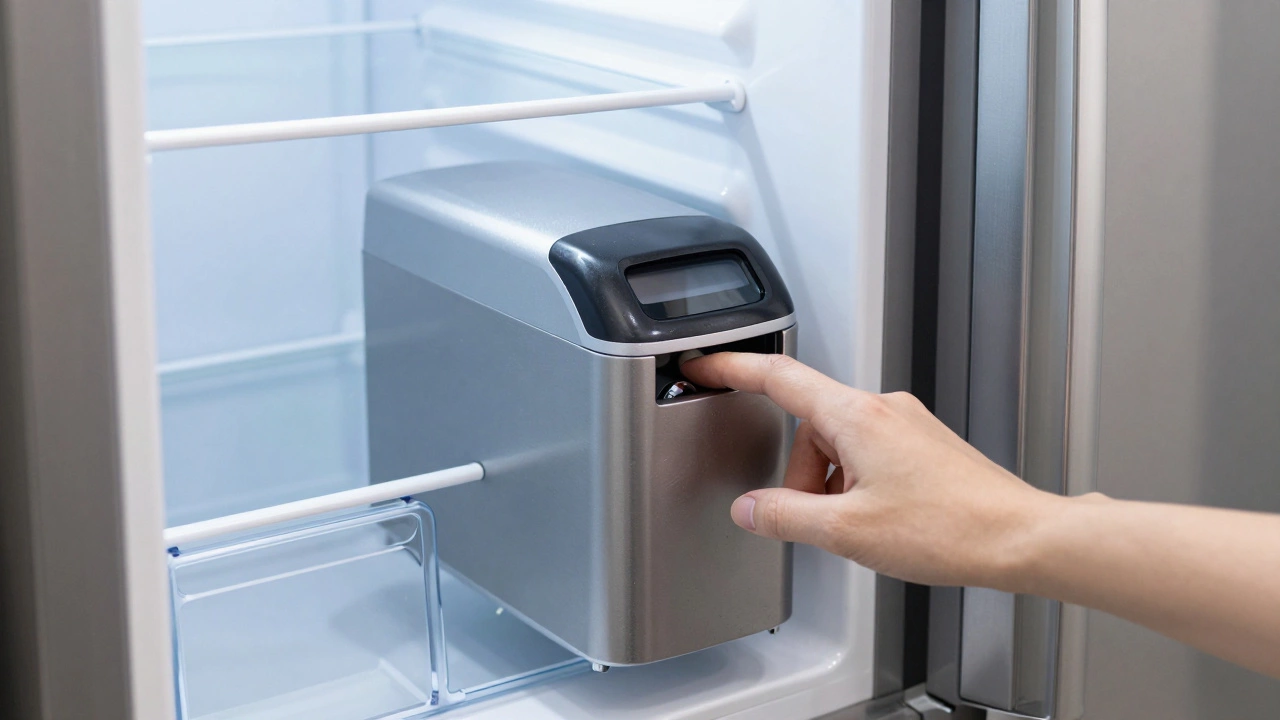
For many brands, there is also a manual reset switch or arm on the ice maker unit itself. Lowering the feeler arm manually often triggers a test cycle. Listen for the motor humming as it tries to eject old ice or start a new batch. If you hear clicking but no movement, you likely have a mechanical jam.
Mechanical Jams and Frozen Components
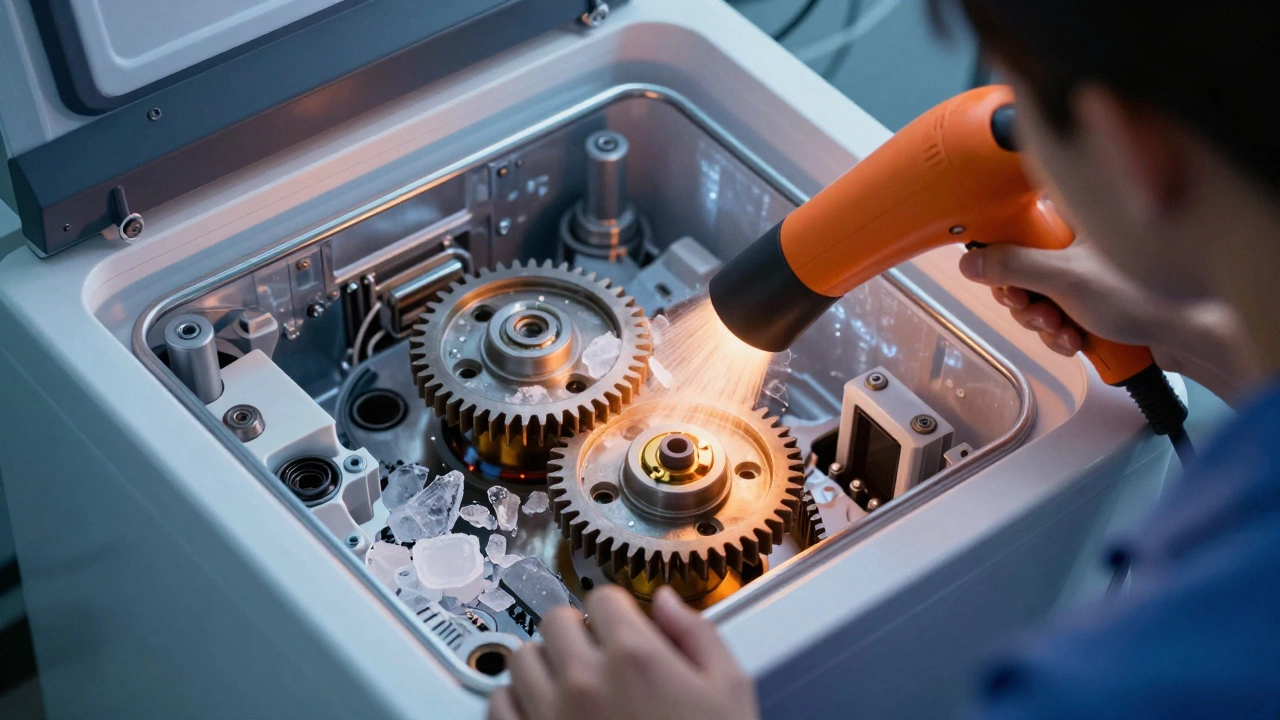
Inside the ice maker module, gears rotate to push ice cubes out of the mold. Over time, small shards of ice can break off and jam these gears. Alternatively, moisture can freeze around the hinge points, locking them in place.
To check for this:
- Turn off the ice maker power switch (usually located on the side of the unit).
- Remove the ice bin.
- Look closely at the gear assembly. Do you see cracked ice wedged between the teeth?
- Gently try to rotate the main gear with your finger (if accessible). It should spin freely with slight resistance.
If it’s stuck, use a hairdryer on low heat to gently thaw the area. Never use sharp tools to pry ice out, as this can damage the delicate plastic molds. Once clear, run a manual cycle to ensure smooth operation.
| Symptom | Likely Cause | Quick Fix |
|---|---|---|
| No water entering tray | Clogged filter or closed valve | Replace filter; check wall valve |
| Water enters but no ice forms | Freezer too warm | Check seals; adjust thermostat |
| Ice cubes stuck together | Heater failure or high humidity | Run defrost cycle; check heater element |
| Loud grinding noise | Jammed gears or broken auger | Power off; inspect for debris |
| Small, misshapen cubes | Low water pressure or partial clog | Flush lines; replace inlet valve screen |
When to Replace Parts vs. Call a Pro
If you’ve checked the water supply, replaced the filter, verified the temperature, and reset the unit, but it still won’t work, you’re likely looking at a hardware failure. The two most common culprits are the water inlet valve is the solenoid-controlled entry point for water and the ice maker module is the complete assembly containing the motor, gears, and heating element.
Inlet valves are relatively inexpensive ($30-$60) and easy to replace if you’re comfortable using basic tools. However, if the ice maker module itself is faulty, replacement costs can range from $100 to $300 depending on the brand. At that point, consider whether calling a professional technician makes financial sense, especially if your fridge is older than seven years.
Preventive Maintenance Tips
Keep your ice maker running smoothly with these habits:
- Change filters regularly: Set a calendar reminder for every six months.
- Monitor temperature: Keep the freezer at 0°F or below.
- Don’t overload: Leave space for air circulation around the ice maker vents.
- Use filtered water: Hard water causes mineral buildup that clogs nozzles and damages components.
A little prevention goes a long way in avoiding those late-night emergencies when you desperately need ice.
How long does it take for an ice maker to start making ice after being turned on?
It typically takes 6 to 12 hours for the first batch of ice to form. The initial cycle involves filling the tray, freezing the water solid, and then harvesting the cubes. Don’t panic if nothing happens for the first few hours.
Can I use tap water directly without a filter?
Yes, but only if your local water quality is good. Unfiltered water contains minerals that build up inside the ice maker, leading to clogs and reduced efficiency. If you skip the filter, flush the system monthly.
Why is my ice maker making cloudy ice?
Cloudy ice is caused by trapped air bubbles or impurities. This often happens when the water pressure is too high or the filter is old. Replacing the filter and ensuring steady, moderate water flow usually clears this up.
Should I unplug my fridge when troubleshooting the ice maker?
Only if you are performing a hard reset or working on electrical components. For simple checks like inspecting the water line or removing the bin, unplugging is unnecessary. Always prioritize safety by disconnecting power before touching any wiring.
What is the average lifespan of an ice maker?
Most built-in ice makers last between 5 and 10 years. Standalone units may last longer due to simpler mechanics. Regular maintenance, such as filter changes and keeping the area clean, can extend this lifespan significantly.