- 12 Mar 2026
- Gideon Thornton
- 0
If your electric oven suddenly stopped working, you’re not alone. Thousands of UK households face this exact problem every year-especially during winter when cooking gets more frequent and the oven becomes essential. It’s frustrating. You turn the knob, hear a click, but nothing heats up. No glowing elements. No smell of baking. Just silence. Before you call a technician or start shopping for a new oven, here’s what’s probably going on-and what you can fix yourself.
The Power Supply Is the First Thing to Check
Electric ovens need 240 volts to run. That’s double the voltage of a standard UK socket. If the circuit breaker trips or the fuse blows, the oven won’t get power at all. Start by checking your consumer unit (fuse box). Look for a breaker labeled "Oven," "Cooker," or "Kitchen." If it’s switched off, flip it back on. If it trips again right away, don’t keep resetting it. That’s a sign of a deeper fault, like a short circuit or a failing element.Some older homes have rewirable fuses instead of circuit breakers. If you see a fuse with a broken wire inside, that’s your culprit. Replace it with the correct amperage (usually 30A or 32A for ovens). Never use a higher-rated fuse-it’s a fire risk.
Also, check if the oven is plugged into a dedicated socket. Some people mistakenly plug ovens into regular wall sockets. That’s unsafe and often causes overload. If your oven is hardwired, you’ll need to inspect the junction box behind the oven or the isolator switch near the kitchen. A loose wire there can cut power silently.
Heating Elements Are the Most Common Culprit
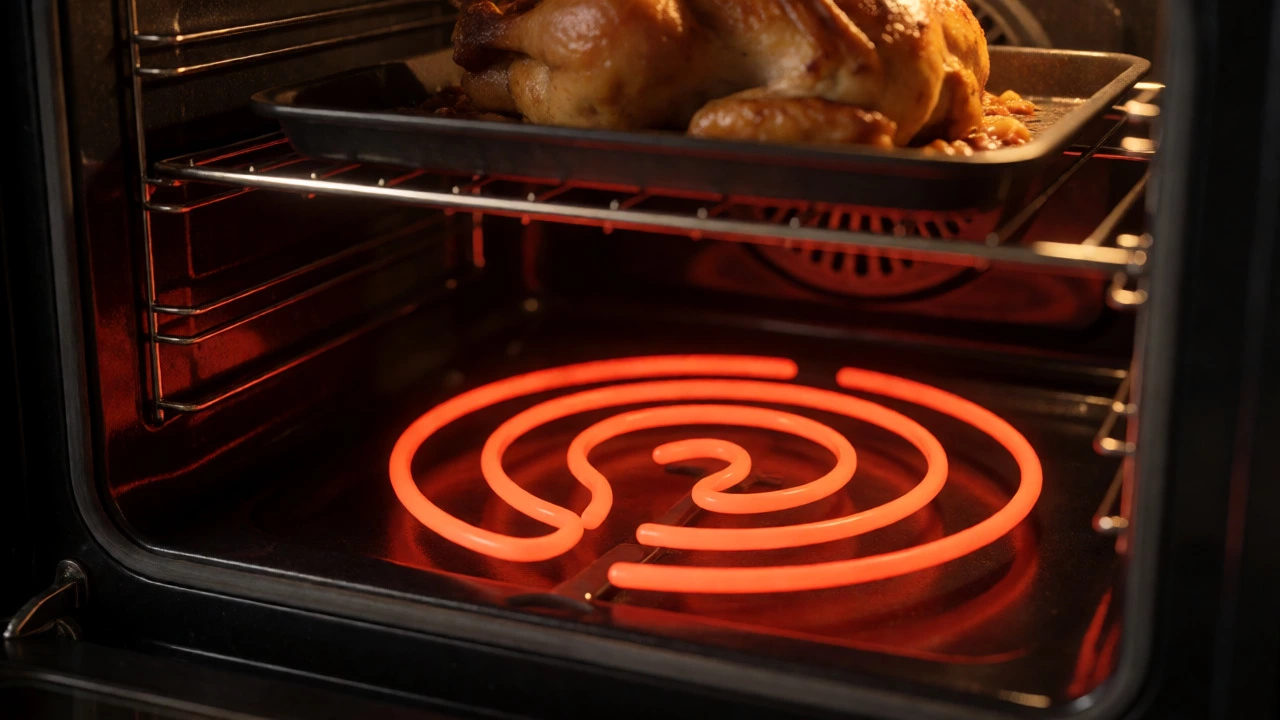
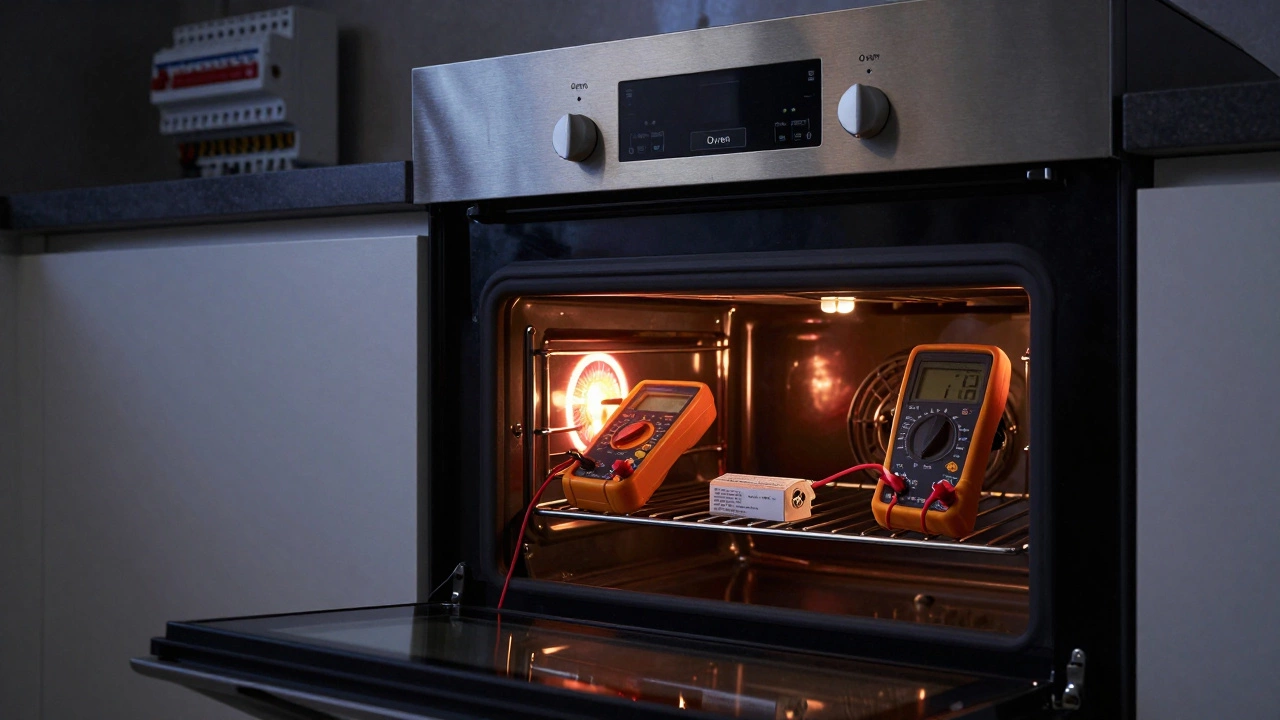
The heating elements in your oven are simple: thick wires that glow red-hot when electricity flows through them. Over time, they wear out. A failed element won’t glow, even if the oven turns on. You might still get the fan running or the light working, but no heat.To check, turn the oven on to 200°C and watch the elements. The top element (grill) should glow within 30 seconds. The bottom element (main oven) should glow too. If one doesn’t, it’s likely dead. You can test it with a multimeter. Set it to continuity (ohms) and touch the probes to the element’s terminals. If it shows infinite resistance (OL), the element is broken. If it reads between 20-50 ohms, it’s fine.
Replacing a heating element is straightforward. Unplug the oven or turn off the circuit breaker. Remove the screws holding the element in place, disconnect the wires, and swap in a new one. Make sure the replacement matches the model number of your oven. You can find this on the serial plate inside the door or on the back panel. A new element costs £25-£50. Labour? You can do it in under an hour.
Thermostat or Temperature Sensor Failure
If your oven heats unevenly or doesn’t reach the right temperature, the thermostat might be faulty. In modern ovens, a temperature sensor (thermistor) does this job. It’s a small probe, usually near the back wall. If it’s damaged or coated in grease, it sends wrong signals to the control board.Here’s how to test it: set the oven to 180°C. Wait 15 minutes. Then use an oven thermometer (not the built-in one) to check the actual temperature. If it’s off by more than 15°C, the sensor is likely faulty. You can also test it with a multimeter. At room temperature, it should read around 1000-1100 ohms. If it reads way higher or lower, replace it. Sensors cost £15-£30 and are easy to swap.
Don’t confuse this with a faulty control board. If the display is blank, buttons don’t respond, or error codes flash (like F1, E3, or E4), the board might be the issue. But boards fail less often than elements or sensors. Only consider replacing it if everything else checks out.
Door Switch Problems Are Often Overlooked
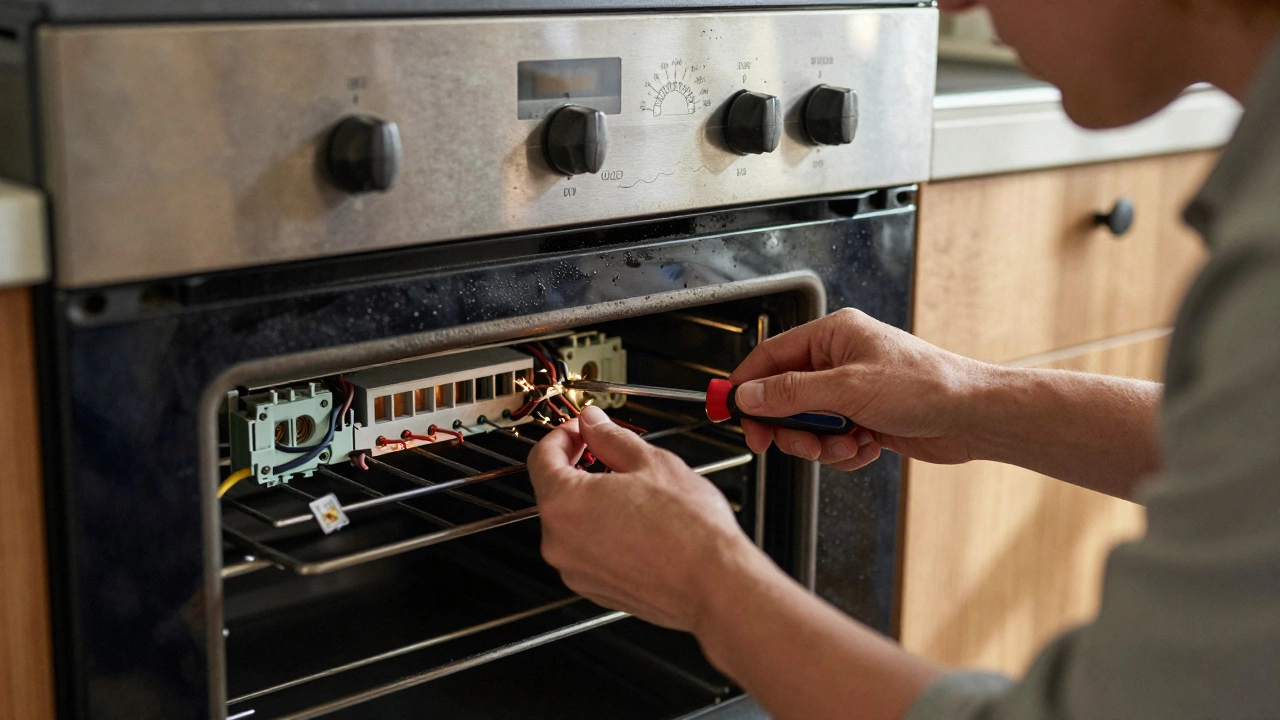
Many electric ovens have a safety switch that cuts power if the door isn’t fully closed. If the switch is stuck, dirty, or broken, the oven won’t heat-even if the door looks shut.Try this: gently press the door latch area with your finger while the oven is on. If it suddenly starts heating, the switch is the problem. Clean it with a dry toothbrush. If that doesn’t help, the switch needs replacing. It’s a small plastic or metal part near the door hinge. You can buy one for under £10. Unplug the oven, remove the door panel, and swap it out. It takes five minutes.
Electrical Connections and Wiring Degradation
Heat and time cause wires to loosen or corrode. In older ovens (15+ years), the terminals where the power cord connects to the oven can burn out. Look for black marks, melted insulation, or loose screws. This is dangerous. If you see damage, turn off the power and don’t use the oven until it’s fixed.Check the terminal block behind the oven’s back panel. Tighten any loose screws. Replace any wires that look brittle or discoloured. If you’re not comfortable doing this, call a qualified electrician. Working with 240V isn’t a DIY job if you’re unsure.
Control Board Failure (The Last Resort)
If all else fails, the control board might be at fault. This is the brain of the oven. It manages power to elements, the fan, the clock, and the display. Signs of a bad board: no display, unresponsive buttons, error codes, or elements that work intermittently.Before replacing it, rule out everything else. Control boards cost £80-£200. Labour adds another £60-£100. For older ovens, it’s often cheaper to replace the whole appliance. But if your oven is under 8 years old and otherwise in good condition, a new board might be worth it.
Some manufacturers offer replacement boards with updated firmware. Always match the exact model number. A wrong board won’t work, even if it looks identical.
What to Do If You’re Still Stuck
If you’ve checked the power, elements, thermostat, door switch, and wiring-and the oven still doesn’t work-it’s time to call a professional. But don’t just call the first technician you find. Ask if they’re Gas Safe registered (even for electric ovens, many are trained for both). Ask if they carry common parts for your brand (Bosch, Neff, AEG, Whirlpool, etc.). Most repairs take under 90 minutes if they have the right part.Keep your manual. It has model-specific troubleshooting steps. If you lost it, search online using your oven’s model number. Most manufacturers offer free PDFs.
Prevent Future Problems
- Clean your oven regularly. Grease buildup on elements or sensors causes overheating and failure. Use non-abrasive cleaners. - Don’t use the self-cleaning function too often. It pushes the oven to extreme temperatures, stressing components. - Avoid slamming the door. It jars the door switch and wiring. - Check your home’s electrical load. If other high-power appliances (kettle, microwave, washing machine) are on the same circuit, they can cause voltage drops that strain the oven.Most electric ovens last 10-15 years. If yours is older and failing often, replacement might be smarter than repair. But if it’s still under 8 years old, most failures are fixable for under £100.
Why is my electric oven not heating but the light still works?
If the oven light works but the oven doesn’t heat, the problem is almost always with the heating elements, thermostat, or control board. The light runs on a separate, lower-voltage circuit. The heating elements need full 240V power. Check both the top and bottom elements for signs of damage or no glow. Test them with a multimeter. If they’re fine, the thermostat or control board may not be sending power to them.
Can a tripped circuit breaker cause my oven to stop working completely?
Yes. Electric ovens draw a lot of power, and if there’s a fault-like a short in the wiring or a failing element-it can trip the breaker. If the breaker trips again after resetting, there’s an ongoing electrical problem. Don’t keep resetting it. Turn off the oven and call an electrician. Repeated tripping can damage your home’s wiring.
Is it safe to use a multimeter to test oven components?
Yes, if you follow safety steps. Always unplug the oven or turn off the circuit breaker before testing. Set your multimeter to continuity or resistance mode. Never test while the oven is powered on. Touch the probes to the terminals of the element or sensor. If you’re unsure how to use a multimeter, watch a short YouTube tutorial for your specific model. It’s a simple tool and saves hundreds on service calls.
How do I find the correct replacement part for my oven?
Look for the model and serial number on the oven’s label. It’s usually inside the door, on the side, or on the back. Use this number to search for parts on manufacturer websites or UK appliance parts retailers like Espares or Partmaster. Avoid generic parts-they often don’t fit right. Always match the exact part number, even if a similar-looking part is cheaper.
Should I repair my oven or buy a new one?
If your oven is under 8 years old and the repair cost is under £150, fix it. If it’s older than 10 years, or if you’re spending more than half the price of a new oven, replace it. Modern ovens are more energy-efficient, have better temperature control, and come with smart features. A basic new electric oven costs £300-£600. Factor in energy savings over time-you’ll recoup the cost in 2-3 years.