- 14 Sep 2026
- Gideon Thornton
- 0
Fridge Troubleshooting Diagnostic Tool
Answer the questions below to narrow down the cause of your fridge issue. The light being on confirms power is reaching the unit, so we are looking for mechanical or electronic failures.
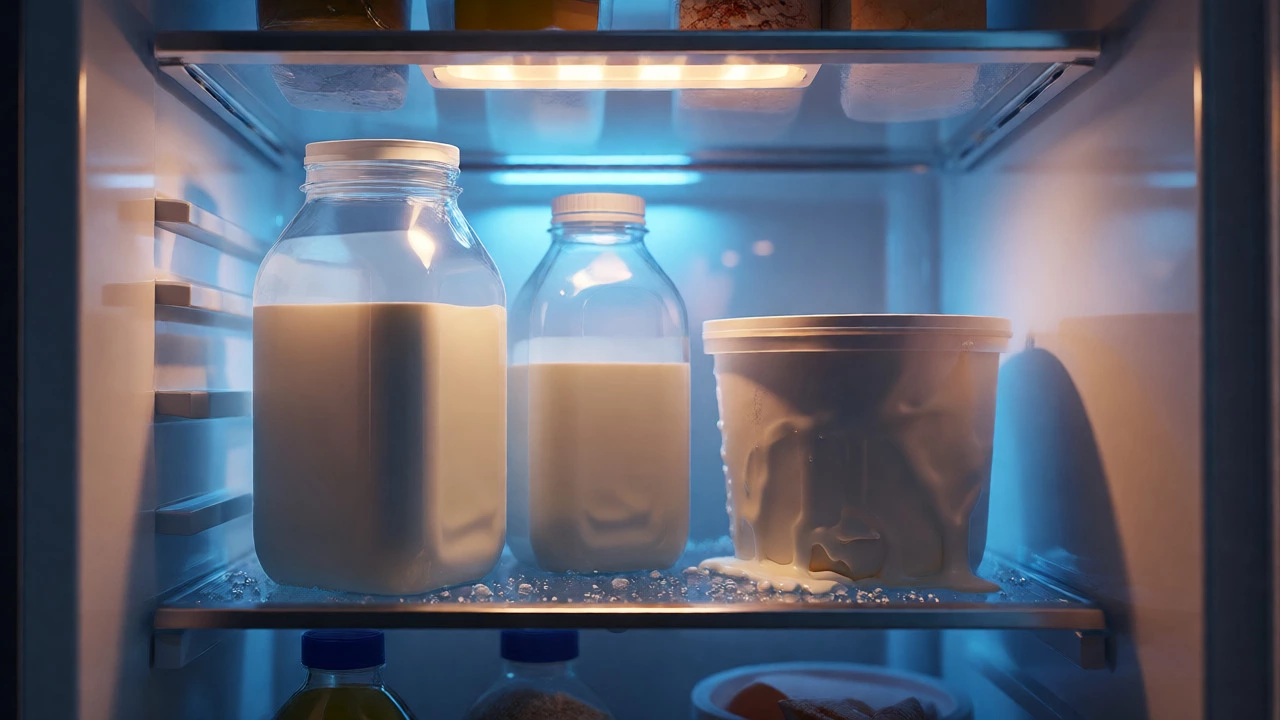
You walk into the kitchen, open the fridge door, and see that comforting glow. The light is working perfectly. But when you reach for your milk, it’s warm. Or worse, your ice cream has melted into a puddle in the freezer compartment. This is one of the most common and frustrating appliance failures: the fridge not cooling but the light is on. It feels contradictory because the electricity is clearly getting to the unit, yet the cold air isn't happening.
Here is the reality: the light bulb and the cooling system are two completely separate circuits inside your appliance. Just because the light works doesn't mean the engine is running. In fact, this specific symptom helps narrow down the problem significantly. You can rule out a blown fuse or a dead power socket immediately. The issue lies deeper within the mechanical or electronic components responsible for moving heat out of the box.
| Symptom | Likely Culprit | Difficulty to Fix |
|---|---|---|
| Fan noise absent, compressor silent | Start Relay or Thermostat | Easy (DIY) |
| Compressor hums but stops after seconds | Sealed System Leak or Compressor Failure | Hard (Pro Job) |
| Frost buildup on back wall (freezer) | Defrost Heater or Timer | Moderate (DIY) |
| Air vents blocked by food | Airflow Restriction | Very Easy |
Check the Basics Before Calling A Technician
Before you start pulling parts apart, let's look at the low-hanging fruit. Sometimes the solution is embarrassingly simple. First, check the temperature settings. Did someone bump the dial while loading groceries? If your fridge is set to "warm" or off, the compressor won't engage even if the light stays on. Reset it to the manufacturer's recommended setting-usually between 3°C and 4°C for fresh food.
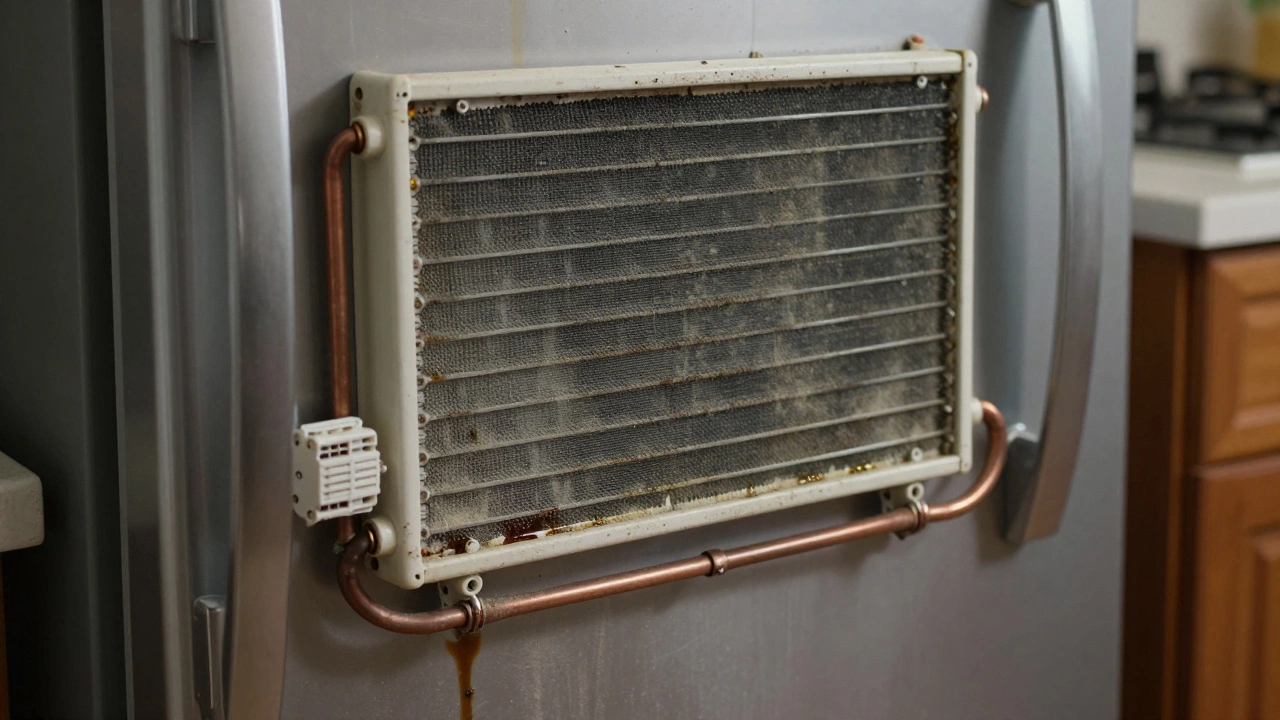
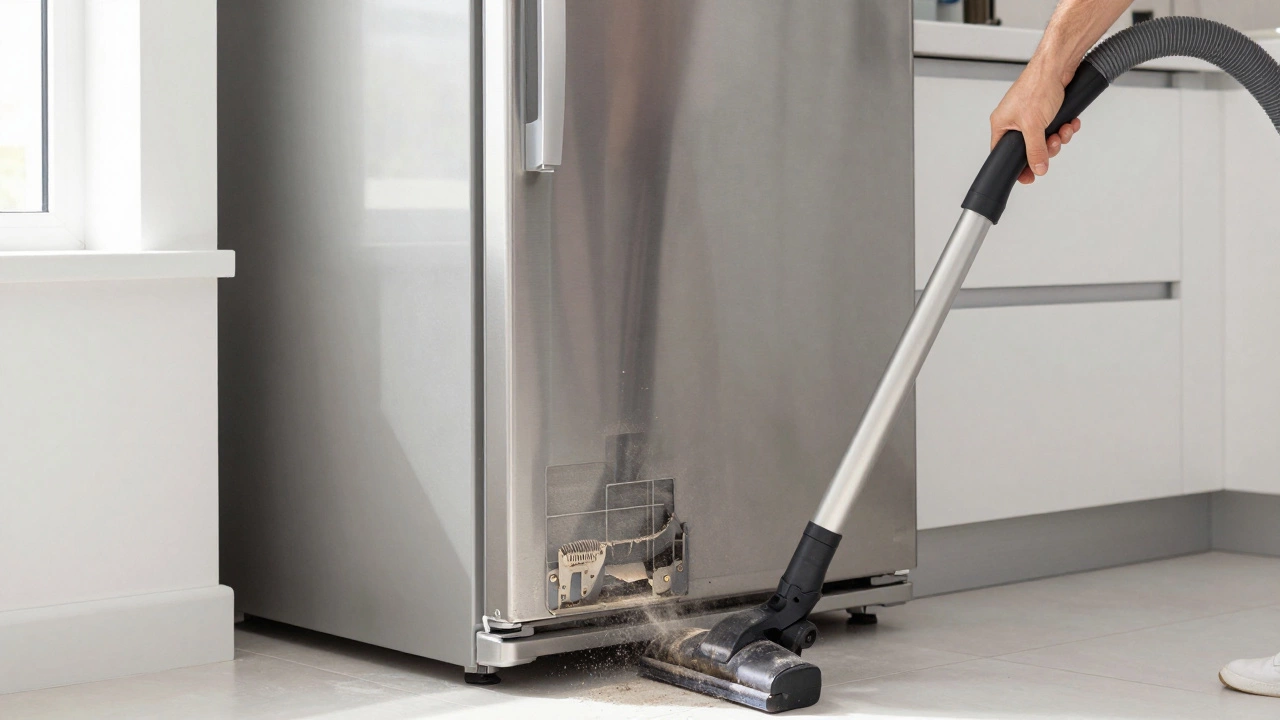
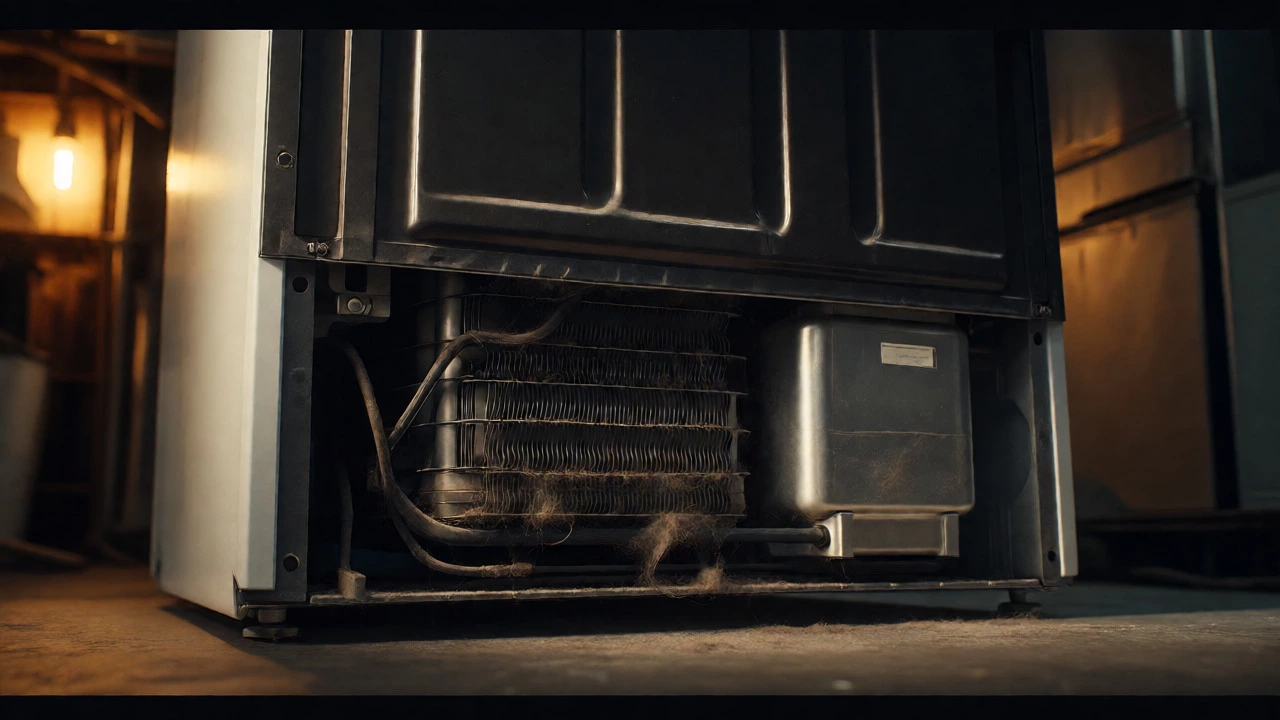
Next, inspect the condenser coils. These are usually located behind the kick plate at the bottom front or across the back of the unit. If they are caked in thick dust and pet hair, the fridge cannot dissipate heat efficiently. The compressor will work overtime, overheat, and shut itself down to prevent damage. Vacuuming these coils takes five minutes and solves roughly 20% of cooling complaints. Do this first. It costs nothing and saves a service call fee.
Also, consider how full your fridge is. If you have stuffed it so tightly that no air can circulate around the vents, the sensor near the thermostat might read the wrong temperature. Pull some items away from the back wall and ensure there is space for airflow. If the fridge was recently defrosted manually, remember that it takes up to 24 hours for the system to stabilize after being unplugged.
The Evaporator Fan Motor Might Be Dead
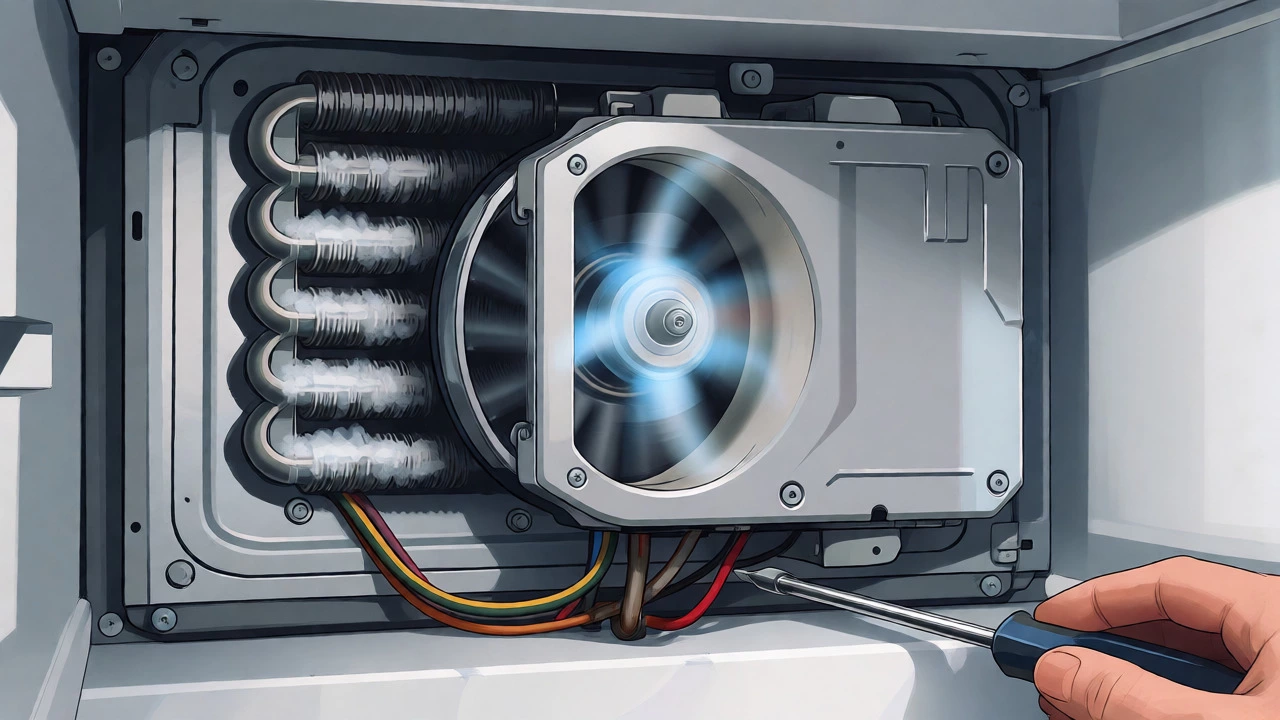
If the basics don't fix it, we move to the internal mechanics. Inside the freezer compartment, behind the back panel, sits the evaporator fan motor. Its job is critical: it blows cold air from the evaporator coils into both the freezer and the fridge sections via a damper system.
How do you test this? Open the freezer door and listen closely. There should be a distinct whirring sound. If you press the door switch with your finger (to simulate the door being closed) and hear silence, the fan motor has likely failed. Another sign is ice buildup around the fan blades themselves. If the fan hits the ice, it stalls. If the fan motor burns out, the cold air generated by the compressor stays trapped in the freezer section, leaving the fresh food compartment warm.
Replacing an evaporator fan is a moderate DIY task. You need to remove the freezer contents, unscrew the back panel, disconnect the wire harness, and swap the motor. Parts cost between £20 and £50 depending on the model. However, if the fan runs but makes a loud grinding noise, it might just need cleaning or lubrication, though replacement is often cheaper than troubleshooting bearings.
Is The Start Relay Or Capacitor Faulty?
If the evaporator fan is working fine, the next suspect is the component that kicks the compressor into gear. The start relay is a small electrical device attached to the side of the compressor at the back of the fridge. When you turn the fridge on, the thermostat sends a signal, and the relay provides the initial surge of power needed to spin the compressor motor.
A faulty start relay is a classic cause of a fridge that lights up but doesn't cool. The tell-tale sign is a clicking sound coming from the back of the unit. The compressor tries to start, fails due to the bad relay, overheats, clicks off, cools down, and tries again. This cycle repeats endlessly. You can shake the old relay; if it rattles like a maraca, it's broken. Replacing it is cheap (£10-£25) and easy. Unplug the fridge, locate the relay on the compressor, pull it off, and push the new one on. Ensure the orientation matches the original.
Sometimes the issue isn't the relay but the run capacitor. This stores energy to keep the compressor running smoothly. If the capacitor is weak, the compressor may run but fail to maintain pressure, leading to poor cooling performance. Multimeter testing is required here, which adds a layer of complexity for the average homeowner.
Thermostat And Control Board Failures
Modern fridges rely heavily on electronics. The thermostat acts as the brain's thermometer. It measures the internal temperature and tells the compressor when to turn on and off. If the thermostat breaks, it might get stuck in the "off" position. The fridge thinks it's cold enough, so it never signals the compressor to start, even though the interior is warming up.
In older models, thermostats are mechanical dials connected to a capillary tube. In newer digital models, they are sensors wired to a main control board. Testing a mechanical thermostat requires a multimeter to check for continuity. If there is no continuity when turned to the coldest setting, replace it. For digital boards, look for burnt marks or swollen capacitors on the circuit board. A failed control board can also disrupt power distribution to the fans and compressor while still powering the light LED.
It is worth noting that replacing a control board is expensive (£80-£150+). Before buying a new board, ensure all other components (relays, fans, heaters) are functioning correctly. Boards are often blamed for problems caused by shorted-out fans or heaters drawing too much current.
Refrigerant Leaks And Sealed System Issues
If you have checked the fans, relays, and thermostats, and the compressor runs continuously without cooling anything, you likely have a sealed system problem. This involves the refrigerant, compressor, and condenser coils. Refrigerant is the gas that absorbs heat inside the fridge and releases it outside.
Over time, tiny leaks can develop in the copper tubing or aluminum joints. If the refrigerant level drops below a certain point, the system loses its ability to transfer heat effectively. You might notice the condenser coils at the back are only warm instead of hot, or the compressor runs constantly without cycling off. Unlike the previous fixes, repairing a leak requires specialized tools to braze pipes, vacuum the system, and recharge it with the correct type of gas (like R600a or R134a).
This is rarely a DIY job unless you have HVAC certification. The cost of hiring a professional to find and repair a leak typically ranges from £150 to £250. If your fridge is more than 10 years old, weigh this cost against buying a new energy-efficient model. New fridges use less electricity and come with warranties, whereas a repaired old unit might spring another leak soon.
When To Call A Professional
Knowing when to stop tinkering is part of the skill. You should call a certified appliance engineer if:
- The compressor is making loud knocking or banging noises.
- You smell burning plastic or see scorch marks on the wiring.
- The fridge uses R600a refrigerant (isobutane), which is flammable and requires careful handling during repairs.
- You have replaced basic parts (relay, fan) and the problem persists.
- The unit is under warranty; opening it yourself might void the coverage.
In Bristol, many independent technicians offer diagnostic fees that are waived if you proceed with the repair. Always ask about labor rates before booking. For a standard domestic fridge, labor should range between £60 and £90 per hour, plus VAT.
Can I fix my fridge myself if the light is on but it's not cooling?
Yes, for several common issues. Cleaning condenser coils, replacing the start relay, swapping the evaporator fan, or adjusting the thermostat are all manageable DIY tasks requiring basic tools like a screwdriver and a multimeter. However, if the issue involves the sealed system (refrigerant leaks) or complex control boards, professional help is recommended.
How long does it take for a fridge to cool down after fixing it?
After a repair or power reset, allow the fridge to run uninterrupted for at least 24 hours. It takes time for the refrigerant to circulate and lower the temperature of the food already inside. Checking it every few hours gives false readings because opening the door lets warm air in.
What does it mean if my fridge compressor runs constantly?
A constantly running compressor indicates the fridge cannot reach its target temperature. Causes include dirty condenser coils, a faulty door seal letting warm air in, a broken thermostat reading incorrectly, or low refrigerant levels. If the coils are clean and seals are tight, it is likely a mechanical or refrigerant issue.
Is it safe to eat food if the fridge wasn't cooling?
Follow the "2-hour rule." Perishable foods left above 5°C for more than 2 hours should be discarded. If the fridge was slightly warm (around 10°C) for a short period, hard cheeses and unopened jars may survive, but dairy, meat, and cooked leftovers are risky. When in doubt, throw it out to avoid food poisoning.
Why is my freezer cold but the fridge is warm?
This usually points to a blocked air vent or a failed evaporator fan. The cold air is generated in the freezer but cannot travel through the ducts to the fridge section. Check for ice blocking the vent between compartments and ensure the fan motor is spinning freely.