- 9 Apr 2026
- Gideon Thornton
- 0
Microwave Heating Failure Diagnostic Tool
What symptoms are you experiencing?
Select all that apply to narrow down the cause:
Analysis Result
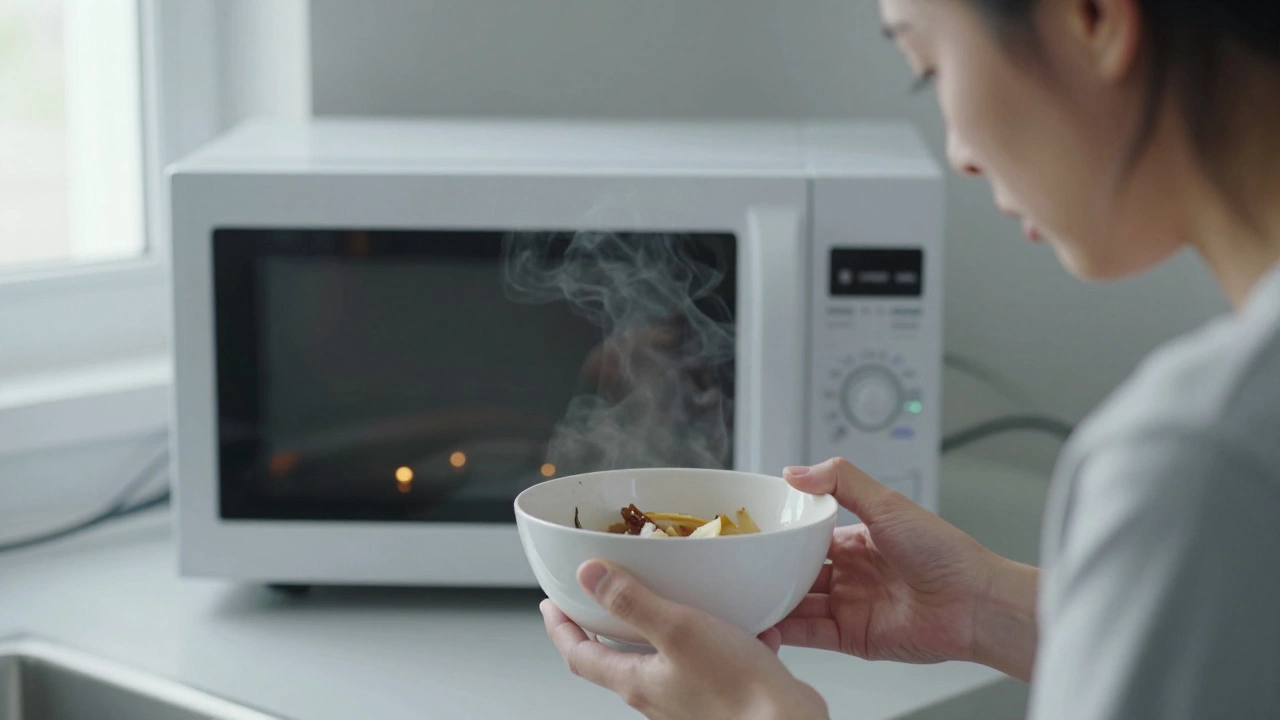
You put your leftovers in the microwave, set it for two minutes, and hear the familiar hum. But when the timer hits zero, the food is still ice-cold. It's a frustrating moment, especially when the lights are on and the turntable is spinning perfectly. In most cases, you're looking at a failing magnetron is the vacuum tube device that generates the microwave radiation used to heat food. This component is essentially the heart of the machine; if it quits, your microwave becomes a very expensive clock.
Quick Diagnosis: Is it the Magnetron?
- Cold Food: The microwave runs and sounds normal, but nothing gets hot.
- Strange Noises: Loud humming, buzzing, or a "growling" sound during the heating cycle.
- Burning Smell: A distinct metallic or electrical burning scent coming from the vents.
- Sparking: Visible arcs of electricity inside the oven cavity (though this can also be caused by the waveguide cover).
The Most Common Signs of a Dying Magnetron
Identifying a bad magnetron isn't always a "eureka" moment. Sometimes the part fails slowly, and other times it goes out with a bang. If your microwave is still turning and the light is on, but the food isn't heating, the magnetron is the primary suspect. But there are a few nuances you should look for.
One of the most telling signs is a gradual loss of power. You might notice that a bowl of soup that used to take three minutes now takes six. This usually happens when the vacuum seal inside the tube degrades or the filament starts to wear out. When the part finally gives up, you'll experience the "cold food" phenomenon where the machine mimics the cooking process perfectly, but no energy is actually being transferred to the food.
Then there are the sounds. A healthy magnetron has a consistent, low-level hum. If you start hearing a loud, vibrating noise-almost like a small engine struggling to start-it's a sign that the internal components are failing or the mounting has shifted. If you hear a loud "pop" followed by a complete lack of heat, the magnetron has likely shorted out entirely.
The "Water Test" for Accuracy
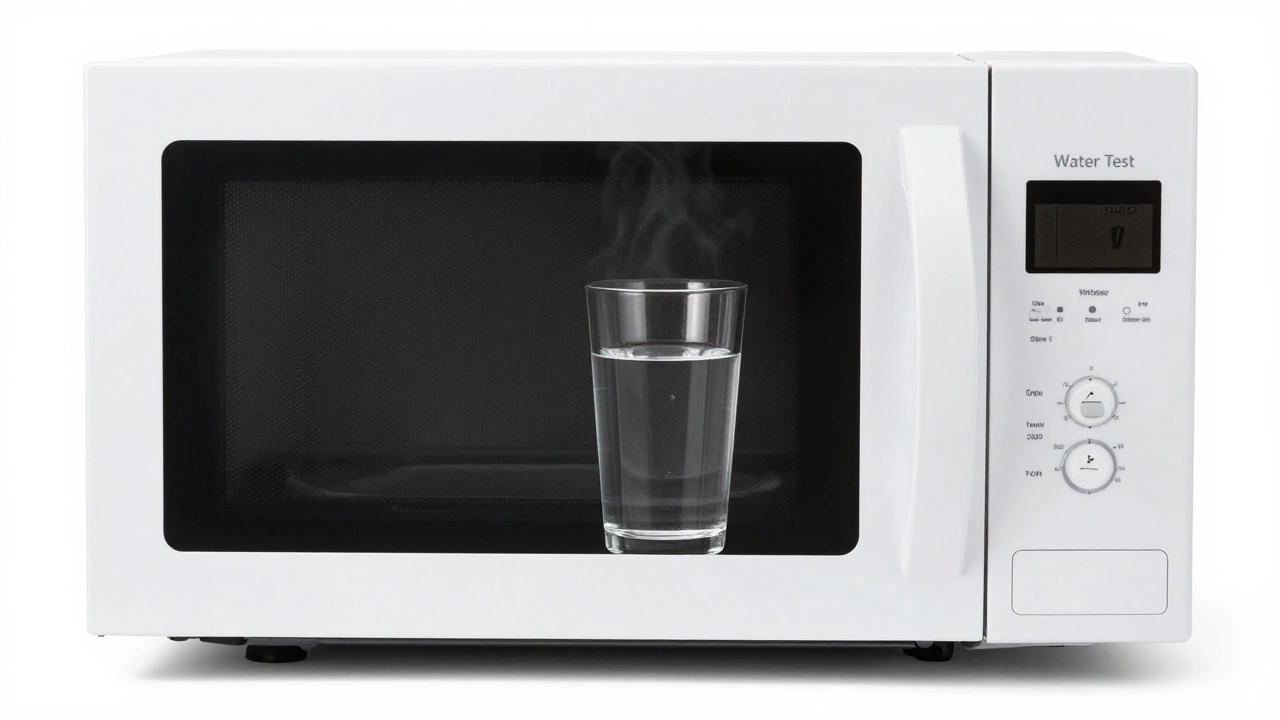
Before you start taking things apart, run a definitive test to rule out user error or weird food placement. Fill a microwave-safe glass with about a cup of water. Set the timer for 60 seconds on high power. When the timer finishes, touch the water. If it's lukewarm or cold, your magnetron is likely dead. If it's boiling, the problem might be with your settings or a specific type of food that isn't absorbing the waves correctly.
If the water is slightly warm but not hot, you might be dealing with a failing capacitor or a diode. These parts provide the electrical "kick" the magnetron needs to operate. If they are weak, the magnetron won't reach full power, leading to uneven or slow heating.
What Else Could Cause These Symptoms?
It's easy to blame the magnetron, but a few other components can mimic these symptoms. You don't want to buy an expensive replacement part only to find out the problem was a $10 piece of cardboard. Consider these alternatives:
First, check the waveguide cover. This is the small, mica-like sheet on the side wall of the oven. If it gets splattered with grease or food, it can char and burn. When this happens, the microwaves reflect back into the magnetron instead of going into the food. This causes sparking and can actually destroy a perfectly good magnetron over time. If the cover looks burnt, replace it first.
Next is the high-voltage diode. This component ensures that the electricity flowing to the magnetron is moving in the right direction. If the diode burns out, the magnetron won't get the voltage it needs to create microwaves. You'll hear the fan and the timer, but the food stays cold. A multimeter can test a diode for continuity; if it's open in both directions, it's toast.
| Symptom | Possible Cause | Difficulty to Fix | Typical Cost |
|---|---|---|---|
| Cold food, humming sound | Magnetron | Medium-High | $50 - $120 |
| Sparking on side wall | Waveguide Cover | Easy | $5 - $15 |
| No heat, no noise | Thermal Fuse | Medium | $10 - $20 |
| Intermittent heating | High-Voltage Capacitor | High (Dangerous) | $20 - $40 |
Safety Warning: The Danger of Capacitors
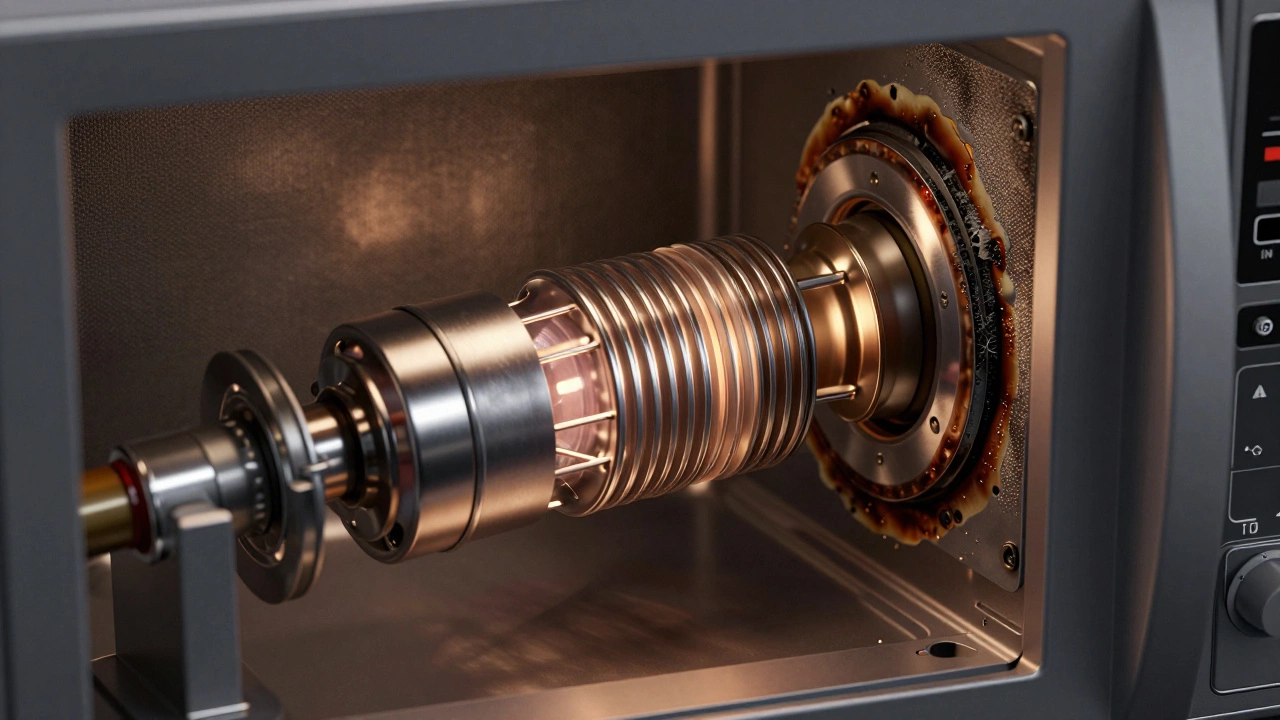
If you decide to open your microwave, you must understand one thing: microwaves are dangerous even when unplugged. The high-voltage capacitor stores a massive electrical charge that can deliver a lethal shock long after the machine is disconnected from the wall.
Professional technicians use a discharge tool to bleed the energy out of the capacitor before touching any internal wires. If you aren't trained in how to safely discharge a capacitor, do not put your hands inside the chassis. The magnetron is located right next to this capacitor, making the risk of accidental shock very high during a replacement.
Is it Worth Replacing the Magnetron?
Whether you should fix it or toss it depends on the age and value of the unit. For a cheap, $60 countertop model, the cost of a new magnetron plus the risk of the repair usually outweighs the benefit. You're better off buying a new unit.
However, for a high-end over-the-range microwave or a built-in convection model, the repair makes sense. These units are expensive and integrated into your kitchen cabinetry. Replacing a part for $80 is far easier than replacing an entire ventilation system and oven unit.
When shopping for a replacement, ensure the part number matches exactly. Magnetrons vary by wattage and mounting bracket style. If the bracket doesn't align perfectly, the air cooling won't work, and the new magnetron will overheat and burn out within weeks.
Preventing Future Magnetron Failure
You can extend the life of your magnetron by changing how you use the microwave. The biggest enemy of the magnetron is running the machine empty. When there is no water or food to absorb the microwaves, the energy bounces back into the tube. This causes the magnetron to overheat and eventually fail.
Always make sure there is something in the oven. If you're just warming a very small item, put a small glass of water in the corner to act as a "sink" for the excess energy. Additionally, keep the interior clean. Grease buildup on the walls creates hotspots that can cause the magnetron to work harder than it needs to, shortening its lifespan.
Can a bad magnetron cause a smell of burning plastic?
Yes, it can. When a magnetron fails, it often shorts out internally or overheats the surrounding insulation and wiring. This creates a sharp, acrid smell of burning electronics or plastic. If you smell this, stop using the microwave immediately and unplug it to avoid a potential electrical fire.
Does the microwave make a louder noise when the magnetron is bad?
Often, yes. While a failing magnetron can be silent, it frequently produces a louder-than-usual hum or a buzzing sound. This is usually caused by the internal vacuum tube failing or the cooling fan struggling to dissipate heat from a malfunctioning component.
Can I fix a magnetron without replacing it?
No. The magnetron is a sealed vacuum tube. Once the internal filament breaks or the vacuum seal is compromised, it cannot be repaired. The only solution is to replace the entire unit with a compatible spare part.
Why is my microwave heating the edges of the food but not the middle?
This is usually not a sign of a bad magnetron, but rather how microwaves work. They create standing waves that hit certain spots more than others. If your turntable isn't spinning or if you're using a container that blocks the waves, you'll get cold spots. If the food is completely cold, then look at the magnetron.
How long does a typical microwave magnetron last?
With proper use, a magnetron can last 10 to 15 years. However, frequent "empty running" and lack of cleaning can cut that life in half. Most modern budget microwaves are designed with a shorter lifespan, making the cost of repair nearly equal to the cost of a new unit.
Next Steps and Troubleshooting
If you've confirmed the magnetron is dead, your path depends on your comfort level with electronics. If you are not experienced with high-voltage safety, your next step is to call a certified appliance technician. They have the tools to safely discharge the capacitor and can verify if other parts, like the diode, were damaged by the magnetron's failure.
For those who are handy and have the proper safety gear, the process involves unplugging the unit, discharging the capacitor, removing the cabinet shell, and unscrewing the magnetron from the chassis. Always double-check the model number on the old part before ordering a replacement to avoid compatibility issues with the mounting brackets.