- 18 Dec 2025
- Gideon Thornton
- 0
Pressure Cooker Safety Checker
Is Your Pressure Cooker Safe?
According to safety reports, 12% of pressure cooker incidents are caused by worn-out seals. Check your cooker now.
Ever walk into a Michelin-starred restaurant and wonder why the kitchen doesn’t have a single pressure cooker on the stove? You’ve seen them at home-fast, easy, great for stews and beans. But in professional kitchens? Rarely. Not because chefs don’t know how they work. It’s because they don’t work for the job.
Control Is Everything in a Professional Kitchen
Chefs don’t just cook food. They manage timing, texture, and flavor with surgical precision. A pressure cooker locks in steam and raises the boiling point to around 121°C, cooking food faster. That sounds great-until you need to adjust a sauce at the last minute or pull a brisket off the heat the second it hits 92°C internal temperature. Pressure cookers don’t let you do that. Once sealed, you’re locked in. No tasting. No tweaking. No adjusting.Think about it: a chef might start a braise at noon, but if the dish needs to be served at 6:30 p.m., they need to know exactly how it’s progressing every 20 minutes. Can you imagine lifting the lid on a pressure cooker mid-cook, losing all that steam, and then having to rebuild pressure? That’s not efficiency-it’s chaos.
Texture Matters More Than Speed
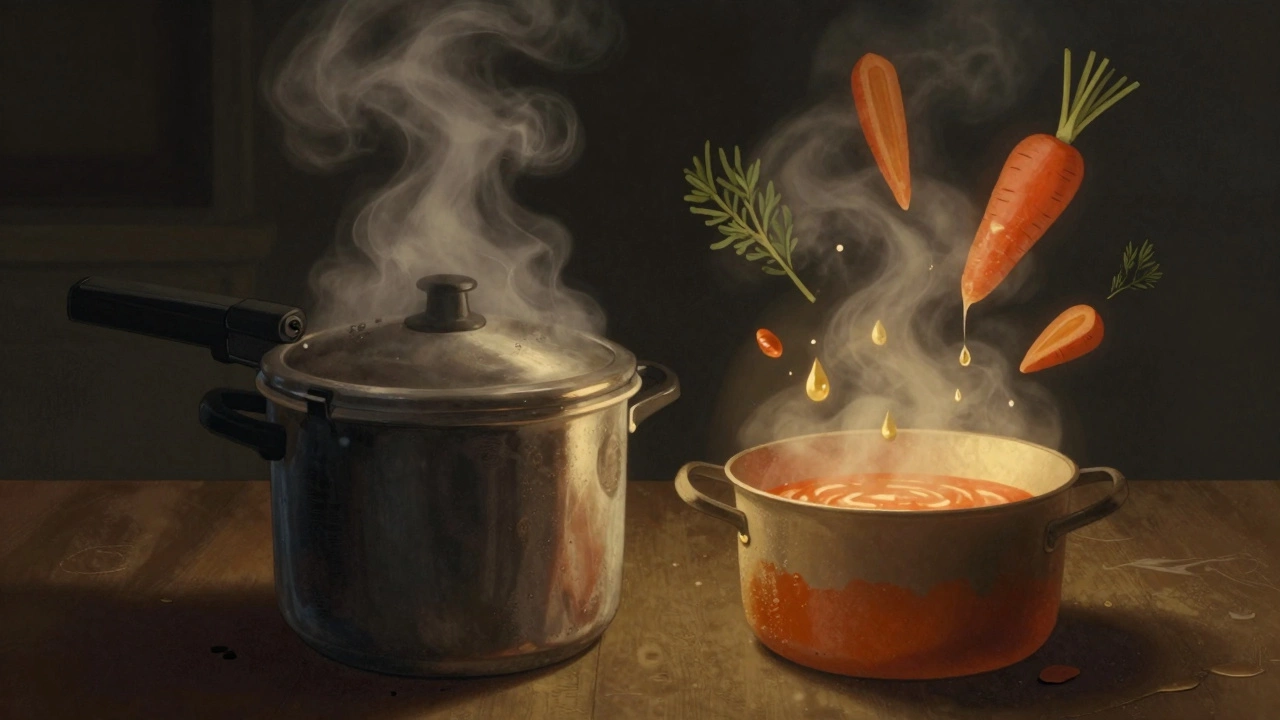
A pressure cooker turns tough cuts of meat tender in under an hour. Sounds perfect, right? But in a fine dining kitchen, tenderness isn’t the goal-balance is. You want meat that falls apart gently, not mushes into oblivion. You want carrots that still hold their shape, not dissolve into pulp. You want beans that are creamy on the inside but have a slight bite on the outside.Slow braising in an open pot lets moisture evaporate slowly. That’s how flavors concentrate. That’s how sauces reduce and thicken naturally. Pressure cookers trap everything. The result? Food that’s cooked through, but often bland, waterlogged, and one-note. A chef might spend 12 hours on a beef bourguignon not because they’re slow-they’re building layers. A pressure cooker flattens that.
Volume Isn’t the Same as Quality
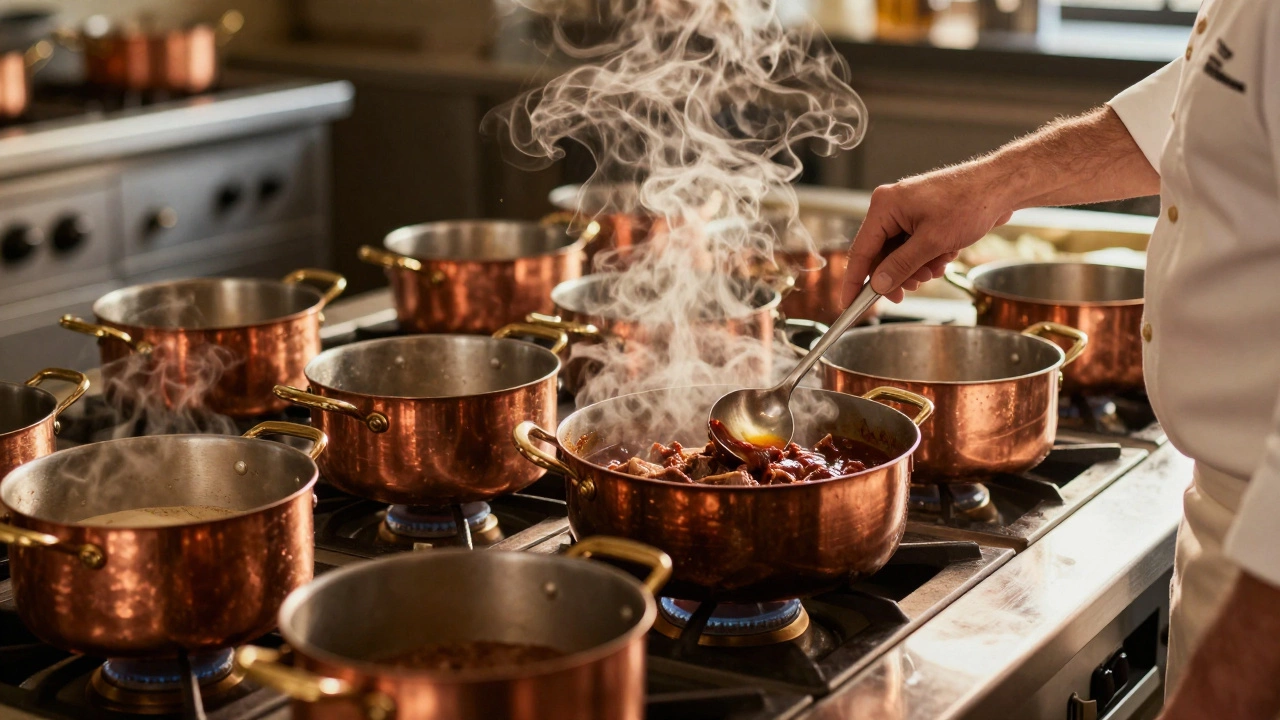
Some people assume chefs avoid pressure cookers because they’re too small for large batches. That’s not it. Commercial kitchens have giant stock pots, steam kettles, and convection ovens that handle 50 liters at a time. The issue isn’t capacity-it’s control. You can’t monitor 10 pressure cookers at once. You can’t adjust heat individually. You can’t skim fat, add herbs, or reduce liquid without opening each one.Compare that to a standard stockpot on a gas range. A chef can stir, taste, skim, and adjust all at once. One pot, one control. That’s why you’ll see 12 stockpots simmering on a line-each one treated like a separate recipe, not a batch job.
Pressure Cookers Are Hard to Clean-and Dangerous
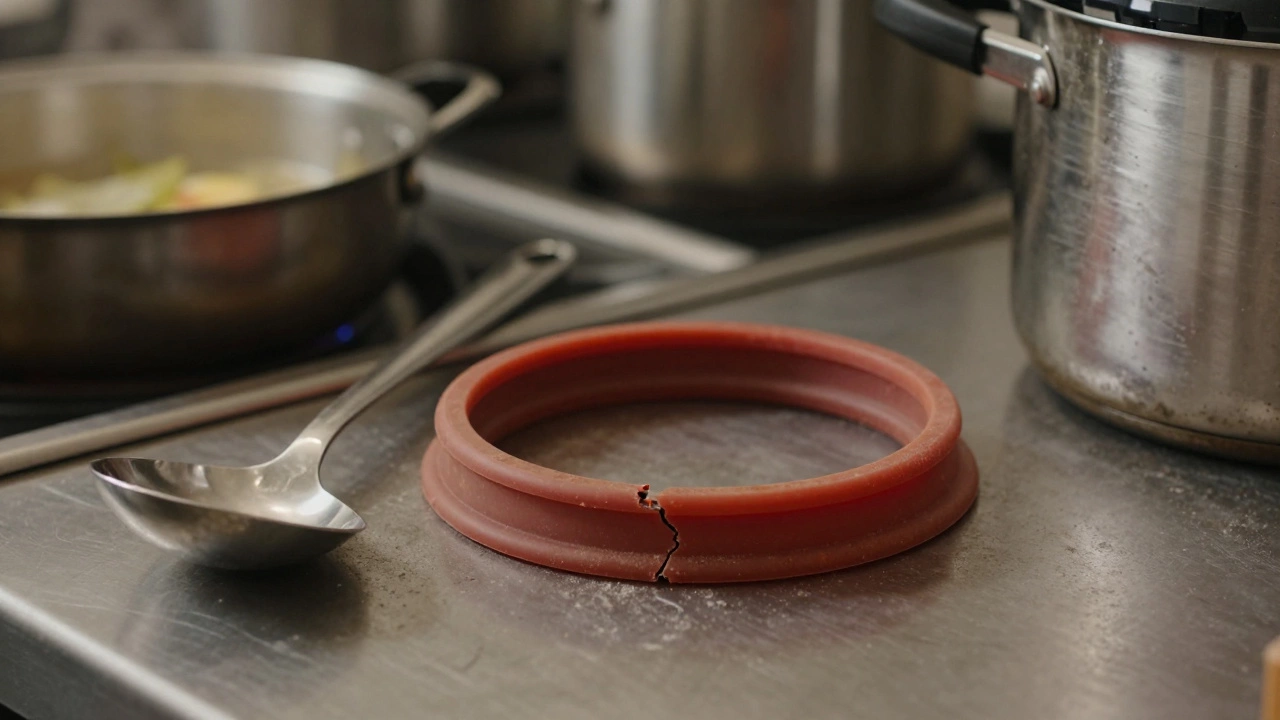
Let’s talk about maintenance. A pressure cooker has seals, valves, and locking mechanisms. In a home kitchen, you clean it once a week. In a restaurant? You clean it after every use. That’s 80 uses a week in a busy kitchen. Seals wear out. Valves clog. Gaskets swell. One faulty seal and you’ve got a steam explosion risk.Professional kitchens have strict health and safety protocols. A broken pressure cooker isn’t just a broken appliance-it’s a liability. A single incident could shut down a kitchen, trigger an inspection, or worse. Most restaurants don’t want the headache. They’d rather spend an extra hour on the stove than risk a $50,000 insurance claim.
Plus, the cleaning process is tedious. You have to disassemble the lid, check the vent, soak the gasket, and test the pressure release. No chef wants to spend 20 minutes cleaning a pot after a 15-minute cook.
Modern Alternatives Are Better
Chefs didn’t abandon pressure cookers because they’re old-fashioned. They abandoned them because better tools came along.Modern sous-vide machines give you precise temperature control. Vacuum-sealed bags cook food evenly without losing moisture. Combi ovens combine steam and convection to roast, braise, and bake all in one. Even induction cooktops give chefs the same speed as a pressure cooker-but with full control over heat and timing.
And then there’s the stockpot. Still the most reliable tool in any professional kitchen. It’s simple. It’s durable. It doesn’t need calibration. It doesn’t have parts that fail. You can throw it in the dishwasher. You can use it to boil pasta, make stock, or blanch vegetables. It’s the Swiss Army knife of cooking equipment.
Pressure Cookers Have Their Place-Just Not Here
Don’t get it wrong. Pressure cookers aren’t useless. They’re fantastic for home cooks who need to get dinner on the table in 30 minutes. They’re great for meal preppers, busy parents, or anyone cooking on a budget. They save time. They save energy. They make tough cuts edible.But in a restaurant? Time isn’t the bottleneck. Quality is. Consistency is. Control is. The goal isn’t to cook fast-it’s to cook perfectly, every single time. And that’s not something a sealed pot can guarantee.
Some high-end kitchens use pressure cookers for specific tasks-like making broth or extracting flavors from bones in bulk. But even then, they’re used like a tool, not a main method. The broth gets strained, then moved to an open pot to reduce and season. The pressure cooker is just the first step.
What This Means for Home Cooks
If you’re wondering whether you should ditch your pressure cooker because “chefs don’t use them,” don’t. You’re not running a restaurant. You’re feeding your family. Your time matters. Your budget matters. Your pressure cooker is doing exactly what it was designed for: making tough meals easy.But if you’re trying to level up your cooking-maybe you’re aiming for richer flavors, better textures, or restaurant-style results-then start experimenting with open-pot techniques. Learn how to reduce a sauce. Learn how to skim fat. Learn how to taste as you go. That’s where real cooking begins.
And if your pressure cooker is leaking steam, taking forever to build pressure, or the lid won’t lock? That’s not a chef problem. That’s an appliance repair problem. Check the sealing ring. Clean the vent. Test the pressure valve. If it’s old or damaged, replacing it is cheaper than replacing your whole kitchen.
When a Pressure Cooker Is Actually a Problem
Here’s the dirty secret: many home pressure cookers are poorly maintained. Seals crack. Valves get clogged with food particles. The pressure release button sticks. People don’t realize how dangerous that is until it’s too late.One report from the UK’s Health and Safety Executive found that 12% of pressure cooker incidents between 2018 and 2023 were caused by worn-out seals. That’s not a coincidence. That’s neglect.
If your cooker makes a hissing sound you’ve never heard before, or the lid feels loose even when locked, stop using it. Don’t try to fix it with tape or rubber bands. Don’t assume it’s “still okay.” A pressure cooker isn’t like a toaster-it’s a small bomb waiting to go off if the safety fails.
Most manufacturers recommend replacing seals every 12-18 months. If you’ve had yours for three years and never changed the gasket? You’re playing Russian roulette with your kitchen.
Professional kitchens don’t use pressure cookers because they can’t afford to take risks. Home kitchens shouldn’t either.
Why don’t chefs use pressure cookers in restaurants?
Chefs avoid pressure cookers because they limit control over flavor, texture, and timing. In professional kitchens, precision matters more than speed. Pressure cookers trap steam and prevent last-minute adjustments, making it impossible to refine sauces, skim fat, or monitor doneness. They also pose safety risks if not maintained properly.
Are pressure cookers dangerous?
Yes, if they’re old, damaged, or poorly maintained. Faulty seals, clogged vents, or worn pressure valves can cause steam explosions. The UK Health and Safety Executive reported that 12% of pressure cooker incidents between 2018 and 2023 were due to worn-out gaskets. Regular maintenance and timely replacement of parts are essential for safety.
Do any professional kitchens use pressure cookers at all?
Some do-but only for specific tasks like making large batches of broth or extracting flavors from bones. Even then, the liquid is usually transferred to an open pot afterward to reduce, season, and refine. Pressure cookers are tools, not primary cooking methods in professional settings.
What’s the best alternative to a pressure cooker for home cooks?
For slow-cooked dishes like stews or braises, a heavy-bottomed Dutch oven on the stove or in the oven works best. It gives you the same tenderness without sacrificing control. For speed, an electric slow cooker or an induction cooktop with precise temperature settings offers better results than a pressure cooker for most home recipes.
How often should I replace the sealing ring on my pressure cooker?
Replace the sealing ring every 12 to 18 months, or sooner if it’s cracked, stiff, or smells like food. A worn seal is the most common cause of pressure cooker failure. It’s a cheap part-usually under £10-but critical for safety and performance.
Should I stop using my pressure cooker if it’s old?
If your pressure cooker is over 10 years old, has visible wear on the lid, doesn’t seal properly, or makes unusual noises, it’s time to replace it. Older models lack modern safety features. Even if it still works, the risk isn’t worth it. A new, certified pressure cooker costs less than a single repair bill from a kitchen accident.
Final Thought: It’s Not About the Tool-It’s About the Goal
Chefs don’t avoid pressure cookers because they’re stubborn or traditional. They avoid them because they’ve seen what happens when you trade control for speed. In a home kitchen, speed is a gift. In a restaurant, control is survival.So if your pressure cooker still works fine, keep using it. Just don’t pretend it’s the same as what you see in a professional kitchen. And if it’s leaking, hissing, or acting up? Don’t wait for it to blow. Get it checked-or replace it. Your kitchen, and your family, will thank you.