

- 29 Dec 2025
- Gideon Thornton
- 0
Dishwasher Repair vs. Replacement Calculator
Enter Your Details
Key Considerations
Results
Every kitchen has that one appliance you just can’t bring yourself to replace. For many, it’s the dishwasher. It hums along for years, chugging through piles of dishes, until one day it stops. Water doesn’t drain. The cycle won’t start. Or worse - it leaks all over the floor. You stare at it, wondering: dishwasher repair or just buy a new one?
The answer isn’t simple. It depends on how old your machine is, what’s broken, and how much you’re willing to spend. In the UK, the average dishwasher lasts 10 to 12 years. If yours is eight years old and the pump’s gone? Maybe fix it. If it’s 14 years old and the control board’s fried? Probably not.
How much does dishwasher repair actually cost?
In Bristol, a local technician charges between £60 and £120 for a diagnostic call-out. That’s usually non-refundable unless you go ahead with the repair. Labour runs about £45 an hour. Parts? That’s where it gets messy.
Here’s what breaks most often, and what it costs to fix:
- Dishwasher pump - £80 to £150 (including labour)
- Door latch or seal - £30 to £70
- Heating element - £60 to £110
- Control board - £120 to £250 (and often not worth it)
- Water inlet valve - £40 to £90
That’s £200 to £300 easily - and that’s if you catch it early. If you wait until the motor burns out or the tub cracks, you’re looking at £350+.
Compare that to a new mid-range dishwasher: £350 to £600. You can get a decent A+++ model with quiet operation, better spray arms, and smart features for under £500. So if the repair bill hits 50% of a new unit’s price, it’s usually time to walk away.
Age matters more than you think
Most manufacturers design dishwashers to last about 10 years. That’s not a suggestion - it’s the point where efficiency, reliability, and parts availability start to drop off. After 12 years, parts become harder to find. Many brands stop supplying them after 7 to 8 years. If your model is discontinued, you’re stuck with a used part from eBay or a repair shop’s spare bin.
I’ve seen customers bring in a 15-year-old Bosch that’s had three repairs in two years. Each time, it worked for a few months. Then it broke again. They spent £500 on repairs. They could’ve bought a new one with a five-year warranty for the same money.
Older models also use more water and electricity. A 2010 dishwasher might use 14 litres per cycle. A 2025 model uses 8. That’s 40% less. Over a year, that adds up to £30-£50 in savings on bills. If your machine is over 10 years old, you’re paying more to run it than you think.
What’s broken? The repairability test
Not all breakdowns are created equal. Some fixes make sense. Others are money pits.
Worth fixing:
- Door seal leak - cheap part, easy install
- Filter clog - free to clean, £15 to replace if worn
- Water inlet valve - common failure, low-cost fix
- Heating element - £70 fix, but only if you need hot washes
Not worth fixing:
- Control board failure - £150+ and often a sign of deeper electrical issues
- Motor burnout - expensive, rarely fixed successfully
- Cracked tub or door - structural damage, no safe repair
- Repeated breakdowns - if it’s had three repairs in under two years, it’s on its last legs
Here’s a rule of thumb: if the repair costs more than half the price of a new dishwasher and your machine is over eight years old, say goodbye. Don’t throw good money after bad.
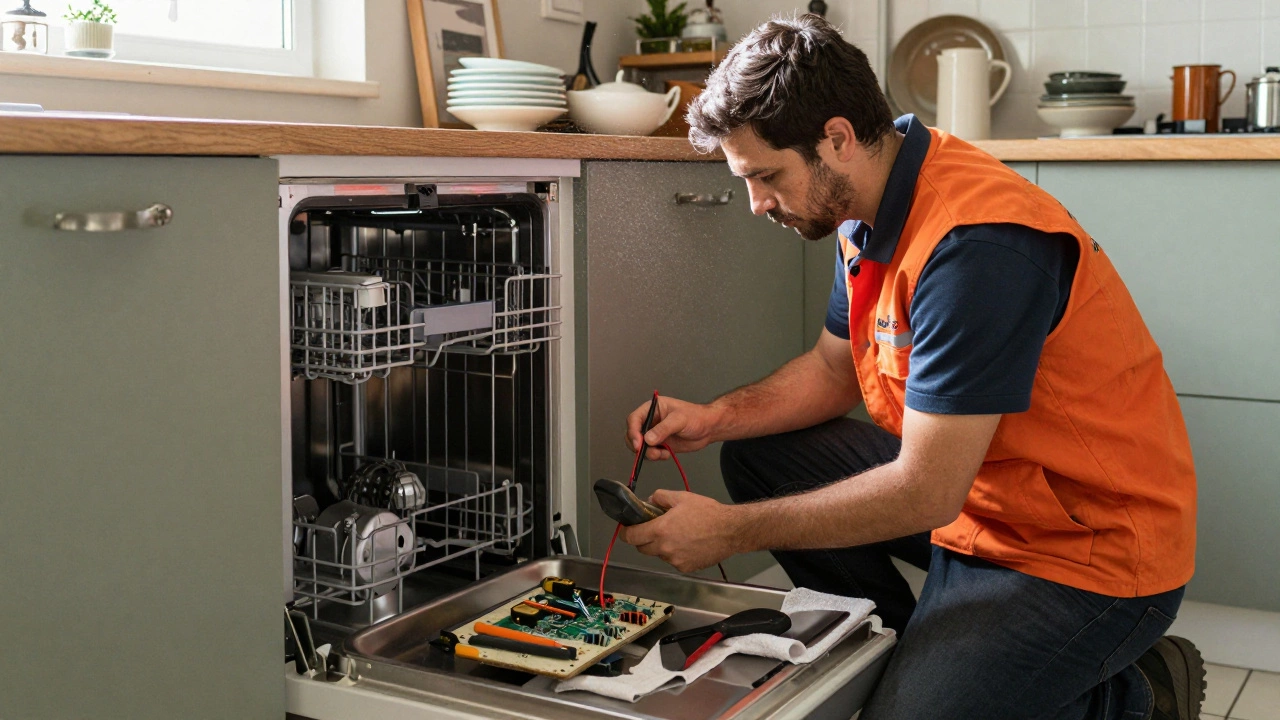
Warranty and guarantees - what you’re really paying for
New dishwashers come with at least a one-year warranty. Most brands offer two. Some premium models give you five years on the motor. That’s peace of mind. No surprise bills. No hunting for a technician on a Sunday.
Repair shops offer 30 to 90 days on parts and labour. That’s it. If the same part fails again? You pay again. And if the technician who fixed it is no longer around? Good luck getting a refund.
When you buy new, you get a manufacturer’s guarantee backed by a national service network. If your new Bosch breaks in year three, they’ll send someone out. If your 12-year-old Hotpoint breaks? You’re calling a local guy who might not even stock the part.
When replacement is the smarter choice
Here’s when you should walk away from repair:
- Your dishwasher is over 10 years old
- The repair quote is over £200
- It’s leaking water onto the floor
- You’ve had two or more repairs in the last two years
- The dishes come out still dirty or greasy
- You’re tired of waiting for it to finish a cycle
And here’s the hidden cost: stress. Every time the dishwasher breaks, you’re left washing dishes by hand. You’re scrambling to find a repairman. You’re wondering if it’ll make it through the next load. That mental load is real. And it’s expensive in time and peace of mind.
Modern dishwashers are quieter, faster, and use less water. A new model can wash a full load in 90 minutes. Older ones take two hours. That’s 30 minutes saved every time. Over a year, that’s over 15 hours - more than half a workday.

What to look for in a new dishwasher
If you’re replacing, here’s what actually matters:
- Energy rating - Look for A+++ (not just A++). Saves £40+ a year on bills
- Noise level - Under 44 dB is quiet. Under 40 dB is whisper-quiet
- Load capacity - 13 place settings is standard. More if you cook often
- Smart features - Not needed, but useful. Auto-sensing load, app control, cycle reminders
- Warranty - At least two years. Five on the motor is a bonus
Brands like Bosch, Siemens, and Miele are reliable. But you don’t need to spend £1,000. A Beko or Hotpoint A+++ model from John Lewis or Currys often comes with free delivery and a two-year warranty for under £400.
And if you’re upgrading from a 10+ year old machine? You’ll notice the difference immediately. Quieter. Faster. Cleaner dishes. No more rinsing before loading.
Final decision: Repair or replace?
Ask yourself these three questions:
- How old is it? (Under 8? Maybe repair. Over 10? Probably replace.)
- How much is the repair? (Under £150 and it’s a simple fix? Go for it. Over £200? Think again.)
- How often has it broken? (Once? Fine. Twice or more in two years? Time to move on.)
If you’re still unsure, call a technician. Ask them: "Is this a one-off fix, or is this machine falling apart?" Most honest ones will tell you the truth. If they push the repair hard, walk away. They’re trying to make a quick buck.
Replacing a dishwasher isn’t a luxury. It’s a practical upgrade. You’re not just buying a machine. You’re buying back time, money on bills, and your sanity.
Is it cheaper to repair or replace a dishwasher?
It depends. If your dishwasher is under 8 years old and the repair costs less than £150, fixing it usually saves money. But if it’s over 10 years old or the repair costs more than half the price of a new unit, replacement is almost always cheaper in the long run - especially when you factor in energy savings and reliability.
How long should a dishwasher last?
Most dishwashers last 10 to 12 years with normal use. After that, parts become harder to find, efficiency drops, and breakdowns become more frequent. Machines over 14 years old are rarely worth repairing.
Can I fix my dishwasher myself?
Some fixes are safe for DIY: cleaning the filter, checking the spray arms, replacing the door seal, or unclogging the drain. But electrical issues, motor problems, or control board failures should be left to professionals. Incorrect repairs can cause leaks, fires, or void your warranty.
Do I need a professional to repair my dishwasher?
For simple issues like clogs or leaks, you can try fixing it yourself. But for anything involving electricity, water pressure, or internal components, a qualified technician is safer and more reliable. Many manufacturers require professional repairs to keep warranties valid.
What’s the most common dishwasher problem?
The most common issue is drainage problems - caused by a clogged filter, blocked pump, or faulty drain hose. Other frequent problems include leaking doors, broken door latches, and heating element failures. Regular cleaning of the filter can prevent 60% of these issues.
If you’re still using a dishwasher from before 2015, you’re not just repairing an appliance - you’re clinging to outdated tech. The savings from a new, efficient model pay for themselves in under two years. And you’ll never have to hand-wash another plate again.