- 5 Oct 2026
- Gideon Thornton
- 0
Washing Machine Repair vs. Replace Calculator
You’re staring at your washing machine as it makes that new, grinding noise. It’s not just squeaking anymore; it sounds like someone is dropping marbles into the drum. You know it’s time to make a decision, but how do you actually know if your machine is "old"? Is ten years ancient? Is five years barely broken in?
The truth is, there isn’t one magic number. A washing machine’s age is relative to its brand, build quality, and how hard you’ve pushed it. But there are clear signs-both mechanical and financial-that tell you when your appliance has crossed the line from "aging gracefully" to "ready for retirement." Let’s break down what actually constitutes an old washing machine and when you should stop throwing money at repairs.
The Average Lifespan: What Does Data Say?
If you look at industry standards, the average lifespan of a modern front-loading or top-loading washing machine sits between 10 and 12 years. This figure comes from data collected by organizations like the National Association of Home Builders (NAHB) and major manufacturers like Whirlpool and LG. However, this is an average, which means half of them die before year 10, and half survive past year 12.
Why the variance? Build quality matters. Older machines built in the 1990s often used more metal components and simpler electronics, allowing some to last 15+ years. Modern machines rely heavily on plastic parts and complex computer boards, which can fail earlier but are cheaper to produce. If your machine is over 10 years old, you are already in the upper percentile of survival. If it’s over 15, you’re living on borrowed time.
| Machine Type | Average Lifespan | Common Failure Point |
|---|---|---|
| Top-Load Agitator | 10-12 Years | Lid switch, motor coupler |
| Front-Load High Efficiency | 8-10 Years | Bearing seals, control board |
| Compact Apartment Size | 7-9 Years | Pump failure, vibration damage |
| Commercial Grade | 15-20 Years | Heavy wear on belts/tubs |
Signs Your Machine Has Crossed the "Old" Threshold
Age is just a number, but symptoms are facts. If your machine exhibits these behaviors, it doesn’t matter if it’s only seven years old-it’s acting old.
- Excessive Vibration or Walking: If your machine moves across the floor during the spin cycle despite being leveled, the shock absorbers or suspension springs are likely worn out. On older models, replacing these is cheap. On newer high-efficiency models, it might indicate tub bearing failure, which is expensive.
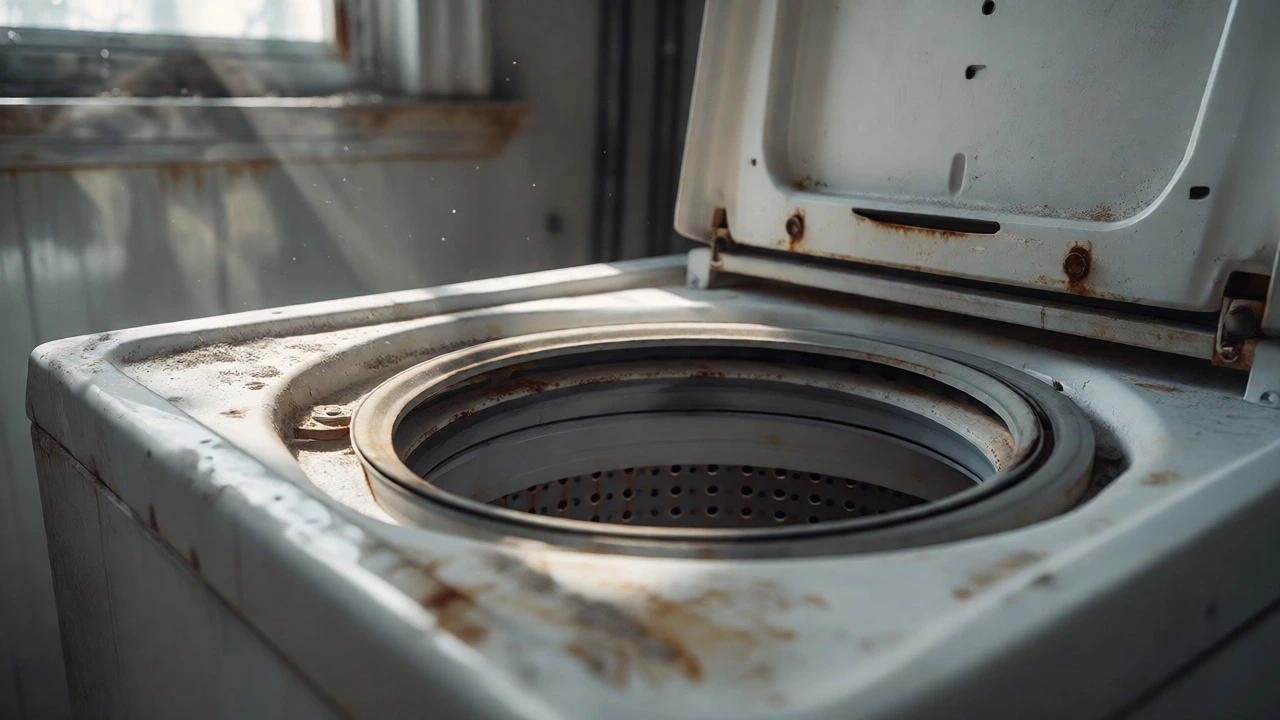
- Leaking Water: Small leaks from hoses are easy fixes. Leaks from underneath the drum usually mean cracked tub seals or rusted outer tubs. If you see rust stains on your concrete floor, the structural integrity is gone.
- Inconsistent Cleaning: If clothes come out still dirty or with detergent residue, the water pump may be failing, or the heating element (if equipped) is burnt out. These are common end-of-life failures.
- Noise Changes: A rhythmic thumping is normal for unbalanced loads. A loud screeching or grinding that persists even when empty points to motor brushes wearing down or bearings seizing up.
The 50% Rule: When Repairing Makes No Sense
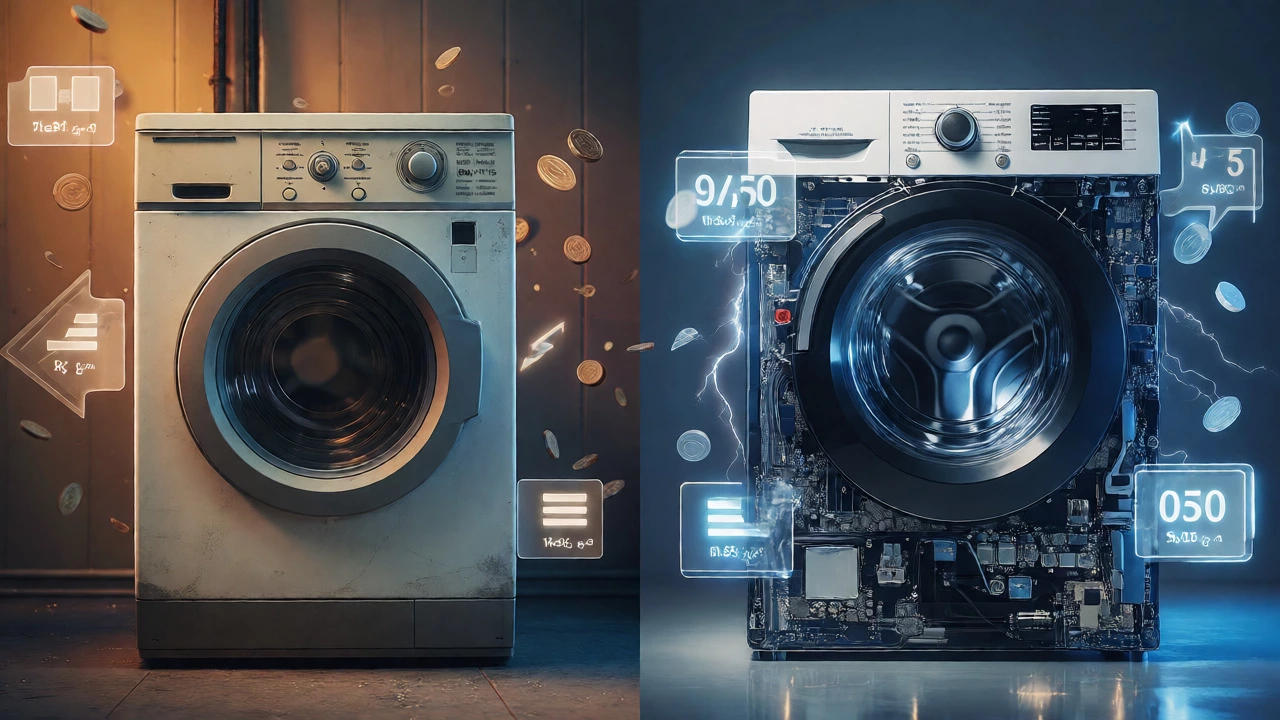
Appliance technicians use a simple heuristic called the 50% rule. If the cost of repairing your washing machine exceeds 50% of the price of a new comparable model, you should replace it rather than fix it.
Let’s say you have a 12-year-old washer. The main bearing fails. The part costs $150, but labor takes 3 hours at $100/hour. Total repair: $450. A new basic model costs $600. Paying $450 to keep a dying machine alive is risky because another component-like the control board-could fail next month. Conversely, if the lid switch breaks on a 5-year-old machine and costs $100 to fix, you absolutely should repair it.
Here’s the catch: As machines get older, the likelihood of multiple failures increases. Electronics degrade, rubber gaskets dry out, and motors lose efficiency. Spending $400 now might just buy you six months before the pump dies too.
Brand Reliability and Age Factors
Not all brands age the same way. Knowing your manufacturer helps you predict if your machine is truly "old" or just poorly made.
Whirlpool and Maytag generally have longer lifespans due to simpler designs and widespread availability of parts. A 12-year-old Whirlpool is often still worth repairing. In contrast, highly featured Samsung and LG front-loaders pack more technology into tighter spaces. While efficient, their complex control boards and proprietary parts can make repairs difficult after the 8-10 year mark. If you own a premium brand with smart features, "old" might start at year 8 because replacement parts become scarce or obsolete.
Check your serial number online. Most manufacturers offer a warranty lookup tool. Even if the warranty is expired, knowing the exact manufacturing date gives you context. If your machine was built in 2012, it’s 14 years old. That’s ancient in appliance terms.
Energy Efficiency: The Hidden Cost of Keeping Old Machines
An old washing machine might still wash clothes, but it does so inefficiently. Newer Energy Star-certified models use significantly less water and electricity. According to the U.S. Department of Energy, modern high-efficiency washers use about 25% less energy and 33% less water than standard models.
If your machine is 15 years old, it likely uses a traditional agitator and heats water using an internal element that consumes massive amounts of power. Upgrading to a newer model could save you $50-$100 per year on utility bills. Over three years, those savings offset a portion of the purchase price. So, while your old machine works, it might be costing you more to run than a new one would cost to buy.
When to Call a Pro vs. Buy New
Deciding whether your machine is considered old enough to replace depends on three factors: age, repair cost, and feature needs.
- Under 7 Years: Always repair unless the repair cost is absurdly high (e.g., >75% of new unit). Parts are usually available, and the machine has life left.
- 7-10 Years: Gray area. Repair minor issues (belts, hoses, switches). Replace if major components fail (motor, transmission, tub).
- Over 10 Years: Lean towards replacement. Unless it’s a commercial-grade unit or a beloved vintage model, investing in a new machine is usually smarter long-term.
Also consider your lifestyle changes. Did you move from a single-person household to a family? Your old compact washer might technically work, but running four small loads instead of one large load wastes time and resources. Sometimes, "old" refers to capacity mismatch rather than mechanical failure.
Extending the Life of Your Current Machine
If you decide your machine isn’t quite ready to go, you can squeeze more years out of it. Maintenance is key.
- Clean the Filter: Many modern washers have drain filters. Clean them every 3-6 months to prevent pump strain.
- Use HE Detergent: If you have a high-efficiency machine, using regular detergent creates excess suds that confuse sensors and leave residue on parts.
- Leave the Door Open: For front-loaders, leaving the door ajar after cycles prevents mold and mildew buildup in the gasket, which can rot the seal and cause leaks.
- Don’t Overload: Stuffing the machine strains the motor and suspension. Follow the manufacturer’s weight guidelines.
By treating your machine gently, you might push that 10-year average to 12 or 13. But remember, every part wears down eventually. Rubber dries, metal rusts, and electronics glitch. Accepting that your machine has an expiration date saves you stress and unexpected repair bills.
Frequently Asked Questions
Is 10 years old for a washing machine?
Yes, 10 years is generally considered the midpoint or end of the average lifespan for most residential washing machines. While some units last longer, reaching the 10-year mark means you are approaching the typical failure window for major components like the motor, transmission, or control board.
How long do LG washing machines last compared to other brands?
LG washing machines typically last between 8 and 10 years. They are known for advanced features and efficiency but can suffer from electronic control board failures earlier than simpler mechanical brands like Maytag or Whirlpool, which often reach 12+ years.
Should I repair a 12-year-old washing machine?
Generally, no. At 12 years, the risk of subsequent failures is high. If the repair cost exceeds $200-$300, it is usually better to put that money toward a new, more energy-efficient model. Exceptions apply if the machine is commercial-grade or if the repair is very minor (e.g., a $50 belt).
What is the most common reason washing machines die?
The most common causes of death are water leaks leading to rust/corrosion of the outer tub, failed drive motors, and malfunctioning electronic control boards. For front-loaders, bearing assembly failure is also a frequent terminal issue.
Do washing machines last longer if they are top-loaders?
Traditional top-loading agitator washers often last longer (10-15 years) than front-loaders (8-10 years) because they have fewer complex seals and less reliance on precise balancing systems. However, high-efficiency top-loaders share similar lifespans with front-loaders due to similar motor and sensor complexities.