- 19 Nov 2026
- Gideon Thornton
- 0
Extractor Fan Troubleshooter
Diagnose your issue and find out who to call. Select the symptoms that match your situation.
Recommended Professional:
Estimated Cost Range (UK):
You wake up to a loud, grinding noise coming from your bathroom ceiling. Or maybe it’s worse: the fan is completely silent, and that lingering damp smell after a hot shower just won’t go away. You know you need help, but who exactly do you call? Do you grab a ladder and try to fix it yourself? Call a plumber? Hire a handyman? Or does this strictly require a qualified electrician?
Here is the short answer: electrical faults in extractor fans generally require a qualified electrician, while mechanical issues like cleaning or simple part replacements might be within a competent handyman’s skill set. But there are critical safety nuances here that could save you money-and potentially your home.
The Critical Distinction: Electrical vs Mechanical
Before you pick up the phone, you need to diagnose what’s actually broken. An extractor fan has two main jobs: move air (mechanical) and run on power (electrical). Knowing which side of the line the problem falls on dictates who you hire.
If the fan motor hums but the blades don’t turn, or if the blades spin freely by hand but stop when powered, that’s often a mechanical seizure or a capacitor issue. If the fan doesn’t light up at all, trips the circuit breaker, or sparks when you touch the switch, that’s an electrical fault. This distinction matters because UK building regulations (specifically Part P) classify most new electrical installations as notifiable work, though repairs can sometimes fall under minor works. However, working inside a bathroom-a "special location" due to water exposure-raises the stakes significantly.
Why You Should Be Careful with DIY
Can you fix it yourself? Technically, yes, if you’re confident. But here is the reality: bathroom extractor fans are often wired into fused spurs or junction boxes hidden behind tiles or in lofts. If you aren’t comfortable isolating the circuit at the consumer unit and testing for dead voltage, you are playing with fire. Literally.
A common mistake homeowners make is assuming the pull-cord switch controls the live feed. In many older UK homes, the switch only breaks the neutral wire, leaving the live current running through the fan motor even when it’s "off." Touching the wrong terminal thinking it’s safe can give you a nasty shock. If you lack a multimeter and the knowledge to use it, skip the DIY route.
The Case for Hiring a Qualified Electrician
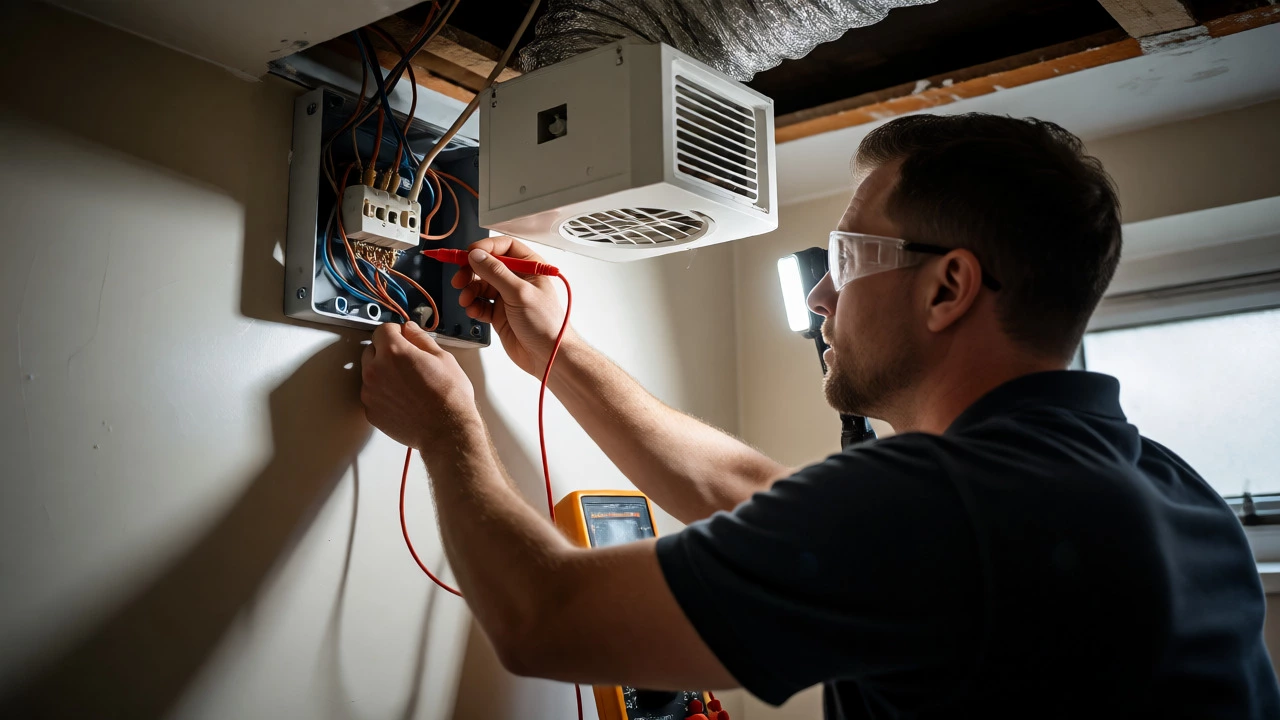
When should you definitely call an electrician? Whenever electricity enters the equation. Specifically:
- New Installations: If you are replacing an old fan with a new one, especially if you need to run new cabling or install a new timer/switch.
- Tripping Breakers: If the fan causes the RCD (Residual Current Device) to trip, you have an earth leakage fault. This is dangerous and requires professional diagnostic tools.
- Burnt Smells: A burning plastic odor indicates overheating components or loose connections arcing. This is an immediate fire risk.
- Complex Wiring: If your fan is linked to the bathroom light or heated towel rail via a shared junction box, rewiring becomes complex.
In the UK, look for an electrician registered with a government-approved scheme like NICEIC, NAPIT, or ELECSA. These bodies ensure the tradesperson is competent and insured. Ask to see their registration card. A quick check on the NICEIC website confirms their status. Why bother? Because if a non-qualified person installs or repairs electrics and something goes wrong, your home insurance claim might be denied.
When a Handyman Might Suffice
Handymen are great for general maintenance, but they vary wildly in electrical competence. Some hold City & Guilds qualifications; others are self-taught. You can consider a handyman if:
- The fan needs deep cleaning (removing dust buildup from the impeller).
- The pull-cord is broken, and you are just replacing the cord itself (not the internal wiring).
- The fan housing is loose and needs re-securing to the joists.
However, always ask: "Are you qualified to handle mains electricity?" If they hesitate, walk away. For anything involving opening the junction box or touching wires, insist on a qualified electrician. The cost difference between a handyman (£50-£80/hour) and an electrician (£60-£90/hour) is negligible compared to the risk of faulty wiring.
What About Plumbers?
People often confuse plumbers with ventilation experts because both deal with pipes and airflow. A plumber fixes leaks and drains. They rarely touch electrical appliances unless it’s a boiler. Unless your extractor fan is integrated into a complex HVAC system managed by a specialist contractor, a standard domestic plumber is likely not the right fit for an electrical repair. Don’t waste time calling them for a sparking fan.
Cost Expectations in 2026
Let’s talk numbers. Prices fluctuate based on location (London is pricier than Bristol), but here are realistic ranges for the UK market in late 2026:
| Service Type | Typical Cost Range | Who Does It |
|---|---|---|
| Deep Clean & Maintenance | £40 - £70 | Handyman / Specialist Cleaner |
| Replace Pull Cord/Switch | £50 - £90 | Electrician (preferred) |
| Repair Motor/Capacitor | £80 - £120 | Electrician / Appliance Tech |
| Full Replacement (Standard) | £150 - £250 | Qualified Electrician |
| Full Replacement (Humidistat/Timer) | £200 - £350 | Qualified Electrician |
Note that these prices include labor and VAT. Parts like capacitors are cheap (£5-£10), but the labor to access tight roof spaces adds up. If the quote seems too low, ask if they are using cheap parts or skipping safety tests.
How to Choose the Right Pro
Don’t just pick the first name off a directory. Follow this checklist:
- Check Qualifications: Verify NICEIC/NAPIT registration for electrical work.
- Ask About Insurance: Ensure they have public liability insurance. If they drop a tool on your head or start a fire, you need coverage.
- Get Multiple Quotes: Aim for three quotes. If one is suspiciously cheap, they might be unqualified.
- Read Reviews: Look for specific mentions of "bathroom," "ceiling," or "tight spaces." Handling awkward loft access is a skill.
- Clarify Scope: Does the price include removing the old unit and disposing of it? Does it include making good any plasterwork if holes need patching?
Preventing Future Failures
Once your fan is fixed, keep it running smoothly. Most failures stem from neglect. Dust acts as insulation, causing motors to overheat. Vacuum the external grille monthly. Every six months, remove the cover and clean the impeller blades with a damp cloth. Avoid using harsh chemicals that can degrade the plastic casing.
Also, check your ducting. If the flexible pipe is crushed or disconnected in the loft, the fan works harder to push air out, leading to premature burnout. A clear path to the outside vent is crucial for efficiency.
Frequently Asked Questions
Can I replace an extractor fan myself if I’m not an electrician?
You can physically swap a like-for-like unit if the existing wiring is accessible and compatible. However, UK Building Regulations Part P recommends that electrical work in bathrooms be carried out by a qualified person. If you are unsure about isolating the supply or connecting terminals correctly, hiring a professional is safer and ensures compliance for future house sales.
Do I need planning permission to install a new extractor fan?
Generally, no, for internal fans. However, if you are installing a new external vent in a listed building or a conservation area, you may need consent. Additionally, ensure the vent discharge complies with local rules regarding distance from windows and boundaries.
Why does my extractor fan make a loud humming noise?
A loud hum usually indicates a failing capacitor or seized bearings in the motor. It can also mean the fan housing is vibrating against the ceiling joists. Tightening mounting screws or lubricating bearings (if accessible) might help, but often the motor unit needs replacement.
Is it cheaper to repair or replace an extractor fan?
For basic models costing under £50, replacement is almost always more economical than paying for labor-intensive repairs. High-end units with humidistats or heat recovery features might justify repair costs. Always compare the repair quote against the price of a new, energy-efficient model.
How long do bathroom extractor fans last?
The average lifespan is 5 to 10 years. Factors like usage frequency, humidity levels, and dust accumulation significantly impact longevity. Regular cleaning can extend life, but motors eventually wear out regardless of care.