- 2 Jul 2026
- Gideon Thornton
- 0
Hob Repair vs. Replacement Calculator
Enter your hob details below. The tool uses the industry-standard "50% Rule" and average lifespans to give you a recommendation.
Ready to Analyze
Fill in the form to see if you should repair or replace your hob.
There is nothing quite as frustrating as a kitchen appliance giving up the ghost right in the middle of dinner prep. You reach for your frying pan, turn the knob, and... nothing. Or worse, it clicks but won't light. The first question that pops into your head isn't usually 'how do I fix this?' It's 'should I even bother fixing it, or is it time for a new one?'
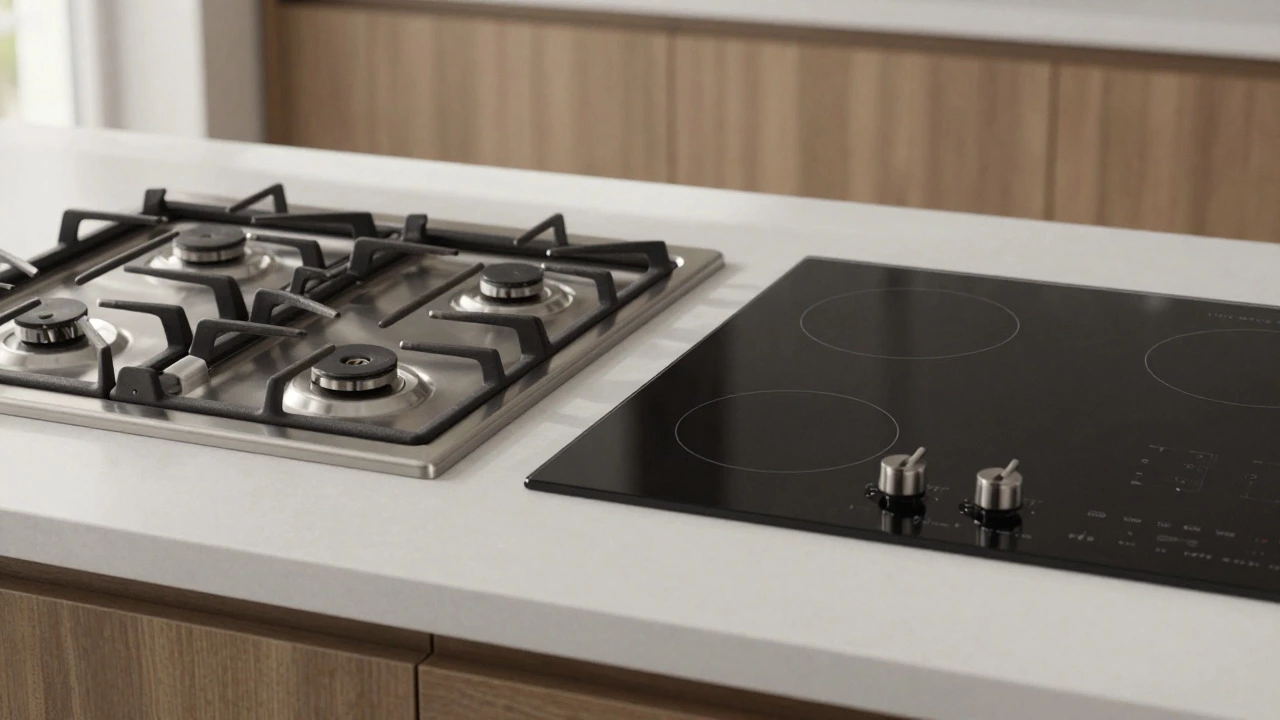
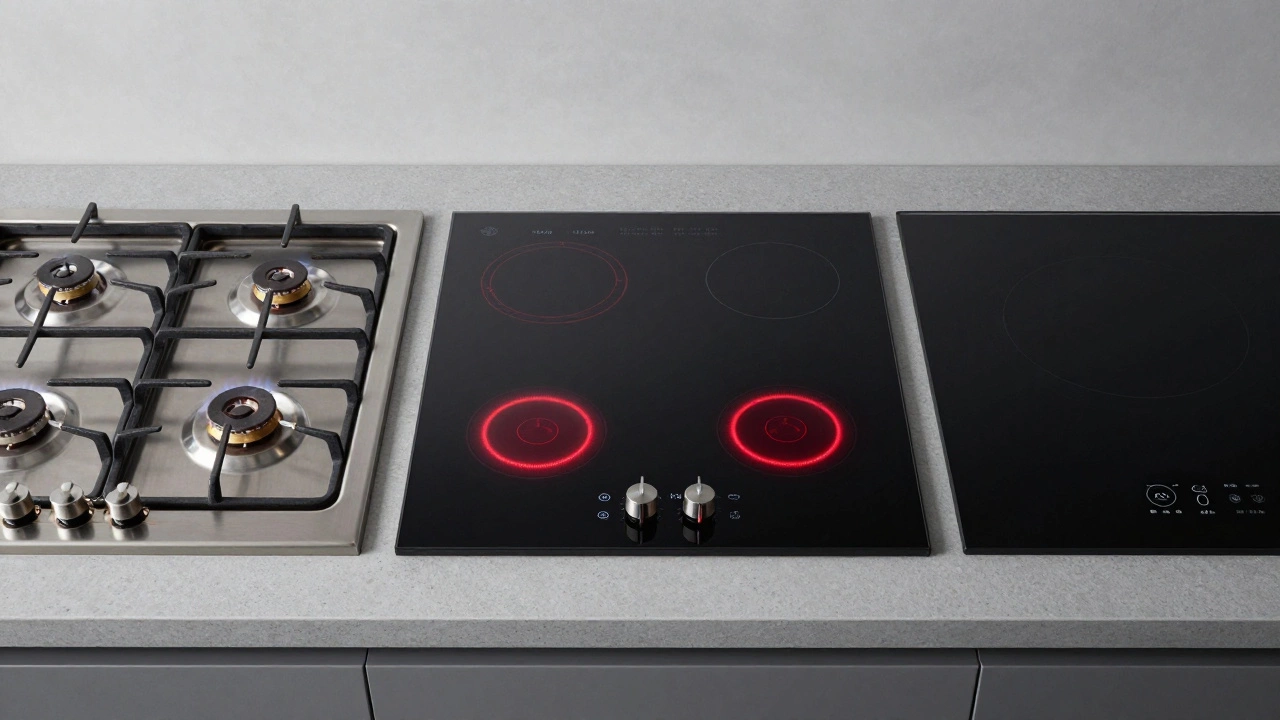
The honest answer depends entirely on what you are dealing with. A kitchen hob is the primary cooking surface in a modern kitchen, available in gas, electric ceramic, and induction varieties. These aren't cheap items, and replacing them involves plumbing, electrical work, or cabinetry modifications. Before you toss the idea of a repair out the window, you need to know if your unit is actually at the end of its rope.
The General Rule of Thumb for Hob Lifespans
If you want a single number to anchor your expectations, most quality hobs last between 10 and 15 years. However, that range shifts dramatically depending on the technology under the glass or steel. Think of it like a car: some engines are built for heavy hauling, while others are designed for efficiency and quiet rides. Your hob falls into one of these categories, and each has a different wear-and-tear profile.
Manufacturers typically design these units with a specific duty cycle in mind. They expect daily use, but not necessarily professional-grade abuse. If you cook three meals a day, plus snacks and leftovers, you are hitting that average usage mark. But if you are a home chef who spends hours simmering sauces or searing steaks every evening, your timeline might be shorter. Conversely, if you mostly use the oven and treat the hob as an afterthought, you could easily squeeze 20 years out of a solid unit.
Gas Hobs: The Workhorses of the Kitchen
Gas hobs are cooking appliances that burn natural gas or LPG to provide direct flame heat. These have been around forever, and for good reason. Mechanically, they are simple. You have a burner, a thermocouple (safety device), and a valve. There are no complex circuit boards or heating elements buried under thick glass.
Because of this simplicity, a well-maintained gas hob can easily last 15 to 20 years. The metal grates might get scratched, and the enamel coating might chip over decades, but the core function-lighting a fire-remains robust. The main point of failure in gas hobs is usually the ignition system. Those little piezoelectric sparkers that click when you twist the knob often fail after a few years. This is a minor repair, costing maybe £20-£30 in parts and a bit of DIY effort, rather than a sign that the whole hob is dead.
However, gas hobs require more cleaning. Grease builds up in the burner ports, which can cause uneven flames or safety shut-offs. If you neglect this, the lifespan drops because corrosion sets in faster. In Bristol, where we get plenty of rain and damp air, keeping those gas jets clear is essential to prevent rust from creeping into the internal mechanisms.
Electric Ceramic Hobs: Glass Surfaces and Heating Elements
Ceramic hobs are electric cooktops featuring a smooth glass-ceramic surface with resistive heating coils underneath. These became popular for their sleek look and ease of wiping down. But that beautiful black glass is also their Achilles' heel. The lifespan here is typically 10 to 12 years.
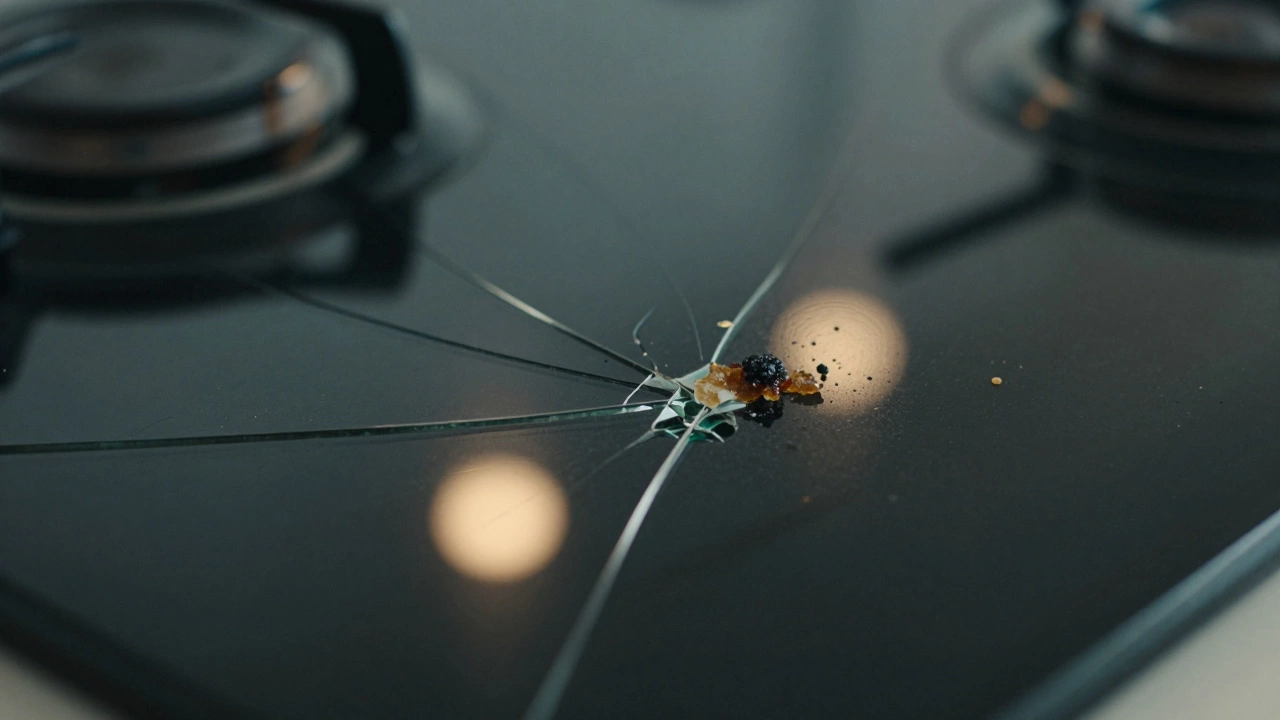
The issue isn't usually the electronics; it's the physical stress on the glass. Thermal shock is the enemy. If you pour cold water onto a hot zone, or drop a heavy cast-iron pot, the glass can crack. Once the glass cracks, the hob is generally considered unsafe to use because moisture can seep in and short the high-voltage components below. Unlike a gas hob, you cannot just swap a part. The entire top assembly is often sealed, making repairs difficult and expensive.
Another factor is the heating element itself. Over time, the resistive coils degrade. You might notice that one zone takes longer to heat up than the others, or that the residual heat indicator stays on longer than usual. This suggests the sensors or the coils are failing. At this stage, repair costs often approach 60-70% of the price of a new unit, which makes replacement the smarter financial move.
Induction Hobs: High Tech, High Efficiency
Induction hobs are advanced electric cooktops that use electromagnetic fields to heat compatible ferromagnetic cookware directly. These are the newest major technology in domestic kitchens. They are incredibly efficient, heating pans almost instantly. Their expected lifespan is similar to ceramic models, around 10 to 15 years, but for different reasons.
Induction hobs rely heavily on electronics. Inside, there are inverters, fans, and control boards managing high-frequency currents. While the glass surface is durable, the electronic components can suffer from power surges or overheating if the cooling fan fails. Because they run cooler than electric ceramic hobs (since the heat is generated in the pan, not the glass), they put less thermal stress on the surface material.
However, if an induction hob dies, it is rarely a simple fix. It’s often a faulty mainboard or a failed power supply module. These parts are proprietary and expensive. If your induction hob is under warranty, get it fixed immediately. If it’s out of warranty, ask yourself: is paying £150+ for a board repair worth it when a new entry-level induction hob might cost only slightly more?
| Hob Type | Average Lifespan | Common Failure Points | Repair Cost vs. Replacement |
|---|---|---|---|
| Gas Hob | 15-20 years | Ignition sparks, gas valves, burner ports | Low - High (often worth repairing) |
| Ceramic Electric | 10-12 years | Cracked glass, degraded heating coils | High - Low (often better to replace) |
| Induction | 10-15 years | Mainboard, cooling fans, touch controls | Medium - Low (depends on age) |
Signs Your Hob Is Nearing the End
You don't always need a technician to tell you when your hob is dying. There are clear warning signs that indicate the internal clock is ticking down. Ignoring these can lead to safety hazards or complete breakdowns during critical moments.
- Inconsistent Heating: If one burner or zone is significantly weaker than the others, the heating element or gas flow regulator is likely failing. On gas hobs, a yellow or orange flame instead of blue indicates incomplete combustion, which is dangerous and inefficient.
- Touch Control Unresponsiveness: For induction and ceramic hobs, if you have to press buttons multiple times or swipe repeatedly to adjust heat, the capacitive touch layer is degrading. This is a common issue after 8+ years of exposure to humidity and grease vapors.
- Noise Issues: A loud humming or buzzing sound from an induction hob usually means the cooling fan is struggling or the inverter is failing. Gas hobs should be relatively silent except for the roar of the flame. Clicking sounds when not trying to ignite suggest a loose connection or failing spark generator.
- Visual Damage: Cracks in the glass surface are non-negotiable. Even hairline fractures can compromise the seal against water and grease. On gas hobs, rusted grates or corroded burner heads reduce efficiency and pose fire risks.
To Repair or To Replace? The Decision Matrix
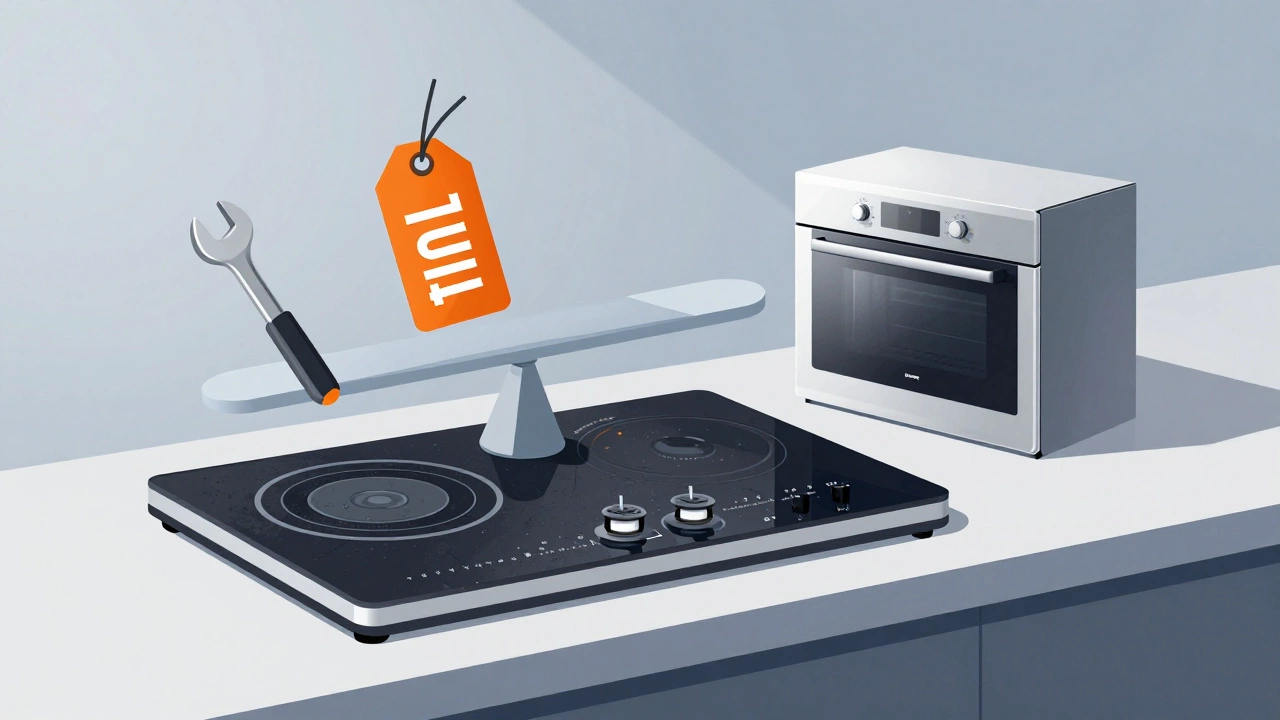
This is the million-dollar question. When you call a repair service, they will give you a quote. How do you decide if that quote is fair? Use the "50% Rule." If the cost of the repair exceeds 50% of the price of a new, equivalent hob, lean towards replacement.
Consider the age of the appliance. If your hob is 12 years old and needs a £100 repair, think about what else might break next year. Older units lack the energy efficiency standards of newer models. Modern induction hobs, for example, use up to 40% less energy than older electric ceramic models. That savings adds up over time, especially with rising energy bills in the UK.
Also, consider availability of parts. Manufacturers stop producing spare parts for older models after a certain period. If your hob is from the early 2000s, finding a matching control board might be impossible, forcing you to replace the entire unit regardless of the current repair cost.
Extending the Life of Your Hob
You can push your hob past its average lifespan with proper care. It doesn't take much, just consistent habits.
- Clean Immediately After Cooling: Never scrub a hot hob. Let it cool completely, then wipe with a dedicated hob cleaner. For ceramic and induction, use a scraper blade to remove burnt-on food gently. Avoid abrasive sponges that scratch the surface, as scratches trap dirt and weaken the glass over time.
- Use the Right Cookware: Flat-bottomed pans are crucial. Warped pans don't make full contact with the hob, reducing efficiency and causing hot spots. For induction, ensure your pans are magnetic. Using incompatible pans wastes energy and stresses the electronics unnecessarily.
- Protect the Surface: Avoid dragging heavy pots across the glass. Lift them instead. Sugar spills can caramelize and stick permanently if heated, so clean sugary residues before turning the hob on.
- Check Gas Connections Annually: For gas hobs, check for leaks using soapy water on connections. Bubbles mean a leak. Also, ensure the burner caps are seated correctly to prevent gas escaping into the cabinet below.
When Professional Help Is Non-Negotiable
Some issues are strictly for professionals. Gas leaks, electrical sparking, or burning smells require immediate shutdown and expert inspection. Do not attempt to open the internal casing of an electric or induction hob unless you are qualified. The voltages involved are lethal. In the UK, all gas work must be carried out by a Gas Safe registered engineer. Attempting DIY gas repairs is illegal and dangerous.
If your hob is still within its warranty period, never void it by opening it yourself. Contact the manufacturer or retailer first. They may cover the repair cost entirely, including labor. Keep your receipt and model number handy; this information speeds up the support process significantly.
How long does a gas hob last compared to induction?
A gas hob typically lasts longer, averaging 15 to 20 years, due to its simpler mechanical design. Induction hobs usually last 10 to 15 years because they rely on sensitive electronic components that can degrade over time or fail due to power surges.
Is it worth repairing a 10-year-old ceramic hob?
It depends on the repair cost. If the issue is a cracked glass surface, replacement is usually necessary as the entire top unit is compromised. If it's a minor sensor fault, repair might be viable if the cost is under £100. However, given that 10 years is near the average lifespan, investing in a new, more energy-efficient model is often the better long-term choice.
Why does my induction hob make a buzzing noise?
A low hum is normal for induction hobs as they operate using electromagnetic fields. However, a loud buzzing or rattling noise often indicates a failing cooling fan or loose internal components. If the noise is sudden or accompanied by error codes, it requires professional inspection to prevent further damage.
Can I replace just one burner on a gas hob?
Yes, individual gas burners and their associated valves can often be replaced. This is a common and cost-effective repair. Ensure you buy the exact model-specific part to fit your hob. If you are not comfortable working with gas lines, hire a Gas Safe engineer to perform the swap safely.
What causes premature failure in kitchen hobs?
Premature failure is usually caused by poor maintenance, such as allowing grease to build up in gas jets, using abrasive cleaners on glass surfaces, or subjecting the hob to thermal shock by pouring cold water on hot zones. Electrical surges can also damage the control boards of induction and ceramic hobs.