
- 30 Apr 2026
- Gideon Thornton
- 0
Refrigerator Repair Decision Tool
The Verdict
Enter your details to see if you should fix or replace your appliance.
Quick Summary of Costly Fixes
- The Heavy Hitter: Compressor replacement is almost always the most expensive repair.
- The Hidden Danger: Sealed system leaks require specialized labor and expensive refrigerants.
- The Modern Headache: Main control boards in smart fridges are pricey and often hard to find.
- The Decision Rule: If a repair costs more than 50% of a new fridge, it's usually time to shop.
The Reigning Champion of Costs: The Compressor
If you're looking for the most expensive fridge repair, look no further than the Compressor is the heart of the refrigeration cycle, a pump that compresses and moves refrigerant gas through the system to remove heat from the interior. Think of it as the engine of your fridge. When this fails, the entire cooling process stops dead.
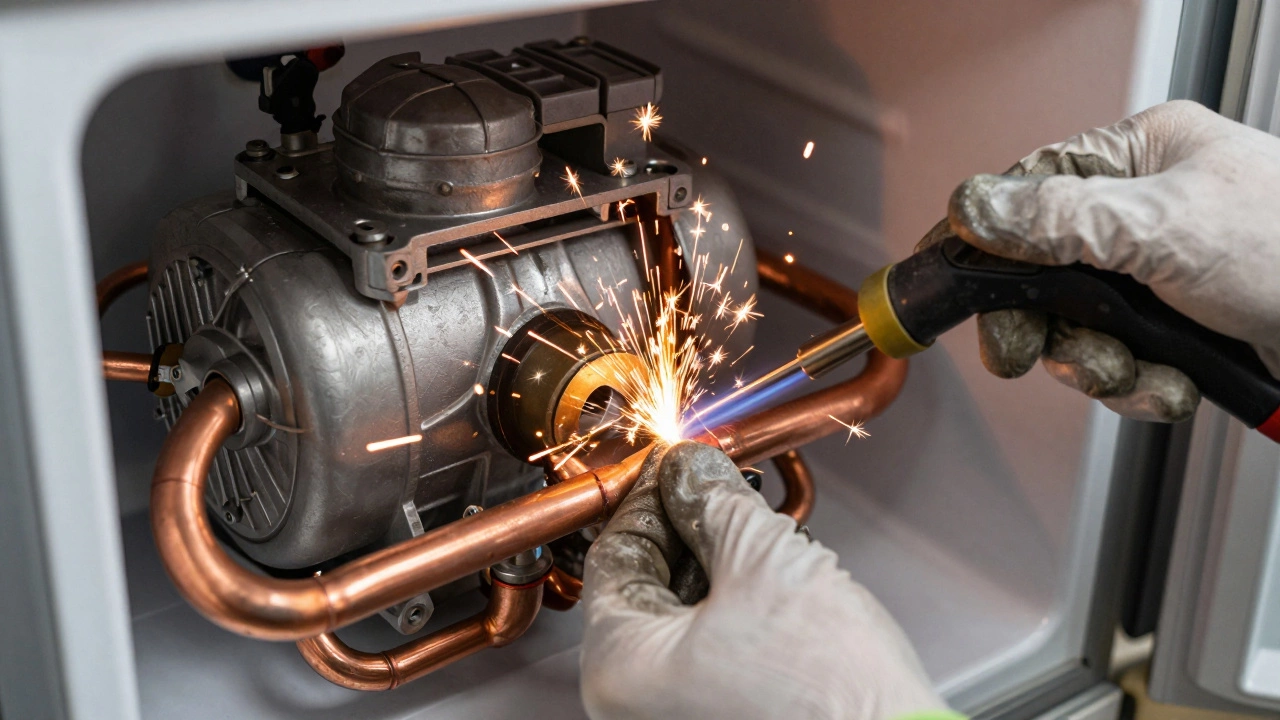
Why is it so expensive? It's not just the part. A compressor isn't like a door handle you can just screw on. It's welded into a sealed system of copper tubes. Replacing one requires a technician to use a torch to braze pipes, vacuum out air and moisture using a high-powered pump, and then recharge the system with specific refrigerants like R-600a or R-134a. Between the part cost and the 3-5 hours of specialized labor, you're often looking at a bill between £400 and £800.
The Sealed System Nightmare
Sometimes the compressor is fine, but the Sealed System is the airtight network of evaporator coils, condenser coils, and capillary tubes that circulate refrigerant has a leak. This is arguably worse than a dead compressor because the leak could be anywhere.
Finding a microscopic hole in a copper line requires a process called pressure testing. The technician pumps nitrogen into the lines to see where the pressure drops. If the leak is in the evaporator coils (the part that actually gets cold), they might have to replace the entire coil assembly. Because this involves handling hazardous chemicals and requires precision welding, the labor costs skyrocket. If you see a technician spending hours with a soap-bubble spray on your pipes, your wallet is likely about to take a hit.
| Component | Typical Repair Cost | Difficulty | Verdict |
|---|---|---|---|
| Compressor | £400 - £800 | Very High | Consider replacing fridge |
| Main Control Board | £200 - £500 | Medium | Worth repairing |
| Evaporator Fan | £100 - £250 | Low/Medium | Easy fix |
| Start Relay | £50 - £150 | Low | Quick win |
Electronic Brain Failure: The Control Board
In the old days, fridges had a simple thermostat. Today, we have Main Control Boards which are the computerized circuit boards that regulate temperature, control the ice maker, and manage the defrost cycle. When a power surge hits or a capacitor blows, the board dies.
The cost here varies wildly. For a standard model, you might spend £200. But if you have a high-end smart fridge with a massive screen and internal cameras, the proprietary boards can be incredibly expensive. The tricky part is that boards are often non-repairable; you can't just solder one connection-you have to replace the whole board. If your fridge is acting possessed-turning off randomly or refusing to cool despite the fans running-the brain is likely fried.
The Defrost System: A Sneaky Money Pit
You might not think of the Defrost Heater as a major expense, but when it fails, it triggers a domino effect. The heater's job is to melt frost off the evaporator coils. If it stops working, ice builds up until it blocks all airflow.
The repair itself is moderately priced, but the danger is that users often mistake this for a compressor failure. They call a technician who spends an hour diagnosing the system, only to find a £60 heating element is the culprit. However, if the failure is caused by a faulty Defrost Timer or a sensor, you're looking at more labor and multiple parts. While not as expensive as the compressor, these issues are the most common reasons for "phantom" cooling problems.
When to Fix vs. When to Trash
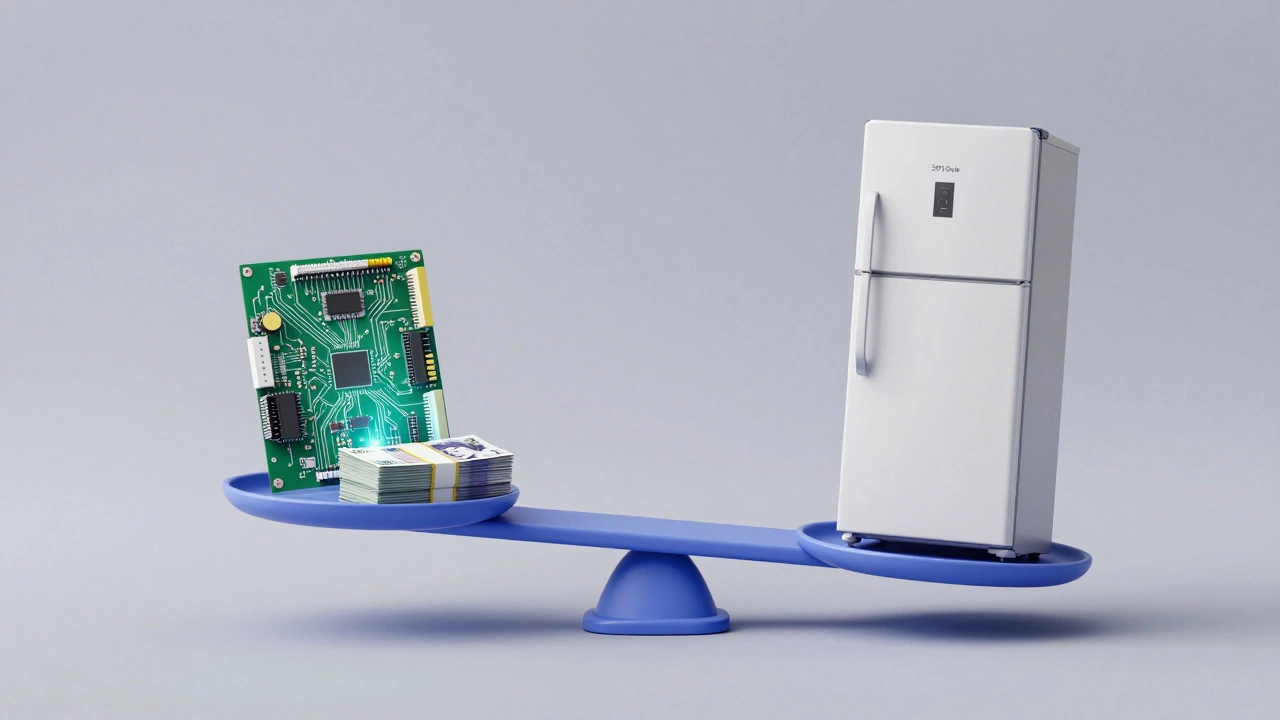
How do you know if you're throwing good money after bad? There's a general rule of thumb in the repair industry: the 50% rule. If the cost of the repair exceeds 50% of the price of a new, comparable fridge, stop.
Consider the age of the unit. If your fridge is 10 years old and the compressor dies, don't fix it. New compressors are more energy-efficient, and the old insulation in your fridge has likely degraded anyway. You'll save more on your monthly electricity bill with a new Inverter Compressor (which varies its speed rather than just clicking on and off) than you would by patching up a relic from 2015.
Common Warning Signs of a Costly Failure
You can usually tell a major failure is coming before the fridge completely dies. Keep an eye out for these red flags:
- The Endless Hum: If the compressor is running 24/7 without stopping, it's struggling. This usually means it's overworked due to a leak or a failing pump.
- Clicking Sounds: A loud "click" every few minutes followed by silence is the sound of the start relay trying and failing to kickstart the compressor.
- Uneven Cooling: If the freezer is freezing but the fridge is warm, you likely have a sealed system blockage or a failed evaporator fan.
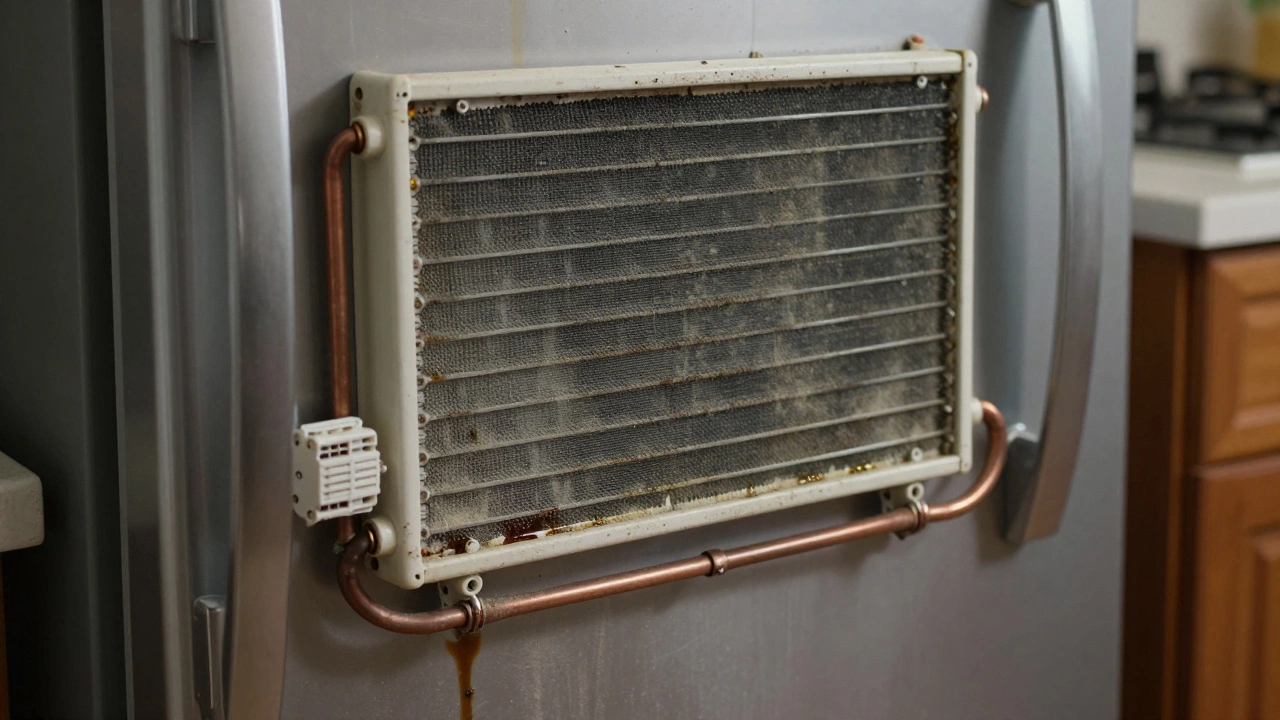
- Excessive Heat: Touch the back of the fridge. If it's scorching hot to the touch, the condenser coils are likely clogged or the compressor is overheating.
Is it ever worth replacing a refrigerator compressor?
Generally, only if the fridge is very new (under 5 years) or if the compressor is covered by a long-term manufacturer warranty. Many brands offer 5 or 10-year warranties specifically on the compressor part, though you still have to pay for the labor.
Why is the labor so expensive for sealed system repairs?
It requires specialized equipment like vacuum pumps, manifolds, and brazing torches. Additionally, technicians must be certified to handle refrigerants to prevent environmental damage and follow safety laws.
Can a leaking seal cause a compressor to fail?
Yes. If the door gaskets are leaking, warm air constantly enters the fridge. The compressor has to work overtime to keep the temperature down, which leads to premature wear and eventual burnout.
What is the cheapest thing to fix that looks like a major problem?
The start relay. It's a small plastic component that helps the compressor start. When it fails, the fridge won't cool, making it seem like the expensive compressor is dead, but the part itself often costs less than £50.
How long does a typical compressor replacement take?
A professional installation usually takes between 3 to 6 hours. This includes removing the old unit, brazing the new one in, vacuuming the lines to remove moisture, and recharging the gas.