- 21 Sep 2026
- Gideon Thornton
- 0
Dishwasher Fault Diagnostic Tool
Select the primary issue you are experiencing with your dishwasher.
Use the "50% Rule" mentioned in the article to make an economic decision.
Prevent future faults by performing these checks monthly:
- Clean Filter Mesh Easy DIY
- Check Spray Arm Holes Easy DIY
- Inspect Waste Pipe (No Kinks) Medium
- Run Hot Water Before Cycle Habit
- Descale Monthly (Hard Water Areas) Routine
You open the door to a pool of stagnant water and a smell that tells you something has gone wrong. It happens to almost everyone eventually. If you are searching for what is the most common dishwasher fault, the answer isn't some complex electronic failure or a burnt-out motor. In the vast majority of cases, especially in domestic settings across the UK and beyond, the culprit is a simple blockage in the drainage system.
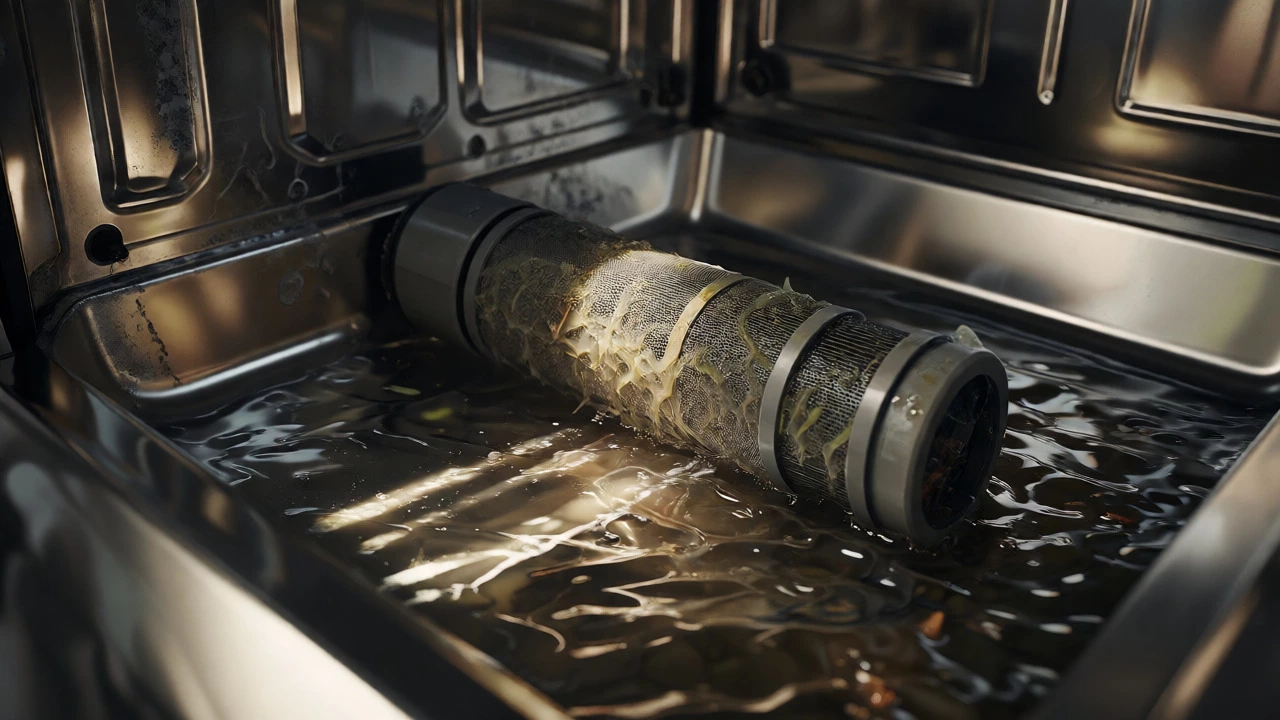
This sounds too easy to be true, right? But here is the reality: dishwashers work by circulating hot, soapy water through spray arms, draining it, and refilling with fresh water. The drain pump and filter assembly are the choke points where food debris, grease, and mineral scale accumulate. When this path gets clogged, the machine cannot empty itself. This triggers safety switches, stops the cycle, or leaves standing water at the bottom. Understanding this primary failure mode saves you from calling an engineer unnecessarily and helps you diagnose other issues faster.
The Primary Culprit: Drainage Blockages
Let's get specific about why this happens. Modern dishwashers are designed to handle small food particles, but they struggle with fibrous vegetables like celery or corn skins, starchy residues like rice or pasta sauce, and hard fats like butter or lard. These materials don't dissolve easily in hot water. Instead, they clump together around the impeller of the drain pump or lodge themselves in the mesh of the filter. Over time, this buildup restricts flow. At first, the machine might just take longer to drain. Eventually, it fails completely.
In Bristol, where we have moderately hard water, this problem is compounded by limescale. Calcium deposits coat the internal components, making them rougher and more likely to trap debris. So, while a bone fragment might cause an immediate stoppage, the gradual accumulation of sludge and scale is what causes the chronic "slow drain" complaints that technicians hear most often. If your dishwasher leaves two inches of dirty water at the end of a cycle, check the filter before you buy any spare parts.
How to Diagnose and Fix the Filter Issue
Fixing a blocked filter is one of the few repairs you can do yourself without tools. Here is the step-by-step process that works on 90% of models, from Bosch to Beko:
- Locate the filter: Open the door and look at the bottom of the tub, usually near the center or rear. You will see a cylindrical mesh screen and sometimes a flat plate.
- Remove the filter: Twist the cylindrical part counter-clockwise (usually) and lift it out. Some models require pulling the flat plate up first.
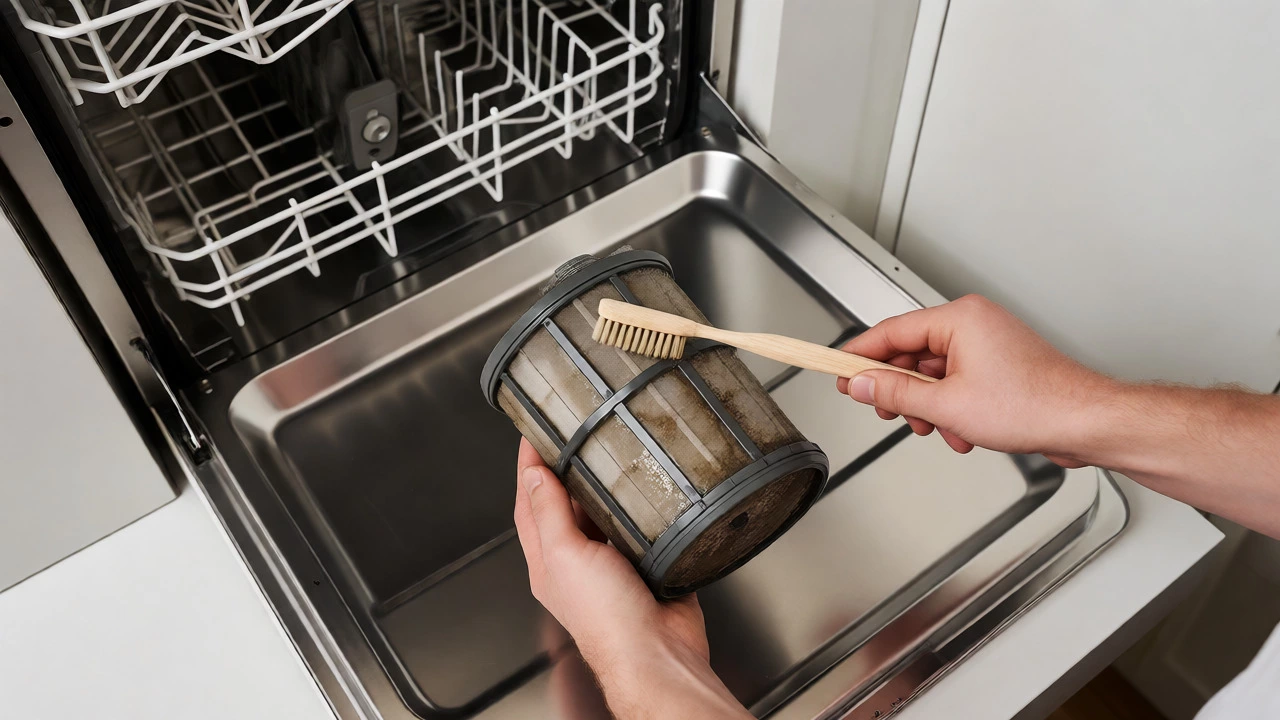
- Clean thoroughly: Take the filter to the sink. Use an old toothbrush and warm soapy water to scrub away the slime and grit. Pay attention to the fine mesh; if it is torn, replace it.
- Check the sump area: Before putting the filter back, look into the hole where it sat. Use a torch to spot any large debris-bones, pits, glass shards-that might be blocking the pump inlet. Remove anything you find.
- Reassemble and test: Put the filter back, ensuring it locks securely. Run a short rinse cycle to verify the water drains properly.
If cleaning the filter doesn't solve the problem, the blockage might be deeper in the hose or the external plumbing connection. Check the waste pipe under your sink. Ensure it isn't kinked and that the high-loop configuration (where the pipe goes up before going down to the drain) is intact. This loop prevents sink water from siphoning back into your clean dishwasher.
Other Frequent Failures Beyond Drainage
While drainage issues top the list, they aren't the only things that go wrong. Once you rule out a blockage, consider these three common faults. They account for most of the remaining service calls.
| Fault Type | Symptoms | Likely Cause | DIY Fixability |
|---|---|---|---|
| Heating Element Failure | Dishes come out cold and wet; error code E15 or similar. | Burnt out element or faulty thermostat. | Medium (Requires multimeter) |
| Water Inlet Valve | Machine doesn't fill with water; dry run. | Clogged solenoid or failed electrical supply to valve. | Medium (Check water pressure first) |
| Door Switch | Machine won't start; lights on but no action. | Mechanical latch broken or microswitch faulty. | High (Often just misaligned) |
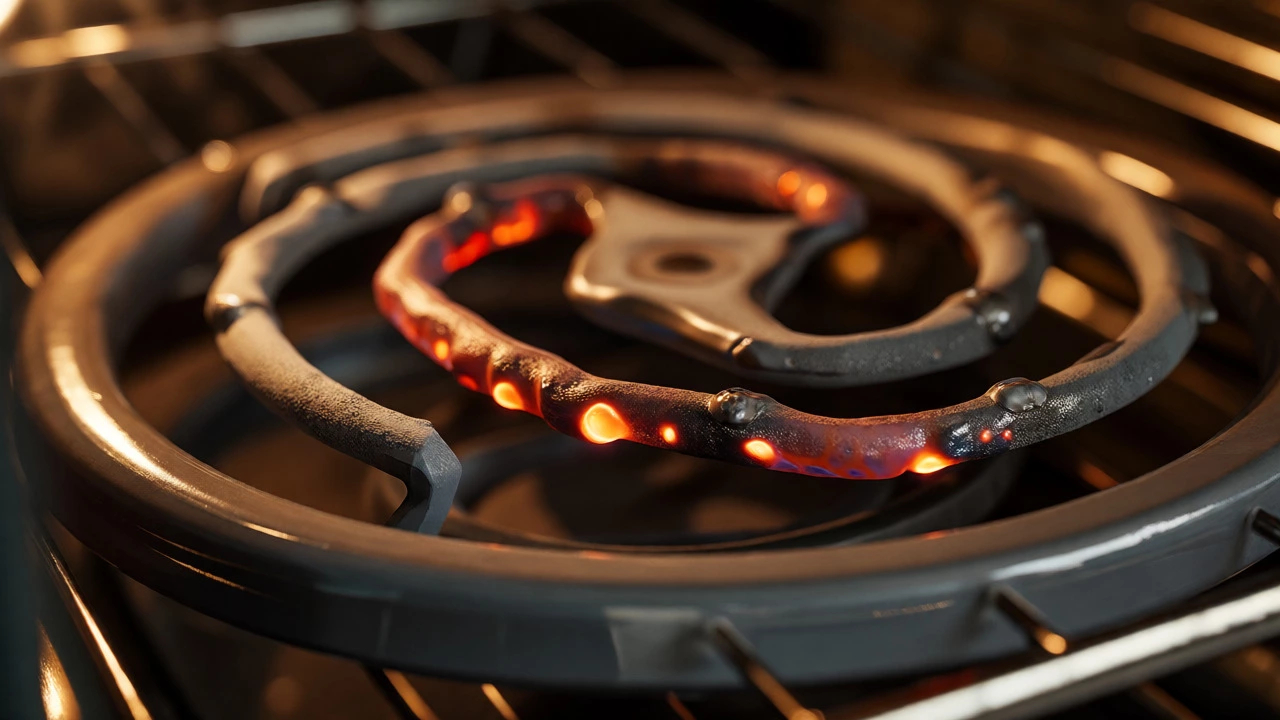
Heating problems are tricky because they mimic other issues. If your dishes are cold, it’s not always the heater. Sometimes, the water simply isn't reaching the element because of low water pressure or a blocked inlet. Always check your home's water supply valves before assuming the heating element is dead. Replacing a heating element involves accessing the bottom of the unit, which can be messy if the insulation is wet.
Water inlet valves fail when sediment from mains pipes clogs the tiny screens inside the valve. If your dishwasher tries to fill but times out, listen for a humming sound. If there is no hum, it’s electrical. If there is a hum but no water flows, it’s a blockage. Cleaning the inlet screens often fixes this cheaply.
The Role of Maintenance in Preventing Faults
Most dishwasher faults are maintenance failures rather than component defects. Manufacturers design these machines to last ten years, but neglect cuts that lifespan in half. Here is how to keep yours running smoothly:
- Scrape, don't rinse: Scrape large food scraps into the bin. Rinsing plates under the tap wastes water and energy, but leaving chunks of potato or chicken skin guarantees a blockage.
- Use the right detergent: Avoid using washing-up liquid meant for hand-washing. It creates excessive foam that overflows the machine and confuses sensors. Use powder, gel, or tablets specifically labeled for automatic dishwashers.
- Run hot water first: Before starting the cycle, run your kitchen tap until the water is hot. This ensures the dishwasher starts with hot water, improving cleaning efficiency and reducing the strain on the heating element.
- Clean the spray arms: Every few months, remove the lower spray arm. Check the holes for clogs. A blocked jet means poor cleaning performance, which users often mistake for a broken machine.
- Descale regularly: If you live in a hard water area, run a cleaning cycle with a dedicated descaler or white vinegar every month. This prevents scale buildup on the heater and sensors.
Ignoring these steps leads to the "silent killer" of dishwashers: biofilm. This slimy layer grows inside the hidden pipes and pumps, causing odors and eventual mechanical jams. You can’t see it, but you can smell it. A sour, musty odor when you open the door is a sign that deep cleaning is overdue.
When to Call a Professional
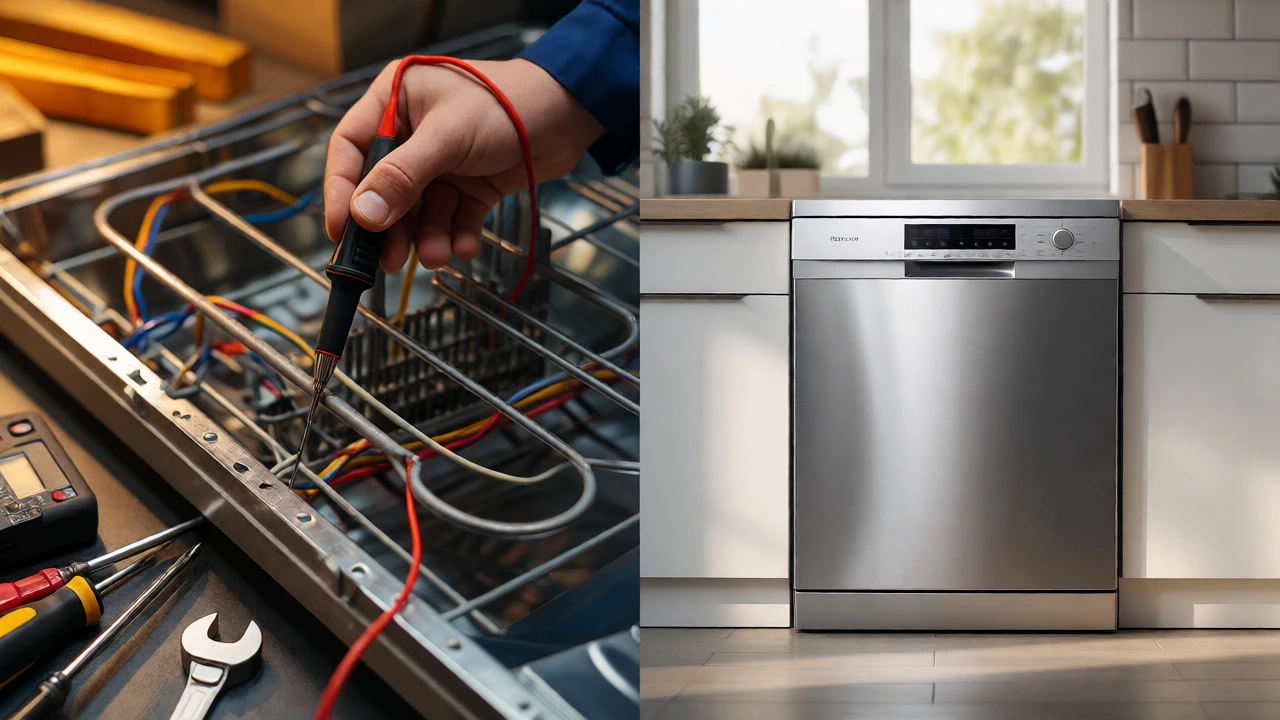
There is a limit to DIY repairs. You should call a qualified engineer if:
- The machine leaks internally: If water pools under the appliance after cleaning the filter and checking hoses, the tub seal or pump housing may be cracked.
- Error codes persist: Modern dishwashers display codes like E24 (drainage) or E15 (leak). If resetting the machine and clearing visible blockages doesn't clear the code, there is likely an electronic control board issue.
- The motor makes grinding noises: A loud, metallic grinding sound during operation suggests a failing motor bearing or a foreign object stuck in the circulation pump impeller. Forcing it to run can burn out the motor.
- Electrical issues: If the breaker trips when you plug in the dishwasher, do not attempt further diagnosis. This indicates a short circuit, possibly in the heating element or wiring.
In the UK, ensure any engineer you hire is Gas Safe registered if they touch gas appliances, though for electric dishwashers, look for NICEIC or NAPIT registration for electrical competence. Getting a quote before authorizing work is standard practice. Labor costs typically range from £60 to £90 per hour, plus parts.
Cost-Benefit Analysis: Repair vs. Replace
Should you fix that old dishwasher? It depends on the age and the fault. Here is a quick rule of thumb used by many repair technicians:
The 50% Rule: If the cost of repair (parts + labor) exceeds 50% of the price of a new equivalent model, replace it. For example, if a new dishwasher costs £400 and the repair quote is £250, buy a new one. New models are significantly more energy-efficient (often rated A or B under the new EU label), which saves money on electricity and water bills over time.
However, if the fault is minor-like replacing a £15 filter or a £30 door latch-and the machine is less than five years old, repair is almost always worth it. Premium brands like Miele or Siemens often have better build quality and are worth repairing even at higher costs because replacement units are expensive (£800+).
Why does my dishwasher leave water at the bottom?
The most common reason is a blocked filter or drain hose. Food debris accumulates in the filter mesh, preventing water from draining. Another possibility is a kinked waste pipe under the sink or a blocked household drain. Check the filter first, as this resolves the issue in most cases.
Can I use vinegar to clean my dishwasher?
Yes, white distilled vinegar is effective for removing limescale and odors. Place a cup of vinegar in a dishwasher-safe bowl on the top rack and run a hot cycle. However, avoid using vinegar frequently if your dishwasher has rubber seals, as prolonged exposure can degrade them over time. Commercial cleaners are formulated to be safer for internal components.
How long should a dishwasher last?
On average, a dishwasher lasts between 7 and 10 years. High-end brands like Miele are engineered to last up to 20 years. Lifespan heavily depends on usage frequency, water hardness, and maintenance habits. Regular cleaning of filters and spray arms can extend the life of the appliance significantly.
Why is my dishwasher not cleaning dishes properly?
Poor cleaning is often due to clogged spray arm holes, incorrect loading, or insufficient detergent. Check that the spray arms rotate freely and their holes are clear. Ensure you are not blocking the arms with tall pots. Also, verify that the water is getting hot enough; if the heating element is failing, the water won't reach the temperature needed to dissolve grease.
Is it cheaper to repair or replace a dishwasher?
It depends on the age and cost of the unit. For dishwashers under 5 years old with minor faults (like a faulty switch or filter), repair is usually cheaper. For older units or major failures (like a burnt-out motor or control board), replacement is often more economical due to rising labor costs and improved energy efficiency of new models.