- 1 Nov 2026
- Gideon Thornton
- 0
Dishwasher Repair vs. Replace Calculator
Enter your details below to get a personalized recommendation based on industry standards and the article's decision matrix.
Machine Details
Analysis Result
Fill in the form to see if you should repair or replace.
- Cost Ratio:
- Est. Remaining Life:
- Annualized Cost (Repair):
- Annualized Cost (Replace):
You’re standing in your kitchen, staring at a puddle of soapy water spreading across the tiles. Your dishwasher, which has been a faithful servant for four years, has finally thrown a fit. The engineer quotes you £150 to fix it. Do you pay up, or do you start browsing online retailers for a new model?
This is one of the most common dilemmas homeowners face. Four years is a tricky age for an dishwasher. It’s no longer covered by warranty, but it’s also not ancient history. You might feel like you’ve barely paid it off, yet suddenly it feels disposable. The truth isn’t black and white. It depends on the specific fault, the brand, and what’s happening in the appliance market right now.
| Scenario | Recommended Action | Why |
|---|---|---|
| Fault: Door seal, pump filter, or minor electronics | Repair | Cheap parts (<£80), restores full function, extends life by 3+ years. |
| Fault: Main control board or motor burnout | Replace | High part cost (>£150) + labour risks exceeding 50% of new unit price. |
| Brand: Premium (Miele, Bosch Series 6/8) | Repair | Built to last 10-15 years; parts are available; resale value holds better. |
| Brand: Budget (entry-level own-brand) | Replace | Lifespan often caps at 7-8 years; repair costs rarely justify remaining life. |
| Energy Efficiency: Old standard (A++ or lower) | Replace | New models (Class C-D under new EU labels) save ~£20-£30/year on bills. |
The Five-Year Wall: Why Age Matters So Much
Appliance manufacturers design products with planned obsolescence in mind, though they rarely admit it. For most mainstream brands like Indesit, Hotpoint, or basic Beko models, the expected lifespan hovers around 7 to 9 years. At four years old, you are roughly halfway through its useful life. This is the critical threshold.
If you spend £150 repairing a machine that only has three years left, you’re paying £50 per year for convenience. If you buy a new £400 machine, you’re paying about £40 per year for seven years. Mathematically, replacing looks cheaper over the long haul. But that ignores the immediate cash hit and the hassle of installation. Most people aren’t looking at seven-year horizons; they’re looking at whether this month’s bill is worth it.
Premium brands operate differently. A Miele G-series dishwasher is engineered for 20 years. If yours breaks at year four, throwing it away is like scrapping a Mercedes because the radio stopped working. In these cases, always repair. The build quality justifies the investment. Check your manual or look up the model number online. If the manufacturer claims a 10-year spare parts guarantee, lean towards repair.
Decoding the Fault: Not All Breakdowns Are Equal
The type of failure dictates the decision more than the age. Some faults are cheap annoyances; others are death sentences.
Minor Faults (Always Repair):
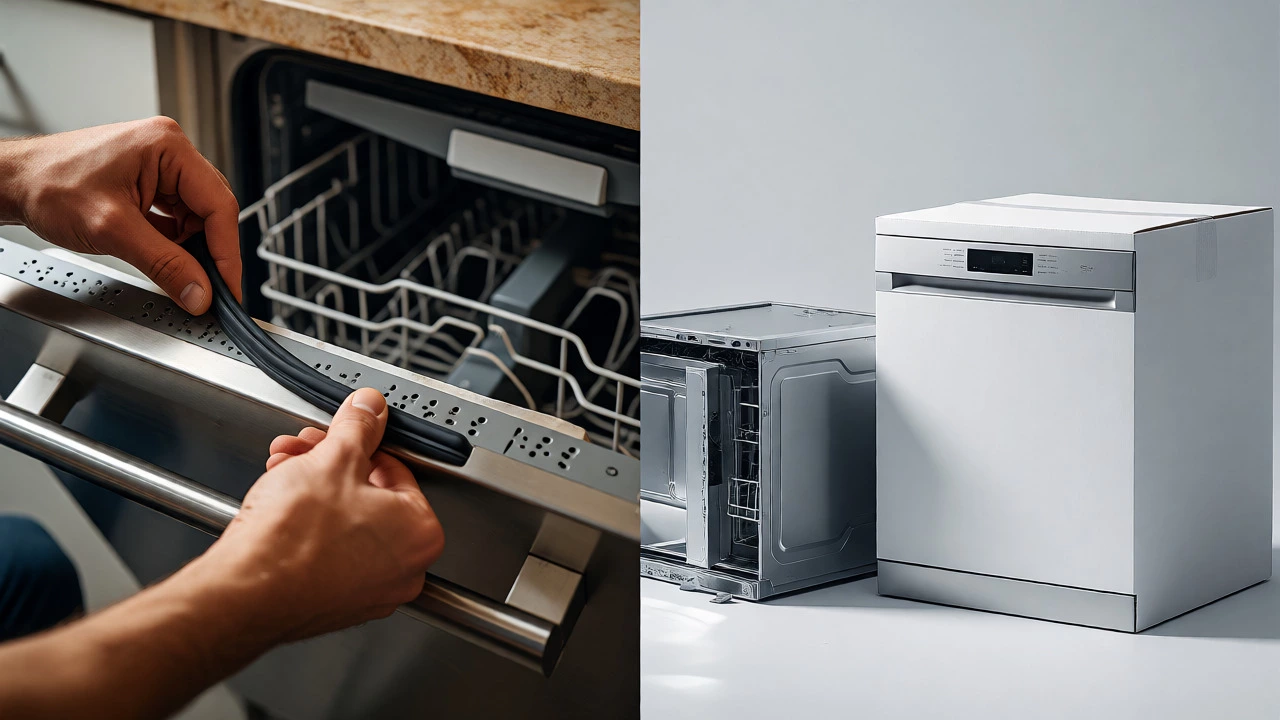
- Door Seals: These degrade over time due to heat and detergent residue. Replacing a rubber gasket costs £20-£40 plus labour. It’s a quick fix that prevents leaks and improves cleaning performance.
- Clogged Filters or Drain Pumps: Often caused by food debris or hard water scale. Cleaning or replacing a small impeller is inexpensive. This is maintenance, not really a "repair" in the traditional sense.
- Water Inlet Valves: If the machine won’t fill, it’s often a £30 valve. Easy swap, low risk.
Major Faults (Consider Replacing):
- Main PCB (Control Board): This is the brain of the dishwasher. If lightning strikes or a surge fries it, the part alone can cost £100-£200. Labour adds another £80-£100. Total cost? £250+. That’s half the price of a new mid-range unit.
- Tub Leak: If the plastic tank itself has cracked, repair is usually impossible or prohibitively expensive. The tub is structural. Once it cracks, the machine is done.
- Motor Failure: Wash motors are robust but expensive. If the bearings seize, replacement costs often mirror the cost of a new appliance.
Ask yourself: Is this a single component failure, or is the machine showing signs of general decay? If the paint is peeling inside, racks are rusted, and buttons feel sticky, you’re fighting a losing battle. One repair will just be followed by another within six months.
The Hidden Costs of Buying New
We tend to focus on the sticker price of a new dishwasher, but there are hidden factors. First, delivery and installation. Many retailers charge £50-£100 for haul-away and fitting unless you’re handy enough to DIY. Second, energy efficiency gains. Since 2021, the EU re-labeled energy ratings. What used to be A+++ is now Class E or F. Don’t let marketing confuse you. Compare actual kWh usage per cycle.
A typical older dishwasher might use 1.0 kWh per cycle. A modern efficient model uses 0.6-0.7 kWh. With UK electricity prices hovering around 25-30p per kWh, running the machine daily saves you about £50-£70 a year. Over five years, that’s £250-£350 saved. This helps offset the purchase price, but it’s a slow return on investment. You won’t see that money back quickly if you plan to move house in two years.
Also, consider water consumption. Newer models use less water, which matters if you’re on a meter. However, if you’re on unmetered water, this benefit vanishes.
When to Pull the Trigger on Replacement
There are clear signals that tell you to stop wasting money on repairs. Recognize them early.
The 50% Rule: If the repair quote exceeds 50% of the cost of a comparable new model, replace it. There’s no point sinking £200 into a machine that costs £350 new. You’d be better off putting that £200 towards the new purchase.
Parts Availability: Call the manufacturer or check spare parts websites. If your model is discontinued and spares are scarce, don’t bother fixing it. You might get it working today, but when the next thing breaks, you’ll have no options. Discontinued models are ticking time bombs.
Feature Regret: Do you hate your current dishwasher? Does it lack a third rack? Is it too loud? Does it leave glasses cloudy? Four years is a reasonable time to upgrade for lifestyle reasons. If you’re annoyed every time you run it, replace it. Life is too short for bad dishwashers.
Multiple Failures: If you’ve already repaired this machine once in the last 12 months, walk away. Appliance breakdowns often come in clusters as systems age. The second failure indicates systemic wear, not an isolated incident.

How to Maximize Lifespan Before You Decide
Before calling an engineer, try these free troubleshooting steps. Sometimes, what looks like a broken machine is just a dirty one.
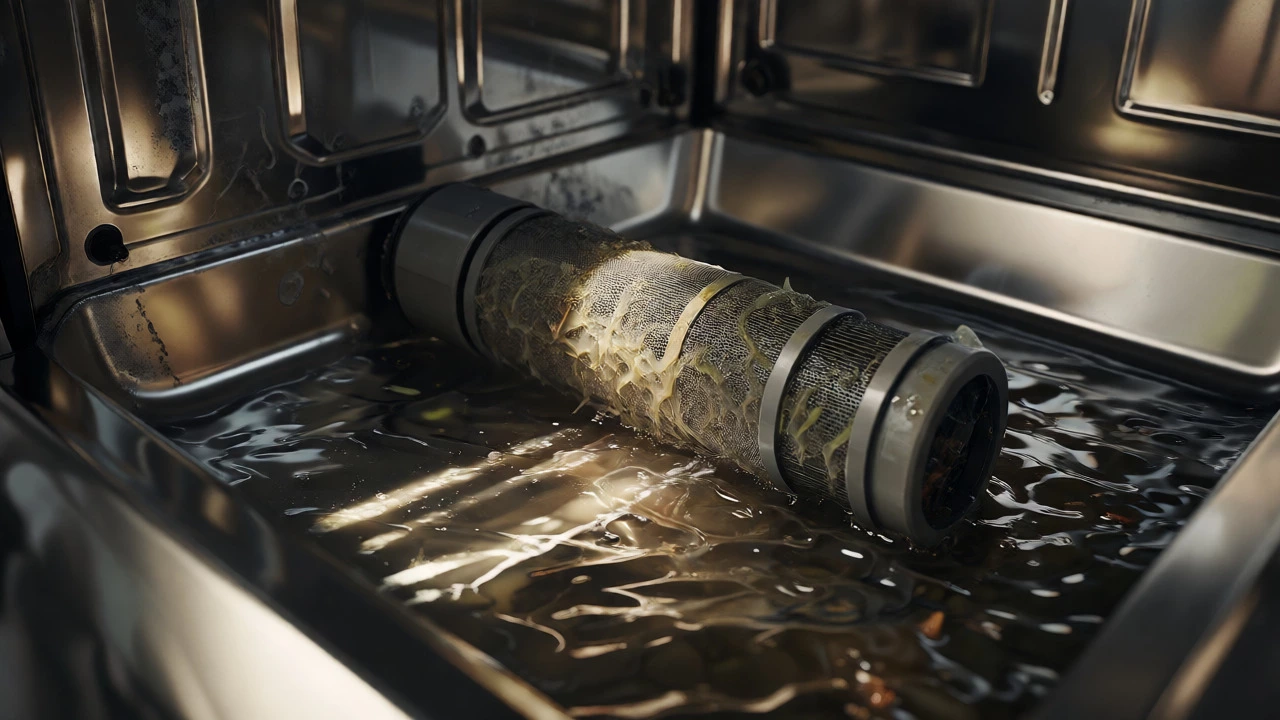
- Clean the Filter: Remove the cylindrical filter at the bottom. Rinse it under hot water. Use a toothbrush to remove sludge. A clogged filter causes poor washing and drainage errors.
- Descale the Machine: Run an empty cycle on the hottest setting with a cup of white vinegar placed upright on the top rack. This dissolves limescale buildup on heating elements and sensors.
- Check the Door Seal: Wipe it down with warm soapy water. Look for tears. Ensure no dishes are blocking it from closing properly.
- Reset the Electronics: Unplug the dishwasher for 5 minutes. Plug it back in. Sometimes a software glitch resets with a power cycle.
If these steps don’t work, then call a professional. But knowing you’ve tried basics first gives you leverage. Engineers respect informed customers. They’re less likely to upsell unnecessary parts.
Making the Final Choice
So, is it worth repairing a 4-year-old dishwasher? Here’s the simple heuristic I use with clients in Bristol and beyond:
If it’s a premium brand (Miele, Bosch, Siemens) and the fault is minor (seal, valve, pump), repair it. These machines are built to go the distance. The repair cost is negligible compared to the value of extending its life.
If it’s a budget brand (Indesit, Candy, entry-level Whirlpool) and the fault involves electronics or motors, replace it. The repair cost eats too much of the remaining lifespan value. You’re better off starting fresh with a new warranty.
If you’re unsure, get a second opinion. Ask the engineer: "If this were your machine, would you fix it?" Their answer tells you everything.
How long should a dishwasher last?
On average, a standard dishwasher lasts between 7 and 10 years. Premium brands like Miele are designed to last up to 20 years. Budget models may fail sooner, around 5-7 years, depending on usage frequency and water hardness.
Is it cheaper to repair or replace a dishwasher?
It depends on the fault. Minor repairs (under £100) are almost always cheaper than replacement. Major repairs (over £200) often exceed 50% of the cost of a new mid-range model, making replacement the more economical choice long-term, especially considering energy savings and new warranties.
What are the most common dishwasher faults?
The most frequent issues include clogged filters, faulty door seals, drain pump blockages, and water inlet valve failures. Electronic control board failures are less common but significantly more expensive to fix.
Do newer dishwashers clean better than older ones?
Not necessarily in terms of raw cleaning power, but they are more efficient. Modern dishwashers use sensors to adjust water usage and temperature based on load size. They also tend to be quieter and offer more flexible rack configurations. Older machines may actually wash hotter, which can help with sanitization, but they waste more water and energy.
Can I negotiate the repair cost?
Yes, especially if you have multiple appliances needing service or if you provide your own parts. Always ask for a fixed-price quote rather than hourly rates. If the quote seems high, get a second opinion from an independent appliance specialist rather than a large retail chain.