- 25 Oct 2026
- Gideon Thornton
- 0
Freezer Troubleshooting Diagnostic Tool
Follow the steps below to identify the most likely cause of your freezer's cooling issues. Answer honestly for the best results.
1. Check Thermostat Setting
The ideal freezer temperature is -18°C (0°F).
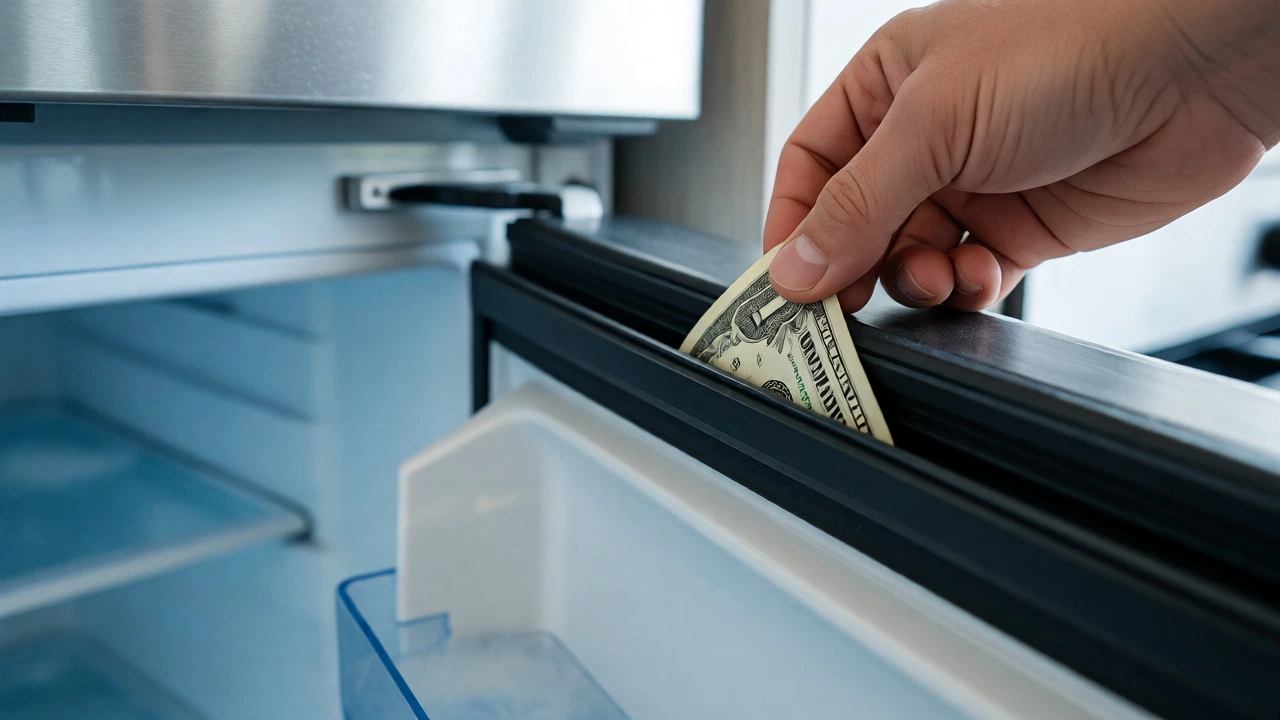
2. The Dollar Bill Test
Close a bill in the door. Pull it out. Do you feel resistance?
3. Check Airflow & Fill Level
Freezers work best when full but not overpacked blocking vents.
4. Inspect Condenser Coils
Located at the back or under the kickplate. Dirty coils cause overheating.
5. Look for Excessive Frost
Thick frost on back walls indicates a defrost system failure.
6. Listen for Noises
Clicking or humming can indicate compressor or fan issues.
Diagnosis Report
Recommended Actions:
Professional Help Needed?
Based on your inputs, we will advise if you should call a technician.
You open the freezer door expecting a blast of icy air, but instead, you’re greeted by soft ice cream and half-thawed peas. It’s frustrating, especially when you’ve just spent good money on groceries. The good news? A freezer that won’t stay frozen is rarely a catastrophic failure. In most cases, it’s a simple maintenance issue or a minor component glitch that you can fix yourself before calling a technician. Let’s figure out exactly what’s going wrong with your unit.
Check the Basics First
Before you grab a screwdriver, look at the obvious stuff. Often, the problem isn’t mechanical-it’s human error or environmental factors. Is the thermostat set correctly? Sometimes kids bump the dial, or a cleaning crew accidentally shifts it. The ideal temperature for a freezer is -18°C (0°F). If it’s set to "Normal" or "Medium," try turning it up one notch and wait 24 hours.
Next, look at how full your freezer is. This seems counterintuitive, but freezers actually work better when they are full. Frozen food acts as a thermal mass, helping to retain cold air when you open the door. An empty freezer has too much warm air circulating inside every time you peek in. Conversely, an overpacked freezer blocks the airflow vents. If you see frost building up around the back wall vents, you’ve packed it too tight. Rearrange the boxes so air can circulate freely.
The Door Seal: Your First Line of Defense
If the temperature settings are fine, the next culprit is almost always the door gasket. This rubber seal keeps cold air in and warm, humid room air out. When it fails, your compressor works overtime trying to compensate for the leak, leading to higher energy bills and poor freezing performance.
How do you know if it’s broken? Try the "dollar bill test." Close the door on a dollar bill (or any piece of paper). Pull it out. You should feel resistance. If it slides out effortlessly, the seal is compromised. Look closely at the gasket for cracks, tears, or brittleness. Also, check for mold or grime buildup along the seal; this prevents a tight closure. Clean it with warm soapy water and dry it thoroughly. If the seal is damaged, replacing it is cheap-usually under $50-and relatively easy for most homeowners.
| Cause | Symptoms | DIY Fixability |
|---|---|---|
| Dirty Condenser Coils | Freezer runs constantly, exterior feels hot | High (Vacuum/Brush) |
| Blocked Air Vents | Inconsistent temps, frost on back wall | High (Rearrange food) |
| Faulty Door Gasket | Frost on door edges, warm interior | Medium (Replace seal) |
| Defroster Heater Failure | Excessive frost buildup on evaporator | Low (Requires multimeter) |
| Compressor Issue | Loud clicking, no cooling at all | Low (Professional repair) |
Clean Those Condenser Coils
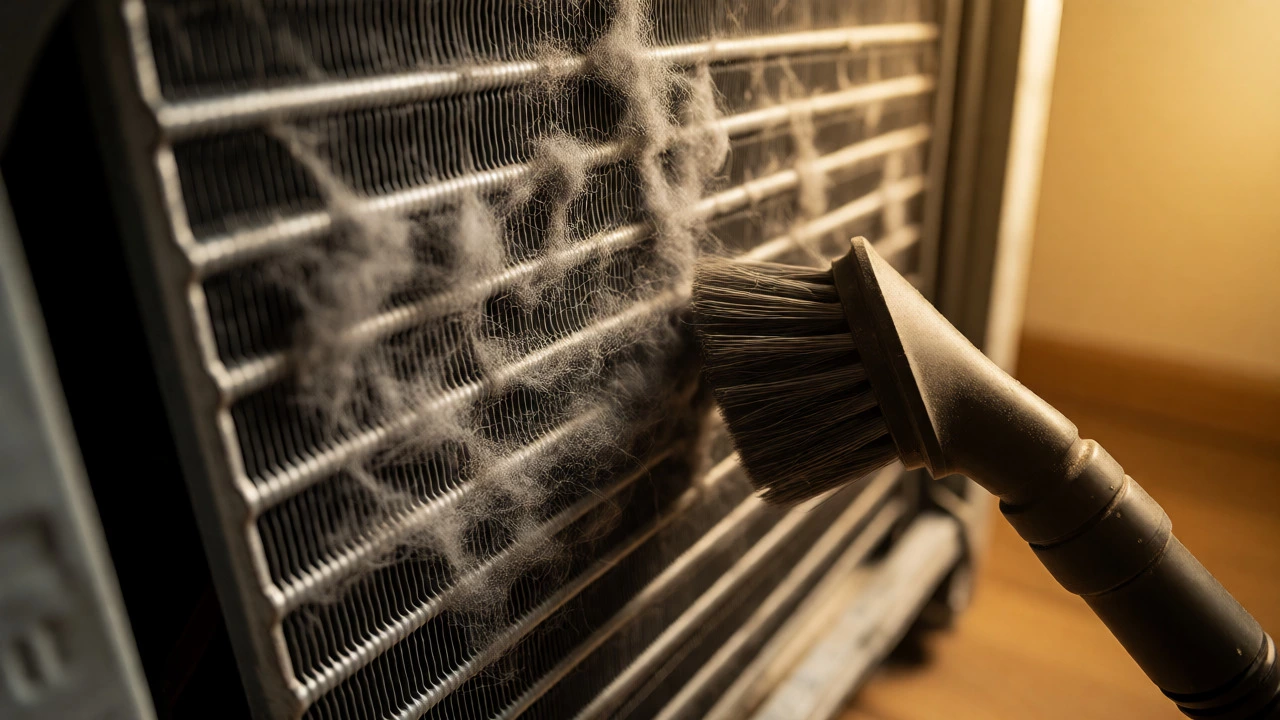
Here is the number one reason older freezers struggle: dirty coils. These metal grids are usually located either behind the kickplate at the bottom front or across the back of the unit. Their job is to dissipate heat from the refrigerant. When they get clogged with dust, pet hair, and lint, they can’t release heat efficiently. The result? The system overheats and stops cooling effectively.
Pull the fridge away from the wall (unplug it first!) and inspect the coils. If they look like fuzzy gray blankets, they need cleaning. Use a coil brush or a vacuum cleaner with a brush attachment. Be gentle-you don’t want to bend the fins. For units with coils on the back, use a long-handled brush to reach between the pipes. Do this once or twice a year, and your appliance will run cooler and last longer.
Airflow Blockages and Evaporator Fans
Modern freezers use fans to circulate cold air from the evaporator coils to the rest of the compartment. If the evaporator fan is blocked by ice or debris, cold air stays trapped near the coils while the rest of the freezer warms up.
Listen closely. When the compressor kicks on, do you hear the fan whirring? If it’s silent, the fan motor might be dead. But often, it’s just stuck because ice has formed around the blades. This usually happens due to a failed defrost cycle. If you notice thick frost on the back panel inside the freezer, unplug the unit and let it defrost completely for 24 hours with the doors open. Place towels underneath to catch the water. Once thawed, plug it back in. If it freezes properly again but the problem returns in a few weeks, you have a deeper defrost system issue.
The Defrost System Components
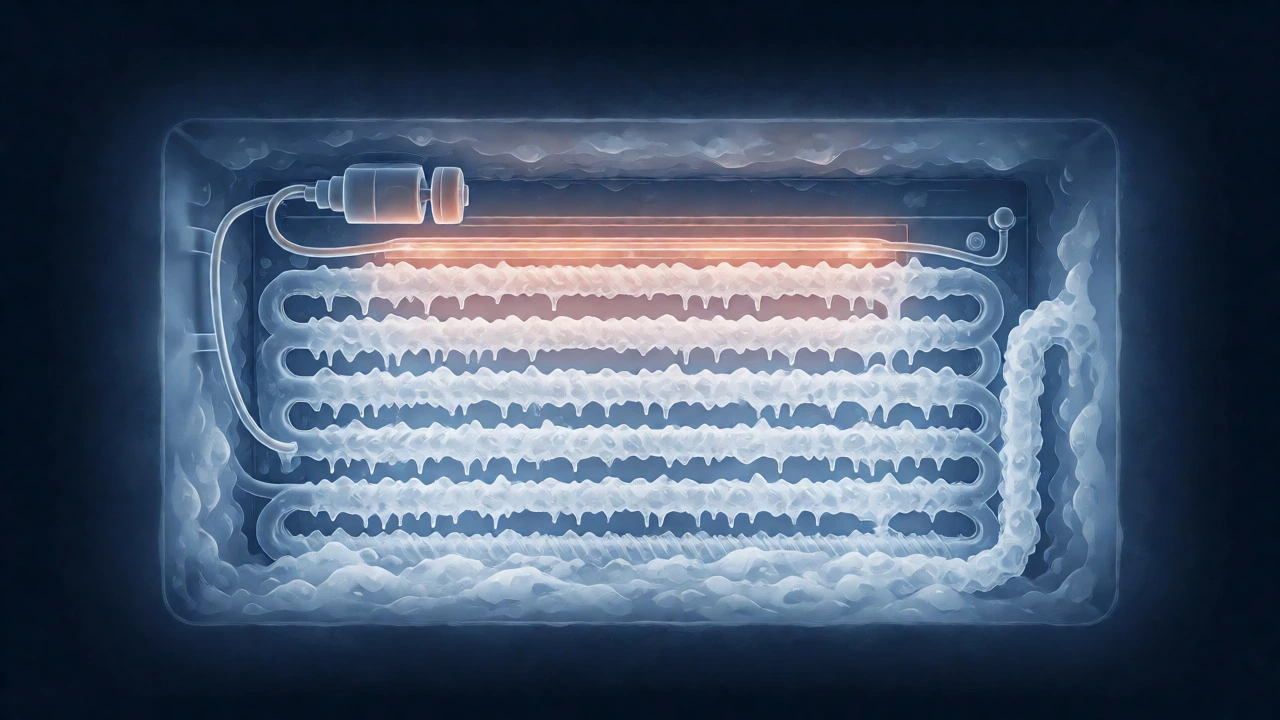
Auto-defrost freezers rely on three key parts: the defrost heater, the defrost thermostat (bi-metal), and the defrost timer or control board. If any of these fail, ice builds up on the evaporator coils, insulating them from the air and stopping the cooling process.
- Defrost Heater: Melts the ice off the coils during the defrost cycle. If it burns out, ice accumulates rapidly.
- Defrost Thermostat: Acts as a safety switch. It cuts power to the heater once the coils are warm enough. If it opens prematurely, the heater doesn’t run long enough.
- Control Board/Timer: Tells the system when to initiate the defrost cycle. On newer models, this is electronic; on older ones, it’s a mechanical clock.
Testing these requires a multimeter. Unplug the freezer, locate the components (usually behind the rear interior panel), and check for continuity. If the heater or thermostat shows no continuity, replace it. Parts are inexpensive, but accessing them can be tricky depending on your model.
When to Call a Pro
If you’ve cleaned the coils, checked the seals, ensured proper airflow, and tested the defrost components, but the freezer still won’t hold temperature, you might be looking at a sealed system issue. This involves the compressor, start relay, or refrigerant levels.
A failing compressor often makes a loud humming noise followed by a click as it tries to restart. Low refrigerant levels indicate a leak, which is difficult to find and expensive to fix. Weigh the cost of repair against the age of the unit. If your freezer is more than 10-15 years old, replacement might be more economical than repairing a sealed system.
How long does it take for a freezer to refreeze after being unplugged?
It typically takes 4 to 24 hours for a freezer to return to -18°C (0°F) after being unplugged or having its door left open. The exact time depends on the ambient room temperature, how full the freezer is, and whether the door was kept closed during recovery. Patience is key-do not keep opening the door to check progress.
Can I put warm food directly into the freezer?
No, putting warm food directly into the freezer raises the internal temperature significantly, potentially thawing surrounding items. This creates a risk zone where bacteria can multiply. Cool food to room temperature first, then place it in small, shallow containers to freeze faster and evenly.
Why is there water pooling at the bottom of my freezer?
Water pooling usually indicates a clogged defrost drain. During the defrost cycle, melted ice should flow down a drain tube into a pan above the compressor. If this tube gets blocked by ice or debris, water backs up and leaks onto the floor. Clear the drain with hot water or a turkey baster injection.
Is it normal for a new freezer to smell like plastic?
Yes, a slight chemical or plastic odor is common in new appliances due to off-gassing from insulation and plastics. This usually dissipates within a few days to two weeks. To speed it up, wipe the interior with a mixture of baking soda and water, and leave an open box of baking soda inside to absorb odors.
What is the ideal temperature setting for a chest freezer vs. upright?
Both types should aim for -18°C (0°F). However, chest freezers naturally maintain temperature better when opened briefly because cold air sinks and stays in. Upright freezers lose more cold air each time you open the door. Therefore, you might need to adjust the thermostat slightly lower on an upright model if you access it frequently.