- 24 Sep 2026
- Gideon Thornton
- 0
Oven Fault Diagnosis Tool
Answer the questions below to narrow down whether you need to replace the Heating Element, the Thermostat, or check other components.
DIY Cost Estimate
Part cost only. Requires basic tools.Pro Service Estimate
Parts + Labor. Recommended for complex fixes.You turn on your electric oven and wait. The fan spins, the light comes on, but the air inside stays cold. Or maybe it gets hot, but never stops getting hotter until smoke starts pouring out of the vents. These are two very different problems, yet both point to one of two usual suspects: the heating element or the thermostat.
Figuring out which part has failed saves you money. If you replace the wrong component, you’ve wasted £20-£50 on a part that was fine, plus the time it took to install it. Worse, if you ignore a faulty thermostat, you might burn out a good element because it’s running continuously without regulation.
The Quick Visual Check
Before you grab a multimeter, look at the physical state of the components. This doesn’t always tell the whole story, but it catches obvious failures instantly.
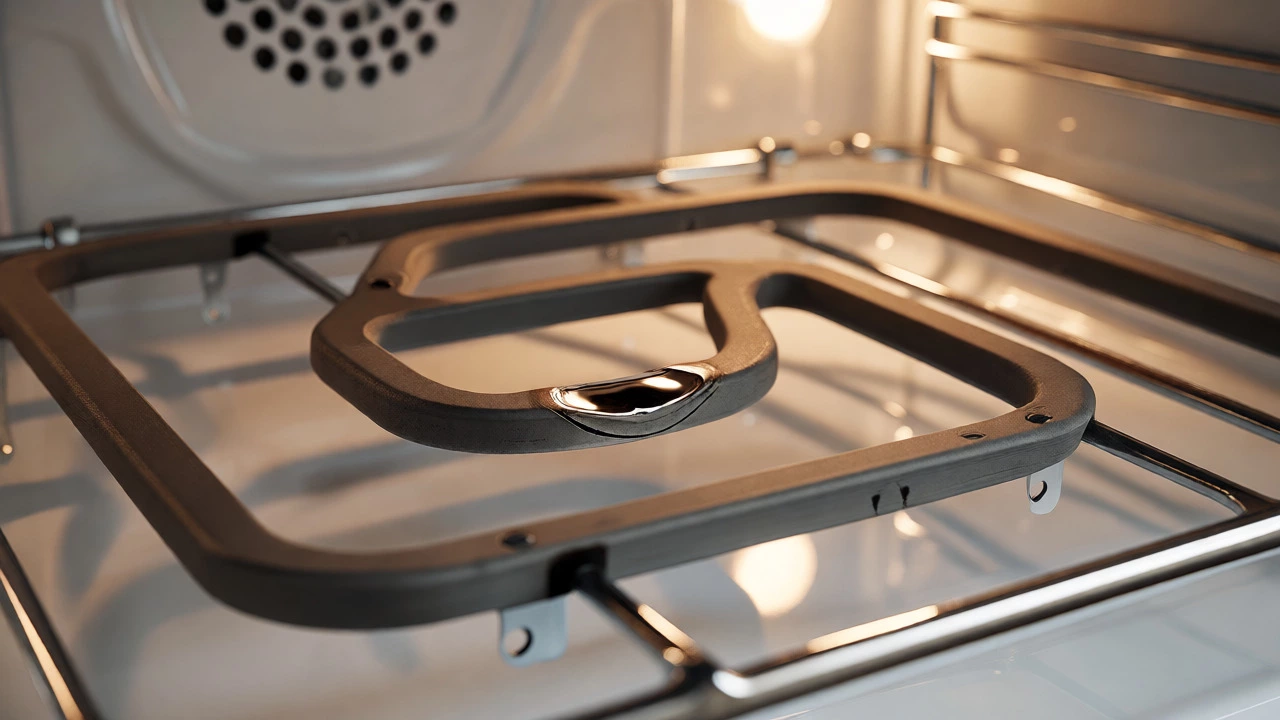
Inspect the Heating Elements: Most ovens have two elements: a top grill element and a bottom bake element (or a circular ring element for fans). Look for blisters, dark spots, cracks, or sections that look melted. A healthy element is usually shiny silver or dull grey. If you see a hole in the metal sheath or a section that has turned black and brittle, the element is dead. You don’t need tools to know this part needs replacing.
Check the Thermostat Dial: Does the knob feel loose? When you turn it, do you hear a distinct "click"? In many mechanical thermostats, that click is the switch engaging. If the dial spins freely without resistance or clicks, the internal mechanism may be stripped. However, lack of a click doesn't always mean failure-some digital models don't click audibly.
Understanding the Roles
To diagnose correctly, you need to understand what each part actually does. Think of them as a team.
| Component | Primary Job | Symptom of Failure |
|---|---|---|
| Heating Element | Converts electricity into heat. | Oven stays cold even when set to high temp. |
| Thermostat | Regulates temperature by switching power on/off. | Oven overheats, underheats, or cycles erratically. |
If the element is broken, no amount of thermostat tweaking will generate heat. If the thermostat is broken, the element might work perfectly but won't stop heating (overheating) or won't start heating (open circuit).
Test 1: The Multimeter Continuity Test
This is the most reliable DIY method. You need a basic multimeter, which costs about £10-£15. Safety first: unplug the oven or flip the breaker off. Never test live circuits with a continuity setting.
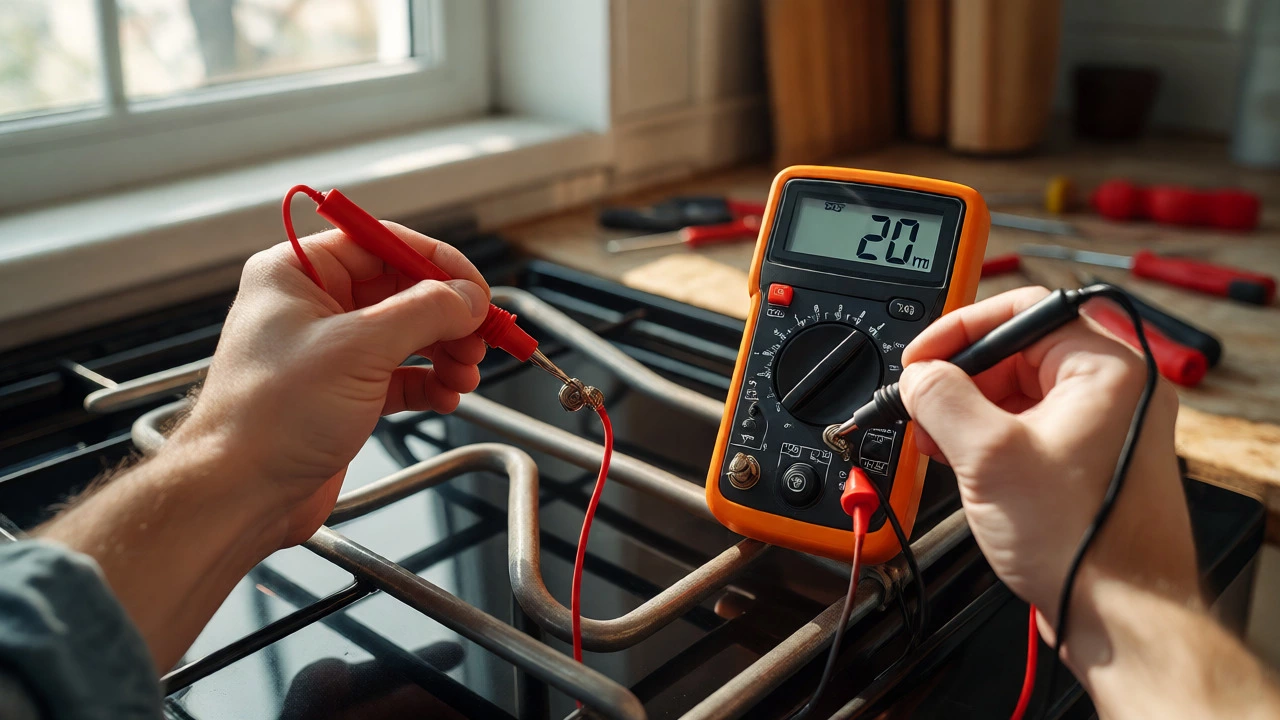
Testing the Element: 1. Access the back of the oven cavity where the element screws attach. 2. Disconnect the wires from the element terminals. 3. Set your multimeter to Ohms (Ω). 4. Touch the probes to the two terminals of the element. 5. Read the value.
A healthy element typically reads between 10 and 50 ohms, depending on its wattage. If the meter shows infinite resistance (often displayed as 'OL' or '1'), the circuit is open-the wire inside is broken. Replace the element. If it reads close to zero (0.1 ohms), there’s a short circuit. Replace it.
Testing the Thermostat: This is trickier because the thermostat is often behind the control panel. You’re testing for continuity when the dial is set to ON.
1. Turn the oven dial to a high setting (e.g., 200°C). 2. Place probes on the thermostat terminals. 3. You should get a low resistance reading (near zero), indicating the switch is closed and sending power.Now, cool the thermostat bulb (the capillary tube) with an ice pack while keeping the dial on. As it cools below the set point, the switch should open, and resistance should jump to infinity. If it stays closed (low resistance) forever, the thermostat is stuck closed. If it stays open (high resistance) when it should be closed, it’s stuck open.
Test 2: The Voltage Drop Test
If you’re comfortable working with live electricity (and wear insulated gloves), you can check if power is reaching the element. This helps isolate wiring issues versus component failure.
With the oven plugged in and set to heat, place your multimeter probes on the element terminals. You should read mains voltage (approx. 230V in the UK). If you get 230V but the element isn’t glowing or heating, the element is dead. If you get 0V, the problem is upstream-likely the thermostat, selector switch, or main control board.
Signs It’s Definitely the Thermostat
Thermostat failures are subtle. Here are the classic clues:
- The Oven Overheats: This is dangerous. If you set it to 180°C and it climbs to 250°C and keeps going, the thermostat isn’t cutting power. The element is working; the brain is failing.
- Poor Temperature Control: Your cakes collapse in the middle or roast chicken burns on the outside but stays raw inside. This suggests the oven is cycling wildly-too hot, then too cold.
- The Light Stays On: In many models, the oven light turns off when the thermostat cuts power. If the light stays on indefinitely while heating, the thermostat contact might be welded shut.
Signs It’s Definitely the Element
Element failures are blunt instruments.
- No Heat at All: You set it to 200°C, wait 20 minutes, and it’s still room temperature. If the fan works and lights work, but no heat, check the elements.
- Uneven Cooking: Only the top browns food, but nothing bakes underneath? The bottom element is likely blown. Conversely, if roasts take hours to cook but the grill works, the main bake element is suspect.
- Visible Damage: As mentioned, blistering or gaps in the coil are definitive proof.
What About Digital Ovens?
Modern ovens use electronic controllers instead of mechanical dials. Diagnosing these requires a bit more care.
In digital ovens, the "thermostat" function is split between a temperature sensor (a thermistor) and the main PCB (Printed Circuit Board). The thermistor is a small probe inside the cavity. If it fails, the oven might display error codes like F1, E1, or similar (check your manual). You can test the thermistor with a multimeter. Its resistance changes predictably with temperature. At room temperature (20°C), it might read around 10k ohms. As it heats up, resistance drops. If it reads open or shorted, replace the sensor. It’s cheap (£10-£20) and easy to swap.
If the sensor is fine but the oven doesn’t heat, the relay on the main board might be burnt out. Replacing a main board is expensive (£80-£150+), so rule out the sensor and elements first.
Cost-Benefit Analysis
Should you fix it yourself or call a pro?
| Part/Fix | DIY Part Cost | Pro Labor Cost | Total Pro Cost |
|---|---|---|---|
| Heating Element | £20-£60 | £80-£120 | £100-£180 |
| Mechanical Thermostat | £15-£40 | £90-£130 | £105-£170 |
| Digital Sensor | £10-£25 | £80-£110 | £90-£135 |
| Main PCB | £80-£150 | £100-£150 | £180-£300 |
If you’re handy, swapping an element is a 15-minute job requiring just a screwdriver and pliers. Replacing a thermostat involves removing the control panel, which takes longer but is manageable. If you suspect the main board, consider calling a professional unless you’re confident with electronics.
Troubleshooting Flowchart
Follow this logic path to narrow it down quickly:
- Does the oven light/fan work?
- No: Check fuse/breaker. If okay, check door switch or main fuse on oven terminal block.
- Yes: Proceed to step 2.
- Do any elements glow red?
- No: Test element continuity. If bad, replace element. If good, test thermostat/power supply.
- Yes: Proceed to step 3.
- Does the oven reach temperature?
- No (stays lukewarm): Likely a weak element or faulty thermostat not staying closed long enough.
- Yes (but overheats): Faulty thermostat.
- Yes (but unevenly): Specific element failure or fan motor issue.
Frequently Asked Questions
Can I drive my car with a broken oven element?
While unrelated to cars, the analogy holds: yes, you can still use other functions. If the bake element is broken, you can still use the grill. If the grill element is broken, you can still bake. Just avoid using the specific mode that relies on the broken part.
How long do oven thermostats last?
Mechanical thermostats typically last 10-15 years. Digital sensors can fail sooner due to thermal stress, often around 7-10 years. Usage frequency and cleaning habits (avoiding water ingress) play a big role.
Is it safe to run an oven with a faulty thermostat?
No, especially if it overheats. A stuck-closed thermostat can cause temperatures to exceed 300°C, potentially melting plastic knobs, damaging seals, or starting a fire. Unplug the oven if it runs away.
Why is my oven heating slowly?
Slow heating often indicates a failing element (increased resistance reduces heat output) or a faulty fan motor (if convection oven) that isn't circulating hot air efficiently. Check the fan blades for grease buildup first.
Do all ovens have two elements?
Most conventional ovens have a top grill element and a bottom bake element. Fan-assisted ovens often have a single circular element surrounding the fan at the back. Some high-end models have multiple zones or induction hobs integrated.